The 2003 Harley-Davidson FXSTB, often referred to as the Softail Night Train, emerged as a prominent member of Harley-Davidson's Softail family. Introduced in 2000, the FXSTB was characterized by its blacked-out styling and a low-slung, aggressive stance. Its model run extended through several years, with the 2003 model year featuring the iconic Twin Cam 88B engine. This bike is popular for its custom look straight from the factory, appealing to riders seeking a stylish cruiser with a dark, rebellious aesthetic. New pricing in 2003 ranged from approximately $15,000 to $17,000, depending on options.
The Good
The 2003 Harley-Davidson FXSTB boasts a strong, torquey engine for a satisfying ride, iconic Harley styling that evokes emotion, and a comfortable riding position for longer journeys. Its robust build offers reliability, and its classic cruiser design provides timeless appeal and good value for a premium American motorcycle.

The Bad
Potential buyers of the 2003 Harley-Davidson FXSTB should watch for typical Harley issues such as oil leaks from the primary or transmission, potential carburetor performance quirks, and wear on the belt drive. Suspension can feel stiff for some riders, and aftermarket exhaust systems can sometimes cause tuning issues if not properly implemented.
2003 Harley-Davidson FXSTB: Quick Overview
- Engine: 1450cc (88 cubic inches) Twin Cam 88B V-twin
- Horsepower: Approximately 62 hp (at the crank)
- Torque: Approximately 77 lb-ft (at the crank)
- Fuel Economy: Typically around 40-45 mpg (city/highway combined), though this can vary significantly based on riding style and conditions.
- 0-60 mph: Generally in the 5-6 second range, depending on rider weight and conditions.
- Towing Capacity: Not applicable. This is a motorcycle designed for solo or two-up riding, not for towing trailers.
- Transmission: 5-speed constant mesh
- Clutch: Multi-plate wet clutch
- Final Drive: Belt drive
- Brakes: Front: Dual 292mm discs with 4-piston calipers; Rear: Single 292mm disc with 4-piston caliper.
- Suspension: Front: Telescopic fork with 4.1-inch travel; Rear: Horizontal, monoshock, under-swing arm with 3.1-inch travel (Softail hidden rear suspension).
- Wheels: 17-inch front and 15-inch rear cast aluminum wheels.
- Tires: Front: MT90B16; Rear: MU85B16.
- Exhaust: Dual slash-cut mufflers.
- Fuel Tank Capacity: 4.0 gallons (15.1 liters)
- Seat Height: Approximately 25.5 inches (648 mm) unladen
- Dry Weight: Approximately 637 lbs (289 kg)
- Key FXSTB (Night Train) Trim Features:
- Blacked-out styling: Engine covers, exhaust, handlebars, wheels, and other components are finished in black.
- Low-slung profile with a sleek, minimalist aesthetic.
- Forward-mounted foot controls and drag-style handlebars for a more aggressive riding posture.
- Smoked headlight lenses and taillight.
- One-piece, two-up seat.
- Chrome accents on forks, engine cases (partially), and wheel spokes to contrast with the black components.
- Standard instrumentation with speedometer and indicator lights.
2003 Harley-Davidson FXSTB Specifications
Vehicle Information
| Year | 2003 |
| Make | Harley-Davidson |
| Model | FXSTB |
| Trim | - |
| Style | - |
| Type | Motorcycle |
| Category | Motorcycle |
Manufacturing Details
| Made In | United States |
| Manufacturing City | YORK |
Dimensions
| Doors | - |
| Curb Weight | - |
| Gross Vehicle Weight Rating | - |
| Overall Height | - |
| Overall Length | - |
| Overall Width | - |
| Wheelbase Length | - |
| Standard Seating | - |
Engine & Performance
| Engine | 1450CC |
| Engine Size | 1450L |
| Engine Cylinders | 2 |
| Transmission | - |
| Transmission Type | - |
| Transmission Speeds | - |
| Drivetrain | - |
Additional Features
| Anti-Brake System | - |
| Steering Type | - |
Pricing
| Manufacturer Suggested Retail Price (MSRP) | - |
| Invoice Price | - |
| Delivery Charges | - |
Vehicle History Report
Vehicle
Specifications
Specifications
Ownership
History
History
All History
Events
Events
NMVTIS Title
History Check
History Check
Salvage/Rebuilt
Check
Check
Accident
Check
Check
Theft
Check
Check
Open Lien
Check
Check
Past Sale
Listings
Listings
Safety
Recalls
Recalls
Odometer
Check
Check
Market Price
Analysis
Analysis
What Problems Does the 2003 Harley-Davidson FXSTB Have?
The 2003 Harley-Davidson FXSTB, part of the Twin Cam 88B era, generally enjoys a reputation for solid mechanical integrity, but like any motorcycle of its age, it has some commonly reported issues and considerations. One area that sometimes requires attention is the oiling system. Owners have reported occasional oil leaks, particularly around the primary drive and transmission seals. While not exclusive to the 2003 model, this is a general concern for Twin Cam engines as they age. Another point of discussion often revolves around the carburetor, specifically the Keihin CV carb. While reliable, it can sometimes develop minor performance quirks if not properly maintained or tuned, affecting idle quality or throttle response. Some riders also note a tendency for the starter clutch to wear over time, leading to a grinding noise during startup. This isn't a widespread catastrophic failure, but rather a component that may need eventual replacement on higher-mileage bikes.
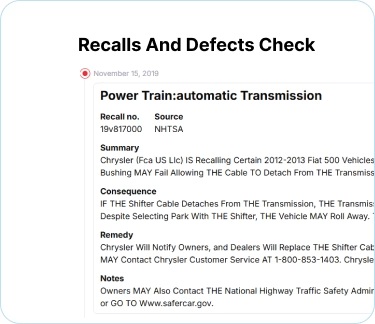
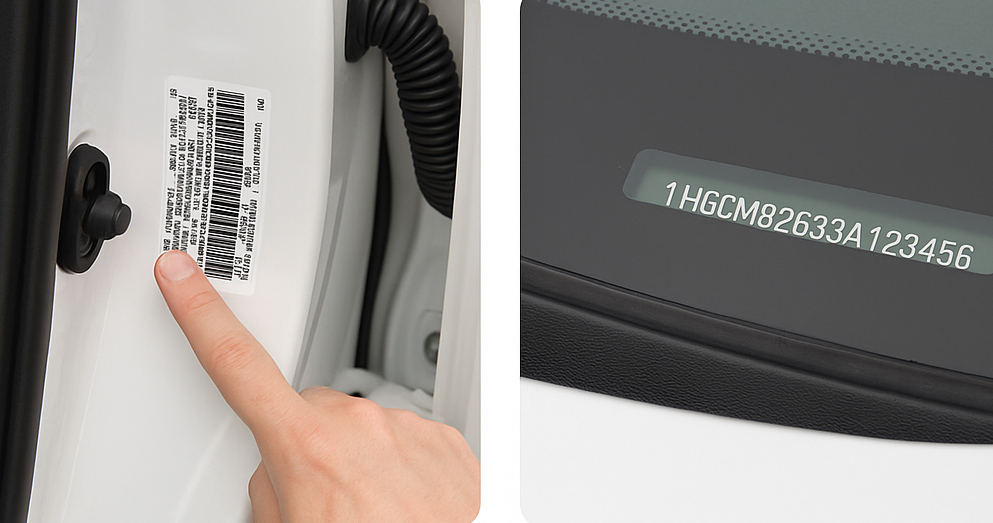
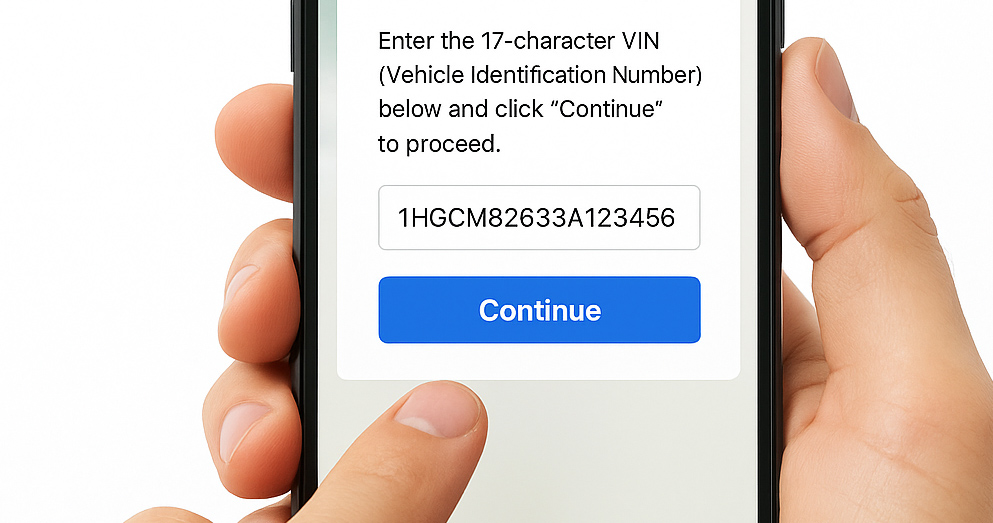
Regarding recalls for the 2003 model year, it's always advisable to check with Harley-Davidson or a dealership using the VIN for any outstanding safety recalls that may not have been addressed. Specific to the Twin Cam era, certain years have had recalls related to things like throttle cables or wheel bearings, but it's important to verify for the exact 2003 FXSTB.
Long-term reliability on the 2003 FXSTB is largely dependent on its maintenance history. These bikes were built to last, and with regular oil changes, proper care of the belt drive, and addressing any minor leaks or electrical connections promptly, they can provide many years of enjoyable service. The Twin Cam 88B engine is a robust powerplant, and many have accumulated well over 100,000 miles with diligent upkeep. However, as with any older motorcycle, expect to perform routine maintenance and address wear-and-tear items as they arise, such as brake pads, tires, and fork seals.
Regarding recalls for the 2003 model year, it's always advisable to check with Harley-Davidson or a dealership using the VIN for any outstanding safety recalls that may not have been addressed. Specific to the Twin Cam era, certain years have had recalls related to things like throttle cables or wheel bearings, but it's important to verify for the exact 2003 FXSTB.
Long-term reliability on the 2003 FXSTB is largely dependent on its maintenance history. These bikes were built to last, and with regular oil changes, proper care of the belt drive, and addressing any minor leaks or electrical connections promptly, they can provide many years of enjoyable service. The Twin Cam 88B engine is a robust powerplant, and many have accumulated well over 100,000 miles with diligent upkeep. However, as with any older motorcycle, expect to perform routine maintenance and address wear-and-tear items as they arise, such as brake pads, tires, and fork seals.
How long will the 2003 Harley-Davidson FXSTB last?
The 2003 Harley-Davidson FXSTB, with its Twin Cam 88B engine, is built for longevity. Based on owner data and typical maintenance habits, a well-maintained FXSTB can reasonably achieve 100,000 to 150,000 miles or more. Many owners report their bikes exceeding 200,000 miles with consistent care, including regular oil changes every 3,000-5,000 miles, checking and adjusting the belt drive, and prompt attention to any emerging leaks. The engine itself is considered very durable. Weaknesses that may appear over time are typically related to wear-and-tear components like the clutch, wheel bearings, or suspension seals. The primary and transmission seals are also known to eventually develop minor leaks. However, these are generally considered repairable and not indicative of a fundamental flaw in the motorcycle's design, affirming its long-term durability when properly cared for.
What Technology & Safety Features are Included?
The 2003 Harley-Davidson FXSTB Night Train represents a more minimalist approach to motorcycle technology, prioritizing the riding experience and classic aesthetics over extensive electronic aids. As such, its built-in tech, entertainment, driver-assistance, and safety features are quite basic by modern standards.
Technology and Entertainment: The FXSTB's dashboard is functional rather than feature-rich. It typically includes a speedometer, an odometer, a trip meter, and a collection of indicator lights for turn signals, high beam, neutral, oil pressure, and engine diagnostics. There is no integrated audio system, Bluetooth connectivity, or GPS navigation. Entertainment is derived solely from the rumble of the V-twin engine and the open road.
Driver-Assistance Features: There are no electronic driver-assistance features like ABS (Anti-lock Braking System), traction control, or ride modes. These were not common, or even available, on most cruisers of this era. The rider is entirely responsible for managing acceleration, braking, and stability.
Safety Features: Safety features are limited to the mechanical components of the motorcycle. This includes dual front disc brakes and a single rear disc brake, providing adequate stopping power. The lighting system consists of a halogen headlight, taillight, and turn signals, all standard for the time. Reflectors are also present for increased visibility.
Optional Features: While the FXSTB came with a specific factory configuration, Harley-Davidson's extensive accessory catalog offered numerous options for personalization and enhancement. These could include different exhaust systems for improved sound and performance, custom seats for enhanced comfort or style, saddlebags for storage, upgraded lighting, and various chrome or blacked-out cosmetic pieces. Security options like aftermarket alarms were also commonly added by owners.
Crash-Test Ratings: Motorcycles, unlike cars, do not undergo standardized crash-test ratings from organizations like the NHTSA (National Highway Traffic Safety Administration). Safety performance is primarily judged on the effectiveness of its braking, handling, and lighting systems, along with rider protection gear, which is the responsibility of the rider.
Technology and Entertainment: The FXSTB's dashboard is functional rather than feature-rich. It typically includes a speedometer, an odometer, a trip meter, and a collection of indicator lights for turn signals, high beam, neutral, oil pressure, and engine diagnostics. There is no integrated audio system, Bluetooth connectivity, or GPS navigation. Entertainment is derived solely from the rumble of the V-twin engine and the open road.
Driver-Assistance Features: There are no electronic driver-assistance features like ABS (Anti-lock Braking System), traction control, or ride modes. These were not common, or even available, on most cruisers of this era. The rider is entirely responsible for managing acceleration, braking, and stability.
Safety Features: Safety features are limited to the mechanical components of the motorcycle. This includes dual front disc brakes and a single rear disc brake, providing adequate stopping power. The lighting system consists of a halogen headlight, taillight, and turn signals, all standard for the time. Reflectors are also present for increased visibility.
Optional Features: While the FXSTB came with a specific factory configuration, Harley-Davidson's extensive accessory catalog offered numerous options for personalization and enhancement. These could include different exhaust systems for improved sound and performance, custom seats for enhanced comfort or style, saddlebags for storage, upgraded lighting, and various chrome or blacked-out cosmetic pieces. Security options like aftermarket alarms were also commonly added by owners.
Crash-Test Ratings: Motorcycles, unlike cars, do not undergo standardized crash-test ratings from organizations like the NHTSA (National Highway Traffic Safety Administration). Safety performance is primarily judged on the effectiveness of its braking, handling, and lighting systems, along with rider protection gear, which is the responsibility of the rider.
What Colors Options are Available?
2003 Harley-Davidson FXSTB Prices and Market Value
When new in 2003, the 2003 Harley-Davidson FXSTB Night Train had an MSRP that typically ranged from approximately $15,000 to $17,000, depending on any factory options. Like most Harley-Davidson motorcycles, the FXSTB has experienced relatively slow depreciation compared to many other vehicle types.
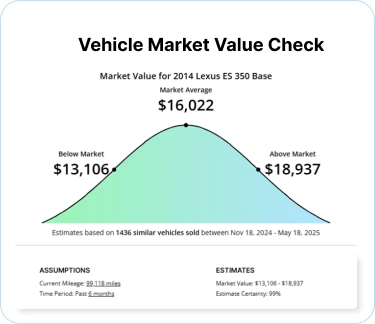
Currently, used market prices for a 2003 FXSTB can vary widely, generally falling between $6,000 and $10,000. This range is heavily influenced by factors such as mileage, overall condition (cosmetic and mechanical), the presence and quality of aftermarket modifications, and service history. A well-maintained, low-mileage example with desirable upgrades can command a higher price, while a bike with significant wear or requiring repairs will be at the lower end. The enduring popularity of the Harley-Davidson brand and the FXSTB's iconic blacked-out styling contribute to its strong resale value over time.
2003 Harley-Davidson FXSTB Cost of Ownership
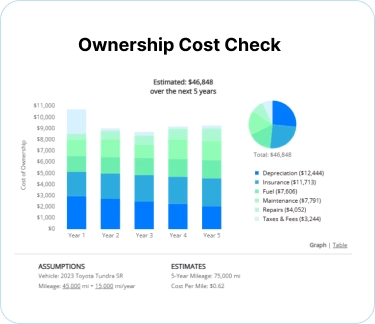
Owning a 2003 Harley-Davidson FXSTB can be moderately costly, though generally more economical than owning a new Harley. Insurance rates will vary based on rider age, location, and coverage, but expect higher premiums than for smaller bikes. Fuel economy is decent, around 40-45 mpg, making gas costs manageable. Maintenance requires regular oil changes ($100-$200 annually) and belt checks. Repairs can be the most significant expense, especially if major components like the engine or transmission need attention, though these are robust engines. Overall, while not a budget machine, its classic appeal and durability can make it a worthwhile investment for enthusiasts who understand and budget for typical cruiser ownership costs.
2003 Harley-Davidson FXSTB Fuel Efficiency
Fuel Type
Gasoline
Fuel Capacity
-
City Mileage
-
Highway Mileage
-
2003 Harley-Davidson FXSTB Warranty
Basic
Original warranty
0 months / No data
Estimated remaining
Expired
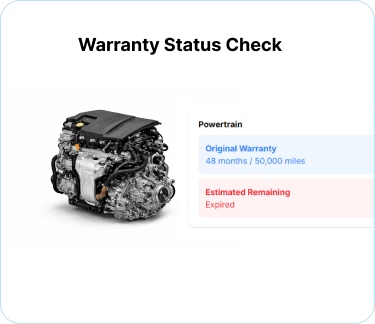
Powertrain
Original warranty
0 months / No data
Estimated remaining
Expired
Rust
Original warranty
0 months / No data
Estimated remaining
Expired
2003 Harley-Davidson FXSTB Insurance
Insurance for a 2003 Harley-Davidson FXSTB is moderately priced, reflecting its status as a Motorcycle with strong safety ratings and
reasonable repair costs.
How Does the 2003 Harley-Davidson FXSTB Compare to Other Motorcycle?
The 2003 Harley-Davidson FXSTB Night Train occupies the cruiser segment, a highly competitive space in the early 2000s. Its primary rivals included models from American and Japanese manufacturers, each offering a distinct take on the cruiser ethos.
Performance: The FXSTB's Twin Cam 88B engine provided characteristic Harley-Davidson V-twin torque, delivering a satisfying low-end pull for cruising and acceleration, though outright horsepower was moderate. Rivals like the Yamaha Road Star Silverado offered strong V-twin power, often with smoother refinement. The Honda Shadow line offered reliable V-twin performance with a focus on ease of use.
Features: The FXSTB was known for its blacked-out styling, a factory custom look that appealed to many. Feature-wise, it was relatively basic, emphasizing the riding experience over electronic gadgets. Competitors might have offered slightly more in terms of instrumentation or comfort options as standard. For instance, some Japanese cruisers of the era might have included more chrome or integrated luggage options more readily.
Reliability: Harley-Davidson's Twin Cam engines, while generally robust, had their quirks, as discussed previously (potential leaks, etc.). However, they were built to be repaired and modified. Japanese competitors like Honda and Yamaha often held a reputation for superior, bulletproof reliability and lower maintenance needs right out of the box, with fewer specific common issues reported across their model lines.
Price: The FXSTB was positioned as a premium cruiser, commanding a price tag reflective of its brand and styling. Rivals from Japanese manufacturers often offered similar displacement and cruiser styling at a slightly lower price point, providing strong value for money.
Alternatives:
Ultimately, the choice often came down to brand loyalty, desired aesthetic (especially the FXSTB's dark, custom look), and the emotional connection riders have with the Harley-Davidson brand.
Performance: The FXSTB's Twin Cam 88B engine provided characteristic Harley-Davidson V-twin torque, delivering a satisfying low-end pull for cruising and acceleration, though outright horsepower was moderate. Rivals like the Yamaha Road Star Silverado offered strong V-twin power, often with smoother refinement. The Honda Shadow line offered reliable V-twin performance with a focus on ease of use.
Features: The FXSTB was known for its blacked-out styling, a factory custom look that appealed to many. Feature-wise, it was relatively basic, emphasizing the riding experience over electronic gadgets. Competitors might have offered slightly more in terms of instrumentation or comfort options as standard. For instance, some Japanese cruisers of the era might have included more chrome or integrated luggage options more readily.
Reliability: Harley-Davidson's Twin Cam engines, while generally robust, had their quirks, as discussed previously (potential leaks, etc.). However, they were built to be repaired and modified. Japanese competitors like Honda and Yamaha often held a reputation for superior, bulletproof reliability and lower maintenance needs right out of the box, with fewer specific common issues reported across their model lines.
Price: The FXSTB was positioned as a premium cruiser, commanding a price tag reflective of its brand and styling. Rivals from Japanese manufacturers often offered similar displacement and cruiser styling at a slightly lower price point, providing strong value for money.
Alternatives:
- Similar: 2003 Harley-Davidson FXST/FXSTS (Softail Standard/Springer: These offered a similar Softail platform but with different styling cues (more chrome on the Standard, Springer front end on the Springer).
- Similar Performance/Vibe: Yamaha Road Star Series (e.g., Silverado): Offered robust V-twin power, comfortable touring features, and strong reliability, often at a slightly lower price.
- Reliability Focus: Honda Shadow Series (e.g., Aero, Sabre): Excellent V-twin engines, renowned for reliability and smooth operation, often with more accessible pricing.
- American Counterpart: Indian Chief (if available in similar years): Offered a more classic, albeit often more expensive and sometimes less refined, American V-twin experience.
Ultimately, the choice often came down to brand loyalty, desired aesthetic (especially the FXSTB's dark, custom look), and the emotional connection riders have with the Harley-Davidson brand.
Final Verdict: Is the 2003 Harley-Davidson FXSTB a Good Motorcycle?
The 2003 Harley-Davidson FXSTB Night Train is ideal for riders who appreciate classic American cruiser styling with a distinctively dark, aggressive aesthetic. It's perfect for those who value the V-twin rumble and the iconic Harley-Davidson experience over cutting-edge technology.
Whether it's worth buying hinges on individual priorities and budget. As a used purchase, it offers a chance to own a piece of Harley history at a much-reduced price from its original MSRP. It's particularly worth buying for enthusiasts looking for a stylish cruiser that's comfortable for weekend rides and has a strong aftermarket support for customization. Conditions that make it a better buy include a well-documented maintenance history, lower mileage, and overall good mechanical condition. Buyers should be prepared for standard cruiser maintenance. Given its age, it's not a new bike and will likely require attention to wear-and-tear items, but its core durability makes it a solid investment for the right rider.