
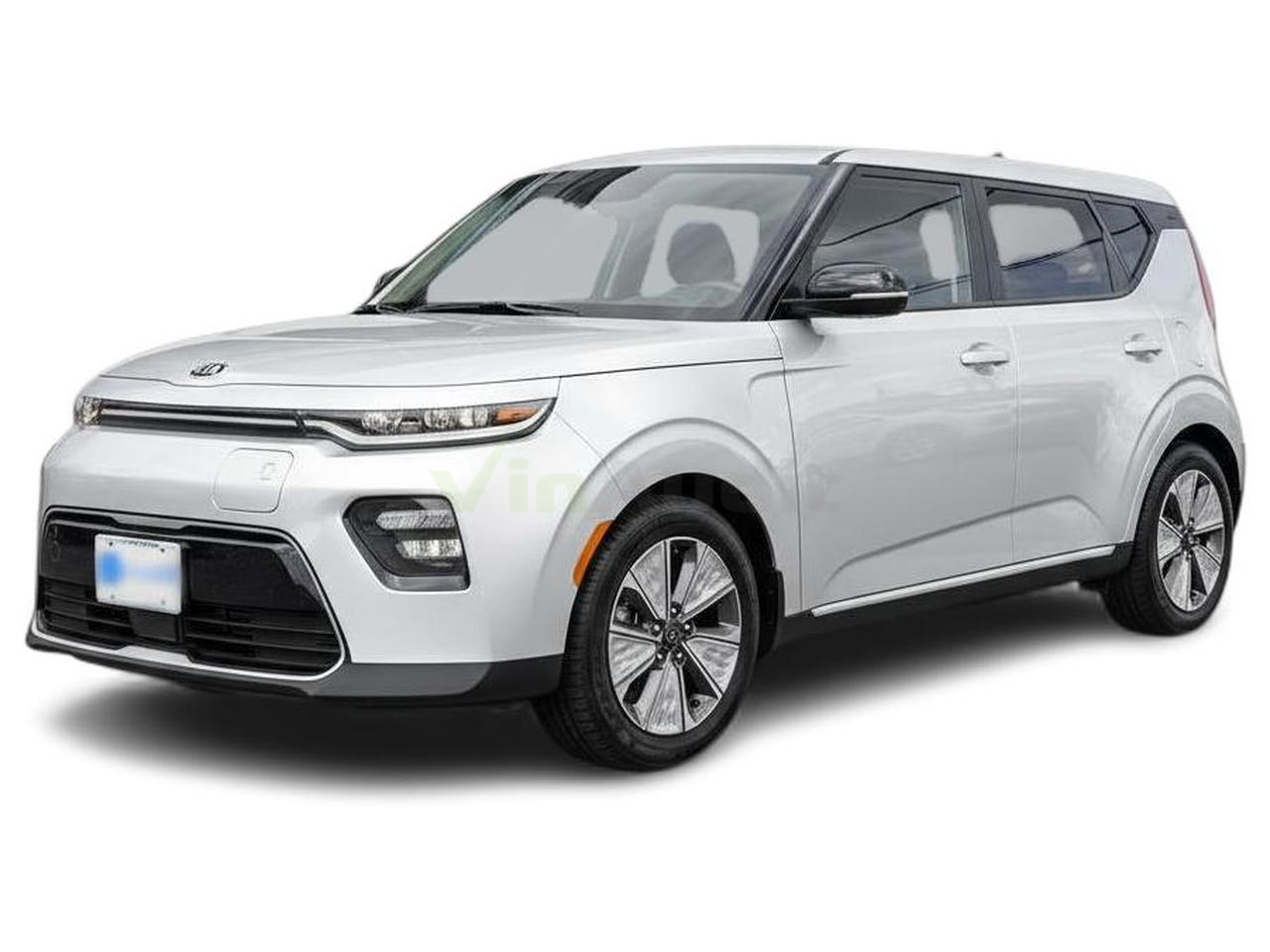
The 2020 KIA Soul EV is a distinctive electric hatchback, first introduced globally in 2014. For 2020, it received a significant redesign, offering a more modern and refined electric driving experience. Its unique, boxy body style sets it apart in a sea of conventional cars. Key trims for the 2020 model include the EV and EV Premium. What makes it stand out is its blend of quirky design, practical interior space, and impressive electric range for its class, making it a popular choice for urban commuters and eco-conscious buyers seeking a stylish and functional EV.
The Good
The 2020 Soul EV boasts impressive electric range, a comfortable and surprisingly spacious interior, and a distinctive, eye-catching design. Its smooth, quiet ride and efficient powertrain appeal to practical buyers, while its unique style and modern tech satisfy emotional desires for something different and forward-thinking.
The Bad
Potential buyers of the 2020 KIA Soul EV should be aware of its limited charging speed compared to some rivals and a relatively basic infotainment system on lower trims. Also, its boxy shape can lead to increased road noise at higher speeds. Cargo space, while decent, isn't class-leading.
2020 KIA Soul EV: Quick Overview
- Engine Options: The 2020 KIA Soul EV is offered with a single electric powertrain.
- Horsepower: The electric motor produces 134 horsepower in the base EV trim and 201 horsepower in the EV Premium trim.
- Torque: Torque figures are 264 lb-ft for the 134 hp version and 291 lb-ft for the 201 hp version.
- Fuel Economy (MPGe): The EPA estimated fuel economy for the 2020 Soul EV is approximately 127 MPGe city and 101 MPGe highway for the 64 kWh battery, and 132 MPGe city and 108 MPGe highway for the 39.2 kWh battery. (Note: Different battery sizes were available in different markets, with the 64 kWh being more common in North America for the redesigned 2020 model).
- 0-60 Times: Official 0-60 mph times are not widely published by KIA for the 2020 Soul EV, but estimates suggest around 7.8 seconds for the 201 hp model and closer to 9-10 seconds for the 134 hp variant.
- Towing Capacity: The 2020 KIA Soul EV does not have a towing capacity.
- Battery Options: Two battery pack sizes were available depending on the market and trim: a 39.2 kWh battery and a larger 64 kWh battery.
- Range: With the 64 kWh battery, the estimated range is around 243 miles. The 39.2 kWh battery offers a range of approximately 177 miles.
- Charging: Supports Level 1, Level 2, and DC fast charging. DC fast charging can replenish the battery from 10% to 80% in about an hour.
- Trim-Level Features (EV Premium): The EV Premium trim typically includes features such as a larger 64 kWh battery, more powerful motor, leather upholstery, heated and ventilated front seats, a larger 10.25-inch touchscreen infotainment system, navigation, premium audio system, wireless charging pad, LED headlights, and a suite of advanced driver-assistance systems.
- Trim-Level Features (EV - Base): The base EV trim often comes with a smaller battery (39.2 kWh), cloth upholstery, a smaller infotainment screen, and fewer premium features, but still offers a competent electric driving experience.
2020 KIA Soul EV Specifications
Vehicle Information
| Year | 2020 |
| Make | KIA |
| Model | Soul |
| Trim | - |
| Style | - |
| Type | Sport Utility Vehicle |
| Category | Standard Sport Utility Vehicle |
Manufacturing Details
| Made In | South Korea |
| Manufacturing City | GWANG-JU |
Dimensions
| Doors | 4-Door |
| Curb Weight | - |
| Gross Vehicle Weight Rating | 5000 pounds |
| Overall Height | - |
| Overall Length | - |
| Overall Width | - |
| Wheelbase Length | - |
| Standard Seating | 5 |
Engine & Performance
| Engine | 2L |
| Engine Size | 2L |
| Engine Cylinders | - |
| Transmission | Automatic |
| Transmission Type | Automatic |
| Transmission Speeds | 1-Speed |
| Drivetrain | Rear-Wheel Drive |
Additional Features
| Anti-Brake System | Standard |
| Steering Type | - |
Pricing
| Manufacturer Suggested Retail Price (MSRP) | - |
| Invoice Price | - |
| Delivery Charges | - |
Vehicle History Report
Vehicle
Specifications
Specifications
Ownership
History
History
All History
Events
Events
NMVTIS Title
History Check
History Check
Salvage/Rebuilt
Check
Check
Accident
Check
Check
Theft
Check
Check
Open Lien
Check
Check
Past Sale
Listings
Listings
Safety
Recalls
Recalls
Odometer
Check
Check
Market Price
Analysis
Analysis
What Problems Does the 2020 KIA Soul EV Have?
The 2020 KIA Soul EV, being a relatively new model year at its launch, generally enjoys a positive reputation for reliability, consistent with KIA's improving track record. However, like any vehicle, there are some reported concerns and areas to monitor. One of the more prominent discussions surrounding early EVs, including the Soul EV, has been related to battery health and degradation over time, though specific widespread issues for the 2020 model year haven't been a major concern. Owners have occasionally reported minor infotainment glitches, such as screen freezing or connectivity issues with Apple CarPlay or Android Auto, which can often be resolved with software updates. Some users have also noted a relatively high level of road noise, particularly at highway speeds, which can be attributed to the Soul's boxy aerodynamic profile and the nature of EV powertrains which can make other noises more apparent. In terms of recalls, the 2020 Soul EV has had a few. For instance, there was a recall concerning potential fire risks in certain electric vehicles, including some Kia models, due to manufacturing defects in the battery pack. Owners were advised to park their vehicles outdoors and away from structures. Another recall involved a potential issue with the charging system, where the charging unit could overheat. It's crucial for potential buyers to check for any outstanding recalls and ensure they have been addressed by a qualified KIA dealership. Long-term reliability for electric powertrains is generally considered strong due to fewer moving parts compared to internal combustion engines. The main long-term considerations for the Soul EV would be battery longevity, which is typically covered by a substantial manufacturer warranty, and the durability of electronic components. Overall, the 2020 Soul EV is considered a reliable choice, with most reported issues being minor or addressed by recalls and software updates.
How long will the 2020 KIA Soul EV last?
Based on general owner data and typical EV usage patterns, the 2020 KIA Soul EV can be expected to serve reliably for well over 100,000 miles, with many owners easily reaching 150,000 to 200,000 miles or more. The electric powertrain, with its fewer moving parts, generally offers excellent long-term durability. The primary factor affecting its lifespan and performance over time is the battery pack. KIA typically offers a robust battery warranty (e.g., 10 years/100,000 miles) protecting against significant degradation. With regular maintenance, such as tire rotations and checking brake fluid, the Soul EV's mechanical components should hold up well. Weaknesses over time might include potential wear on suspension components due to its city-oriented design and possible degradation of interior materials if exposed to harsh conditions. However, its core electric drivetrain is built for longevity.
What Technology & Safety Features are Included?
The 2020 KIA Soul EV comes equipped with a good array of technology and safety features, enhancing both the driving experience and peace of mind. Standard on most trims is an 8-inch touchscreen infotainment system that supports Apple CarPlay and Android Auto, allowing seamless smartphone integration for navigation, music, and calls. Higher trims, like the EV Premium, upgrade to a larger 10.25-inch display with navigation and a premium Harman Kardon sound system. Also available is a wireless charging pad for compatible smartphones. In terms of driver-assistance and safety, the 2020 Soul EV is well-outfitted. Standard safety features often include multiple airbags, electronic stability control, and a rearview camera. Advanced driver-assistance systems (ADAS) are available, and on higher trims, can include Forward Collision-Avoidance Assist (FCA), Lane Keeping Assist (LKA), Blind-Spot Collision Warning (BCW), Rear Cross-Traffic Collision Warning (RCCW), and Driver Attention Warning (DAW). Optional features can further enhance safety and convenience, such as adaptive cruise control (ACC) on some configurations. Regarding crash-test ratings, the 2020 KIA Soul (including its EV variant) generally performs well. The National Highway Traffic Safety Administration (NHTSA) awarded the 2020 Soul an overall 4-star safety rating. The Insurance Institute for Highway Safety (IIHS) gave the 2020 Soul good ratings in most crashworthiness tests, earning it an IIHS TOP SAFETY PICK designation when equipped with specific headlights and front crash prevention systems. These ratings reflect a well-built vehicle designed to protect its occupants.
What Colors Options are Available?
2020 KIA Soul EV Prices and Market Value
When new, the 2020 KIA Soul EV had an MSRP that varied by trim and battery size, generally ranging from around $35,000 for the base model to upwards of $45,000 for the fully-equipped EV Premium trim, before any potential federal or state tax credits. Currently, on the used market, prices for a 2020 KIA Soul EV typically range from $18,000 to $28,000, depending heavily on mileage, condition, trim level, and battery health. The Soul EV experiences depreciation common to many electric vehicles, with the initial drop being more significant in the first few years. Factors affecting resale value include battery capacity (larger batteries are more desirable), remaining warranty on the battery, overall vehicle condition, and market demand for EVs. Low mileage and well-maintained examples will command higher prices. The unique styling of the Soul also plays a role, appealing to a specific buyer demographic.
2020 KIA Soul EV Cost of Ownership
The 2020 KIA Soul EV is generally economical to own. Insurance costs are typically competitive for a compact electric vehicle, though rates vary by location and driver profile. Fuel costs are significantly lower than gasoline cars, relying on electricity, which is usually cheaper per mile. Maintenance is minimal; no oil changes are required, and brake wear is often reduced due to regenerative braking. Major repair costs can be high if the battery needs replacement outside of warranty, but this is rare. Overall, the Soul EV offers low running costs, making it an economical choice for long-term ownership, especially when factoring in potential government incentives.
2020 KIA Soul EV Fuel Efficiency
Fuel Type
Electric
Fuel Capacity
14.3 gallons
City Mileage
27 miles/gallon
Highway Mileage
33 miles/gallon
2020 KIA Soul EV Safety Rating
NHTSA
2020 KIA Soul EV Insurance
Insurance for a 2020 KIA Soul EV is moderately priced, reflecting its status as a Sport Utility Vehicle with strong safety ratings and
reasonable repair costs.
How Does the 2020 KIA Soul EV Compare to Other Sport Utility Vehicle?
The 2020 KIA Soul EV competes in the compact electric vehicle segment. Its closest rivals include vehicles like the Nissan Leaf, Chevrolet Bolt EV, and Hyundai Kona Electric.
Performance: The 2020 Soul EV, especially in its 201 hp EV Premium trim, offers brisk acceleration comparable to the Bolt EV and Kona Electric, providing a peppy driving experience. The Nissan Leaf often has slightly less engaging performance. The Soul EV's range of up to 243 miles (with the 64 kWh battery) is competitive, exceeding the base Nissan Leaf but falling slightly short of the extended-range Bolt EV or Kona Electric.
Features: KIA's infotainment system, particularly the larger 10.25-inch screen on higher trims, is user-friendly and offers good connectivity. The available driver-assistance features are comprehensive. The Nissan Leaf offers a similar suite of tech, while the Bolt EV provides a slightly more basic interior but a good standard tech offering. The Kona Electric often leads in advanced tech and driver aids.
Reliability: KIA has a strong reputation for reliability, and the Soul EV generally holds up well. The Chevrolet Bolt EV has had some notable battery issues in its history, which might concern some buyers. The Nissan Leaf is also considered reliable, though early generations had some battery concerns.
Price: The 2020 Soul EV was positioned competitively, often offering a good value proposition, especially when considering its range and features relative to its price point. The Nissan Leaf typically starts at a lower price point, while the Bolt EV and Kona Electric were often similarly priced or slightly higher.
Alternatives:
* Chevrolet Bolt EV: Offers excellent range for its price and a solid, if somewhat uninspired, interior. A strong contender if maximum range is a priority.
* Nissan Leaf: A more conventional option, often more affordable, but with less range and less dynamic styling.
* Hyundai Kona Electric: Shares a platform with the Kia Niro EV and offers similar range and performance to the top-tier Soul EV, often with slightly more refined styling and features, but usually at a higher price.
The 2020 KIA Soul EV remains a compelling choice for its unique style, comfortable ride, and practical interior, making it a strong alternative to the more mainstream offerings if its distinctive character appeals to you.
Performance: The 2020 Soul EV, especially in its 201 hp EV Premium trim, offers brisk acceleration comparable to the Bolt EV and Kona Electric, providing a peppy driving experience. The Nissan Leaf often has slightly less engaging performance. The Soul EV's range of up to 243 miles (with the 64 kWh battery) is competitive, exceeding the base Nissan Leaf but falling slightly short of the extended-range Bolt EV or Kona Electric.
Features: KIA's infotainment system, particularly the larger 10.25-inch screen on higher trims, is user-friendly and offers good connectivity. The available driver-assistance features are comprehensive. The Nissan Leaf offers a similar suite of tech, while the Bolt EV provides a slightly more basic interior but a good standard tech offering. The Kona Electric often leads in advanced tech and driver aids.
Reliability: KIA has a strong reputation for reliability, and the Soul EV generally holds up well. The Chevrolet Bolt EV has had some notable battery issues in its history, which might concern some buyers. The Nissan Leaf is also considered reliable, though early generations had some battery concerns.
Price: The 2020 Soul EV was positioned competitively, often offering a good value proposition, especially when considering its range and features relative to its price point. The Nissan Leaf typically starts at a lower price point, while the Bolt EV and Kona Electric were often similarly priced or slightly higher.
Alternatives:
* Chevrolet Bolt EV: Offers excellent range for its price and a solid, if somewhat uninspired, interior. A strong contender if maximum range is a priority.
* Nissan Leaf: A more conventional option, often more affordable, but with less range and less dynamic styling.
* Hyundai Kona Electric: Shares a platform with the Kia Niro EV and offers similar range and performance to the top-tier Soul EV, often with slightly more refined styling and features, but usually at a higher price.
The 2020 KIA Soul EV remains a compelling choice for its unique style, comfortable ride, and practical interior, making it a strong alternative to the more mainstream offerings if its distinctive character appeals to you.
Final Verdict: Is the 2020 KIA Soul EV a Good Sport Utility Vehicle?
The 2020 KIA Soul EV is ideal for urban commuters, small families, or individuals seeking an electric vehicle with distinctive style and practical space. Its standout design, comfortable interior, and respectable range make it a fun and efficient daily driver. It is definitely worth buying, particularly on the used market where its value proposition is strong. Buyers should prioritize the EV Premium trim for its longer range (64 kWh battery) and enhanced features. If purchasing used, thoroughly inspect the battery health report, check for any outstanding recalls, and consider the remaining warranty. For those who appreciate its unique character and need a reliable, economical electric car for everyday use, the 2020 Soul EV remains an excellent choice.