The 2011 Harley-Davidson FLSTF, often known as the Fat Boy, is an iconic cruiser that has been a staple in Harley-Davidson's lineup for many years. This model year offered a classic, timeless design with a powerful engine. Its distinctive broad front fork, large headlight, and solid aluminum wheels set it apart visually. It falls under the Softail family, renowned for its hidden rear suspension, mimicking a hardtail look while providing a smoother ride. While specific trims are limited for the FLSTF itself, it represents a core model within the Softail range. Pricing for a used 2011 FLSTF typically ranges from $10,000 to $17,000, depending on condition and mileage. Its popularity stems from its powerful V-twin engine, comfortable riding position, and undeniable presence on the road, embodying the quintessential American motorcycle experience.
The Good
The 2011 FLSTF excels with its robust V-twin engine delivering ample torque for a thrilling ride, coupled with its classic, head-turning design. Comfort is a strong suit, with a relaxed riding posture. Its enduring appeal and strong resale value offer practical benefits alongside the emotional satisfaction of owning an American icon.
The Bad
Owners should be aware of potential oil leaks from the engine or transmission seals, especially on higher mileage models. Some riders find the stock suspension can be a bit firm on rough roads. Additionally, standard braking performance may feel less robust compared to more modern motorcycles.
2011 Harley-Davidson FLSTF: Quick Overview
- Engine: The 2011 Harley-Davidson FLSTF Fat Boy came standard with the Twin Cam 103 V-twin engine.
- Displacement: 103 cubic inches (1,687 cc).
- Fueling: Electronic Sequential Port Fuel Injection (ESPFI).
- Horsepower: Approximately 75-80 horsepower at the crank (peak figures can vary slightly based on source and tuning).
- Torque: Around 100-105 lb-ft at 3,000 RPM (peak figures can vary slightly).
- Transmission: 6-speed Cruise Drive manual transmission.
- Drive: Belt drive.
- Fuel Economy: Estimated around 40-45 miles per gallon (MPG), though this is highly dependent on riding style and conditions.
- 0-60 mph: Typically in the 4.5 to 5.5 second range, offering brisk acceleration for a cruiser of its size.
- Towing Capacity: Not designed or equipped for towing. Motorcycles of this style are not meant for towing trailers or sidecars without significant modifications and safety considerations.
- Wheelbase: 64.5 inches.
- Seat Height: 26.5 inches (unladen).
- Ground Clearance: 4.9 inches.
- Weight: Approximately 694 lbs (dry weight), 730 lbs (wet weight).
- Fuel Tank Capacity: 5.0 gallons.
- Brakes: Hydraulic disc brakes front and rear. The front typically featured a 4-piston caliper with a 320mm disc, and the rear a 2-piston caliper with a 292mm disc.
- Suspension: Front telescopic forks and a rear swingarm with dual shock absorbers (hidden for Softail appearance).
- Trim-Level Features: The FLSTF is a specific model, not a trim level with multiple options. Key features include its distinctive chrome and polished engine covers, wide front fork, large, bullet-shaped headlight, cast aluminum wheels (often referred to as turbine wheels), fat front and rear tires, a teardrop-shaped fuel tank, and a comfortable, low seat height. The overall aesthetic is classic Harley-Davidson Fat Boy, emphasizing its iconic styling.
2011 Harley-Davidson FLSTF Specifications
Vehicle Information
| Year | 2011 |
| Make | Harley-Davidson |
| Model | FLSTF |
| Trim | - |
| Style | - |
| Type | Motorcycle |
| Category | Motorcycle |
Manufacturing Details
| Made In | United States |
| Manufacturing City | YORK |
Dimensions
| Doors | - |
| Curb Weight | - |
| Gross Vehicle Weight Rating | - |
| Overall Height | - |
| Overall Length | - |
| Overall Width | - |
| Wheelbase Length | - |
| Standard Seating | - |
Engine & Performance
| Engine | 1584CC |
| Engine Size | 1584L |
| Engine Cylinders | 2 |
| Transmission | - |
| Transmission Type | - |
| Transmission Speeds | - |
| Drivetrain | - |
Additional Features
| Anti-Brake System | - |
| Steering Type | - |
Pricing
| Manufacturer Suggested Retail Price (MSRP) | - |
| Invoice Price | - |
| Delivery Charges | - |
Vehicle History Report
Vehicle
Specifications
Specifications
Ownership
History
History
All History
Events
Events
NMVTIS Title
History Check
History Check
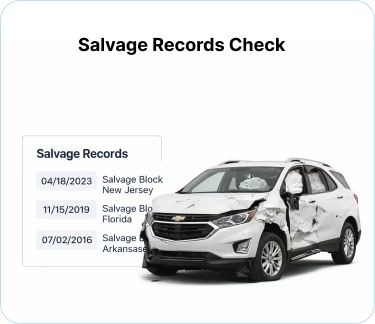
Salvage/Rebuilt
Check
Check
Accident
Check
Check
Theft
Check
Check
Open Lien
Check
Check
Past Sale
Listings
Listings
Safety
Recalls
Recalls
Odometer
Check
Check
Market Price
Analysis
Analysis
What Problems Does the 2011 Harley-Davidson FLSTF Have?
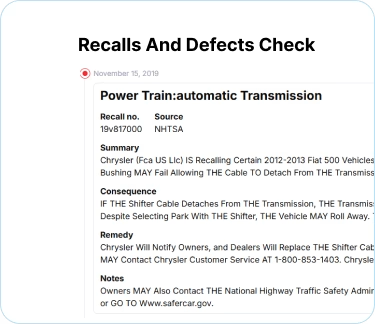
The 2011 Harley-Davidson FLSTF, part of the Softail family, is generally considered a reliable motorcycle, but like any vehicle, it has some commonly reported issues and areas to watch for. One of the most frequent concerns, particularly as mileage increases, is the potential for oil leaks. These can originate from various seals and gaskets within the engine and transmission, such as the primary chain tensioner seal, derby cover gasket, or crankcase seals. Regular inspections and prompt attention to any signs of weeping are important. Some owners have reported issues with the automatic compression release mechanism on the Twin Cam engines, which can sometimes fail, making it harder to start the bike, though this is less common on the 103 cubic inch engine compared to earlier Twin Cam versions. Electrical gremlins, though not widespread, can sometimes manifest as issues with the starter solenoid, ignition switch, or charging system components like the stator or regulator/rectifier. Vibration, inherent to V-twin engines, can also contribute to fasteners loosening over time, making regular checks of critical bolts and components a good practice. Regarding recalls for the 2011 model year, Harley-Davidson has issued recalls for various models in this era, often related to brake lines, fuel pump components, or ABS system issues (though ABS was not standard on the FLSTF). It is crucial for prospective buyers to verify if any recalls have been performed on a specific used motorcycle. Long-term reliability is generally good, provided the motorcycle has been maintained according to Harley-Davidson's schedule. Owners who consistently change oil and filter, use quality fluids, and address minor issues proactively can expect many years and miles of service from their FLSTF. The Twin Cam 103 engine is known for its durability when properly cared for. Wear on the clutch and brake components is also a standard maintenance consideration for any motorcycle of this age and mileage.
How long will the 2011 Harley-Davidson FLSTF last?
Based on owner data and typical maintenance habits, a well-maintained 2011 Harley-Davidson FLSTF can reasonably be expected to serve for 100,000 to 150,000 miles or more. The Twin Cam 103 engine is known for its robust construction and longevity. Long-term durability is heavily influenced by the owner's commitment to regular maintenance, including timely oil changes, filter replacements, and using quality fluids. Weaknesses that can emerge over time, as mentioned previously, include potential oil seal leaks, and wear on brake components. Electrical system components like the stator and regulator/rectifier may also require attention as the bike ages. However, with proper care, the core mechanical components of the FLSTF are built to last, making it a durable choice for long-term ownership.
What Technology & Safety Features are Included?
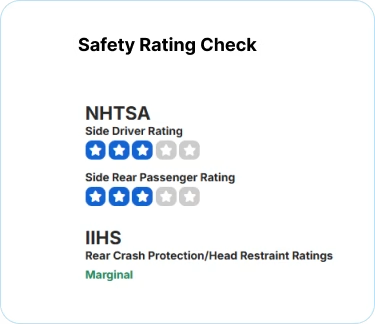
The 2011 Harley-Davidson FLSTF Fat Boy is designed with a focus on classic styling and riding experience, meaning its technological offerings are relatively understated compared to modern motorcycles. It does not feature advanced driver-assistance systems (ADAS) like adaptive cruise control or lane-keeping assist. Built-in tech is primarily functional and focused on the riding essentials. The instrument cluster is typically a handlebar-mounted analog speedometer with an integrated digital display showing odometer, trip meter, and gear indicator. There's no built-in entertainment system such as a radio or Bluetooth connectivity as standard. Owners often opt for aftermarket solutions if they desire audio capabilities. Safety features are limited to the fundamental aspects of motorcycle design. It is equipped with hydraulic disc brakes front and rear, providing adequate stopping power for its class. ABS (Anti-lock Braking System) was not a standard feature on the 2011 FLSTF, though it may have been an optional upgrade on some Harley-Davidson models from that era, and could potentially be found on a used example. Lighting consists of a powerful halogen headlight and traditional incandescent turn signals and tail lights. Harley-Davidson motorcycles of this era are not subjected to formal crash-test ratings in the same way as automobiles. Safety is primarily a function of rider skill, the motorcycle's inherent stability, and effective braking. Optional features that might have been available from the factory or through the Harley-Davidson accessory catalog include various chrome embellishments, upgraded seats for enhanced comfort, saddlebags for storage, windshields for wind protection, and engine guards for added protection in case of a tip-over. The philosophy behind the FLSTF is about the raw riding experience, so technology is kept to a minimum to enhance that feeling.


What Colors Options are Available?
2011 Harley-Davidson FLSTF Prices and Market Value
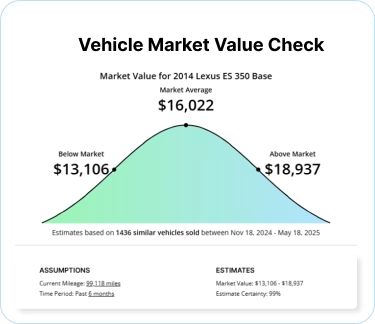
When new, the 2011 Harley-Davidson FLSTF Fat Boy had an MSRP that typically ranged from approximately $16,500 to $17,500, depending on optional features and any custom paint schemes. The used market prices for a 2011 FLSTF today generally fall between $10,000 and $17,000. This range is significantly influenced by mileage, overall condition, maintenance history, and any aftermarket modifications. Harley-Davidson motorcycles, especially iconic models like the Fat Boy, tend to hold their value quite well compared to many other vehicle types. Depreciation is moderate and plateaus after the initial few years. Factors affecting resale value include originality, the presence of desirable factory options, low mileage, a clean title, and evidence of meticulous maintenance. Significant modifications or signs of neglect can negatively impact its value.
2011 Harley-Davidson FLSTF Cost of Ownership
Owning a 2011 Harley-Davidson FLSTF is generally considered moderately costly, not typically economical. Insurance premiums can vary significantly based on rider experience, location, and coverage, but expect them to be higher than for smaller displacement motorcycles. Fuel costs are reasonable due to the V-twin engine's respectable, albeit not class-leading, fuel economy around 40-45 MPG. Maintenance is crucial; routine oil changes, filter replacements, and tire upkeep are standard. Repairs, especially for specialized Harley-Davidson parts or labor, can be more expensive than for Japanese brands. Long-term ownership costs lean towards the higher side, mainly due to potential repair expenses and the cost of genuine Harley-Davidson parts and accessories.
2011 Harley-Davidson FLSTF Fuel Efficiency
Fuel Type
Gasoline
Fuel Capacity
-
City Mileage
-
Highway Mileage
-
2011 Harley-Davidson FLSTF Warranty
Basic
Original warranty
0 months / No data
Estimated remaining
Expired
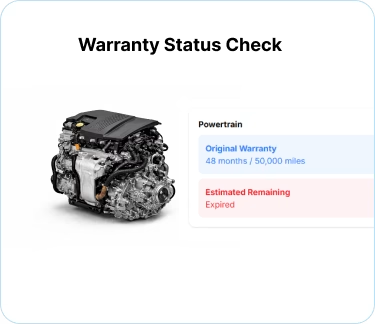
Powertrain
Original warranty
0 months / No data
Estimated remaining
Expired
Rust
Original warranty
0 months / No data
Estimated remaining
Expired
2011 Harley-Davidson FLSTF Insurance
Insurance for a 2011 Harley-Davidson FLSTF is moderately priced, reflecting its status as a Motorcycle with strong safety ratings and
reasonable repair costs.
How Does the 2011 Harley-Davidson FLSTF Compare to Other Motorcycle?
The 2011 Harley-Davidson FLSTF Fat Boy competes in the cruiser segment against brands like Indian, and some offerings from Japanese manufacturers that adopt a classic cruiser aesthetic.
Performance: The FLSTF's Twin Cam 103 engine provides strong low-end torque, ideal for relaxed cruising and confident acceleration from a stop. It's not a sportbike in terms of top-end power or handling agility, but for its intended purpose, it performs admirably. Rivals like the Indian Chief Classic of a similar era offered a comparable V-twin experience, often with a more robust suspension and a slightly different character. Some Japanese cruisers, such as the Honda Shadow or Yamaha V-Star, might offer comparable engine power but often lack the iconic rumble and presence of a Harley.
Features: The FLSTF is intentionally minimalist, focusing on its iconic design. Features are limited to essential riding instruments and the comfortable riding posture. Rivals might offer more modern conveniences like better infotainment systems or more advanced braking (e.g., ABS, which was optional or unavailable on the FLSTF). The Indian Chief often had more standard features.
Reliability: Harley-Davidsons from this era are generally reliable with proper maintenance, but can be more prone to oil leaks and require more diligent upkeep than some Japanese counterparts. Japanese cruisers like Honda or Yamaha often boast superior reliability with less frequent need for specialized attention.
Price: The FLSTF typically commanded a premium when new, and its used market value remains strong due to brand desirability. Competitors might offer more motorcycle for the money in terms of features or outright performance, especially from Japanese brands.
Alternatives:
Similar: Indian Chief Classic (around 2011-2013): Offers a comparable American V-twin cruiser experience with a distinct style. Similar: Honda VTX1300/VTX1800 or Yamaha V-Star 1300/1100: If a more reliable, potentially more technologically equipped, and often more affordable cruiser is desired, these offer excellent alternatives with good V-twin power, though they lack the Harley cachet. Performance-oriented: Triumph Bonneville/America: Offers a different take on classic styling with a parallel-twin engine that provides a more nimble ride and good character.
Performance: The FLSTF's Twin Cam 103 engine provides strong low-end torque, ideal for relaxed cruising and confident acceleration from a stop. It's not a sportbike in terms of top-end power or handling agility, but for its intended purpose, it performs admirably. Rivals like the Indian Chief Classic of a similar era offered a comparable V-twin experience, often with a more robust suspension and a slightly different character. Some Japanese cruisers, such as the Honda Shadow or Yamaha V-Star, might offer comparable engine power but often lack the iconic rumble and presence of a Harley.
Features: The FLSTF is intentionally minimalist, focusing on its iconic design. Features are limited to essential riding instruments and the comfortable riding posture. Rivals might offer more modern conveniences like better infotainment systems or more advanced braking (e.g., ABS, which was optional or unavailable on the FLSTF). The Indian Chief often had more standard features.
Reliability: Harley-Davidsons from this era are generally reliable with proper maintenance, but can be more prone to oil leaks and require more diligent upkeep than some Japanese counterparts. Japanese cruisers like Honda or Yamaha often boast superior reliability with less frequent need for specialized attention.
Price: The FLSTF typically commanded a premium when new, and its used market value remains strong due to brand desirability. Competitors might offer more motorcycle for the money in terms of features or outright performance, especially from Japanese brands.
Alternatives:
Final Verdict: Is the 2011 Harley-Davidson FLSTF a Good Motorcycle?
The 2011 Harley-Davidson FLSTF Fat Boy is ideal for riders who prioritize classic American motorcycle styling, a commanding presence, and the iconic V-twin experience over cutting-edge technology or outright performance. It's perfect for cruising enthusiasts who appreciate the heritage and sound of a Harley.
It is worth buying for individuals seeking a statement motorcycle with strong resale value and a comfortable, laid-back riding position for medium to long-distance rides.
Buying used is generally recommended, as new models are significantly more expensive, and the 2011 model year represents a mature and well-regarded iteration of the Fat Boy. Look for bikes with documented maintenance history, relatively low mileage for its age, and check for common wear items or potential oil leaks. While not a budget-friendly option, it offers enduring appeal and a satisfying ownership experience for the right rider.
It is worth buying for individuals seeking a statement motorcycle with strong resale value and a comfortable, laid-back riding position for medium to long-distance rides.
Buying used is generally recommended, as new models are significantly more expensive, and the 2011 model year represents a mature and well-regarded iteration of the Fat Boy. Look for bikes with documented maintenance history, relatively low mileage for its age, and check for common wear items or potential oil leaks. While not a budget-friendly option, it offers enduring appeal and a satisfying ownership experience for the right rider.