The 2000 Land Rover Discovery Series II, produced from 1998 to 2004, is a mid-size luxury SUV known for its robust off-road capability and distinctive British styling. Available as a 4-door or 2-door, with trims like the SE and HSE, it offered a premium experience. Its popularity stems from its go-anywhere attitude combined with comfortable interiors, making it a versatile choice for both adventure and daily life.
The Good
The 2000 Discovery Series II excels with its exceptional off-road prowess and a surprisingly comfortable ride for its class. Its rugged yet refined design appeals to those seeking both capability and style. Practical buyers appreciate its versatility, while emotional buyers are drawn to its adventurous spirit and iconic Land Rover heritage.

The Bad
Potential buyers should be aware of common electrical gremlins, particularly with the ABS and traction control systems. Leaks from the sunroof, headliner, and engine are also frequent. The ACE (Active Cornering Enhancement) system can be costly to repair. Regular and diligent maintenance is crucial for longevity.

2000 Land Rover Discovery Series II: Quick Overview
- Engine Options: The primary engine for the 2000 Land Rover Discovery Series II was the 4.0-liter V8 gasoline engine.
- Horsepower: This V8 typically produced around 182 horsepower at 4,750 rpm.
- Torque: Torque figures were approximately 230 lb-ft at 3,200 rpm.
- Fuel Economy: Expect rather modest fuel economy, often in the range of 12-14 MPG city and 16-18 MPG highway, depending on driving conditions and maintenance.
- 0-60 Times: Acceleration was not a strong suit; 0-60 mph times were generally in the 9-10 second range.
- Towing Capacity: The Discovery Series II boasted a robust towing capacity, typically rated at around 7,700 pounds when properly equipped with a trailer brake controller.
- Trim-Level Features (SE):
- Leather upholstery
- Power-adjustable front seats
- Sunroof (often with dual panels)
- Climate control
- Premium sound system
- Alloy wheels
- ABS and traction control
- Hill Descent Control
- Permanent four-wheel drive with a locking center differential and low-range gearing - Trim-Level Features (HSE - often a higher trim or package):
- May include additional luxury appointments such as a premium audio system, heated seats, upgraded wood or leather trim, and sometimes navigation systems (though less common and basic for the era).
- Often featured the Active Cornering Enhancement (ACE) system for improved on-road handling. - Transmission: Generally paired with a 4-speed automatic transmission.
2000 Land Rover Discovery Series II Specifications
Vehicle Information
| Year | 2000 |
| Make | Land Rover |
| Model | Discovery Series II |
| Trim | - |
| Style | 4-Door SUV All-Wheel Drive |
| Type | Sport Utility Vehicle |
| Category | Standard Sport Utility Vehicle |
Manufacturing Details
| Made In | United Kingdom |
| Manufacturing City | SOLIHULL |
Dimensions
| Doors | 4-Door |
| Curb Weight | 4576 pounds |
| Gross Vehicle Weight Rating | 6064 pounds |
| Overall Height | 76.40 inches |
| Overall Length | 185.20 inches |
| Overall Width | 74.40 inches |
| Wheelbase Length | 100.00 inches |
| Standard Seating | 5 |
Engine & Performance
| Engine | 4L V8 |
| Engine Size | 4L |
| Engine Cylinders | 8 |
| Transmission | 4-Speed Automatic |
| Transmission Type | Automatic |
| Transmission Speeds | 4-Speed |
| Drivetrain | All-Wheel Drive |
Additional Features
| Anti-Brake System | 4-Wheel ABS |
| Steering Type | Worm |
Pricing
| Manufacturer Suggested Retail Price (MSRP) | $34,150 |
| Invoice Price | $30,394 |
| Delivery Charges | - |
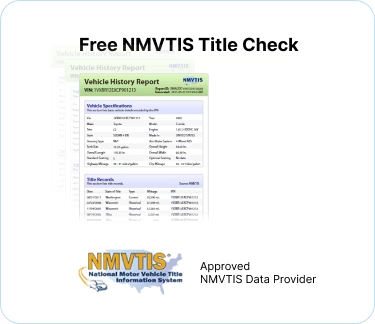
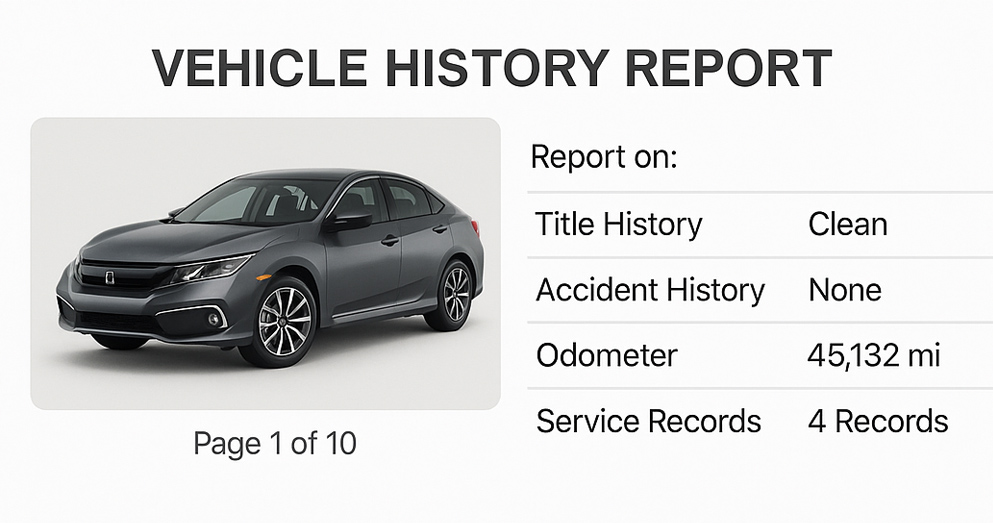
Vehicle History Report
Vehicle
Specifications
Specifications
Ownership
History
History
All History
Events
Events
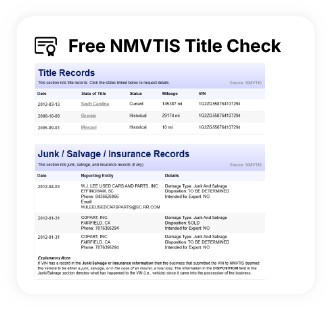
NMVTIS Title
History Check
History Check
Salvage/Rebuilt
Check
Check
Accident
Check
Check
Theft
Check
Check
Open Lien
Check
Check
Past Sale
Listings
Listings
Safety
Recalls
Recalls
Odometer
Check
Check
Market Price
Analysis
Analysis
What Problems Does the 2000 Land Rover Discovery Series II Have?
The 2000 Land Rover Discovery Series II, while celebrated for its off-road prowess, is also known for its share of common issues and potential long-term reliability concerns. One of the most prevalent problems revolves around the slushbox transmission, the 4-speed automatic, which can be prone to overheating and failure if not properly maintained. Another significant area of concern is the engine, particularly the 4.0L V8. Head gasket leaks are not uncommon, and the plastic intake manifold can become brittle and crack over time, leading to vacuum leaks and performance issues.
Electrical systems are a notorious weak point. Owners frequently report issues with the ABS (Anti-lock Braking System) and SLS (Self-Leveling Suspension) modules. The complex wiring harness, especially around the engine bay and under the dashboard, can degrade, leading to a myriad of warning lights and intermittent system failures. The Active Cornering Enhancement (ACE) system, designed to reduce body roll, is another component that can be a costly repair when it fails, often due to worn hydraulic pumps or hoses.
Body and chassis issues can include rust, especially on the frame rails and around the wheel arches, and leaks are a common complaint, often originating from the sunroof drains, the rear crossmember, or the engine block itself. The transfer case can also develop leaks or suffer from worn chain components.
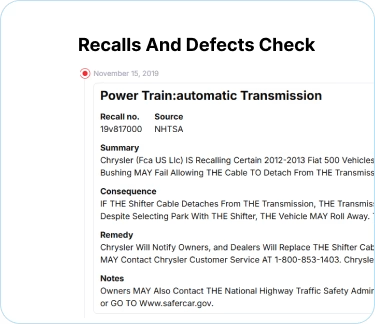
While there weren't widespread, large-scale recalls specifically for the 2000 model year that fundamentally altered its design, it's crucial for owners to have a history of meticulous maintenance. Neglect can exacerbate these inherent weaknesses and lead to significant repair bills. For instance, regular transmission fluid changes and addressing minor coolant leaks promptly can prevent more catastrophic failures down the line. Buyers should be particularly vigilant for signs of these issues during pre-purchase inspections.
Electrical systems are a notorious weak point. Owners frequently report issues with the ABS (Anti-lock Braking System) and SLS (Self-Leveling Suspension) modules. The complex wiring harness, especially around the engine bay and under the dashboard, can degrade, leading to a myriad of warning lights and intermittent system failures. The Active Cornering Enhancement (ACE) system, designed to reduce body roll, is another component that can be a costly repair when it fails, often due to worn hydraulic pumps or hoses.
Body and chassis issues can include rust, especially on the frame rails and around the wheel arches, and leaks are a common complaint, often originating from the sunroof drains, the rear crossmember, or the engine block itself. The transfer case can also develop leaks or suffer from worn chain components.
While there weren't widespread, large-scale recalls specifically for the 2000 model year that fundamentally altered its design, it's crucial for owners to have a history of meticulous maintenance. Neglect can exacerbate these inherent weaknesses and lead to significant repair bills. For instance, regular transmission fluid changes and addressing minor coolant leaks promptly can prevent more catastrophic failures down the line. Buyers should be particularly vigilant for signs of these issues during pre-purchase inspections.
How long will the 2000 Land Rover Discovery Series II last?
With consistent and diligent maintenance, the 2000 Land Rover Discovery Series II can achieve average mileages of 150,000 to 200,000 miles, and in some cases, even exceed 250,000 miles. However, its long-term durability is heavily contingent on the owner's commitment to upkeep. Neglecting routine servicing, especially transmission fluid changes and coolant flushes, can significantly shorten its lifespan. The V8 engine itself is robust but susceptible to issues like head gasket failure if overheated. Electrical gremlins and the aforementioned ACE system can become recurring expenses. While capable of lasting for many years, owners should be prepared for potentially higher repair costs compared to more mainstream SUVs as components age.
What Technology & Safety Features are Included?
The 2000 Land Rover Discovery Series II offered a blend of contemporary technology for its era, prioritizing functionality and comfort over cutting-edge digital integration. Standard entertainment features typically included a premium audio system, often with a cassette player and CD changer, though the latter was sometimes optional. The climate control system was usually automatic, providing consistent cabin temperature.
In terms of driver-assistance features, the Discovery Series II was ahead of many contemporaries with its standard permanent four-wheel drive system, featuring a locking center differential and low-range gearing, which are essential for off-road performance. It also came equipped with Hill Descent Control (HDC), a groundbreaking feature at the time that electronically controlled braking on steep descents, allowing drivers to focus on steering. ABS (Anti-lock Braking System) was also standard, enhancing braking control.
Safety features included standard front airbags and often optional side airbags. The robust body-on-frame construction provided a substantial physical barrier. While comprehensive crash-test data for this specific model year from agencies like the NHTSA or IIHS might be limited or less detailed by today's standards, vehicles of this era generally aimed for acceptable safety performance.
Optional features could include a power tilt-and-slide sunroof (sometimes a dual-panel setup), heated front and rear seats, and perhaps even a basic navigation system, though this was a rare and early iteration. The focus was more on durable, functional equipment rather than advanced electronic gizmos. The interior design prioritized a commanding view of the road and a sense of sturdy enclosure, reflecting its utilitarian roots while still offering a luxurious ambiance.
In terms of driver-assistance features, the Discovery Series II was ahead of many contemporaries with its standard permanent four-wheel drive system, featuring a locking center differential and low-range gearing, which are essential for off-road performance. It also came equipped with Hill Descent Control (HDC), a groundbreaking feature at the time that electronically controlled braking on steep descents, allowing drivers to focus on steering. ABS (Anti-lock Braking System) was also standard, enhancing braking control.
Safety features included standard front airbags and often optional side airbags. The robust body-on-frame construction provided a substantial physical barrier. While comprehensive crash-test data for this specific model year from agencies like the NHTSA or IIHS might be limited or less detailed by today's standards, vehicles of this era generally aimed for acceptable safety performance.
Optional features could include a power tilt-and-slide sunroof (sometimes a dual-panel setup), heated front and rear seats, and perhaps even a basic navigation system, though this was a rare and early iteration. The focus was more on durable, functional equipment rather than advanced electronic gizmos. The interior design prioritized a commanding view of the road and a sense of sturdy enclosure, reflecting its utilitarian roots while still offering a luxurious ambiance.
What Colors Options are Available?
2000 Land Rover Discovery Series II Prices and Market Value
When new, the 2000 Land Rover Discovery Series II had an MSRP that typically ranged from approximately $38,000 to $45,000, depending on the trim level and optional features. As with most luxury SUVs, it experienced significant depreciation in its early years. Currently, used prices for a 2000 Discovery Series II can vary widely, from as low as $2,000 for vehicles needing substantial work to upwards of $8,000-$12,000 for well-maintained examples with lower mileage. Factors significantly affecting resale value include maintenance history, condition of the ACE and SLS systems, overall mechanical health, and the presence of rust. Vehicles with documented service records and in excellent, original condition command the highest prices.
2000 Land Rover Discovery Series II Cost of Ownership
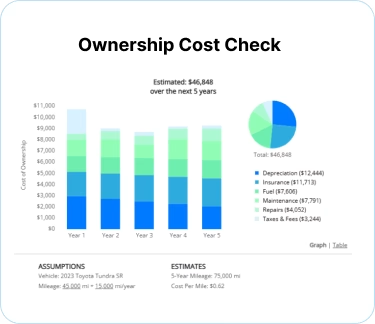
Owning a 2000 Land Rover Discovery Series II is generally considered costly. Insurance premiums can be higher than average due to its luxury status and repair costs. Fuel economy is poor, typically in the low teens for MPG. Maintenance requires a dedicated approach; while routine services like oil changes are standard, specialized fluid changes for the ACE and SLS systems are crucial. Repair costs can be substantial, especially for common issues like head gaskets, electrical problems, or ACE system failures, as parts and specialized labor are expensive. Overall, this vehicle is not economical to own and requires a significant budget for ongoing upkeep and potential repairs.
2000 Land Rover Discovery Series II Fuel Efficiency
Fuel Type
Gasoline
Fuel Capacity
13 gallons
City Mileage
12 miles/gallon
Highway Mileage
16 miles/gallon
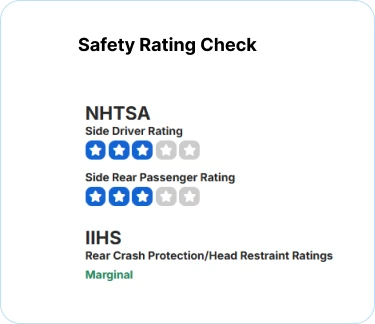
2000 Land Rover Discovery Series II Safety Rating
NHTSA
IIHS
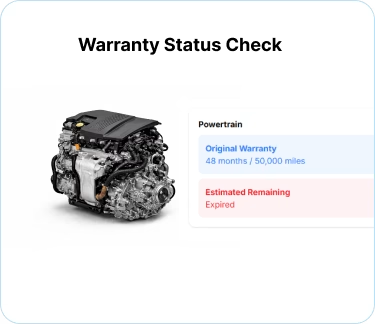
2000 Land Rover Discovery Series II Warranty
Basic
Original warranty
48 months / 50,000 miles
Estimated remaining
Expired
Powertrain
Original warranty
48 months / 50,000 miles
Estimated remaining
Expired
Rust
Original warranty
72 months / unlimited miles
Estimated remaining
Expired
2000 Land Rover Discovery Series II Insurance
Insurance for a 2000 Land Rover Discovery Series II is moderately priced, reflecting its status as a Sport Utility Vehicle with strong safety ratings and
reasonable repair costs.
How Does the 2000 Land Rover Discovery Series II Compare to Other Sport Utility Vehicle?
The 2000 Land Rover Discovery Series II competed in a segment populated by capable luxury SUVs. Its closest rivals included the Jeep Grand Cherokee, the Toyota Land Cruiser, and the Mercedes-Benz ML-Class.
In terms of performance, the Discovery Series II excelled in off-road capability due to its advanced traction systems and robust chassis, surpassing most rivals in true wilderness exploration. On-road performance was comfortable but not sporty, with V8 power being adequate rather than thrilling. The Jeep Grand Cherokee offered a more accessible price point and decent off-road chops, but less luxury. The Toyota Land Cruiser was renowned for its bulletproof reliability and excellent off-road prowess, often considered the benchmark for durability, though typically at a higher price point. The Mercedes ML-Class offered a more refined on-road experience and luxury appointments but was generally less adept off-road.
Regarding features, the Discovery Series II provided a luxurious interior for its time, with features like ACE and HDC setting it apart. Rivals offered competitive luxury amenities. However, reliability was where the Discovery Series II often faltered compared to the Land Cruiser, which is legendary for its dependability. The Jeep Grand Cherokee also had its share of issues, while the ML-Class, though more refined, could also be costly to repair.
In terms of price, the Discovery Series II was positioned in the mid-to-upper luxury SUV range. The Grand Cherokee was generally more affordable, while the Land Cruiser was often more expensive.
Alternatives: For buyers prioritizing unwavering reliability and strong off-road capability, the Toyota Land Cruiser (e.g., 1998-2007 models) is a superior alternative, albeit at a higher initial cost and potentially higher used prices. For those seeking a more reliable, yet still capable luxury SUV with better on-road manners, a well-maintained Lexus LX 470 (based on the Land Cruiser) is an excellent choice. If budget is a primary concern and off-road capability is desired, a Jeep Grand Cherokee (e.g., WJ generation) could be considered, though with a compromise in luxury and long-term reliability compared to the Land Cruiser.
In terms of performance, the Discovery Series II excelled in off-road capability due to its advanced traction systems and robust chassis, surpassing most rivals in true wilderness exploration. On-road performance was comfortable but not sporty, with V8 power being adequate rather than thrilling. The Jeep Grand Cherokee offered a more accessible price point and decent off-road chops, but less luxury. The Toyota Land Cruiser was renowned for its bulletproof reliability and excellent off-road prowess, often considered the benchmark for durability, though typically at a higher price point. The Mercedes ML-Class offered a more refined on-road experience and luxury appointments but was generally less adept off-road.
Regarding features, the Discovery Series II provided a luxurious interior for its time, with features like ACE and HDC setting it apart. Rivals offered competitive luxury amenities. However, reliability was where the Discovery Series II often faltered compared to the Land Cruiser, which is legendary for its dependability. The Jeep Grand Cherokee also had its share of issues, while the ML-Class, though more refined, could also be costly to repair.
In terms of price, the Discovery Series II was positioned in the mid-to-upper luxury SUV range. The Grand Cherokee was generally more affordable, while the Land Cruiser was often more expensive.
Alternatives: For buyers prioritizing unwavering reliability and strong off-road capability, the Toyota Land Cruiser (e.g., 1998-2007 models) is a superior alternative, albeit at a higher initial cost and potentially higher used prices. For those seeking a more reliable, yet still capable luxury SUV with better on-road manners, a well-maintained Lexus LX 470 (based on the Land Cruiser) is an excellent choice. If budget is a primary concern and off-road capability is desired, a Jeep Grand Cherokee (e.g., WJ generation) could be considered, though with a compromise in luxury and long-term reliability compared to the Land Cruiser.
Final Verdict: Is the 2000 Land Rover Discovery Series II a Good Sport Utility Vehicle?
The 2000 Land Rover Discovery Series II is ideal for the enthusiast who appreciates its unique blend of rugged off-road capability, iconic British styling, and comfortable on-road manners. It's worth buying for those with a passion for adventure and a realistic understanding of its potential maintenance needs. It is strictly a used purchase, and buyers should be prepared for higher-than-average repair and running costs. It is most suitable for mechanically inclined individuals or those with a trusted specialist mechanic familiar with Land Rovers. Prioritize examples with meticulous maintenance records, especially for the ACE and SLS systems. Avoid vehicles with a history of neglect, as they can quickly become money pits. It's a vehicle for those who value character and capability over outright reliability and economy.