The 1988 Chrysler Conquest, a sporty rear-wheel-drive coupe, was a badge-engineered version of the Mitsubishi Starion. Produced from 1984 to 1989, it offered a thrilling driving experience with its turbocharged engine. Key trims included the base and the more performance-oriented TSI. Its distinctive wedge-shaped styling and pop-up headlights made it a standout in the 1980s automotive landscape, appealing to enthusiasts seeking an affordable performance car.
The Good
The 1988 Chrysler Conquest offers exhilarating turbocharged performance and striking 80s styling that excites enthusiasts. Its affordable price point provides excellent value for money, while a surprisingly comfortable and driver-focused interior caters to practical needs.

The Bad
Potential buyers should be wary of rust, particularly in the wheel wells and rocker panels. Electrical gremlins are also common, as are issues with the turbocharger and intercooler system due to age and wear.
1988 Chrysler Conquest: Quick Overview
- Engine Options: 1988 Chrysler Conquest was equipped with a 2.6-liter turbocharged inline-4 engine.
- Horsepower: This engine produced approximately 176 horsepower.
- Fuel Economy: Expect fuel economy to be around 17 MPG city and 23 MPG highway, though this can vary significantly with driving style and the condition of the turbo system.
- 0-60 Times: Performance figures for the 1988 Conquest typically placed its 0-60 mph acceleration in the mid-to-high 7-second range, a respectable figure for its era.
- Towing Capacity: The Chrysler Conquest was not designed for towing, and therefore, no official towing capacity is listed.
- Trim-Level Features:
- Base Trim: Often featured power windows, power locks, air conditioning, and an AM/FM stereo.
- TSI Trim: The more performance-oriented TSI model typically included upgraded suspension components, limited-slip differential, sport seats, and sometimes electronic fuel injection enhancements for slightly improved performance. Some TSI models also featured adjustable suspension settings and a unique interior trim.
- Transmission: Available with either a 5-speed manual or a 4-speed automatic transmission.
- Drivetrain: Rear-wheel drive.
- Brakes: Typically featured front and rear disc brakes.
- Suspension: Independent front suspension with MacPherson struts, and a solid rear axle with trailing arms and a Panhard rod.
1988 Chrysler Conquest Specifications
Vehicle Information
| Year | 1988 |
| Make | Chrysler |
| Model | Conquest |
| Trim | - |
| Style | 4-Speed |
| Type | Hatchback |
| Category | Compact Car |
Manufacturing Details
| Made In | Japan |
| Manufacturing City | OKAZAKI |
Dimensions
| Doors | 2-Door |
| Curb Weight | - |
| Gross Vehicle Weight Rating | - |
| Overall Height | 50.20 inches |
| Overall Length | 173.20 inches |
| Overall Width | 68.30 inches |
| Wheelbase Length | 95.90 inches |
| Standard Seating | 5 |
Engine & Performance
| Engine | 2.6L I4 |
| Engine Size | 2.6L |
| Engine Cylinders | 4 |
| Transmission | 4-Speed Automatic |
| Transmission Type | Automatic |
| Transmission Speeds | 4-Speed |
| Drivetrain | Rear-Wheel Drive |
Additional Features
| Anti-Brake System | Non-ABS 2-Wheel ABS |
| Steering Type | Recirculating |
Pricing
| Manufacturer Suggested Retail Price (MSRP) | $18,683 |
| Invoice Price | - |
| Delivery Charges | - |
Vehicle History Report
Vehicle
Specifications
Specifications
Ownership
History
History
All History
Events
Events
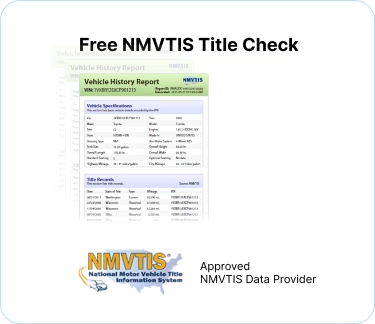
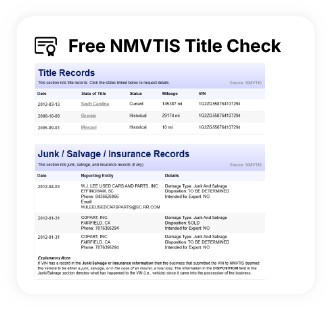
NMVTIS Title
History Check
History Check
Salvage/Rebuilt
Check
Check
Accident
Check
Check
Theft
Check
Check
Open Lien
Check
Check
Past Sale
Listings
Listings
Safety
Recalls
Recalls
Odometer
Check
Check
Market Price
Analysis
Analysis
What Problems Does the 1988 Chrysler Conquest Have?
The 1988 Chrysler Conquest, like many performance-oriented cars of its era, is prone to certain issues that owners should be aware of. One of the most common concerns is rust, particularly affecting the unibody structure. Areas like the rocker panels, wheel arches, rear quarter panels, and floor pans are susceptible due to road salt and moisture accumulation. Early signs of rust should be addressed immediately as they can spread rapidly and compromise structural integrity.
Engine and drivetrain issues are also frequently reported. The 2.6-liter turbocharged engine, while potent, can suffer from worn turbochargers, intercooler leaks, and head gasket failures if not properly maintained. Oil leaks from various seals and gaskets are common with age. The fuel injection system can also be a source of problems, with sensors and fuel pumps requiring replacement over time. The automatic transmission can develop shifting issues or fail entirely if neglected.
Electrical gremlins are a hallmark of many older cars, and the Conquest is no exception. Owners often report issues with the dashboard lights, power window motors, door locks, and the electronic control unit (ECU). The pop-up headlight motors can also become slow or inoperable. These electrical problems can be frustrating to diagnose and repair.
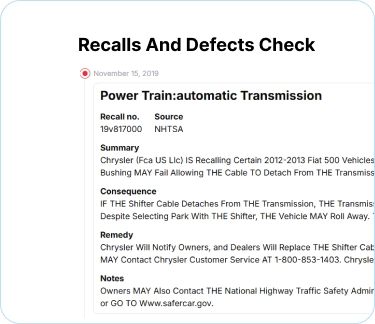
While specific recalls for the 1988 model year are not extensively documented in easily accessible public databases for this particular variant, it is always advisable to check with a Chrysler dealership or the NHTSA website for any potential outstanding safety recalls that might apply. Owners should also be aware that parts availability for these vehicles can be challenging, particularly for specialized components, which can impact long-term reliability and repair costs.
Engine and drivetrain issues are also frequently reported. The 2.6-liter turbocharged engine, while potent, can suffer from worn turbochargers, intercooler leaks, and head gasket failures if not properly maintained. Oil leaks from various seals and gaskets are common with age. The fuel injection system can also be a source of problems, with sensors and fuel pumps requiring replacement over time. The automatic transmission can develop shifting issues or fail entirely if neglected.
Electrical gremlins are a hallmark of many older cars, and the Conquest is no exception. Owners often report issues with the dashboard lights, power window motors, door locks, and the electronic control unit (ECU). The pop-up headlight motors can also become slow or inoperable. These electrical problems can be frustrating to diagnose and repair.
While specific recalls for the 1988 model year are not extensively documented in easily accessible public databases for this particular variant, it is always advisable to check with a Chrysler dealership or the NHTSA website for any potential outstanding safety recalls that might apply. Owners should also be aware that parts availability for these vehicles can be challenging, particularly for specialized components, which can impact long-term reliability and repair costs.
How long will the 1988 Chrysler Conquest last?
Based on owner data and typical maintenance habits, a well-maintained 1988 Chrysler Conquest can reasonably expect to serve for approximately 150,000 to 200,000 miles, or potentially more. However, this is heavily dependent on the owner's commitment to regular maintenance, especially addressing the known issues like rust and turbocharger health. Cars that have been consistently garaged, received regular oil changes, and had their cooling systems flushed are far more likely to reach higher mileages. Conversely, neglected examples, particularly those exposed to harsh climates, may succumb to rust or mechanical failures much earlier, often below 100,000 miles. The long-term durability is directly tied to proactive care and timely repairs, with the turbo system and body integrity being key areas to monitor.
What Technology & Safety Features are Included?
The 1988 Chrysler Conquest, as a product of its time, featured technology and safety amenities that were considered advanced for the mid-to-late 1980s. Built-in technology was relatively rudimentary by today's standards. Entertainment typically consisted of an AM/FM radio, often with a cassette player. Higher trims or optional packages might have included a more sophisticated stereo system with graphic equalizers and more speakers, aiming for a premium audio experience.
Driver-assistance features were virtually non-existent. The focus was primarily on the driving dynamics and the feel of the road. There were no electronic aids like traction control or stability control. The car's primary safety features included seatbelts (three-point belts in the front), padded dashboard and steering wheel, and energy-absorbing crumple zones designed into the chassis. Anti-lock braking systems (ABS) were an optional feature on some models, offering a significant safety advantage for braking performance, especially in slippery conditions.
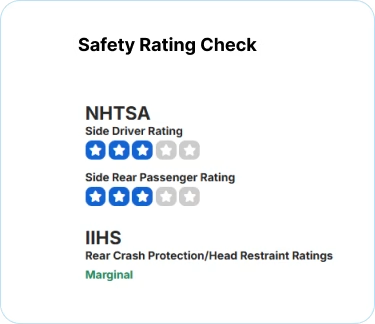
In terms of safety, crash-test ratings for vehicles from this era are not as standardized or readily available as they are today. However, the Conquest, like other vehicles of its time, would have been designed to meet the safety regulations of the period. It's unlikely to have received ratings comparable to modern vehicles due to advancements in safety engineering, airbag technology (which were not standard or widely available in 1988), and structural reinforcement.
Optional features could include things like cruise control, which was a popular convenience item, and a power moonroof. The interior was driver-centric, with a focus on accessible controls and gauges, reflecting the era's approach to automotive design. The pop-up headlights themselves were a distinctive technological and design feature that added to its futuristic appeal at the time.
Driver-assistance features were virtually non-existent. The focus was primarily on the driving dynamics and the feel of the road. There were no electronic aids like traction control or stability control. The car's primary safety features included seatbelts (three-point belts in the front), padded dashboard and steering wheel, and energy-absorbing crumple zones designed into the chassis. Anti-lock braking systems (ABS) were an optional feature on some models, offering a significant safety advantage for braking performance, especially in slippery conditions.
In terms of safety, crash-test ratings for vehicles from this era are not as standardized or readily available as they are today. However, the Conquest, like other vehicles of its time, would have been designed to meet the safety regulations of the period. It's unlikely to have received ratings comparable to modern vehicles due to advancements in safety engineering, airbag technology (which were not standard or widely available in 1988), and structural reinforcement.
Optional features could include things like cruise control, which was a popular convenience item, and a power moonroof. The interior was driver-centric, with a focus on accessible controls and gauges, reflecting the era's approach to automotive design. The pop-up headlights themselves were a distinctive technological and design feature that added to its futuristic appeal at the time.
What Colors Options are Available?
1988 Chrysler Conquest Prices and Market Value
In 1988, the Chrysler Conquest had a new price range typically falling between $15,000 and $20,000, depending on the trim level and options. As with most vehicles, it experienced significant depreciation in its early years. Today, the used market prices for a 1988 Chrysler Conquest vary widely based on condition, mileage, and originality. Well-maintained, low-mileage examples can fetch anywhere from $5,000 to $15,000 or even more for pristine collector-grade vehicles. Poorly maintained or high-mileage examples might be found for $2,000 to $4,000. Factors significantly affecting resale value include the presence of rust, the condition of the turbo system and engine, original paint, interior condition, and service records. Collector interest in 80s performance cars has been growing, which can positively impact the value of well-preserved examples.
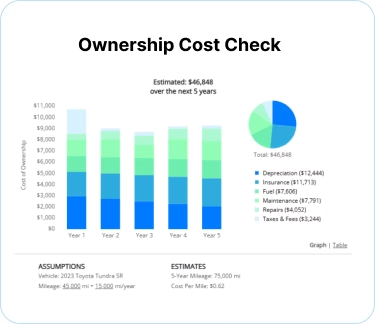
1988 Chrysler Conquest Cost of Ownership
Owning a 1988 Chrysler Conquest can be moderately costly. Insurance rates can be higher than average due to its sporty nature and potential for enthusiasts. Fuel economy, while not terrible, is not economical, especially when the turbo is engaged. Maintenance requires diligence; regular oil changes and checks on the turbo system are crucial. Repair costs can be significant, particularly for specialized parts and any electrical issues, and finding mechanics familiar with these older turbo systems can be a challenge. Overall, it is more costly to own than a basic economy car, demanding a budget for potential upkeep and repairs, but offering significant driving enjoyment in return.
1988 Chrysler Conquest Fuel Efficiency
Fuel Type
Gasoline
Fuel Capacity
19.80 gallons
City Mileage
18 miles/gallon
Highway Mileage
22 miles/gallon
1988 Chrysler Conquest Warranty
Basic
Original warranty
0 months / No data
Estimated remaining
Expired
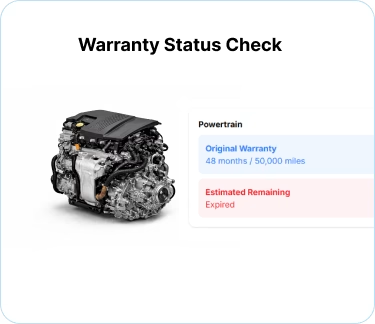
Powertrain
Original warranty
0 months / No data
Estimated remaining
Expired
Rust
Original warranty
0 months / No data
Estimated remaining
Expired
1988 Chrysler Conquest Insurance
Insurance for a 1988 Chrysler Conquest is moderately priced, reflecting its status as a Hatchback with strong safety ratings and
reasonable repair costs.
How Does the 1988 Chrysler Conquest Compare to Other Hatchback?
The 1988 Chrysler Conquest competed in a vibrant sports coupe market. Key rivals included the Nissan 300ZX (Z31), the Toyota Supra, and the Ford Mustang GT. In terms of performance, the Conquest's turbocharged inline-4 offered strong acceleration, often on par with or exceeding the naturally aspirated base models of its competitors. The 300ZX and Supra, particularly with their available turbocharged engines, could offer more sophisticated handling and outright power, though often at a higher price point. The Mustang GT provided brute V8 power and a different driving dynamic.
Features-wise, the Conquest was competitive for its time, offering power amenities and a sporty interior. However, rivals like the 300ZX and Supra often boasted more advanced technology, such as independent rear suspension and more elaborate electronics. The Mustang GT offered a simpler, more driver-focused experience.
Reliability is a mixed bag. While Japanese cars like the Toyota Supra and Nissan 300ZX generally had a reputation for robust engineering and greater long-term reliability, the Conquest, being a more complex turbocharged vehicle with some imported components (from Mitsubishi), could be more susceptible to specific mechanical issues, especially as it aged. Regular maintenance is critical for all these vehicles, but the Conquest's turbo system and associated plumbing can be a point of concern. The Mustang GT, with its simpler V8 and less complex systems, might offer a more straightforward reliability path, though older V8s also have their own set of potential issues.
In terms of price, the Chrysler Conquest was often a more affordable entry into the performance coupe segment compared to the higher-end Japanese sports cars. It offered a compelling value proposition for those seeking turbocharged performance without the premium cost. However, if budget is the primary concern and a more reliable, less performance-oriented car is desired, alternatives like the Honda Prelude or even some trim levels of the Mazda MX-6 could be considered, though they lack the same raw power. For a similar price and performance focus with potentially better long-term reliability, a well-maintained Nissan 240SX (S13) or a later model Toyota MR2 could also be attractive alternatives, though they might offer less interior space and comfort.
Features-wise, the Conquest was competitive for its time, offering power amenities and a sporty interior. However, rivals like the 300ZX and Supra often boasted more advanced technology, such as independent rear suspension and more elaborate electronics. The Mustang GT offered a simpler, more driver-focused experience.
Reliability is a mixed bag. While Japanese cars like the Toyota Supra and Nissan 300ZX generally had a reputation for robust engineering and greater long-term reliability, the Conquest, being a more complex turbocharged vehicle with some imported components (from Mitsubishi), could be more susceptible to specific mechanical issues, especially as it aged. Regular maintenance is critical for all these vehicles, but the Conquest's turbo system and associated plumbing can be a point of concern. The Mustang GT, with its simpler V8 and less complex systems, might offer a more straightforward reliability path, though older V8s also have their own set of potential issues.
In terms of price, the Chrysler Conquest was often a more affordable entry into the performance coupe segment compared to the higher-end Japanese sports cars. It offered a compelling value proposition for those seeking turbocharged performance without the premium cost. However, if budget is the primary concern and a more reliable, less performance-oriented car is desired, alternatives like the Honda Prelude or even some trim levels of the Mazda MX-6 could be considered, though they lack the same raw power. For a similar price and performance focus with potentially better long-term reliability, a well-maintained Nissan 240SX (S13) or a later model Toyota MR2 could also be attractive alternatives, though they might offer less interior space and comfort.
Final Verdict: Is the 1988 Chrysler Conquest a Good Hatchback?
The 1988 Chrysler Conquest is ideal for the nostalgic enthusiast who appreciates 1980s styling and the thrill of turbocharged performance on a budget. It's a great choice for a weekend car or a project vehicle for someone who enjoys tinkering. It's worth buying if you find a well-maintained example with documented service history and minimal rust. Buying used is the only option. The TSI trim offers a more engaging driving experience. However, potential buyers must be prepared for the ongoing costs associated with maintaining an older, performance-oriented vehicle, including potential repairs for its known weaknesses. It is not recommended for those seeking daily driver reliability without a significant commitment to upkeep.