
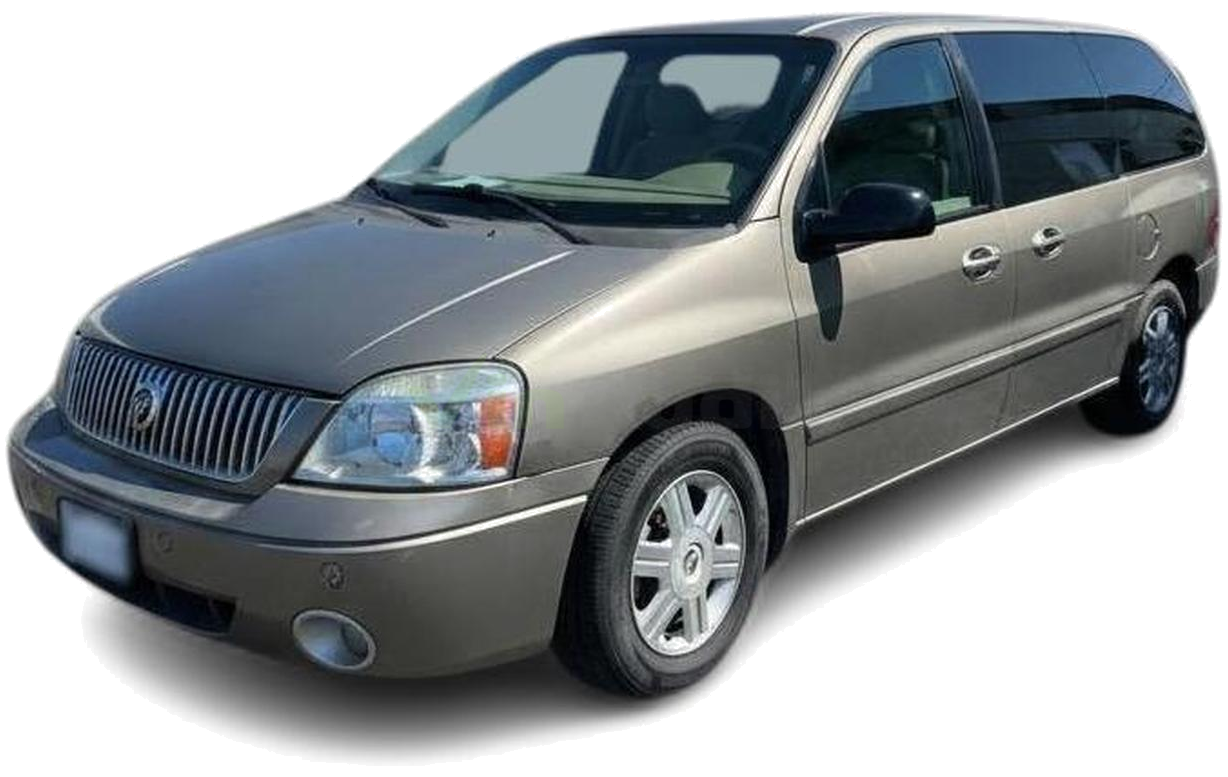
The Good
The 2005 Mercury Monterey offered a comfortable and quiet ride, a spacious interior ideal for families, and distinctive styling. Its robust V6 engine provided adequate power, while its accessible pricing made it a practical choice, appealing to both the desire for a serene family journey and sensible budgeting.
The Bad
Potential buyers should be aware of reported issues with the transmission, particularly concerning hesitation and rough shifting. Electrical system gremlins, such as malfunctioning power windows and door locks, are also noted. Some owners have experienced premature wear on suspension components.
2005 Mercury Monterey: Quick Overview
- Engine Options: The 2005 Mercury Monterey was equipped with a single engine option: a 3.9L V6.
- Horsepower: This 3.9L V6 engine produced 193 horsepower.
- Torque: It generated approximately 240 lb-ft of torque.
- Transmission: A 4-speed automatic transmission was standard.
- Drivetrain: Front-wheel drive was the only available configuration.
- Fuel Economy: EPA estimates for the 2005 Monterey were around 16 MPG city and 22 MPG highway.
- 0-60 Times: Acceleration was generally in the range of 9.5 to 10.5 seconds, depending on load and conditions.
- Towing Capacity: When properly equipped with an optional towing package, the Monterey could tow up to 3,500 pounds.
- Trim-Level Features:
Convenience: This base trim typically included features like power windows and locks, air conditioning, a CD player, and second-row captain's chairs.
Luxury: Added features often included upgraded cloth or leather seating, power adjustable pedals, a power liftgate, and enhanced audio systems.
Premier: The top-tier trim usually came with premium leather upholstery, a rear-seat entertainment system, a sunroof, heated front seats, and advanced audio components. All trims benefited from Mercury's focus on a quiet cabin and comfortable ride.
2005 Mercury Monterey Specifications
Vehicle Information
| Year | 2005 |
| Make | Mercury |
| Model | Monterey |
| Trim | - |
| Style | - |
| Type | Sport Utility Vehicle Van |
| Category | Cargo Van |
Manufacturing Details
| Made In | Canada |
| Manufacturing City | - |
Dimensions
| Doors | - |
| Curb Weight | - |
| Gross Vehicle Weight Rating | - |
| Overall Height | - |
| Overall Length | - |
| Overall Width | - |
| Wheelbase Length | - |
| Standard Seating | - |
Engine & Performance
| Engine | 4.2 L V-6 |
| Engine Size | 4.2L |
| Engine Cylinders | 6 |
| Transmission | - |
| Transmission Type | - |
| Transmission Speeds | - |
| Drivetrain | Front-Wheel Drive |
Additional Features
| Anti-Brake System | - |
| Steering Type | - |
Pricing
| Manufacturer Suggested Retail Price (MSRP) | - |
| Invoice Price | - |
| Delivery Charges | - |
Vehicle History Report
Specifications
History
Events
History Check
Check
Check
Check
Check
Listings
Recalls
Check
Analysis
What Problems Does the 2005 Mercury Monterey Have?
Another area of concern relates to the vehicle's electrical system. Issues such as malfunctioning power windows, power door locks, and intermittent operation of interior lights have been documented. These electrical gremlins can be frustrating to diagnose and repair. Some owners have also reported problems with the heating and air conditioning system, including blower motor failures and leaks.
On the mechanical front, suspension components, such as ball joints and control arms, may experience premature wear, leading to clunking noises and compromised handling. The powertrain control module (PCM) has also been implicated in some instances, leading to various engine performance issues.
While there haven't been widespread, major recalls for the 2005 model year that significantly impact its long-term reliability, it's always advisable to check for any outstanding recalls with the NHTSA. Generally, the 3.9L V6 engine is considered reasonably durable if maintained properly, but the transmission and electrical systems are the most common weak points to monitor in a 2005 Mercury Monterey.
How long will the 2005 Mercury Monterey last?
What Technology & Safety Features are Included?
In terms of driver-assistance features, the 2005 Monterey was relatively basic by today's standards. It lacked many of the advanced electronic aids common in modern vehicles. However, features like cruise control and an adjustable steering wheel were standard, contributing to driver comfort. Optional features could include power-adjustable pedals, which aided drivers of varying heights in finding a comfortable driving position.
Safety was a key consideration. Standard safety features included anti-lock brakes (ABS), front-seat airbags, and side-curtain airbags for all three rows of seating, which was a significant offering for a minivan of that era. Power-adjustable pedals were also an option that could contribute to safety by allowing a more optimal driving position.
Crash-test ratings from the National Highway Traffic Safety Administration (NHTSA) for the 2005 Mercury Monterey were generally good for its time. It typically received four out of five stars in front and side-impact crash tests for the driver and front passenger. These ratings indicated a solid structural integrity and effective airbag deployment. While it didn't have the sophisticated driver-assistance tech of newer vehicles, its passive safety features provided a good level of protection.
What Colors Options are Available?
2005 Mercury Monterey Prices and Market Value
2005 Mercury Monterey Cost of Ownership
2005 Mercury Monterey Fuel Efficiency
2005 Mercury Monterey Safety Rating
NHTSA
2005 Mercury Monterey Recalls & Defects
Power Train:automatic Transmission:torque Converter
Power Train:automatic Transmission
Seats
Structure:body:hatchback/Liftgate
Fuel System, Gasoline
2005 Mercury Monterey Insurance
reasonable repair costs.
How Does the 2005 Mercury Monterey Compare to Other Sport Utility Vehicle Van?
Features on the Monterey were competitive for 2005, especially in higher trims, offering amenities like rear-seat entertainment and power liftgates. However, rivals like the Sienna and Odyssey often had more innovative interior configurations and available technology. Reliability is where the Monterey significantly lagged behind its Japanese competitors. The Toyota Sienna and Honda Odyssey are renowned for their exceptional long-term reliability and lower rates of costly repairs, particularly concerning transmissions, which have been a known weak point for the Monterey.
In terms of price, the Monterey often offered a slightly lower entry price than comparable Honda or Toyota models when new, and its used market pricing reflects this. However, the potential for higher repair costs due to reliability concerns can offset initial savings.
Alternatives to consider:
- Toyota Sienna: Often considered the benchmark for minivan reliability, comfort, and practicality. Offers a more powerful V6 and excellent build quality.
- Honda Odyssey: Known for its engaging driving dynamics, versatile interior, and strong reliability, though sometimes a bit pricier.
- Chrysler Pacifica: A stylish alternative that offered a comfortable ride and good feature content, though its reliability record is more mixed than Japanese rivals.
Final Verdict: Is the 2005 Mercury Monterey a Good Sport Utility Vehicle Van?

Drew B
Drew is a seasoned automotive expert and contributor to VinCheck.info. With nearly 15 years of experience as a former Porsche technician, he brings a wealth of hands-on knowledge to his writing. Born in North Carolina, a region renowned for its deep-rooted NASCAR culture, Drew developed a passion for cars early in life, often building and working on vehicles from a young age. At VINCheck, Drew leverages his extensive technical background to provide in-depth analyses of various vehicles. His articles often focus on engine performance, reliability, and maintenance insights, offering readers practical information grounded in real-world experience. Some of his notable contributions include reviews on the Mazda CX-5's longevity and detailed examinations of engine options for models like the 2011 Toyota Camry and Tacoma