
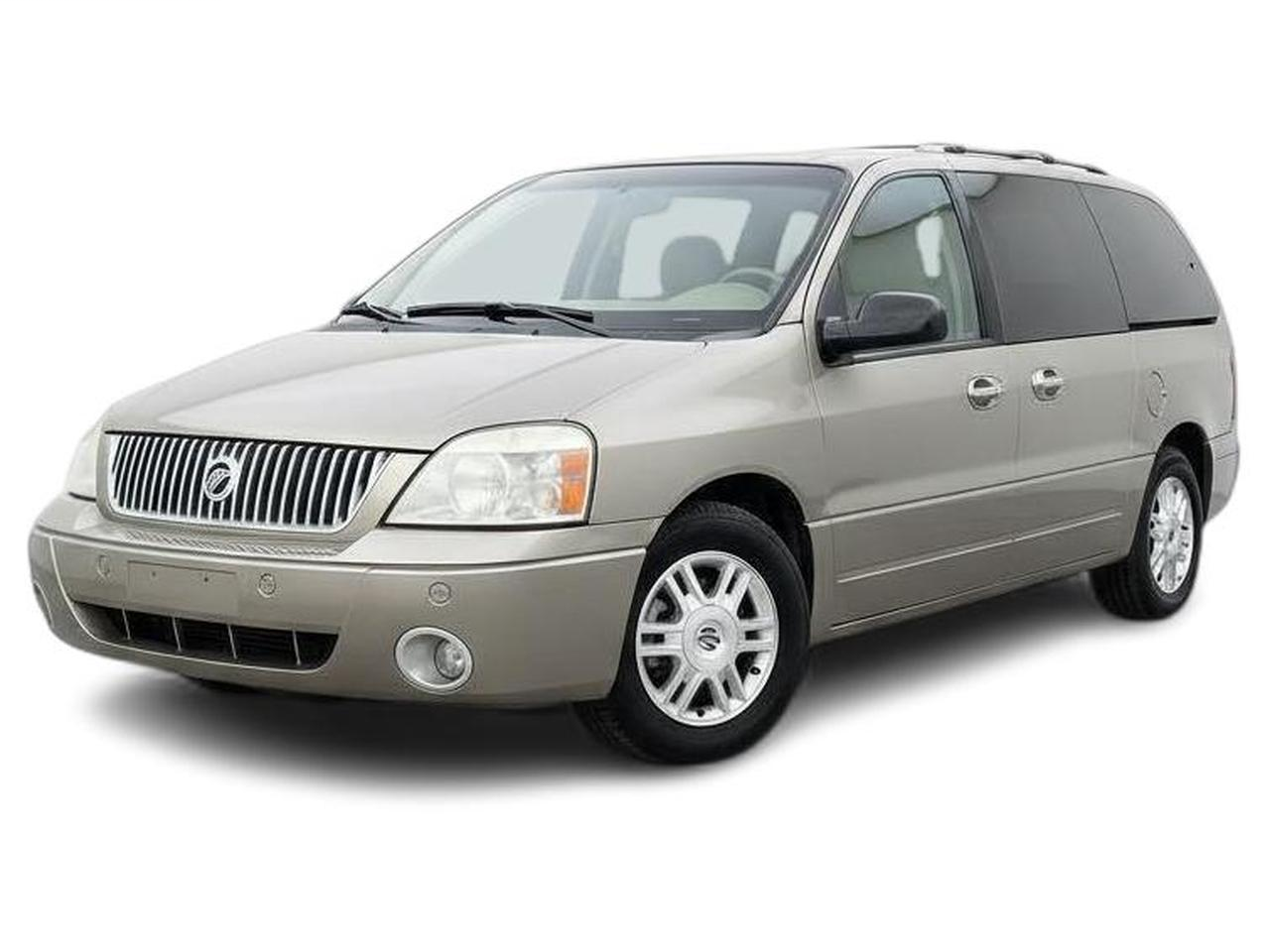
The Good
The 2004 Monterey offers a smooth, comfortable ride for long journeys, appealing to practical comfort seekers. Its spacious interior is a major draw for families. Emotionally, the Mercury name evokes a sense of quiet dignity and traditional American motoring. While not a performance beast, its V6 provides adequate power for daily needs.
The Bad
Owners should be aware of potential issues with the transmission, particularly at higher mileage. Electrical gremlins, such as power window malfunctions or dashboard light problems, are also noted. Rust, especially in areas with harsh winters, can be a concern for the body and undercarriage.
2004 Mercury Monterey: Quick Overview
- Engine Options: Only one primary engine was offered.
- 3.3L V6: This was the standard and only engine option for the 2004 Mercury Monterey.
- Horsepower:
- 3.3L V6: Produced 180 horsepower at 5,000 rpm.
- Torque:
- 3.3L V6: Generated 205 lb-ft of torque at 3,200 rpm.
- Fuel Economy (EPA Estimated):
- City: Approximately 17 MPG
- Highway: Approximately 23 MPG
- Combined: Approximately 19 MPG
*(Note: Actual mileage can vary based on driving conditions and maintenance.)*
- 0-60 Times:
- Typically ranged from 9.5 to 10.5 seconds, depending on load and conditions.
- Towing Capacity:
- With the optional towing package, the Monterey could tow up to 3,500 lbs.
- Trim-Level Features:
- Monarch: Standard features often included power windows and locks, air conditioning, cruise control, a CD player, and dual sliding doors.
- Premier: Added features like upgraded cloth upholstery, a power driver's seat, and potentially a better sound system.
- Luxury: Included premium leather seating, heated front seats, a power passenger seat, automatic climate control, and a rear-seat entertainment system (optional). All trims typically offered a fold-flat third-row seat for versatile cargo space.
2004 Mercury Monterey Specifications
Vehicle Information
| Year | 2004 |
| Make | Mercury |
| Model | Monterey |
| Trim | - |
| Style | - |
| Type | Sport Utility Vehicle Van |
| Category | Cargo Van |
Manufacturing Details
| Made In | Canada |
| Manufacturing City | - |
Dimensions
| Doors | - |
| Curb Weight | - |
| Gross Vehicle Weight Rating | - |
| Overall Height | - |
| Overall Length | - |
| Overall Width | - |
| Wheelbase Length | - |
| Standard Seating | - |
Engine & Performance
| Engine | 4.2 L V-6 |
| Engine Size | 4.2L |
| Engine Cylinders | 6 |
| Transmission | - |
| Transmission Type | - |
| Transmission Speeds | - |
| Drivetrain | Front-Wheel Drive |
Additional Features
| Anti-Brake System | - |
| Steering Type | - |
Pricing
| Manufacturer Suggested Retail Price (MSRP) | - |
| Invoice Price | - |
| Delivery Charges | - |
Vehicle History Report
Specifications
History
Events
History Check
Check
Check
Check
Check
Listings
Recalls
Check
Analysis
What Problems Does the 2004 Mercury Monterey Have?
Electrical issues are also prevalent. These can manifest in various ways, including faulty power windows and door locks, malfunctioning interior lights, and problems with the instrument cluster. Some owners have reported issues with the heater core failing, leading to a loss of heating capability and sometimes a sweet smell inside the cabin due to coolant leaks.
Brake wear can be accelerated on these minivans, with some owners reporting premature rotor and pad replacement needs. Power steering problems, such as leaks or a noisy pump, have also been noted. For the 2004 model year specifically, while there were no widespread major recalls that significantly impacted its reputation, it's always advisable to check for any outstanding service campaigns or technical service bulletins (TSBs) issued by the manufacturer that might address common, albeit less severe, issues.
Rust is a significant long-term concern, especially for vehicles driven in snowy or coastal regions. The undercarriage, rocker panels, and wheel wells are particularly susceptible. While reliability can be decent with diligent maintenance, the potential for costly repairs to the transmission and electrical systems means that potential buyers should have any used Monterey thoroughly inspected by a trusted mechanic.
How long will the 2004 Mercury Monterey last?
What Technology & Safety Features are Included?
Driver-assistance features were quite limited by today's standards. The Monterey did not feature advanced systems like adaptive cruise control or lane departure warnings. Its primary driver aids were the standard antilock braking system (ABS) for improved stopping control and traction control on some models to help prevent wheel slip during acceleration.
In terms of safety, the 2004 Monterey came equipped with front airbags for the driver and front passenger. Side curtain airbags were often an optional feature, especially on higher trims, providing enhanced protection for occupants in side-impact collisions. The vehicle also featured four-wheel disc brakes (on many models) for effective stopping power.
Crash-test ratings for the 2004 Monterey from the National Highway Traffic Safety Administration (NHTSA) generally showed good performance for its class at the time. It typically received four out of five stars for front-impact protection for both the driver and front passenger, indicating a good ability to protect occupants in a head-on collision. Side-impact protection ratings were also generally favorable, especially when equipped with side airbags. However, these ratings should be considered within the context of vehicle safety standards and testing procedures of the early 2000s.
What Colors Options are Available?
2004 Mercury Monterey Prices and Market Value
2004 Mercury Monterey Cost of Ownership
2004 Mercury Monterey Fuel Efficiency
2004 Mercury Monterey Safety Rating
NHTSA
2004 Mercury Monterey Recalls & Defects
Power Train:automatic Transmission:torque Converter
Power Train:automatic Transmission
Seats
Steering:hydraulic Power Assist:hose, Piping, and Connections
Wheels:hub
Fuel System, Gasoline
2004 Mercury Monterey Insurance
reasonable repair costs.
How Does the 2004 Mercury Monterey Compare to Other Sport Utility Vehicle Van?
Performance: The Monterey's 180-hp V6 was adequate but generally less powerful than the offerings in some rivals, like the Odyssey or Sienna, which often had more potent V6 engines. Its 0-60 times were in the middle of the pack.
Features: While the Monterey offered a comfortable ride and a spacious interior, its feature set, particularly in technology and advanced safety, lagged behind competitors like the Honda Odyssey, which often boasted more sophisticated options and a reputation for better engineering. However, it did offer many of the expected conveniences for its time.
Reliability: This is where the Monterey often falls short compared to its Japanese rivals. The Honda Odyssey and Toyota Sienna have long been lauded for their superior long-term reliability and fewer major mechanical issues. The Monterey, sharing its platform with Dodge/Chrysler, inherits some of their known reliability concerns, particularly with the transmission.
Price: The Monterey was typically positioned as a slightly more upscale offering than its Dodge counterparts, aiming for a balance between features and price. However, its used market value is often lower than the Honda and Toyota equivalents due to perceived reliability differences.
Alternatives:
- Honda Odyssey (2004-2006): Generally considered a benchmark for reliability, performance, and features in the minivan segment. Often a safer bet for long-term ownership.
- Toyota Sienna (2004-2010): Another highly reliable option known for its comfortable ride, spacious interior, and strong resale value.
- Dodge Grand Caravan/Chrysler Town & Country (2004-2007): If you are looking for the same platform as the Monterey but potentially at a lower price point, these are similar, though they share the same potential weaknesses.
Final Verdict: Is the 2004 Mercury Monterey a Good Sport Utility Vehicle Van?
It is likely worth buying primarily in the used market, as purchasing new in 2004 would have offered less value compared to more reliable competitors. If considering a purchase, look for well-maintained examples with lower mileage, preferably with documented service history, especially regarding the transmission. The Premier or Luxury trims offer more desirable features, but base Monarch models can be a very economical choice if basic transportation is the main goal. Buyers should absolutely have any potential Monterey thoroughly inspected by a mechanic, with a keen eye on the transmission and any signs of rust, before making a purchase. It's a vehicle for those who understand its potential drawbacks and are prepared for possible repairs.

Drew B
Drew is a seasoned automotive expert and contributor to VinCheck.info. With nearly 15 years of experience as a former Porsche technician, he brings a wealth of hands-on knowledge to his writing. Born in North Carolina, a region renowned for its deep-rooted NASCAR culture, Drew developed a passion for cars early in life, often building and working on vehicles from a young age. At VINCheck, Drew leverages his extensive technical background to provide in-depth analyses of various vehicles. His articles often focus on engine performance, reliability, and maintenance insights, offering readers practical information grounded in real-world experience. Some of his notable contributions include reviews on the Mazda CX-5's longevity and detailed examinations of engine options for models like the 2011 Toyota Camry and Tacoma