
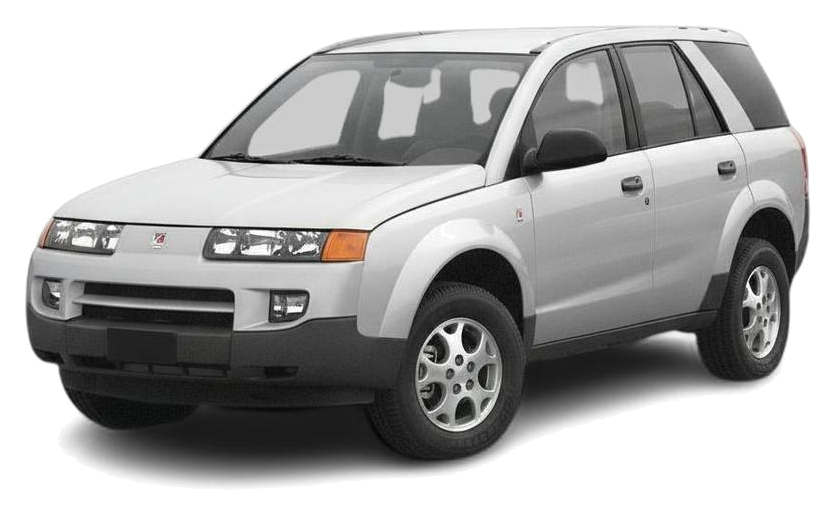
The 2002 Saturn VUE was the inaugural model year for this compact crossover SUV from General Motors' Saturn division. It boasted a distinctive, car-like unibody construction, a departure from traditional truck-based SUVs. Available through 2010, key trims included the base, XR, and for later years, the Green Line hybrid. Initially, pricing ranged from approximately $18,000 to $24,000. Its popularity stemmed from its approachable size, distinctive plastic body panels resistant to dents, and a comfortable ride, aiming to appeal to buyers seeking practicality with a touch of uniqueness.
The Good
The 2002 Saturn VUE offered a comfortable and quiet ride, a user-friendly interior, and a surprisingly spacious cargo area. Its distinctive plastic body panels offered a practical advantage against minor dings. For many, its unique styling and accessible price point provided emotional appeal, while its overall practicality satisfied practical needs.
The Bad
Potential buyers of the 2002 Saturn VUE should be aware of the Continuously Variable Transmission (CVT) issues that plagued early models, often leading to premature failure. Weak interior materials and occasional electrical gremlins are also points to monitor. Rust on the steel subframe, despite plastic body panels, can be a concern.
2002 Saturn VUE: Quick Overview
- Engine Options: The 2002 Saturn VUE primarily offered two engine choices.
- A 2.2-liter inline-4 cylinder engine (ECOTEC).
- An optional 3.0-liter V6 engine (a rebadged Honda engine).
- Horsepower:
- The 2.2L inline-4 produced approximately 143 horsepower.
- The 3.0L V6 delivered around 181 horsepower.
- Fuel Economy:
- With the 2.2L engine and manual transmission, expect EPA estimates around 20 MPG city / 27 MPG highway.
With the 2.2L engine and automatic (CVT), estimates were similar, around 19 MPG city / 26 MPG highway.
With the 3.0L V6 and automatic transmission, fuel economy was lower, around 17 MPG city / 23 MPG highway.
- With the 2.2L engine and manual transmission, expect EPA estimates around 20 MPG city / 27 MPG highway.
- 0-60 Times:
- 0-60 mph times varied significantly with engine and transmission. The 2.2L typically clocked in around 10-11 seconds, while the V6 could achieve it in roughly 8-9 seconds.
- Towing Capacity:
- The 2002 Saturn VUE was not designed for heavy towing. Its maximum towing capacity was typically limited to around 1,500 to 3,500 pounds, depending on the engine and specific configuration.
- Trim-Level Features (Base, XR):
- Base Trim: Standard features usually included air conditioning, power windows and locks, a CD player, tilt steering wheel, and 15-inch steel wheels.
- XR Trim: The XR trim often added alloy wheels, a more premium sound system, cruise control, and upgraded interior accents. Optional features could include a sunroof, heated seats, and a rear cargo organizer.
- Note: The XR trim was more associated with the V6 engine option in later model years, but in 2002, it was more of an appearance and convenience package.
2002 Saturn VUE Specifications
Vehicle Information
| Year | 2002 |
| Make | Saturn |
| Model | VUE |
| Trim | - |
| Style | Front-Wheel Drive 5-Speed Manual |
| Type | Sport Utility Vehicle |
| Category | Standard Sport Utility Vehicle |
Manufacturing Details
| Made In | United States |
| Manufacturing City | SPRINGHILL |
Dimensions
| Doors | 4-Door |
| Curb Weight | 3361 pounds |
| Gross Vehicle Weight Rating | - |
| Overall Height | 66.50 inches |
| Overall Length | 181.30 inches |
| Overall Width | 71.50 inches |
| Wheelbase Length | 106.60 inches |
| Standard Seating | 5 |
Engine & Performance
| Engine | 2.2L I4 |
| Engine Size | 2.2L |
| Engine Cylinders | 4 |
| Transmission | 5-Speed Manual |
| Transmission Type | Manual |
| Transmission Speeds | 5-Speed |
| Drivetrain | All-Wheel Drive |
Additional Features
| Anti-Brake System | Non-ABS 4-Wheel ABS |
| Steering Type | Rack & Pinion |
Pricing
| Manufacturer Suggested Retail Price (MSRP) | $18,860 |
| Invoice Price | $17,586 |
| Delivery Charges | $510 |
Vehicle History Report
Vehicle
Specifications
Specifications
Ownership
History
History
All History
Events
Events
NMVTIS Title
History Check
History Check
Salvage/Rebuilt
Check
Check
Accident
Check
Check
Theft
Check
Check
Open Lien
Check
Check
Past Sale
Listings
Listings
Safety
Recalls
Recalls
Odometer
Check
Check
Market Price
Analysis
Analysis
What Problems Does the 2002 Saturn VUE Have?
The 2002 Saturn VUE, being the first model year, experienced a few common issues that are worth noting for potential buyers. The most significant and frequently reported problem revolves around the Continuously Variable Transmission (CVT). Early CVTs in the VUE were prone to premature failure, often requiring costly replacement. While not a recall, this is a widespread concern that significantly impacts long-term reliability. Owners have reported a loss of power, slipping gears, or a complete transmission failure. It's crucial to have the transmission inspected by a mechanic familiar with CVTs.
Another area of concern is related to the powertrain, particularly with the 2.2-liter Ecotec engine. While generally robust, some owners have reported issues with the intake manifold gaskets and valve cover gaskets leaking oil. Over time, the plastic body panels, while resistant to dents, could become brittle and crack, especially in colder climates. The interior, while comfortable, could also show signs of wear and tear, with some reports of headliner sagging and cracking dashboard plastics.
Electrical gremlins are not uncommon in vehicles of this age, and the VUE is no exception. Issues can range from faulty power window motors to problems with the climate control system or dashboard warning lights illuminating unexpectedly. Regarding recalls, it's always advisable to check the National Highway Traffic Safety Administration (NHTSA) website for any specific recalls issued for the 2002 model year. However, the CVT issue is more of a known design/reliability weakness than a recallable defect in most cases.
Long-term reliability can be somewhat hit-or-miss. If the vehicle has been meticulously maintained, especially the CVT fluid changes (which were often neglected), it can offer decent service. However, the potential for expensive repairs, particularly the transmission, makes it a higher-risk purchase compared to some competitors. Later model years saw improvements, but the 2002 model year is where these initial concerns were most prevalent.
Another area of concern is related to the powertrain, particularly with the 2.2-liter Ecotec engine. While generally robust, some owners have reported issues with the intake manifold gaskets and valve cover gaskets leaking oil. Over time, the plastic body panels, while resistant to dents, could become brittle and crack, especially in colder climates. The interior, while comfortable, could also show signs of wear and tear, with some reports of headliner sagging and cracking dashboard plastics.
Electrical gremlins are not uncommon in vehicles of this age, and the VUE is no exception. Issues can range from faulty power window motors to problems with the climate control system or dashboard warning lights illuminating unexpectedly. Regarding recalls, it's always advisable to check the National Highway Traffic Safety Administration (NHTSA) website for any specific recalls issued for the 2002 model year. However, the CVT issue is more of a known design/reliability weakness than a recallable defect in most cases.
Long-term reliability can be somewhat hit-or-miss. If the vehicle has been meticulously maintained, especially the CVT fluid changes (which were often neglected), it can offer decent service. However, the potential for expensive repairs, particularly the transmission, makes it a higher-risk purchase compared to some competitors. Later model years saw improvements, but the 2002 model year is where these initial concerns were most prevalent.
How long will the 2002 Saturn VUE last?
Based on owner data and general observations, the 2002 Saturn VUE, when well-maintained, can reasonably reach an average mileage of 150,000 to 200,000 miles. Some owners have reported pushing them even further, upwards of 250,000 miles. However, this longevity is heavily dependent on consistent and thorough maintenance, particularly concerning the Continuously Variable Transmission (CVT). Neglecting CVT fluid changes and driving habits can significantly shorten its lifespan, making transmission failure a common weakness. The plastic body panels tend to hold up well against minor cosmetic damage over time, but the underlying steel components, like the subframe, are susceptible to rust in certain climates, impacting long-term structural integrity. Engine durability is generally good for both the 4-cylinder and V6 options, but accessory components like alternators, power steering pumps, and AC compressors will eventually need replacement as the vehicle ages.
What Technology & Safety Features are Included?
The 2002 Saturn VUE offered a functional, albeit not cutting-edge, suite of technology and safety features for its era. In terms of entertainment, standard equipment typically included an AM/FM stereo with a CD player. Higher trim levels or optional packages could upgrade this to a more robust sound system, sometimes with premium speakers. Auxiliary inputs and Bluetooth connectivity were not standard and largely unavailable in this model year. The dashboard layout was straightforward, with easy-to-reach controls for climate and audio.
Driver-assistance features were minimal by today's standards. Cruise control was often an optional feature, particularly on base models, while a tilt steering wheel was generally standard. Parking sensors and rearview cameras were not offered. The primary driver-assistance was the inherent handling characteristics of its car-like platform, providing a more composed ride than traditional SUVs.
Safety was a focus for Saturn. Standard safety features for the 2002 VUE included front airbags and anti-lock brakes (ABS). Optional safety features could include side-impact airbags for front occupants and a rear defogger. The VUE was built with a reinforced passenger cage to enhance occupant protection. Crash-test ratings for the 2002 model year, according to the Insurance Institute for Highway Safety (IIHS), showed it performed reasonably well in frontal offset tests, earning a "Good" rating. However, side-impact test results might vary, and it's important to consult specific IIHS data for detailed insights. NHTSA ratings for this model year also indicated a generally safe vehicle for its time. The lack of more advanced electronic stability control (ESC) systems, which became more common in later years, is a notable absence for modern safety expectations.
Driver-assistance features were minimal by today's standards. Cruise control was often an optional feature, particularly on base models, while a tilt steering wheel was generally standard. Parking sensors and rearview cameras were not offered. The primary driver-assistance was the inherent handling characteristics of its car-like platform, providing a more composed ride than traditional SUVs.
Safety was a focus for Saturn. Standard safety features for the 2002 VUE included front airbags and anti-lock brakes (ABS). Optional safety features could include side-impact airbags for front occupants and a rear defogger. The VUE was built with a reinforced passenger cage to enhance occupant protection. Crash-test ratings for the 2002 model year, according to the Insurance Institute for Highway Safety (IIHS), showed it performed reasonably well in frontal offset tests, earning a "Good" rating. However, side-impact test results might vary, and it's important to consult specific IIHS data for detailed insights. NHTSA ratings for this model year also indicated a generally safe vehicle for its time. The lack of more advanced electronic stability control (ESC) systems, which became more common in later years, is a notable absence for modern safety expectations.
What Colors Options are Available?
2002 Saturn VUE Prices and Market Value
When new, the 2002 Saturn VUE had an MSRP that ranged approximately from $18,000 for a base model with the 4-cylinder engine to around $24,000 for a well-equipped V6 model. As with most vehicles, the VUE experienced significant depreciation in its early years. Currently, the used market prices for a 2002 Saturn VUE are quite low, typically ranging from $1,500 to $4,000, depending heavily on mileage, condition, and trim level. Factors significantly affecting its resale value include the notorious reliability concerns with the CVT transmission; vehicles with documented recent transmission work or those that have had the CVT replaced with a traditional automatic may fetch a higher price. Mileage is also a major determinant, with lower-mileage examples commanding more. The overall condition, including the state of the plastic body panels and interior wear, also plays a crucial role in its current market value.
2002 Saturn VUE Cost of Ownership
The 2002 Saturn VUE is generally considered economical to own, particularly concerning insurance and fuel costs. Insurance premiums are typically low due to its older age and lower market value. Fuel economy, especially with the 4-cylinder engine, is competitive for its class, contributing to lower running expenses. Maintenance costs can be moderate for routine services like oil changes and tire rotations. However, long-term ownership costs can escalate significantly if major repairs are needed, most notably the Continuously Variable Transmission (CVT), which can be an expensive replacement. Other potential costly repairs include suspension components and electrical issues. While it can be economical for daily driving, the risk of significant, unforeseen repair bills makes its total cost of ownership variable.
2002 Saturn VUE Fuel Efficiency
Fuel Type
Gasoline
Fuel Capacity
15.50 gallons
City Mileage
21 miles/gallon
Highway Mileage
26 miles/gallon
2002 Saturn VUE Safety Rating
NHTSA
IIHS
2002 Saturn VUE Warranty
Basic
Original warranty
36 months / 36,000 miles
Estimated remaining
Expired
Powertrain
Original warranty
36 months / 36,000 miles
Estimated remaining
Expired
Rust
Original warranty
72 months / 100,000 miles
Estimated remaining
Expired
2002 Saturn VUE Insurance
Insurance for a 2002 Saturn VUE is moderately priced, reflecting its status as a Sport Utility Vehicle with strong safety ratings and
reasonable repair costs.
How Does the 2002 Saturn VUE Compare to Other Sport Utility Vehicle?
The 2002 Saturn VUE entered a competitive compact SUV segment against rivals like the Honda CR-V, Toyota RAV4, Ford Escape, and Mazda Tribute. In terms of performance, the VUE's available V6 offered decent acceleration, comparable to some competitors, but the base 4-cylinder, especially with the CVT, felt underpowered and sluggish. The CR-V and RAV4 were generally more refined in their powertrain offerings. Features-wise, the VUE offered a comfortable interior and a distinctive exterior, but competitors often provided more advanced optional features and a more polished interior design. The VUE's unique plastic body panels were a talking point for durability against minor dents, a practical advantage.
Reliability is where the VUE significantly faltered compared to its Japanese rivals. The notorious issues with its CVT transmission were a major detractor, leading to higher long-term repair costs and owner frustration, whereas the CR-V and RAV4 built reputations for exceptional reliability and durability. The Ford Escape and Mazda Tribute offered a more traditional SUV feel and generally better reliability than the VUE, though not always on par with Honda or Toyota.
Price-wise, the VUE was often positioned attractively, offering a lower entry price than some of its Japanese counterparts, making it a budget-friendly option when new. However, this initial cost saving could be quickly offset by potential repair bills.
Recommendations:
* Better Alternative: For those prioritizing reliability and overall refinement, the Honda CR-V or Toyota RAV4 from the same era are superior choices. They offer more dependable powertrains, better resale value, and a proven track record.
* Similar Alternative (with caveats): The Ford Escape or Mazda Tribute offer a similar price point and SUV utility. While not as reliable as the Japanese stalwarts, they generally avoided the widespread CVT issues that plagued the VUE. A Subaru Forester is another option if all-wheel-drive capability and a more rugged feel are desired.
Reliability is where the VUE significantly faltered compared to its Japanese rivals. The notorious issues with its CVT transmission were a major detractor, leading to higher long-term repair costs and owner frustration, whereas the CR-V and RAV4 built reputations for exceptional reliability and durability. The Ford Escape and Mazda Tribute offered a more traditional SUV feel and generally better reliability than the VUE, though not always on par with Honda or Toyota.
Price-wise, the VUE was often positioned attractively, offering a lower entry price than some of its Japanese counterparts, making it a budget-friendly option when new. However, this initial cost saving could be quickly offset by potential repair bills.
Recommendations:
* Better Alternative: For those prioritizing reliability and overall refinement, the Honda CR-V or Toyota RAV4 from the same era are superior choices. They offer more dependable powertrains, better resale value, and a proven track record.
* Similar Alternative (with caveats): The Ford Escape or Mazda Tribute offer a similar price point and SUV utility. While not as reliable as the Japanese stalwarts, they generally avoided the widespread CVT issues that plagued the VUE. A Subaru Forester is another option if all-wheel-drive capability and a more rugged feel are desired.
Final Verdict: Is the 2002 Saturn VUE a Good Sport Utility Vehicle?

The 2002 Saturn VUE is best suited for budget-conscious buyers who prioritize a low purchase price and can accept the inherent risks associated with its known weaknesses, particularly the Continuously Variable Transmission (CVT). It might be ideal for a second car, a student's vehicle, or for someone who performs their own maintenance and is mechanically inclined. It's generally not recommended for buyers seeking long-term, trouble-free ownership, especially if they are not prepared for potentially expensive repairs. If considering a purchase, thoroughly inspect any VUE, paying close attention to the CVT's condition. Models with the V6 engine might offer a slightly more robust driving experience, but the CVT remains a critical concern across most variants. Buying one is a gamble; it could be a cheap and functional utility vehicle, or it could quickly become an expensive headache. New purchases are obviously not applicable, and any used purchase should be approached with extreme caution and a pre-purchase inspection.