
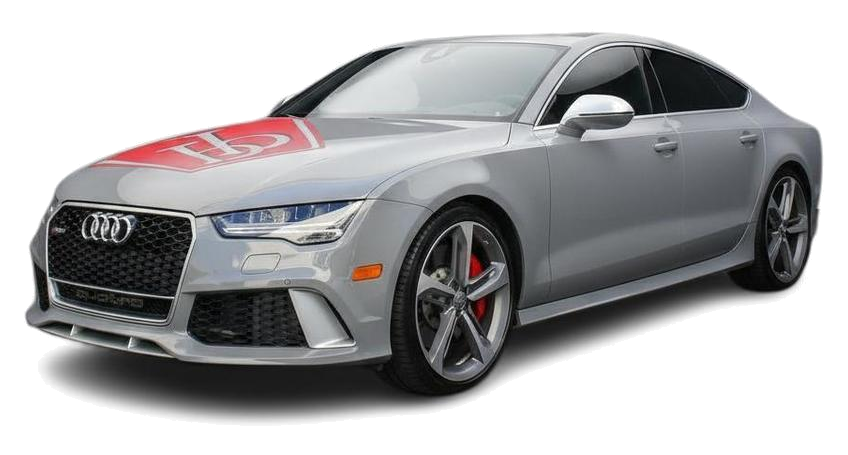
The Good
The 2018 RS 7 excels with exhilarating V8 power and tenacious all-wheel drive for thrilling drives. Its sophisticated design and premium interior offer refined comfort, while the hatchback offers surprising practicality. It's a statement car appealing to both performance cravings and everyday needs.
The Bad
Owners should be aware of potentially high fuel consumption due to its powerful engine. Some early models experienced infotainment glitches. Additionally, the sophisticated technology, while advanced, can lead to costly repairs if components fail, and suspension components can be expensive to replace.
2018 Audi RS 7: Quick Overview
- Engine Options: The 2018 Audi RS 7 exclusively featured a 4.0-liter twin-turbocharged V8 engine.
- Horsepower: The standard RS 7 produced 560 horsepower, while the RS 7 Performance variant offered 605 horsepower.
- Torque: Standard RS 7: 516 lb-ft. RS 7 Performance: 553 lb-ft.
- Transmission: 8-speed Tiptronic automatic transmission.
- Drivetrain: quattro all-wheel drive system.
- Fuel Economy (EPA Estimates): Approximately 15 MPG city / 25 MPG highway. Real-world mileage can be significantly lower when driven aggressively.
- 0-60 MPH Times: Around 3.7 seconds for the standard RS 7 and approximately 3.3 seconds for the RS 7 Performance.
- Towing Capacity: Not applicable; the RS 7 is a performance car and does not offer towing capabilities.
- Trim-Level Features (Standard RS 7):
- Full LED headlights
- Power-adjustable, heated, and auto-dimming side mirrors
- Sunroof
- Keyless ignition and entry
- Quad-zone automatic climate control
- Leather upholstery with Alcantara accents
- 12-way power-adjustable front sport seats with driver memory
- Carbon-fiber interior trim
- Audi MMI infotainment system with a 7-inch color display
- Navigation system
- Bluetooth connectivity
- Audi Connect (with subscription)
- Bose premium sound system
- HD Radio
- Front and rear parking sensors
- Backup camera
- Audi Pre Sense basic and city (forward collision warning and mitigation)
- Adaptive cruise control
- Lane departure warning
- Blind-spot monitoring
- Audi Drive Select (adjustable driving modes)
- Sport suspension with adjustable damping
- Large, high-performance brakes
- 20-inch alloy wheels
- RS 7 Performance Trim Features: Additional horsepower and torque, sport exhaust, dynamic steering, larger brake discs, and unique interior/exterior styling elements.
2018 Audi RS 7 Specifications
Vehicle Information
| Year | 2018 |
| Make | Audi |
| Model | RS 7 |
| Trim | - |
| Style | All-Wheel Drive |
| Type | Hatchback |
| Category | Mid-Size Car |
Manufacturing Details
| Made In | Germany |
| Manufacturing City | NECKARSULM |
Dimensions
| Doors | 4-Door |
| Curb Weight | - |
| Gross Vehicle Weight Rating | 2721.55 kg |
| Overall Height | 141.73 cm |
| Overall Length | 501.14 cm |
| Overall Width | 191.01 cm |
| Wheelbase Length | 291.59 cm |
| Standard Seating | 4 |
Engine & Performance
| Engine | 4L V8 |
| Engine Size | 4L |
| Engine Cylinders | 8 |
| Transmission | Automatic |
| Transmission Type | Automatic |
| Transmission Speeds | 8-Speed |
| Drivetrain | All-Wheel Drive |
Additional Features
| Anti-Brake System | 4-Wheel ABS |
| Steering Type | Rack & Pinion |
Pricing
| Manufacturer Suggested Retail Price (MSRP) | $130,700 USD |
| Invoice Price | $121,552 USD |
| Delivery Charges | $975 USD |
Vehicle History Report
Specifications
History
Events
History Check
Check
Check
Check
Check
Listings
Recalls
Check
Analysis
What Problems Does the 2018 Audi RS 7 Have?
Another area to watch is the complex powertrain. While the 4.0-liter twin-turbo V8 is a powerhouse, its sophisticated components, including the turbochargers and associated plumbing, can be a source of future expense as the vehicle ages. Oil leaks, particularly from the valve covers or oil cooler seals, have been noted in some instances. The dual-clutch S tronic transmission, while quick-shifting, can also develop issues over time, though it is generally considered robust.
The air suspension system, a feature often found on RS models for its adaptive capabilities, can be prone to leaks or compressor failure, leading to uneven ride height or a harsh ride. Repairing these systems can be quite expensive.
Regarding recalls, specific to the 2018 model year, Audi issued recalls concerning the fuel pump and potentially faulty airbags. It is crucial for potential buyers to verify that any recall work has been completed.
Long-term reliability can also be impacted by the car's performance orientation. Frequent hard driving and aggressive acceleration can put more stress on drivetrain components, brakes, and tires, potentially leading to accelerated wear. Maintenance must be meticulously followed, especially oil changes with the correct specifications, to ensure the longevity of the V8 engine. While there aren't widespread catastrophic failures reported for the 2018 RS 7 by model year, vigilance with maintenance and awareness of these common issues are key to a positive ownership experience.
How long will the 2018 Audi RS 7 last?
What Technology & Safety Features are Included?
Driver-assistance features are comprehensive for the era. Standard equipment includes front and rear parking sensors, a rearview camera, Audi Pre Sense Basic and City (which warns of potential frontal collisions and can apply brakes), adaptive cruise control, lane departure warning, and blind-spot monitoring. These systems work in concert to enhance safety and reduce driver fatigue on longer journeys.
Optional features could include a head-up display, a more advanced Bang & Olufsen surround-sound system for an audiophile experience, and enhanced driver assistance packages that might offer features like a night vision assistant or more sophisticated adaptive cruise control with traffic jam assist.
In terms of safety, the 2018 Audi RS 7, as part of the A7 model line, generally received good crash test ratings. While specific RS 7 ratings might not be as prominently detailed as mainstream models, the A7 platform typically scored well in tests conducted by the IIHS (Insurance Institute for Highway Safety) and NHTSA (National Highway Traffic Safety Administration). For instance, the A7 often earned top marks in frontal offset, side impact, and roof strength tests, contributing to an overall strong safety profile. Standard safety features include multiple airbags (front, side, and knee), stability control, and traction control, all contributing to its robust safety credentials.
What Colors Options are Available?
2018 Audi RS 7 Prices and Market Value
2018 Audi RS 7 Cost of Ownership
2018 Audi RS 7 Fuel Efficiency
2018 Audi RS 7 Recalls & Defects
AIR Bags:sensor:occupant Classification
Equipment:other:labels
2018 Audi RS 7 Warranty
Basic
Powertrain
Rust
2018 Audi RS 7 Insurance
reasonable repair costs.
How Does the 2018 Audi RS 7 Compare to Other Hatchback?
Performance: The RS 7's 4.0-liter twin-turbo V8 offered immense power and torque, delivering blistering acceleration. The BMW M6 Gran Coupe, with its V8, provided equally thrilling performance, often with a slightly more engaging driving dynamic. The Mercedes-AMG CLS 63 S also boasted a potent V8, renowned for its raw power and aggressive exhaust note. All three excelled in straight-line speed, but the RS 7's quattro all-wheel drive offered superior traction in various conditions compared to the primarily rear-wheel-drive competitors.
Features: All three vehicles offered luxurious interiors, advanced infotainment systems, and a host of modern comfort and safety features. Audi's MMI, BMW's iDrive, and Mercedes' COMAND systems were all sophisticated for their time. The RS 7 stood out for its practical hatchback design, offering more cargo versatility than the sedan-bodied M6 Gran Coupe or CLS 63 S.
Reliability: Reliability across these high-performance German machines can be a mixed bag. While generally well-built, their complex powertrains and electronics can lead to costly repairs as they age. Owners often report issues with infotainment, suspension components, and turbochargers on all these models. Long-term reliability often depends heavily on diligent maintenance and the specific issues encountered with individual cars. Audi, BMW, and Mercedes-AMG vehicles in this class are not typically known for the same bulletproof reliability as their more mainstream counterparts.
Price: When new, these cars were similarly priced, in the high six figures. On the used market in 2023/2024, they often fall into a comparable range, though condition and mileage are key.
Alternatives: For those seeking similar performance with potentially a sportier feel, the Porsche Panamera (especially Turbo models) is a strong contender, often offering superior driving dynamics and build quality, albeit at a higher price point. If outright luxury and comfort are prioritized over raw sportback practicality, a Mercedes-Benz S-Class Coupe or a BMW 8 Series could be considered, though they are two-door coupes. For a more budget-friendly option in the performance sedan space, one might look at a Cadillac CTS-V or a higher-trim BMW M5.
Final Verdict: Is the 2018 Audi RS 7 a Good Hatchback?
Whether it's worth buying depends heavily on the buyer's priorities and budget for upkeep. As a used vehicle, it represents a significant performance value compared to its original price. However, potential buyers must be prepared for higher fuel, insurance, and maintenance costs, and the possibility of expensive repairs. It's crucial to purchase a well-maintained example, ideally with a comprehensive service history, and to have a thorough pre-purchase inspection performed by a specialist familiar with Audi RS models. Opting for a lower-mileage car in excellent condition is strongly recommended for the best ownership experience. It is certainly worth considering for those with the financial capacity to handle its running costs.

Eugene S
Eugene is an automotive enthusiast with over 15 years of experience in the used car market. As a writer at VINCheck.info, he brings deep industry insight and a passion for cars, helping readers make smart, informed decisions. Eugene has written hundreds of used car reviews and is known for breaking down complex automotive topics into clear, actionable advice. Over the years, he has driven and worked on a wide range of vehicles—starting with tuning street cars in his early days and eventually focusing on performance upgrades and reliability improvements. Today, he specializes in evaluating used vehicles through the lens of real-world ownership and enthusiast needs. A longtime fan of Porsche, Eugene especially appreciates vehicles that blend durability with driving enjoyment.