
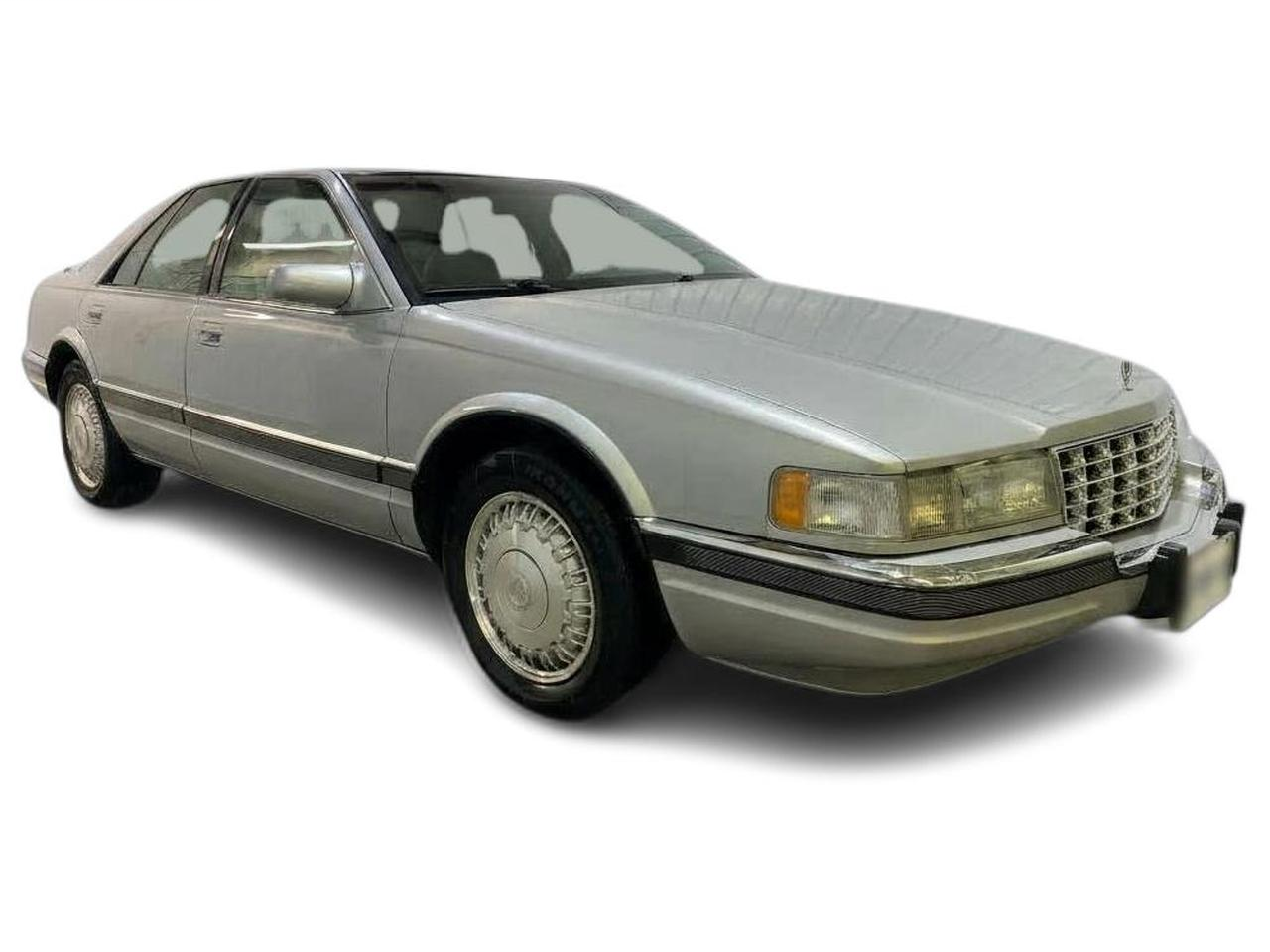
The 1994 Cadillac Seville represented the pinnacle of American luxury and technology for its era. As part of the fifth generation, produced from 1992 to 1997, this front-wheel-drive sedan was a significant departure from its predecessors with a more European-inspired design. Key trims included the standard Seville and the higher-performance Seville STS (Sport Touring Sedan). Pricing when new typically ranged from the mid-$30,000s to over $40,000. It stood out with its sophisticated styling, quiet and comfortable interior, and advanced features for the time, making it a popular choice for those seeking American luxury with a modern edge.
The Good
The 1994 Seville offers a compelling blend of plush comfort and a smooth, powerful ride, appealing to the desire for luxury and effortless cruising. Its distinctive, angular design evokes a sense of prestige, while practical buyers will appreciate its sturdy build and increasingly accessible used market value.
The Bad
Potential buyers should be aware of common issues such as electrical gremlins, particularly with the Northstar engine's head gaskets and oil leaks. Transmission problems and aging suspension components are also areas to inspect closely to avoid costly repairs.
1994 Cadillac Seville: Quick Overview
- Engine Options: The 1994 Cadillac Seville was primarily offered with two potent engine options:
- 4.9L V8: Standard on the base Seville, this engine provided robust power.
- 4.6L Northstar V8: Standard on the Seville STS, this was a more advanced, DOHC 32-valve engine designed for performance and smoothness.
- Horsepower:
- 4.9L V8: Approximately 200 horsepower.
- 4.6L Northstar V8: Approximately 270-290 horsepower (depending on specific tuning for the STS).
- Fuel Economy: As expected for a V8 luxury sedan of this era, fuel economy was not a strong suit. Expect figures in the range of 15-18 MPG city and 19-23 MPG highway.
- 0-60 Times:
- With the 4.9L V8: Around 8.5-9.0 seconds.
- With the 4.6L Northstar V8 (STS): Significantly quicker, often in the 7.0-7.5 second range.
- Towing Capacity: The Cadillac Seville was not designed or equipped for towing. Towing capacity is not applicable.
- Trim-Level Features:
- Base Seville: Typically included features like automatic climate control, power windows and locks, cruise control, an AM/FM stereo with cassette player, leatherette seating, and anti-lock brakes (ABS).
- Seville STS (Sport Touring Sedan): Added significant performance and luxury enhancements. These often included:
- The more powerful 4.6L Northstar V8 engine.
- Electronically controlled suspension (Magnasteer steering system).
- Leather upholstery.
- Heated front seats.
- Premium Bose audio system.
- Larger alloy wheels.
- Optional features could include a sunroof, premium sound systems, and more advanced interior comfort options.
1994 Cadillac Seville Specifications
Vehicle Information
| Year | 1994 |
| Make | Cadillac |
| Model | Seville |
| Trim | - |
| Style | - |
| Type | Sedan |
| Category | Mid-Size Car |
Manufacturing Details
| Made In | United States |
| Manufacturing City | HAMTRAMCK |
Dimensions
| Doors | 4-Door |
| Curb Weight | 3830 pounds |
| Gross Vehicle Weight Rating | - |
| Overall Height | 54.50 inches |
| Overall Length | 204.10 inches |
| Overall Width | 74.20 inches |
| Wheelbase Length | 111.00 inches |
| Standard Seating | 5 |
Engine & Performance
| Engine | 4.6L V8 |
| Engine Size | 4.6L |
| Engine Cylinders | 8 |
| Transmission | 4-Speed Automatic |
| Transmission Type | Automatic |
| Transmission Speeds | 4-Speed |
| Drivetrain | Front-Wheel Drive |
Additional Features
| Anti-Brake System | 4-Wheel ABS |
| Steering Type | Rack & Pinion |
Pricing
| Manufacturer Suggested Retail Price (MSRP) | $41,430 |
| Invoice Price | - |
| Delivery Charges | - |
Vehicle History Report
Vehicle
Specifications
Specifications
Ownership
History
History
All History
Events
Events
NMVTIS Title
History Check
History Check
Salvage/Rebuilt
Check
Check
Accident
Check
Check
Theft
Check
Check
Open Lien
Check
Check
Past Sale
Listings
Listings
Safety
Recalls
Recalls
Odometer
Check
Check
Market Price
Analysis
Analysis
What Problems Does the 1994 Cadillac Seville Have?
The 1994 Cadillac Seville, particularly models equipped with the Northstar V8 engine, is known for certain recurring issues that owners and potential buyers should be aware of. One of the most significant and frequently reported problems revolves around the head gaskets. The Northstar V8s, especially earlier versions, were susceptible to coolant leaks and blown head gaskets due to coolant passage design flaws or overheating. This can lead to severe engine damage if not addressed promptly. Repairing blown head gaskets on a Northstar engine can be a labor-intensive and costly endeavor, often involving significant disassembly.
Another area of concern is the electronic climate control system. These systems, while advanced for their time, can become temperamental with age, leading to issues with temperature regulation, blower motor control, or display malfunctions. Sensors within the system can fail, causing erratic behavior.
Transmission issues are also not uncommon in vehicles of this age and mileage. While the transmissions are generally robust, wear and tear can lead to slipping, rough shifting, or complete failure. Regular maintenance and fluid changes are crucial for extending transmission life.
Electrical gremlins are another hallmark of many older luxury vehicles, and the 1994 Seville is no exception. Issues can range from faulty power window motors, malfunctioning door locks, and intermittent dashboard warning lights to problems with the infotainment system or onboard computers. These can be difficult to diagnose and repair.
While there aren't widespread recalls that uniquely plague the 1994 model year with catastrophic failures, general maintenance items like aging suspension components (bushings, ball joints, shocks) and exhaust system corrosion are common for any vehicle of this vintage. Long-term reliability heavily depends on a meticulous maintenance history. If the vehicle has not been consistently maintained, especially with regard to coolant levels and changes, the risk of major engine and transmission problems increases significantly. There are no widely documented specific issues that differ drastically between the 1992-1997 generations that would make one year significantly better or worse than another, though minor refinements may have been made throughout the production run.
Another area of concern is the electronic climate control system. These systems, while advanced for their time, can become temperamental with age, leading to issues with temperature regulation, blower motor control, or display malfunctions. Sensors within the system can fail, causing erratic behavior.
Transmission issues are also not uncommon in vehicles of this age and mileage. While the transmissions are generally robust, wear and tear can lead to slipping, rough shifting, or complete failure. Regular maintenance and fluid changes are crucial for extending transmission life.
Electrical gremlins are another hallmark of many older luxury vehicles, and the 1994 Seville is no exception. Issues can range from faulty power window motors, malfunctioning door locks, and intermittent dashboard warning lights to problems with the infotainment system or onboard computers. These can be difficult to diagnose and repair.
While there aren't widespread recalls that uniquely plague the 1994 model year with catastrophic failures, general maintenance items like aging suspension components (bushings, ball joints, shocks) and exhaust system corrosion are common for any vehicle of this vintage. Long-term reliability heavily depends on a meticulous maintenance history. If the vehicle has not been consistently maintained, especially with regard to coolant levels and changes, the risk of major engine and transmission problems increases significantly. There are no widely documented specific issues that differ drastically between the 1992-1997 generations that would make one year significantly better or worse than another, though minor refinements may have been made throughout the production run.
How long will the 1994 Cadillac Seville last?
Based on owner data and typical maintenance habits for luxury vehicles of this era, a well-maintained 1994 Cadillac Seville can reasonably achieve between 150,000 to 200,000 miles or more. However, this is heavily contingent on diligent care. Vehicles that have received regular oil changes, coolant flushes (especially critical for the Northstar engine), and timely attention to minor issues are far more likely to reach higher mileage figures. The long-term durability of the Seville is significantly tested by its powertrain. While the body and interior often hold up well to time, demonstrating good build quality for its class, the Northstar V8 engine's susceptibility to head gasket failures can be a major weakness if not proactively managed. Neglected cooling systems are the primary culprit for premature engine failure. Similarly, transmission longevity is directly tied to fluid maintenance. With consistent, high-quality maintenance, the Seville can be a durable vehicle, but without it, major and costly repairs are a distinct possibility as it ages.
What Technology & Safety Features are Included?
The 1994 Cadillac Seville was a showcase of late 1990s automotive technology, offering a sophisticated array of features for its time. Standard technology included automatic climate control with dual-zone capability, ensuring comfort for both driver and front passenger. The entertainment system typically featured an AM/FM stereo with a cassette player, and often a CD player was an option. Premium sound systems, particularly the Bose-branded units, were frequently found in higher trims like the STS, offering a richer audio experience.
Driver-assistance features, while not as ubiquitous as today, were present. The Seville came standard with anti-lock brakes (ABS) for enhanced stopping power and control. Traction control was also available, especially on the STS, helping to prevent wheelspin during acceleration, particularly on slippery surfaces. The Magnasteer system, an option on some models and standard on the STS, provided variable assist steering that became lighter at low speeds for easier maneuvering and firmer at higher speeds for better stability.
Safety features were also a priority. Standard safety equipment included airbags for the driver and front passenger. Seatbelt pretensioners were also incorporated to tighten the belts during a collision. The robust construction of the Seville provided a solid protective shell.
Optional features added to the luxury and convenience. These could include a power sunroof, heated front seats, power-adjustable front seats with memory settings, and an electrochromic rearview mirror that automatically dimmed to reduce glare from headlights at night. More advanced trip computers and navigation systems were beginning to emerge, though they were less common and more basic in 1994.
Crash-test ratings for this specific model year are not readily available in the standardized format we see today. However, Cadillac vehicles of this era were generally engineered with a focus on occupant protection, featuring strong unibody construction and a suite of safety features aimed at mitigating injury in the event of a collision.
Driver-assistance features, while not as ubiquitous as today, were present. The Seville came standard with anti-lock brakes (ABS) for enhanced stopping power and control. Traction control was also available, especially on the STS, helping to prevent wheelspin during acceleration, particularly on slippery surfaces. The Magnasteer system, an option on some models and standard on the STS, provided variable assist steering that became lighter at low speeds for easier maneuvering and firmer at higher speeds for better stability.
Safety features were also a priority. Standard safety equipment included airbags for the driver and front passenger. Seatbelt pretensioners were also incorporated to tighten the belts during a collision. The robust construction of the Seville provided a solid protective shell.
Optional features added to the luxury and convenience. These could include a power sunroof, heated front seats, power-adjustable front seats with memory settings, and an electrochromic rearview mirror that automatically dimmed to reduce glare from headlights at night. More advanced trip computers and navigation systems were beginning to emerge, though they were less common and more basic in 1994.
Crash-test ratings for this specific model year are not readily available in the standardized format we see today. However, Cadillac vehicles of this era were generally engineered with a focus on occupant protection, featuring strong unibody construction and a suite of safety features aimed at mitigating injury in the event of a collision.
What Colors Options are Available?
1994 Cadillac Seville Prices and Market Value
When new in 1994, the Cadillac Seville had a starting price in the mid-$30,000s for the base model, with the more performance-oriented Seville STS commanding prices well into the $40,000s. As with most luxury vehicles, depreciation was quite rapid in the initial years. Today, the 1994 Cadillac Seville is available on the used market at significantly reduced prices, often ranging from $2,000 to $6,000 for models in decent condition. Well-maintained examples, particularly the STS trims with lower mileage and documented service history, can fetch slightly higher prices. Factors affecting resale value include the condition of the Northstar engine (especially head gasket integrity), transmission health, overall body and interior condition, and the presence of original documentation and service records. Rarity of specific options or colors can also play a minor role.
1994 Cadillac Seville Cost of Ownership
Owning a 1994 Cadillac Seville is generally considered moderately costly, leaning towards expensive, especially if major repairs arise. Insurance costs will vary based on your profile but are typically higher than for economy cars. Fuel costs are significant due to the V8 engine, averaging around 17-20 MPG combined. Maintenance requires diligence; regular fluid changes (especially coolant and transmission fluid) are vital. Repair costs can be substantial, particularly for Northstar engine issues like head gaskets, or complex electronic systems. While purchase price is low, the total cost of ownership is influenced by the potential for costly repairs, making it less economical than a newer or simpler vehicle.
1994 Cadillac Seville Fuel Efficiency
Fuel Type
Gasoline
Fuel Capacity
20.00 gallons
City Mileage
16 miles/gallon
Highway Mileage
25 miles/gallon
1994 Cadillac Seville Safety Rating
NHTSA
IIHS
1994 Cadillac Seville Warranty
Basic
Original warranty
0 months / No data
Estimated remaining
Expired
Powertrain
Original warranty
0 months / No data
Estimated remaining
Expired
Rust
Original warranty
0 months / No data
Estimated remaining
Expired
1994 Cadillac Seville Insurance
Insurance for a 1994 Cadillac Seville is moderately priced, reflecting its status as a Sedan with strong safety ratings and
reasonable repair costs.
How Does the 1994 Cadillac Seville Compare to Other Sedan?
The 1994 Cadillac Seville competed in the luxury sedan segment against formidable rivals such as the Lincoln Continental, Lexus LS 400, and BMW 5 Series. In terms of performance, the Seville STS, with its Northstar V8, offered competitive horsepower and acceleration, often surpassing the Lincoln Continental of the same year and rivaling the base BMW 5 Series in some metrics, though the Lexus LS 400 was generally considered smoother and more refined. However, the Seville's reliability, particularly concerning the Northstar engine's head gasket issues, was a significant drawback compared to the stellar reputation of the Lexus LS 400. The Lincoln Continental offered a more traditional American luxury feel but lacked the performance edge of the Seville STS.
Features-wise, the Seville was well-equipped for its era, boasting amenities like automatic climate control, available Bose audio, and advanced steering systems. The Lexus LS 400 was also a leader in features and build quality. The BMW 5 Series, while perhaps less laden with creature comforts in its base form, offered superior driving dynamics and a more driver-focused experience.
Price-wise, the 1994 Seville was generally positioned competitively, often slightly below its German and Japanese counterparts when new, making it an attractive option for those seeking luxury without the absolute top-tier price tag. Today, its used market price is significantly lower than comparable Lexus or BMW models, offering excellent value for the initial luxury feel.
Recommendations:
For buyers prioritizing bulletproof reliability and refinement above all else, the Lexus LS 400 (e.g., 1994-1997) is a superior alternative, though often commanding a higher used price.
If driving dynamics and a sportier feel are more important, the BMW 5 Series (e.g., E34 generation) would be a better choice, though maintenance costs can be higher.
For a similar American luxury experience, the Lincoln Continental is a close competitor, offering comparable comfort but generally less performance.
The 1994 Cadillac Seville remains a compelling option if its specific styling and features are appealing, and if one is willing to meticulously vet its mechanical condition, particularly the engine and transmission, to avoid potential costly repairs.
Features-wise, the Seville was well-equipped for its era, boasting amenities like automatic climate control, available Bose audio, and advanced steering systems. The Lexus LS 400 was also a leader in features and build quality. The BMW 5 Series, while perhaps less laden with creature comforts in its base form, offered superior driving dynamics and a more driver-focused experience.
Price-wise, the 1994 Seville was generally positioned competitively, often slightly below its German and Japanese counterparts when new, making it an attractive option for those seeking luxury without the absolute top-tier price tag. Today, its used market price is significantly lower than comparable Lexus or BMW models, offering excellent value for the initial luxury feel.
Recommendations:
For buyers prioritizing bulletproof reliability and refinement above all else, the Lexus LS 400 (e.g., 1994-1997) is a superior alternative, though often commanding a higher used price.
If driving dynamics and a sportier feel are more important, the BMW 5 Series (e.g., E34 generation) would be a better choice, though maintenance costs can be higher.
For a similar American luxury experience, the Lincoln Continental is a close competitor, offering comparable comfort but generally less performance.
The 1994 Cadillac Seville remains a compelling option if its specific styling and features are appealing, and if one is willing to meticulously vet its mechanical condition, particularly the engine and transmission, to avoid potential costly repairs.
Final Verdict: Is the 1994 Cadillac Seville a Good Sedan?

The 1994 Cadillac Seville is ideal for the enthusiast or budget-conscious buyer who appreciates American luxury, distinctive styling, and a comfortable, smooth ride, and is willing to undertake diligent pre-purchase inspection and ongoing maintenance. It is worth considering as a used vehicle, especially the Seville STS trim, for its current low prices offering a taste of near-luxury for minimal outlay. However, it is absolutely crucial to buy one with a meticulously documented maintenance history, particularly concerning the Northstar engine's cooling system and head gaskets, and the transmission. Buyers should expect potential repair costs and be prepared for them, or have a trusted mechanic knowledgeable in these vehicles. It is not recommended for someone seeking trouble-free, basic transportation or who is not mechanically inclined or budgeted for potential repairs. Buying new in 1994 was a different proposition, but as a used car, it offers an affordable entry into a classic American luxury sedan for the right buyer under the right conditions.