
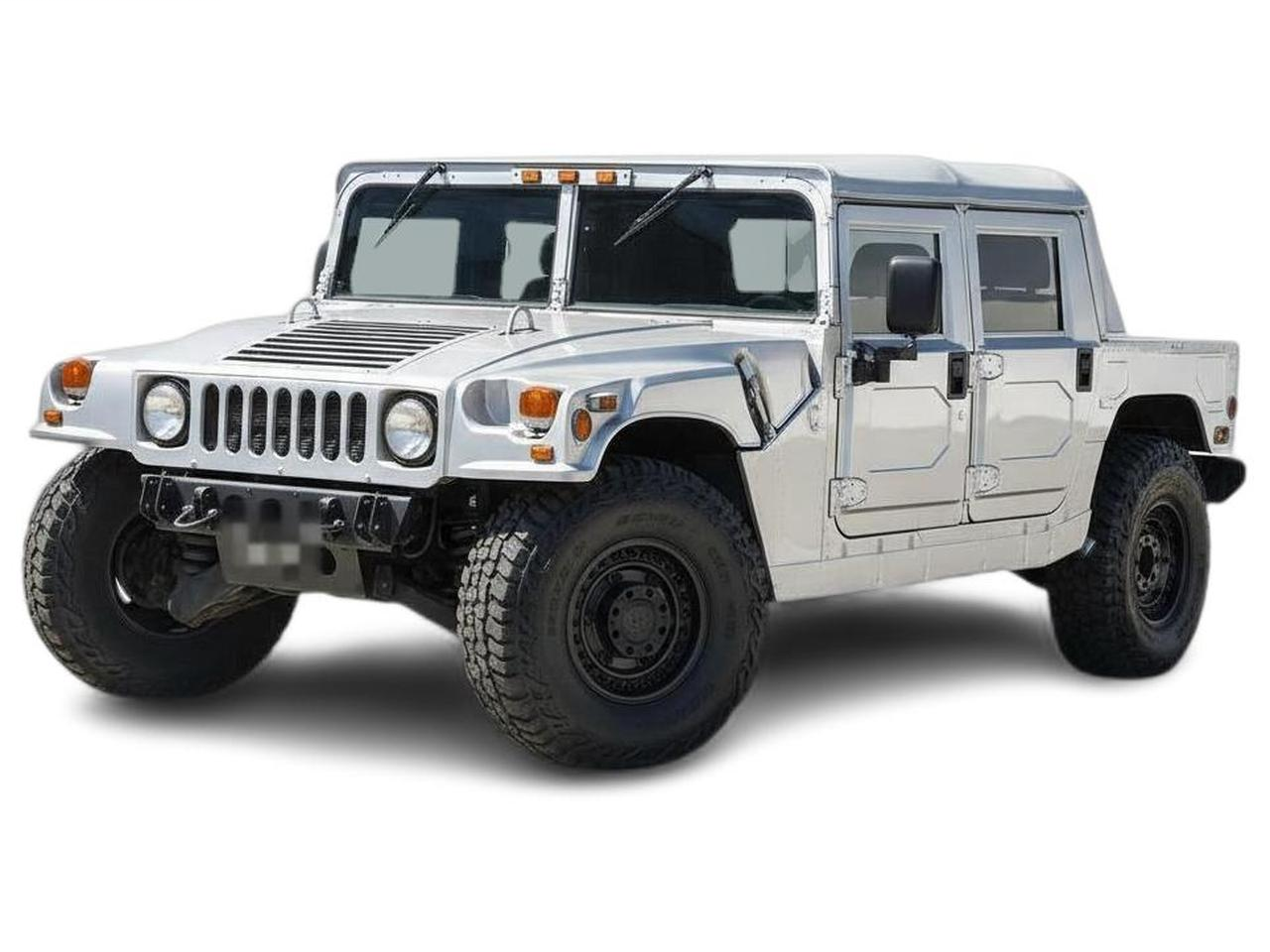
The Good
The 1995 HUMMER excels in extreme off-road performance and commanding presence. Its utilitarian design appeals to a sense of adventure and exclusivity. While not fuel-efficient, its robust build offers a unique sense of security and capability, providing an emotional connection for those seeking ultimate toughness.
The Bad
Beware of poor fuel economy, a notoriously harsh ride, and high maintenance costs. The sheer size presents parking and maneuverability challenges. Electrical gremlins and potential for rust on older models are common concerns. Parts can be expensive and specialized.
1995 AM General HUMMER: Quick Overview
- Engine Options: The 1995 AM General HUMMER H1 primarily featured a 6.5L naturally aspirated V8 diesel engine (L65). A turbocharged version (L56) was also available in some configurations.
- Horsepower: The naturally aspirated 6.5L V8 diesel produced around 190 horsepower. The turbocharged variant offered slightly more power.
- Fuel Economy: Fuel economy is a significant weak point for the HUMMER. Expect figures in the range of 8-12 MPG combined, heavily dependent on driving conditions and terrain.
- 0-60 Times: Acceleration is not a strong suit. 0-60 MPH times were generally very slow, often exceeding 15-20 seconds due to the vehicle's weight and engine power.
- Towing Capacity: While not its primary purpose, the HUMMER H1 generally had a substantial towing capacity, typically rated around 5,000-7,000 lbs, though this varied by specific configuration and year.
- Trim-Level Features:
The 1995 model year offered several body styles, each with distinct features:- Wagon: The most common, offering a four-door enclosed cabin with ample cargo space, making it the most practical for passenger transport and general use. Often equipped with basic amenities for its time.
- Pickup: Featured an open cargo bed, suitable for hauling equipment or for those who preferred a more utilitarian look and function.
- Soft Top: Provided an open-air experience, though with less security and weather protection than the Wagon.
Standard features across trims often included power steering, power brakes, and a robust 4WD system. Options could include air conditioning, upgraded sound systems, and various exterior protection packages. Interior amenities were functional rather than luxurious, prioritizing durability and utility over creature comforts. Central tire inflation systems were a notable advanced feature for off-roading.
1995 AM General HUMMER Specifications
Vehicle Information
| Year | 1995 |
| Make | AM General |
| Model | HUMMER |
| Trim | - |
| Style | 4-Door Hard Top |
| Type | Sport Utility Vehicle |
| Category | Commercial |
Manufacturing Details
| Made In | United States |
| Manufacturing City | MISHAWAKA |
Dimensions
| Doors | 4-Door |
| Curb Weight | 6400 pounds |
| Gross Vehicle Weight Rating | - |
| Overall Height | 75.00 inches |
| Overall Length | 184.50 inches |
| Overall Width | 86.50 inches |
| Wheelbase Length | 130.00 inches |
| Standard Seating | 4 |
Engine & Performance
| Engine | 6.5L V8 |
| Engine Size | 6.5L |
| Engine Cylinders | 8 |
| Transmission | 4-Speed Automatic |
| Transmission Type | Automatic |
| Transmission Speeds | 4-Speed |
| Drivetrain | Four-Wheel Drive |
Additional Features
| Anti-Brake System | 4-Wheel ABS |
| Steering Type | Recirculating |
Pricing
| Manufacturer Suggested Retail Price (MSRP) | $53,788 |
| Invoice Price | - |
| Delivery Charges | - |
Vehicle History Report
Specifications
History
Events
History Check
Check
Check
Check
Check
Listings
Recalls
Check
Analysis
What Problems Does the 1995 AM General HUMMER Have?
One of the most frequently reported concerns revolves around the powertrain, specifically the 6.5L diesel engine. While generally robust, they can suffer from overheating issues if not properly maintained, especially if the cooling system components are neglected. Injector pump failures and glow plug issues are also not uncommon as these vehicles age.
The drivetrain, while designed for extreme conditions, can experience wear and tear on components like CV joints, differentials, and the central tire inflation system (CTIS) if not regularly serviced. Seals and gaskets can degrade over time, leading to fluid leaks.
Electrical systems can also be a source of frustration. Older HUMMERs often develop minor electrical gremlins, such as faulty sensors, intermittent dashboard warning lights, or issues with the power windows and locks. The complexity of the CTIS can also lead to its malfunction, requiring specialized troubleshooting.
Body and chassis issues often involve rust, particularly in areas prone to moisture, such as the rocker panels, wheel wells, and undercarriage. The extensive use of steel components means that corrosion can be a significant concern for vehicles in rust-belt regions.
While specific recalls for the 1995 model year might be limited and often addressed over time, ongoing maintenance is critical. The rugged construction means many components are over-engineered, but age and usage will eventually take their toll. For a 1995 HUMMER, proactive maintenance and addressing minor issues before they become major problems are key to maintaining its long-term reliability. It's advisable to seek out mechanics experienced with these specific vehicles.
How long will the 1995 AM General HUMMER last?
Long-term durability is generally high in terms of its core structure and drivetrain, reflecting its military heritage. Weaknesses that emerge over time typically relate to aging rubber and plastic components, electrical system quirks, and potential for rust. The central tire inflation system, while innovative, can also become a point of failure. Regular, meticulous maintenance is paramount for achieving high mileage and sustained service life.
What Technology & Safety Features are Included?
Built-in Tech: The most notable piece of integrated technology was the optional Central Tire Inflation System (CTIS). This system allowed the driver to adjust tire pressure from inside the cabin, a significant advantage for off-roading, enabling drivers to lower pressure for increased traction on soft surfaces and then reinflate for on-road driving. Beyond CTIS, the technology was basic: power steering, power brakes, and a robust 4WD system with locking differentials were standard.
Entertainment: Factory entertainment systems were rudimentary. Most models came with a basic AM/FM radio and cassette player. Upgraded sound systems might have been available as options, but they were far from the sophisticated infotainment suites found in modern vehicles. Buyers often opted for aftermarket head units to add features like CD players or auxiliary inputs.
Driver-Assistance & Safety Features: Driver-assistance technologies were virtually non-existent. The HUMMER relied on its sheer size, robust construction, and the driver's skill to navigate challenging situations. Safety features were also basic for the era. Standard equipment would have included seat belts, and potentially side-impact beams in the doors. Airbags were not standard on the 1995 model; they became available on later iterations.
Optional Features: Options could include air conditioning, cruise control (though often primitive), and various exterior protection packages.
Crash-Test Ratings: Official government crash-test ratings (like NHTSA or IIHS) for the 1995 AM General HUMMER H1 are generally not available or were not conducted in the same comprehensive manner as for mainstream passenger vehicles. Its sheer mass and robust construction provide a significant physical barrier in a collision, but the lack of modern safety technologies means it would not perform well by today's standards in terms of occupant protection in severe impacts.
What Colors Options are Available?
1995 AM General HUMMER Prices and Market Value
Currently, used market prices for a 1995 HUMMER H1 can vary widely. Expect to see prices ranging from $30,000 to $70,000 or even higher for exceptional, low-mileage, and well-maintained examples. Factors significantly affecting resale value include condition (mechanical and cosmetic), mileage, rarity of the specific trim, history of maintenance, and any modifications.
Depreciation has been substantial from its original MSRP. However, the HUMMER H1 has a unique status as an icon, which helps it retain value better than many other vehicles. It's often considered a collector's item rather than a depreciating asset, particularly for enthusiasts and those who appreciate its extreme capabilities and iconic design. Well-preserved examples can even see appreciation.
1995 AM General HUMMER Cost of Ownership
1995 AM General HUMMER Fuel Efficiency
1995 AM General HUMMER Recalls & Defects
Fuel System, Gasoline:storage:tank Assembly
Vehicle Speed Control
Vehicle Speed Control:accelerator Pedal
Fuel System, Gasoline
Equipment
1995 AM General HUMMER Warranty
Basic
Powertrain
Rust
1995 AM General HUMMER Insurance
reasonable repair costs.
How Does the 1995 AM General HUMMER Compare to Other Sport Utility Vehicle?
Key Rivals (Broadly Defined):
- Luxury SUVs (e.g., Range Rover, Mercedes-Benz G-Class): These offered more refined interiors, better on-road comfort, and advanced technology for their time. Performance was typically more balanced between on-road and off-road, though they lacked the extreme capability of the HUMMER. Reliability varied, but luxury SUVs often came with higher maintenance costs for electronics and complex systems. Pricing was competitive with the HUMMER.
- Heavy-Duty Pickup Trucks (e.g., Ford F-250/350, Dodge Ram 2500/3500): These focused on utility, towing, and hauling. They were generally more practical for everyday use and significantly less expensive. Off-road capability varied, but none matched the HUMMER's extreme approach and departure angles or wading depth. Reliability of their diesel engines could be strong, but overall build quality and refinement were lesser.
- Other Military-Derived Civilian Vehicles (e.g., older Jeep models, Land Rover Defender): These offered robust construction and off-road capability, often at a lower price point. However, they typically lacked the sheer size, imposing presence, and specialized features like CTIS found on the HUMMER. Comfort and on-road manners were usually more basic.
Performance: The HUMMER H1 is unparalleled in extreme off-road performance. On-road, it is slow, cumbersome, and fuel-inefficient. Rivals generally offer a more balanced or on-road-biased performance.
Features: The HUMMER's key feature is its capability. Interior features were spartan. Luxury SUVs would offer far superior comfort, technology, and amenities. Heavy-duty trucks prioritize utility features.
Reliability: The HUMMER's mechanical simplicity (relative to complex luxury vehicles) can lend itself to durability if maintained. However, its specialized nature and potential for hard use can lead to unique repair needs. Luxury SUVs can be complex and costly to maintain.
Price: At $100,000+, the HUMMER was in a premium segment. Cheaper alternatives offer practicality and on-road manners, while equally capable off-roaders like the G-Wagen were similarly priced.
Recommendations:
- For extreme off-road capability and presence: The HUMMER H1 is in a class of its own. No direct competitor matches its specific combination of size, capability, and iconic status.
- For a more balanced luxury off-roader: A used Mercedes-Benz G-Class or a high-end Range Rover might be a better choice if on-road comfort and everyday usability are prioritized.
- For extreme utility and towing: A heavy-duty pickup truck will be far more practical and affordable.
- For rugged off-road adventure with a smaller footprint: Older Jeep Wranglers or Land Rover Defenders are strong contenders, though less imposing.
Ultimately, the 1995 HUMMER H1 is for buyers who prioritize its unique, extreme capabilities and iconic image above all else.
Final Verdict: Is the 1995 AM General HUMMER a Good Sport Utility Vehicle?
Whether it's worth buying depends entirely on the buyer's intentions and financial capacity. For the right person, it offers unparalleled adventure. It is worth considering only in the used market, as new prices were astronomical and its appeal is now rooted in its classic, albeit brutal, form. Buyers should target well-maintained examples, ideally with complete service history. Specific trims like the Wagon offer more utility, while the Pickup or Soft Top cater to a more niche preference. Owning one requires a significant budget for fuel, maintenance, and potential repairs, making it a costly passion project rather than a sensible daily driver.

Eugene S
Eugene is an automotive enthusiast with over 15 years of experience in the used car market. As a writer at VINCheck.info, he brings deep industry insight and a passion for cars, helping readers make smart, informed decisions. Eugene has written hundreds of used car reviews and is known for breaking down complex automotive topics into clear, actionable advice. Over the years, he has driven and worked on a wide range of vehicles—starting with tuning street cars in his early days and eventually focusing on performance upgrades and reliability improvements. Today, he specializes in evaluating used vehicles through the lens of real-world ownership and enthusiast needs. A longtime fan of Porsche, Eugene especially appreciates vehicles that blend durability with driving enjoyment.