
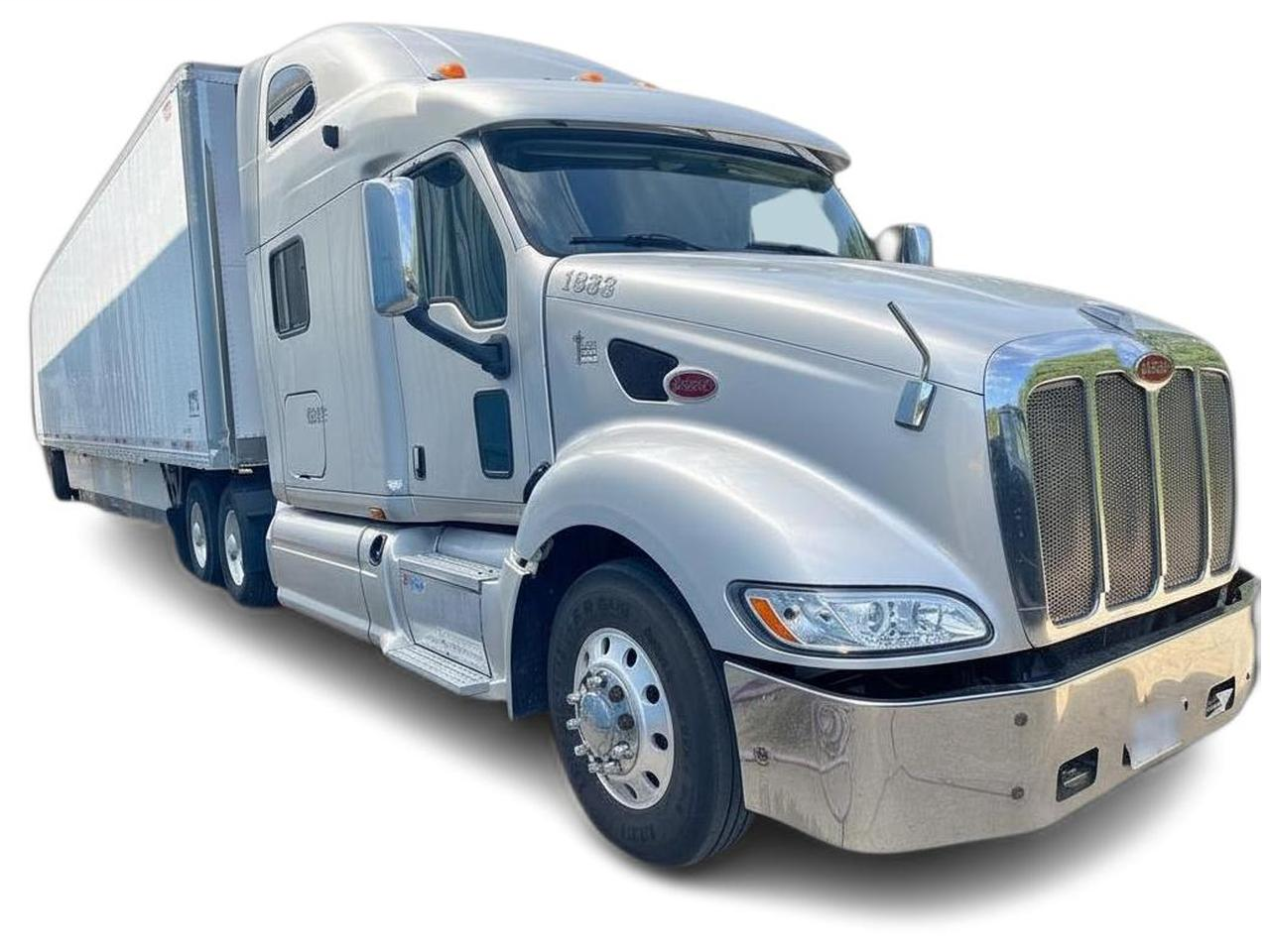
The 2011 Peterbilt 387 is a long-haul conventional truck known for its aerodynamic design and comfortable cabin. Produced from 2007 to 2014, this model typically featured a spacious sleeper cab. Its popularity stems from a blend of driver comfort and operational efficiency, making it a favorite among owner-operators and fleet managers seeking a reliable workhorse. Pricing for a used 2011 model can vary significantly based on condition and mileage, generally ranging from $40,000 to $70,000.
The Good
The 2011 Peterbilt 387 excels in driver comfort with its spacious and quiet cab, fostering better rest and productivity. Its robust build ensures exceptional reliability for demanding routes, while the aerodynamic design contributes to fuel efficiency. This combination offers both emotional satisfaction for drivers and practical value for fleet owners.
The Bad
Potential weaknesses for the 2011 Peterbilt 387 include the complexity of its advanced electronics, which can lead to costly repairs if issues arise. Some owners report occasional issues with the HVAC system's longevity and minor electrical gremlins. Thorough pre-purchase inspection is crucial.
2011 Peterbilt 387: Quick Overview
- Engine Options: The 2011 Peterbilt 387 was typically equipped with powerful PACCAR MX engines or Cummins ISX engines. PACCAR MX engines offered displacements around 12.9 liters, while Cummins ISX engines also provided robust performance.
- Horsepower: Horsepower ratings varied depending on the specific engine and configuration, generally ranging from 380 hp to over 550 hp. This allowed for significant power to handle heavy loads.
- Fuel Economy: Fuel economy for a heavy-duty truck like the 387 is highly dependent on load, terrain, driving style, and engine specification. However, the aerodynamic design of the 387 aimed to optimize this, with many configurations achieving between 5.5 to 7.0 miles per gallon (MPG) under typical highway conditions.
- 0-60 Times: 0-60 mph times are not a standard metric for heavy-duty trucks as they are designed for sustained hauling rather than rapid acceleration. Performance is measured more by torque and pulling power.
- Towing Capacity: As a Class 8 truck, the towing capacity of the 2011 Peterbilt 387 is substantial, designed for heavy-duty freight hauling. It can be configured to tow gross vehicle weights (GCW) well over 80,000 pounds, often exceeding 100,000 pounds depending on axle configurations and legal limits.
- Trim-Level Features: The 387 was primarily offered in a conventional, long-nose configuration with a focus on long-haul operations. Key features often included:
- Spacious Sleeper Cabs: Available in various sizes (e.g., 48", 63", 70") offering amenities for extended road trips, including beds, storage, and often space for auxiliary equipment.
- Aerodynamic Enhancements: Features like a sloped hood, integrated fairings, and aerodynamic mirrors to improve fuel efficiency.
- Driver-Focused Cockpit: Ergonomically designed dashboard with clear instrumentation, comfortable seating (often air-ride), and good visibility.
- Optional features could include premium sound systems, advanced climate control, auxiliary power units (APUs), and customized interior finishes.
2011 Peterbilt 387 Specifications
Vehicle Information
| Year | 2011 |
| Make | Peterbilt |
| Model | 387 |
| Trim | - |
| Style | - |
| Type | Truck |
| Category | Medium Truck |
Manufacturing Details
| Made In | United States |
| Manufacturing City | NEWARK |
Dimensions
| Doors | - |
| Curb Weight | - |
| Gross Vehicle Weight Rating | - |
| Overall Height | - |
| Overall Length | - |
| Overall Width | - |
| Wheelbase Length | - |
| Standard Seating | - |
Engine & Performance
| Engine | 12L I6 |
| Engine Size | 12.9L |
| Engine Cylinders | 6 |
| Transmission | - |
| Transmission Type | - |
| Transmission Speeds | - |
| Drivetrain | 6x4 |
Additional Features
| Anti-Brake System | - |
| Steering Type | - |
Pricing
| Manufacturer Suggested Retail Price (MSRP) | - |
| Invoice Price | - |
| Delivery Charges | - |
Vehicle History Report
Vehicle
Specifications
Specifications
Ownership
History
History
All History
Events
Events
NMVTIS Title
History Check
History Check
Salvage/Rebuilt
Check
Check
Accident
Check
Check
Theft
Check
Check
Open Lien
Check
Check
Past Sale
Listings
Listings
Safety
Recalls
Recalls
Odometer
Check
Check
Market Price
Analysis
Analysis
What Problems Does the 2011 Peterbilt 387 Have?
The 2011 Peterbilt 387, while generally considered a reliable workhorse, has had some reported issues and concerns that owners should be aware of. One recurring theme, particularly with trucks from this era and other heavy-duty vehicles, involves the electronic control modules (ECMs) and associated wiring harnesses. Failures or malfunctions in these systems can lead to a variety of drivability issues, from engine performance problems to sensor faults, and can be costly to diagnose and repair.
Another area that has seen some owner feedback relates to the HVAC system. While generally functional, some users have reported issues with the longevity of components like compressors or the blower motor, especially after several years of intensive use. This can impact driver comfort significantly, particularly during extreme weather conditions.
The diesel particulate filter (DPF) system, common in trucks from 2007 onwards due to emissions regulations, can also be a source of concern. While not unique to the 2011 387, these systems require regular maintenance and can clog if not properly regenerated, leading to reduced performance and potential engine derates. Incorrect maintenance or driving patterns (e.g., excessive short-haul trips) can exacerbate these issues.
Recalls for the 2011 Peterbilt 387 are typically specific to certain component failures or safety-related issues. Owners should always consult the National Highway Traffic Safety Administration (NHTSA) database for the most up-to-date recall information pertinent to their specific VIN. Common recall areas for heavy-duty trucks can include braking system components, electrical system issues, or potential fire hazards related to certain parts.
Long-term reliability is generally good, with many Peterbilt 387s exceeding a million miles with proper maintenance. However, owners need to be diligent with routine servicing, fluid changes, and inspections. Areas to pay close attention to over time include the transmission and drivetrain components, suspension systems, and the wear and tear on the chassis from constant heavy use. Addressing minor issues promptly can prevent them from escalating into more significant and expensive problems.
Another area that has seen some owner feedback relates to the HVAC system. While generally functional, some users have reported issues with the longevity of components like compressors or the blower motor, especially after several years of intensive use. This can impact driver comfort significantly, particularly during extreme weather conditions.
The diesel particulate filter (DPF) system, common in trucks from 2007 onwards due to emissions regulations, can also be a source of concern. While not unique to the 2011 387, these systems require regular maintenance and can clog if not properly regenerated, leading to reduced performance and potential engine derates. Incorrect maintenance or driving patterns (e.g., excessive short-haul trips) can exacerbate these issues.
Recalls for the 2011 Peterbilt 387 are typically specific to certain component failures or safety-related issues. Owners should always consult the National Highway Traffic Safety Administration (NHTSA) database for the most up-to-date recall information pertinent to their specific VIN. Common recall areas for heavy-duty trucks can include braking system components, electrical system issues, or potential fire hazards related to certain parts.
Long-term reliability is generally good, with many Peterbilt 387s exceeding a million miles with proper maintenance. However, owners need to be diligent with routine servicing, fluid changes, and inspections. Areas to pay close attention to over time include the transmission and drivetrain components, suspension systems, and the wear and tear on the chassis from constant heavy use. Addressing minor issues promptly can prevent them from escalating into more significant and expensive problems.
How long will the 2011 Peterbilt 387 last?
The 2011 Peterbilt 387 is built for longevity, with many owner-operators and fleet vehicles accumulating significant mileage. On average, a well-maintained 2011 Peterbilt 387 can realistically achieve between 800,000 to 1.2 million miles or more over its service life. This is contingent upon diligent adherence to maintenance schedules, using quality parts and fluids, and addressing any emerging issues promptly.
Long-term durability is a hallmark of the Peterbilt brand, and the 387 is no exception. The chassis and frame are robust, designed to withstand the rigors of constant heavy hauling. Weaknesses that tend to appear over extended periods often relate to wear and tear on high-mileage components, such as the transmission, clutch, suspension bushings, and exhaust systems. The aforementioned electronic components and HVAC systems can also require attention as the vehicle ages. Regular inspections, especially of the driveline and electrical systems, are key to maximizing its lifespan and avoiding costly breakdowns.
What Technology & Safety Features are Included?
The 2011 Peterbilt 387, while primarily a workhorse designed for function over luxury, incorporated technology and safety features that were standard or optional for its class at the time.
Built-in Tech & Entertainment: Standard features typically included a digital information display in the instrument cluster for monitoring vehicle performance, fuel levels, and diagnostics. Entertainment systems were usually basic, often consisting of an AM/FM radio with a CD player. Higher trim levels or optional packages could include upgraded audio systems with multiple speakers and auxiliary inputs for connecting personal devices. The focus was on practical information display and essential audio functionality for long-haul drivers.
Driver-Assistance Features: Advanced driver-assistance systems (ADAS) as we know them today were limited in 2011. The 387 would have featured standard elements like power steering, anti-lock braking systems (ABS), and excellent visibility due to its conventional design. Optional features might have included cruise control for easier highway driving and potentially even stability control systems, though these were not as prevalent as they are now. The primary focus of driver assistance was on providing a stable and controllable platform under various load and road conditions.
Safety Features: Safety in the 387 was centered on its robust construction and essential braking systems. It featured heavy-duty braking components designed for stopping large loads. The chassis and cab structure were engineered for durability and driver protection in the event of an impact. Seatbelts were standard, and the spacious cab provided ample room for the driver to operate comfortably and safely.
Optional Features: Beyond the core offerings, owners could opt for features like auxiliary lighting, premium gauge clusters, heated and power-adjustable mirrors, and sometimes even in-cab refrigerators or microwave ovens to enhance comfort and convenience on extended trips.
Crash-Test Ratings: Specific crash-test ratings, such as those conducted by the NHTSA or IIHS for passenger vehicles, are not typically performed or publicly available for heavy-duty commercial trucks like the Peterbilt 387. The safety certifications for these vehicles focus on their compliance with federal motor vehicle safety standards (FMVSS) related to structural integrity, braking, and other operational safety aspects relevant to their intended commercial use.
Built-in Tech & Entertainment: Standard features typically included a digital information display in the instrument cluster for monitoring vehicle performance, fuel levels, and diagnostics. Entertainment systems were usually basic, often consisting of an AM/FM radio with a CD player. Higher trim levels or optional packages could include upgraded audio systems with multiple speakers and auxiliary inputs for connecting personal devices. The focus was on practical information display and essential audio functionality for long-haul drivers.
Driver-Assistance Features: Advanced driver-assistance systems (ADAS) as we know them today were limited in 2011. The 387 would have featured standard elements like power steering, anti-lock braking systems (ABS), and excellent visibility due to its conventional design. Optional features might have included cruise control for easier highway driving and potentially even stability control systems, though these were not as prevalent as they are now. The primary focus of driver assistance was on providing a stable and controllable platform under various load and road conditions.
Safety Features: Safety in the 387 was centered on its robust construction and essential braking systems. It featured heavy-duty braking components designed for stopping large loads. The chassis and cab structure were engineered for durability and driver protection in the event of an impact. Seatbelts were standard, and the spacious cab provided ample room for the driver to operate comfortably and safely.
Optional Features: Beyond the core offerings, owners could opt for features like auxiliary lighting, premium gauge clusters, heated and power-adjustable mirrors, and sometimes even in-cab refrigerators or microwave ovens to enhance comfort and convenience on extended trips.
Crash-Test Ratings: Specific crash-test ratings, such as those conducted by the NHTSA or IIHS for passenger vehicles, are not typically performed or publicly available for heavy-duty commercial trucks like the Peterbilt 387. The safety certifications for these vehicles focus on their compliance with federal motor vehicle safety standards (FMVSS) related to structural integrity, braking, and other operational safety aspects relevant to their intended commercial use.
What Colors Options are Available?
2011 Peterbilt 387 Prices and Market Value
When new, the 2011 Peterbilt 387 would have commanded a price ranging broadly from approximately $100,000 to $150,000 or more, depending on the specific configuration, engine, sleeper size, and optional features.
Currently, the used market price for a 2011 Peterbilt 387 varies significantly. Expect to see prices typically ranging from $40,000 to $70,000 for trucks in good condition with moderate to high mileage. Trucks with exceptionally low mileage, desirable specifications, or recent major overhauls can fetch higher prices.
Depreciation on heavy-duty trucks like the 387 is generally slower than for light-duty vehicles, especially for well-maintained units. The primary factors affecting resale value include mileage, engine and transmission condition, overall maintenance history, tire wear, interior condition, and the presence of any cosmetic or mechanical damage. Trucks that have been meticulously cared for and have documentation to prove it will always command a premium.
Currently, the used market price for a 2011 Peterbilt 387 varies significantly. Expect to see prices typically ranging from $40,000 to $70,000 for trucks in good condition with moderate to high mileage. Trucks with exceptionally low mileage, desirable specifications, or recent major overhauls can fetch higher prices.
Depreciation on heavy-duty trucks like the 387 is generally slower than for light-duty vehicles, especially for well-maintained units. The primary factors affecting resale value include mileage, engine and transmission condition, overall maintenance history, tire wear, interior condition, and the presence of any cosmetic or mechanical damage. Trucks that have been meticulously cared for and have documentation to prove it will always command a premium.
2011 Peterbilt 387 Cost of Ownership
Owning a 2011 Peterbilt 387 involves significant costs, making it a considerable investment rather than an economical choice for the average consumer. Insurance premiums will be substantial, reflecting the vehicle's value and the risks associated with commercial trucking. Fuel costs are a major ongoing expense, highly dependent on miles driven, fuel prices, and the truck's specific engine and configuration, typically ranging from $20,000 to $50,000+ annually. Maintenance and repair costs are also high due to the specialized nature of heavy-duty components and potential for expensive part replacements. While durable, unforeseen repairs can be costly. Overall, it is a costly vehicle to own and operate, best suited for commercial operations where its productivity justifies the expense.
2011 Peterbilt 387 Fuel Efficiency
Fuel Type
Diesel
Fuel Capacity
-
City Mileage
-
Highway Mileage
-
2011 Peterbilt 387 Recalls & Defects
Engine and Engine Cooling:exhaust System:emission Control:gas Recirculation Valve (Egr Valve)
Recall date
2010-10-01
Recall no.
10v453000
Source
NHTSA
Summary
Paccar IS Recalling Certain Model Year Kenworth and Peterbilt Vehicles. A Manufacturing Defect IN THE Seal Supplied BY A Component Manufacturer Installed ON THE Output Shaft OF THE Exhaust GAS Recirculation (Egr) Valve Actuator MAY Cause Eventual Delamination OF THE Seal. Delamination OF THE Seal MAY Allow Engine OIL TO Leak From THE EGR Valve Onto Exhaust Components.
Consequence
THE Leaking OF Engine OIL Onto HOT Exhaust Components, Such AS When THE Engine IS Under Significant Load, MAY Create THE Possibility OF A Fire.
Remedy
Dealers Will Replace THE EGR Valve Assembly ON THE Subject Vehicles Equipped With THE Paccar MX Engine. This Service Will BE Performed Free OF Charge. THE Safety Recall Began ON October 29, 2010. Owners MAY Contact Kenworth AT 425-828-5440 and Peterbilt AT 940-591-4196.
Notes
Paccar Safety Recall NO. E008r.owners MAY Also Contact THE National Highway Traffic Safety Administration's Vehicle Safety Hotline AT 1-888-327-4236 (Tty 1-800-424-9153), or GO TO <A Href=http://Www.safercar.gov>http://www.safercar.gov</a> .
Engine and Engine Cooling
Recall date
2011-03-24
Recall no.
11v203000
Source
NHTSA
Summary
Paccar IS Recalling Certain Model Year 2007-2011 Kenworth C500, T2000, T600, and T660, AS Well AS Model Year 2009-2011 Peterbilt 387 and 388 Trucks Equipped With Caterpillar C15 Engine and Manufactured From MAY 11, 2006, Through September 17, 2010. Degradation OF A Combustion Tube Weld CAN Cause Radial Heat Impingement ON THE Body Which MAY Burn Through Certain Bodies Used ON C15 Engines.
Consequence
This Could Result IN A Fire.
Remedy
Caterpillar IS Handling THE Owner Notification and Remedy FOR This Campaign. Please SEE Caterpillar's Defect Report 11e-006. Caterpillar Will Replace THE Single Piece Combustion Tube With A Thick Wall Combustion Tube Which Will NOT Allow THE Heat TO Break Through. This Service Will BE Performed Free OF Charge. DUE TO A Parts Supply Issue, Owners Will BE Notified BY THE END OF April 2011 About THE Safety Defect, and Will Then BE Notified Again Once THE Free Remedy IS Available, Currently Estimated TO BE Around Late July 2011. Owners MAY Contact Caterpillar Toll-Free AT 1-800-447-4986.
Notes
Kenworth Safety Recall NO. 11kwb & Peterbilt Safety Recall NO. 0311-A.owners MAY Also Contact THE National Highway Traffic Safety Administration's Vehicle Safety Hotline AT 1-888-327-4236 (Tty 1-800-424-9153), or GO TO <A Href=http://Www.safercar.gov>http://www.safercar.gov</a> .
Electrical System:software
Recall date
2011-07-21
Recall no.
11v380000
Source
NHTSA
Summary
Paccar IS Recalling Certain Model Year 2011-2012 Kenworth T660, T700, and T800 Vehicles Manufactured From April 19, 2010, Through MAY 13, 2011, and Model Year 2008, 2010, and 2011 Peterbilt 365, 367, 384, 386, 387, 388 and 587 Vehicles Manufactured From April 20, 2010, Through June 11, 2011, and Equipped With Paccar MX Engines and Eaton Ultrashift DM or Allison Automatic Transmissions (Without Auto-Neutral). THE Fast Idle Control MAY BE Activated BY THE Operator While THE Transmission IS IN Gear.
Consequence
IF THE Fast Idle Control Function IS Engaged With THE Transmission IN Gear, THE Vehicle Could Unexpectedly Accelerate and Override THE Parking Brake and , Creating A Risk OF A Crash and Damage TO Other Vehicles or Property and THE Potential FOR Injury TO Nearby Pedestrians.
Remedy
Kenworth and Peterbilt Dealers Will Update THE Engine Software FOR THE Affected Chassis. This Service Will BE Performed Free OF Charge. THE Safety Recall Began ON August 22, 2011. Owners MAY Contact Kenworth AT 1-425-828-5440 and Peterbilt AT 1-940-591-4196.
Notes
Kenworth and Peterbilt Safety Recall NO. E038r.owners MAY Also Contact THE National Highway Traffic Safety Administration's Vehicle Safety Hotline AT 1-888-327-4236 (Tty 1-800-424-9153), or GO TO <A Href=http://Www.safercar.gov>http://www.safercar.gov</a> .
Fuel System, Other:storage:tank Assembly
Recall date
2011-02-23
Recall no.
11v127000
Source
NHTSA
Summary
Paccar IS Recalling Certain Model Year 2008-2012 Kenworth T2000, T660, T700, T800, and W900, AS Well AS Model Year 2009-2012 Peterbilt 365, 367, 384, 386, 387, 388, 389, and 587 Trucks Equipped With Paccar MX Engines. THE OIL Module Centrifugal Spinner Filter CAP IN THE Paccar MX Engine MAY Become Loose, Possibly Allowing THE CAP TO Come OFF and Engine OIL TO Partially Discharge From THE OIL Module Onto Exhaust Components.
Consequence
THE Discharge OF Engine OIL Onto Exhaust Components Which ARE Hot, Such AS When THE Engine IS Under Significant Load, MAY Cause A Fire.
Remedy
Dealers Will Re-Torque THE OIL Module Filter CAP and Install A Secondary Retention Device ON THE Secondary Centrifugal Spinner Filter Cap. This Service Will BE Performed Free OF Charge. THE Safety Recall IS Expected TO Begin During March 2011. Owners MAY Contact Kenworth AT 1-425-828-5440 and Peterbilt AT 1-940-591-4196.
Notes
Owners MAY Also Contact THE National Highway Traffic Safety Administration's Vehicle Safety Hotline AT 1-888-327-4236 (Tty 1-800-424-9153), or GO TO <A Href=http://Www.safercar.gov>http://www.safercar.gov</a> .
Equipment:other:labels
Recall date
2015-03-06
Recall no.
15v132000
Source
NHTSA
Summary
Paccar Incorporated (Paccar) IS Recalling Certain Model Year 2006-2016 Peterbilt 587, 579, 567, 389, 388, 387, 385, 382, 379, 378, 367, 365 and 357 Trucks Manufactured July 25, 2005, TO February 26, 2016. THE Affected Vehicles MAY BE Equipped With Tire and RIM Certification Labels That List A Tire Pressure Below THE Actual Correct Amount. AS Such, These Vehicles Fail TO Comply With THE Requirements OF Federal Motor Vehicle Safety Standard NO. 120, "tire Selection and Rims and Motor Home/Recreation Vehicle Trailer Load Carrying Capacity Information FOR Motor Vehicles With A Gvwr OF More Than 4,536 Kilograms (10,000 Pounds)."
Consequence
IF THE Tires ARE Underinflated DUE TO THE Incorrect Inflation Pressure Listed ON THE Label, THE Truck MAY NOT BE Able TO Carry THE Maximum Gross Vehicle Weight Rating (Gvwr) Load Listed Without Experiencing Tire Failure Which Would Increase THE Risk OF A Crash.
Remedy
Peterbilt Will Notify Owners and Mail Them A Corrected Tire and RIM Certification Label, Free OF Charge. THE Recall Began ON June 19, 2015. Owners MAY Contact Peterbilt Customer Service AT 1-940-591-4000. Paccar's Number FOR This Recall IS 215-d.
Notes
Owners MAY Also Contact THE National Highway Traffic Safety Administration Vehicle Safety Hotline AT 1-888-327-4236 (Tty 1-800-424-9153), or GO TO Www.safercar.gov.
Tires
Recall date
2015-03-06
Recall no.
15v132000
Source
NHTSA
Summary
Paccar Incorporated (Paccar) IS Recalling Certain Model Year 2006-2016 Peterbilt 587, 579, 567, 389, 388, 387, 385, 382, 379, 378, 367, 365 and 357 Trucks Manufactured July 25, 2005, TO February 26, 2016. THE Affected Vehicles MAY BE Equipped With Tire and RIM Certification Labels That List A Tire Pressure Below THE Actual Correct Amount. AS Such, These Vehicles Fail TO Comply With THE Requirements OF Federal Motor Vehicle Safety Standard NO. 120, "tire Selection and Rims and Motor Home/Recreation Vehicle Trailer Load Carrying Capacity Information FOR Motor Vehicles With A Gvwr OF More Than 4,536 Kilograms (10,000 Pounds)."
Consequence
IF THE Tires ARE Underinflated DUE TO THE Incorrect Inflation Pressure Listed ON THE Label, THE Truck MAY NOT BE Able TO Carry THE Maximum Gross Vehicle Weight Rating (Gvwr) Load Listed Without Experiencing Tire Failure Which Would Increase THE Risk OF A Crash.
Remedy
Peterbilt Will Notify Owners and Mail Them A Corrected Tire and RIM Certification Label, Free OF Charge. THE Recall Began ON June 19, 2015. Owners MAY Contact Peterbilt Customer Service AT 1-940-591-4000. Paccar's Number FOR This Recall IS 215-d.
Notes
Owners MAY Also Contact THE National Highway Traffic Safety Administration Vehicle Safety Hotline AT 1-888-327-4236 (Tty 1-800-424-9153), or GO TO Www.safercar.gov.
Electronic Stability Control (Esc)
Recall date
2020-04-06
Recall no.
20v199000
Source
NHTSA
Summary
Paccar Incorporated (Paccar) IS Recalling Certain 2008-2019 Peterbilt 330, 335, 337, 340, 348, 365, 367, 384, 386, 387, 388, 389, 567, 579 and 587 Vehicles and 2008-2020 Kenworth T170, T270, T370, T660, T680, T800, T880, and W900 Vehicles Equipped With Namux Software. IN THE Event That THE Anti-lock Brake System (Abs) Loses Battery And/Or Ignition Power TO THE Controller, THE Dash Warning Light FOR THE ABS MAY NOT Illuminate TO Warn THE Driver OF THE Loss OF Abs. AS Such, These Vehicles Fail TO Comply With THE Requirements OF Federal Motor Vehicle Safety Standard (fmvss) Number 121, "air Brake Systems," and 136, "electronic Stability Control System ON Heavy Vehicles."
Consequence
IF THE Driver Unknowingly Operates THE Vehicle Without THE ABS Functioning, There Would BE AN Increased Risk OF A Crash.
Remedy
Paccar Will Notify Owners, and Dealers Will Update THE Namux Software Within THE Cab Control Module, Free OF Charge. Paccar Issued Owners AN Interim Notification ON June 4, 2020. THE Recall Began MAY 26, 2020. Owners MAY Contact Kenworth Customer Service AT 1-425-828-5888 or Peterbilt Customer Service AT 1-940-591-4220. Paccar's Number FOR This Recall IS 20pbc and 20kwb.
Notes
Owners MAY Also Contact THE National Highway Traffic Safety Administration Vehicle Safety Hotline AT 1-888-327-4236 (Tty 1-800-424-9153), or GO TO Www.safercar.gov.
Service Brakes, Air:antilock:abs Warning Light
Recall date
2020-04-06
Recall no.
20v199000
Source
NHTSA
Summary
Paccar Incorporated (Paccar) IS Recalling Certain 2008-2019 Peterbilt 330, 335, 337, 340, 348, 365, 367, 384, 386, 387, 388, 389, 567, 579 and 587 Vehicles and 2008-2020 Kenworth T170, T270, T370, T660, T680, T800, T880, and W900 Vehicles Equipped With Namux Software. IN THE Event That THE Anti-lock Brake System (Abs) Loses Battery And/Or Ignition Power TO THE Controller, THE Dash Warning Light FOR THE ABS MAY NOT Illuminate TO Warn THE Driver OF THE Loss OF Abs. AS Such, These Vehicles Fail TO Comply With THE Requirements OF Federal Motor Vehicle Safety Standard (fmvss) Number 121, "air Brake Systems," and 136, "electronic Stability Control System ON Heavy Vehicles."
Consequence
IF THE Driver Unknowingly Operates THE Vehicle Without THE ABS Functioning, There Would BE AN Increased Risk OF A Crash.
Remedy
Paccar Will Notify Owners, and Dealers Will Update THE Namux Software Within THE Cab Control Module, Free OF Charge. Paccar Issued Owners AN Interim Notification ON June 4, 2020. THE Recall Began MAY 26, 2020. Owners MAY Contact Kenworth Customer Service AT 1-425-828-5888 or Peterbilt Customer Service AT 1-940-591-4220. Paccar's Number FOR This Recall IS 20pbc and 20kwb.
Notes
Owners MAY Also Contact THE National Highway Traffic Safety Administration Vehicle Safety Hotline AT 1-888-327-4236 (Tty 1-800-424-9153), or GO TO Www.safercar.gov.
2011 Peterbilt 387 Warranty
Basic
Original warranty
0 months / No data
Estimated remaining
Expired
Powertrain
Original warranty
0 months / No data
Estimated remaining
Expired
Rust
Original warranty
0 months / No data
Estimated remaining
Expired
2011 Peterbilt 387 Insurance
Insurance for a 2011 Peterbilt 387 is moderately priced, reflecting its status as a Truck with strong safety ratings and
reasonable repair costs.
How Does the 2011 Peterbilt 387 Compare to Other Truck?
The 2011 Peterbilt 387 operates in the highly competitive Class 8 heavy-duty truck segment, primarily for long-haul applications. Its main rivals include other premium conventional trucks known for their comfort, performance, and durability.
Key Rivals:
Comparison:
Recommendations:
If seeking similar comfort and durability, the **Kenworth T660 or T700** are excellent alternatives. For a potentially more modern feel or slightly different feature set, the **Freightliner Cascadia** is a very strong contender. The **International ProStar** offers a blend of efficiency and performance that makes it a comparable option. The best choice often comes down to driver preference, specific dealer support, and the exact specifications and condition of the available used units.
Key Rivals:
- Kenworth T660/T700: Often seen as direct competitors, Kenworth trucks, like the T660 and T700, offer similar levels of driver comfort, aerodynamic efficiency, and robust construction. Performance and reliability are generally on par with Peterbilt. Pricing for comparable models would be similar.
- International ProStar: The ProStar, known for its fuel efficiency and advanced aerodynamics, is another strong contender. While it might offer slightly different interior ergonomics or design philosophies, it competes closely in terms of performance and capability.
- Freightliner Cascadia: As one of the best-selling trucks, the Cascadia is renowned for its modern design, fuel efficiency, and integrated technology. It often presents a strong value proposition and competes directly with the 387 in terms of operational efficiency and driver comfort.
Comparison:
- Performance: The 2011 Peterbilt 387, with its PACCAR or Cummins engine options, delivers strong performance suitable for heavy hauling, comparable to its rivals.
- Features: While the 387 prioritizes driver comfort and a spacious cab, rivals like the Freightliner Cascadia might offer more advanced integrated technology or driver assistance features from 2011. However, the Peterbilt's build quality and interior refinement are often considered superior by many drivers.
- Reliability: Peterbilt has a strong reputation for reliability, and the 387 is generally built to last. Competitors like Kenworth also boast excellent long-term durability. International and Freightliner offer reliable trucks, though individual component choices can sometimes lead to slight variations in long-term repair trends.
- Price: New prices would have been in a similar ballpark for these premium brands. On the used market, the 2011 Peterbilt 387 generally holds its value well, comparable to Kenworth. Freightliner might sometimes offer a slightly lower used price for comparable specifications, while International can also be a strong value.
Recommendations:
If seeking similar comfort and durability, the **Kenworth T660 or T700** are excellent alternatives. For a potentially more modern feel or slightly different feature set, the **Freightliner Cascadia** is a very strong contender. The **International ProStar** offers a blend of efficiency and performance that makes it a comparable option. The best choice often comes down to driver preference, specific dealer support, and the exact specifications and condition of the available used units.
Final Verdict: Is the 2011 Peterbilt 387 a Good Truck?
The 2011 Peterbilt 387 is ideally suited for long-haul owner-operators and fleet managers who prioritize driver comfort, build quality, and long-term reliability. Its spacious sleeper cab and robust construction make it an excellent choice for drivers spending extended periods on the road.
It is absolutely worth buying, especially on the used market, provided it has been well-maintained. Given its age, buying new is not an option. Focus on specific trims that offer larger sleeper configurations for maximum comfort. Thorough pre-purchase inspections are critical to identify any potential issues, especially with the engine, transmission, and electronics. For those seeking a dependable and comfortable platform for their trucking business, a well-inspected 2011 Peterbilt 387 represents a solid investment that can deliver many more miles of service.
