
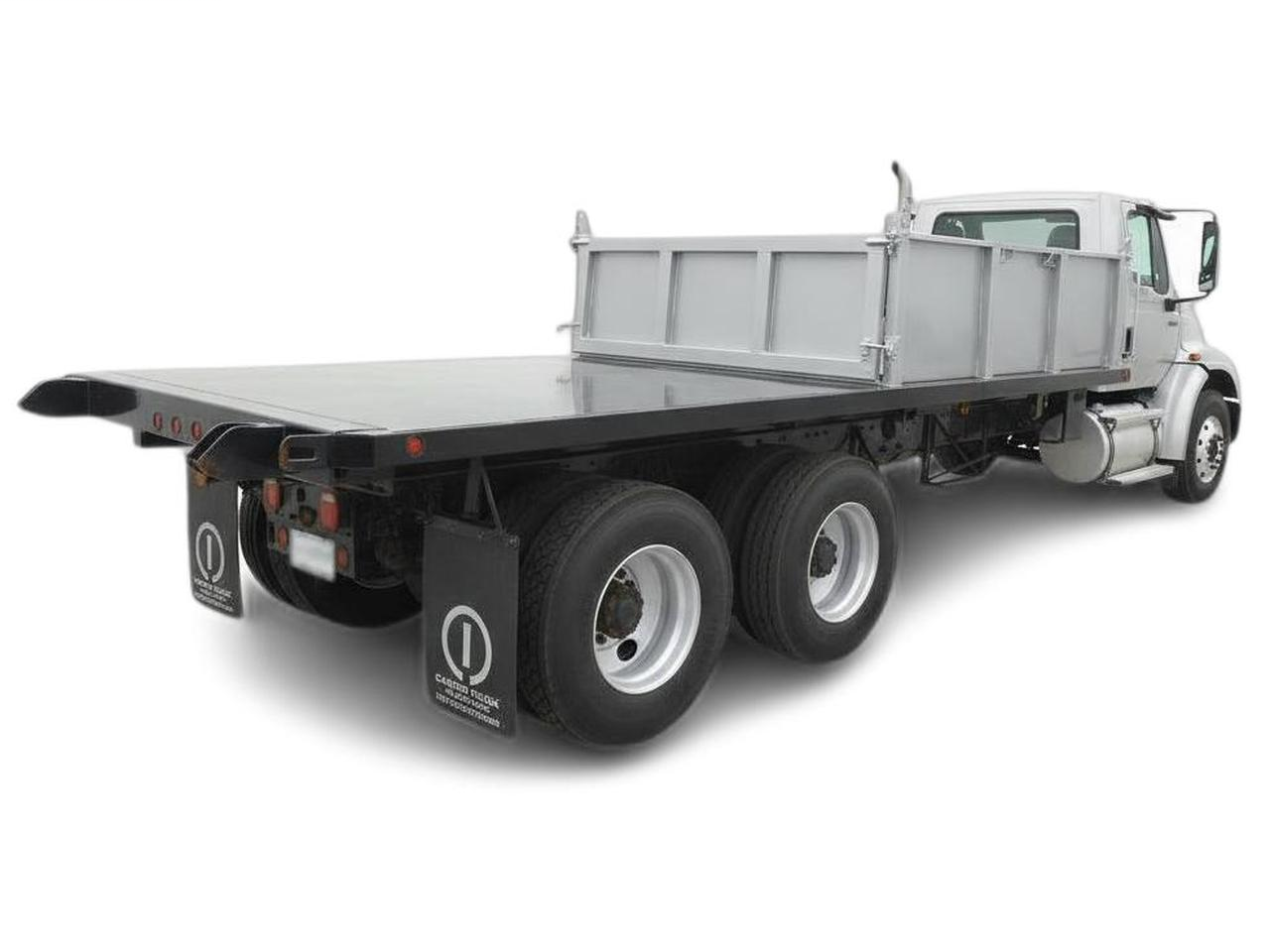
The Good
The 2006 Peterbilt 335 excels in performance with its powerful engine options and robust chassis, ensuring reliability for demanding tasks. Its driver-focused design offers surprising comfort, while its distinctive Peterbilt aesthetic appeals to pride of ownership. This blend of capability and durability provides excellent long-term value.
The Bad
Potential weaknesses for the 2006 Peterbilt 335 include the possibility of wear and tear on aging components, particularly in high-mileage vehicles. Some owners report issues with electrical systems or specific engine accessory failures. Rust on the frame or body panels can also be a concern in certain climates.
2006 Peterbilt 335: Quick Overview
- Engine Options: The 2006 Peterbilt 335 was typically equipped with powerful PACCAR PX-6 or Cummins ISB diesel engines.
- Horsepower: Horsepower ratings generally ranged from approximately 225 hp to 300 hp, depending on the specific engine and configuration chosen. Higher performance options were available for specific vocational needs.
- Fuel Economy: Fuel economy for diesel trucks of this era and class is highly variable, dependent on load, terrain, driving style, and specific engine tune. Owners often reported mileage in the range of 8-12 miles per gallon (MPG).
- 0-60 Times: 0-60 mph acceleration figures are not a primary metric for trucks of this nature and are not readily available. Performance is geared towards torque and hauling capability rather than rapid acceleration.
- Towing Capacity: Towing and payload capacities are heavily dependent on the chassis configuration, axle ratings, and transmission. The 335, as a medium-duty truck, could be configured for significant towing and hauling duties, often in the range of 20,000 lbs to 30,000 lbs Gross Combined Weight Rating (GCWR) or higher with appropriate specifications.
- Trim-Level Features: The 2006 Peterbilt 335 didn't have traditional consumer 'trim levels' like cars. Instead, features were dictated by vocational application and customer specifications. Common configurations included:
- Day Cab: Standard configuration for local and regional hauling, offering a no-frills, functional workspace.
- Stake Bed/Flatbed: Designed for general cargo, construction materials, and equipment transport.
- Box Truck/Dry Van: Enclosed body for secure freight.
- Tractor Unit: Configured for pulling trailers in various commercial operations.
2006 Peterbilt 335 Specifications
Vehicle Information
| Year | 2006 |
| Make | Peterbilt |
| Model | 335 |
| Trim | - |
| Style | - |
| Type | Truck |
| Category | Medium Truck |
Manufacturing Details
| Made In | Canada |
| Manufacturing City | MONTREAL |
Dimensions
| Doors | - |
| Curb Weight | - |
| Gross Vehicle Weight Rating | - |
| Overall Height | - |
| Overall Length | - |
| Overall Width | - |
| Wheelbase Length | - |
| Standard Seating | - |
Engine & Performance
| Engine | 8.3L I6 |
| Engine Size | 8.3L |
| Engine Cylinders | 6 |
| Transmission | - |
| Transmission Type | - |
| Transmission Speeds | - |
| Drivetrain | 6x4 |
Additional Features
| Anti-Brake System | - |
| Steering Type | - |
Pricing
| Manufacturer Suggested Retail Price (MSRP) | - |
| Invoice Price | - |
| Delivery Charges | - |
Vehicle History Report
Specifications
History
Events
History Check
Check
Check
Check
Check
Listings
Recalls
Check
Analysis
What Problems Does the 2006 Peterbilt 335 Have?
How long will the 2006 Peterbilt 335 last?
What Technology & Safety Features are Included?
Built-in Tech and Entertainment: Standard features are typically basic. This would include a functional AM/FM radio, possibly with a CD player. A basic HVAC system is standard for climate control. More advanced entertainment systems, such as satellite radio or complex infotainment screens, were rare and would have been optional upgrades, likely installed by a third party rather than factory-fitted in the traditional sense. Connectivity options like Bluetooth or USB ports were not standard.
Driver-Assistance Features: Driver-assistance features as we know them today were largely absent. There are no lane departure warnings, adaptive cruise control, or automatic emergency braking systems. The primary focus is on the driver's ability to operate the vehicle safely through direct control.
Safety Features: Safety is paramount in commercial vehicles, but it manifests differently. Standard safety features include robust hydraulic or air-over-hydraulic braking systems, designed for heavy loads. Seatbelts are standard. The sturdy construction of the Peterbilt chassis and cab is a significant safety asset, offering substantial protection. Visibility is generally good due to the truck's upright design. Advanced safety systems like electronic stability control (ESC) or traction control were not typically standard on models from this era but could have been optional on certain configurations or specific chassis types.
Crash-Test Ratings: Unlike passenger cars and SUVs, medium-duty trucks like the Peterbilt 335 are not subjected to standardized consumer crash tests by organizations like the NHTSA (National Highway Traffic Safety Administration) or IIHS (Insurance Institute for Highway Safety). Their safety is assessed based on different regulatory standards, often related to structural integrity under load and compliance with commercial vehicle safety regulations. The inherent robust construction of a Peterbilt is designed to withstand significant stresses in vocational use, which contributes to occupant protection.
What Colors Options are Available?
2006 Peterbilt 335 Prices and Market Value
2006 Peterbilt 335 Cost of Ownership
2006 Peterbilt 335 Fuel Efficiency
2006 Peterbilt 335 Recalls & Defects
Parking Brake:driveline:hydraulic
Service Brakes, Air:antilock:abs Warning Light
2006 Peterbilt 335 Warranty
Basic
Powertrain
Rust
2006 Peterbilt 335 Insurance
reasonable repair costs.
How Does the 2006 Peterbilt 335 Compare to Other Truck?
Performance: Peterbilt typically offered robust PACCAR or Cummins engine options that were competitive in terms of power and torque, suitable for a wide range of vocational applications. Freightliner M2 and Kenworth T170/T270 also provided comparable powertrain performance, often with similar engine choices. International DuraStar models were also known for their strong performance.
Features: The 335 focused on core functionality and durability. Its driver-centric cab design was a hallmark, offering good visibility and operator comfort for its class. Competitors like the Freightliner M2 also emphasized driver comfort and modern ergonomics for the time. Kenworth trucks are often lauded for their build quality and driver amenities. International DuraStar offered a mix of practicality and functionality. None of these vehicles from 2006 would feature extensive modern tech like advanced infotainment or driver-assistance systems; the focus was on mechanical robustness.
Reliability: Peterbilt has a strong reputation for build quality and long-term reliability, often outperforming competitors in terms of chassis and structural integrity. Kenworth shares a similar reputation. Freightliner and International are also generally reliable, but specific model years or configurations might have had their own common issues. The PACCAR engines used in Peterbilts and Kenworths are known for their longevity.
Price: Peterbilt trucks, including the 335, were often positioned at a premium price point when new, reflecting their brand prestige and perceived higher quality. Competitors like Freightliner and International might have offered slightly more aggressive pricing, making them attractive to budget-conscious fleet buyers.
Alternatives: For a similar vocational application, a used 2006 Kenworth T170 or T270 would be a direct and comparable alternative, offering similar reliability and build quality, though potentially with slightly different styling or cab ergonomics. A used 2006 Freightliner M2 106 is also a strong contender, often providing a good balance of performance, features, and value. If extreme durability is the absolute priority, sticking with Peterbilt or Kenworth is often the safest bet. For slightly less premium feel but potentially more accessible used pricing, an International DuraStar could be considered, though research into specific engine and transmission reliability for that era is advised.
Final Verdict: Is the 2006 Peterbilt 335 a Good Truck?
Buying this vehicle is most sensible on the used market. New models are no longer produced, and purchasing a used 335 requires a thorough pre-purchase inspection by a diesel mechanic to assess its mechanical health, mileage, and overall condition. It's worth buying if its service history is well-documented, it hasn't been excessively abused, and its intended application aligns with its capabilities. Specific configurations (e.g., flatbed, dump body) will dictate its suitability for particular tasks. Given its age, expect ongoing maintenance costs but benefit from its inherent durability if well-cared for.

Eugene S
Eugene is an automotive enthusiast with over 15 years of experience in the used car market. As a writer at VINCheck.info, he brings deep industry insight and a passion for cars, helping readers make smart, informed decisions. Eugene has written hundreds of used car reviews and is known for breaking down complex automotive topics into clear, actionable advice. Over the years, he has driven and worked on a wide range of vehicles—starting with tuning street cars in his early days and eventually focusing on performance upgrades and reliability improvements. Today, he specializes in evaluating used vehicles through the lens of real-world ownership and enthusiast needs. A longtime fan of Porsche, Eugene especially appreciates vehicles that blend durability with driving enjoyment.