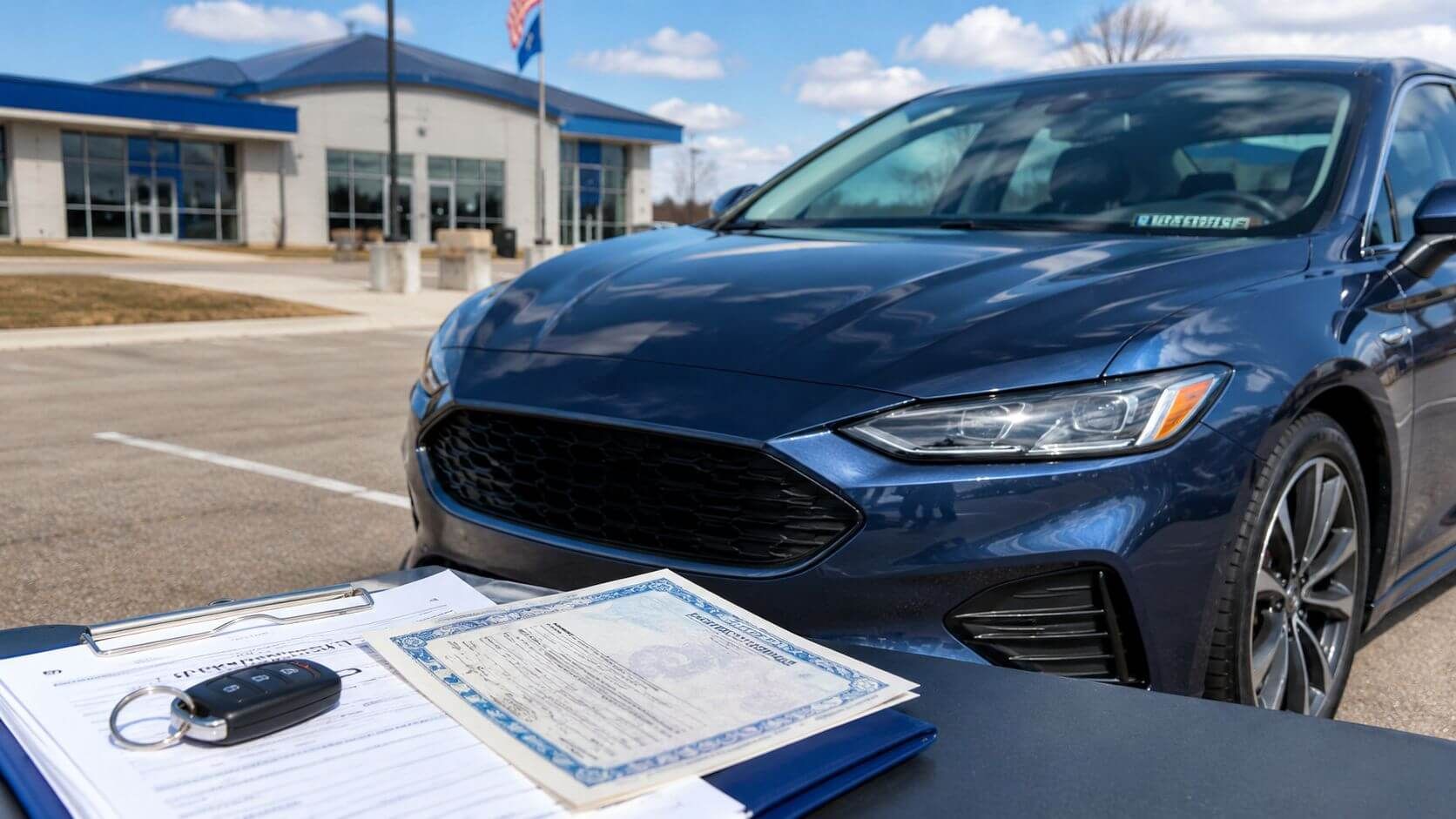
Buying a used car in Michigan should start with a careful VIN lookup and title review. A Michigan VIN check can help you review available vehicle history records, while the title tells you whether the seller can legally transfer ownership, whether a lien is listed, whether the vehicle has a salvage or rebuilt history, and whether the paperwork matches the car.
Do not rely only on the seller’s listing, photos, or verbal promises. Before paying, confirm the VIN on the vehicle, review the original title, check for liens, compare the odometer reading, inspect the car, and complete the title transfer on time.
If you only have the license plate number from a listing, start with a license plate lookup as an early screening step. Once the seller provides the VIN, use that number to verify the vehicle more deeply.
Why a Michigan VIN Check Matters
The VIN is the vehicle’s unique 17-character identification number. It connects the car to title records, registration events, mileage readings, recall information, accident clues, theft records, sale history, and vehicle specifications when those records are available.
A Michigan VIN check can help you answer questions like:
- Does the vehicle match the seller’s description?
- Are the year, make, model, and trim accurate?
- Does the mileage history make sense?
- Are there salvage, rebuilt, flood, junk, or scrap clues?
- Are there accident or damage records?
- Does the title history show multiple states or unusual transfers?
- Are there theft or auction records?
- Are there open recall concerns?
- Does the asking price match the vehicle’s history?
A VIN lookup is not a substitute for the title or a mechanic inspection. It is an early warning tool. If the report raises questions, use the title, seller documents, inspection, and state transfer process to verify the car before buying.
VIN Lookup vs. Michigan Title Check
A VIN lookup and title check work together, but they answer different questions.
| Check | What It Helps Verify | Why It Matters |
|---|---|---|
| VIN lookup | Vehicle identity, title clues, mileage, accidents, recalls, theft, and sale records | Helps screen the vehicle before you spend money |
| Title check | Ownership, seller name, liens, brands, odometer information, and transfer status | Helps confirm whether the seller can transfer ownership |
| Plate lookup | Early research when the VIN is not shown | Useful for screening listings before asking for the VIN |
| Inspection | Current mechanical and physical condition | Helps identify problems records may not show |
If you are serious about the vehicle, do not stop at one step. Use the VIN, title, odometer, inspection, and seller documents together.
Where to Find the VIN
Before checking records, confirm you are using the correct VIN. A single wrong character can return the wrong vehicle or incomplete results.
Check the VIN on:
- Dashboard near the windshield
- Driver-side door jamb label
- Michigan title or out-of-state title
- Registration documents
- Insurance documents, if available
- Seller listing
- Service records, if provided
The VIN on the title should match the VIN on the vehicle. If it does not, pause the transaction. A mismatch could be a clerical error, but it could also point to title fraud, VIN cloning, theft risk, or a vehicle being misrepresented.
What to Check on a Michigan Vehicle Title
The title is the ownership document. In a private sale, the seller should provide the original title, not a photocopy. Review it carefully before paying.
Check the title for:
- Correct VIN
- Seller’s legal name
- Buyer’s name and address section
- Accurate odometer reading or mileage statement
- Sale date and selling price
- Seller’s signature
- Buyer’s signature, where required
- Lienholder information
- Lien release or lien termination statement, if applicable
- Title brands or legends
- Erasures, alterations, or crossed-out information
Michigan guidance also warns buyers not to take possession of a vehicle without a title signed by the owner or owners named on the front of the title. If more than one owner appears on the title, confirm that all required owners have signed.
If the title history looks unclear, use a focused title check by VIN and ask the seller for an explanation before moving forward.
Michigan Title Transfer Timing and Costs
Michigan buyers generally have 15 days from the date of sale to transfer the title. If the title is transferred late, a late fee may apply.
Common Michigan title-transfer costs can include:
- Title transfer fee
- Sales tax, unless an exemption applies
- Plate transfer fee or new plate registration cost
- Additional registration fees, depending on the situation
- Late fee if the title is not transferred within the required period
To register the vehicle in Michigan, you must also provide proof of a valid Michigan No-Fault insurance policy. If you are buying a vehicle and planning to drive it, do not leave insurance and registration questions until the last minute.
Check for Liens Before Buying
A lien means another party, usually a lender, may have a financial interest in the vehicle. If there is a lien on the title, it must be properly released before a clear transfer can happen.
Be cautious if:
- A lender is listed on the title but no lien release is provided
- The seller says the loan is paid but has no documentation
- The title is held electronically and cannot be transferred yet
- The seller wants full payment before clearing the lien
- The title is not in the seller’s name
- The seller promises to send the title later
For a paper Michigan title, the lien may need to be terminated on the title or supported by a lien termination statement. If the title is electronic, the lien may need to be released before transfer. Do not rely only on verbal assurances.
Odometer and Mileage Checks
Mileage is one of the most important used car value signals. In Michigan private sales, the title paperwork includes odometer information when required, and the odometer reading should match the mileage displayed on the vehicle.
Compare mileage across:
- Dashboard odometer
- Title
- VIN report
- Service records
- Inspection records
- Seller listing
- Oil change stickers, if available
Watch for mileage that moves backward, sudden jumps, long gaps, or low mileage that does not match the vehicle’s wear. A mistake may be explainable, but mileage inconsistencies should always be resolved before purchase.
Michigan Salvage, Rebuilt, and Scrap Title Concerns
Title brands matter because they affect safety, registration, insurance, financing, and resale value.
In Michigan, a salvage title is connected to a distressed vehicle. Michigan describes a distressed vehicle as one where major component parts have been wrecked, destroyed, damaged, stolen, or are missing, and the total estimated damage is from 75% to less than 91% of the vehicle’s pre-damaged cash value.
A vehicle with a Michigan salvage title cannot be plated or used on public roads until it is recertified by a salvage vehicle inspector and retitled.
After repair and inspection, the vehicle may receive a title with the legend REBUILT SALVAGE. That label tells future owners that the vehicle was previously classified as totaled by an insurance company under a prior owner.
Michigan also has scrap titles. A scrap title applies to more severe cases where estimated repair cost is 91% or more of the vehicle’s pre-damaged value. A scrap-titled vehicle can be used only for parts or scrap metal and cannot be registered for road use.
If a VIN report or title shows salvage, rebuilt salvage, or scrap history, proceed carefully. Ask for repair records, inspection documents, parts receipts, insurance confirmation, and a price that reflects the risk.
Dealer Purchase vs. Private Seller Purchase
Buying from a Michigan dealer and buying from a private seller involve different responsibilities.
A dealer may handle more of the title and plate paperwork. Michigan guidance says dealers must show the previous owner’s title and allow the buyer to examine it for used vehicles. Dealers also provide transaction documents such as the title application, warranty documents if any, odometer mileage statement when required, Buyers Guide window sticker, and finance contract if applicable.
In a private sale, the buyer and seller are responsible for providing the required documents. If possible, both parties can go together to a Secretary of State office to complete the transfer.
| Buying Source | Possible Advantage | Buyer Risk |
|---|---|---|
| Dealer | More paperwork support | Still need to review title, fees, warranties, and prior title |
| Private seller | Potentially lower price | Buyer must verify title, liens, VIN, mileage, and condition carefully |
Whether buying from a dealer or individual, keep copies of every document.
License Plate Rules Buyers Should Know
In Michigan, the seller generally removes the plate when selling a vehicle. The buyer must apply for a new plate or transfer a plate they already own.
Michigan guidance also notes that a buyer may have limited ability to drive the vehicle home without a plate for a short period, but the buyer must carry the assigned title and proof of insurance and travel directly. Because rules can depend on the situation, confirm current requirements before relying on this.
Do not use the seller’s plate unless the law clearly allows it. Plate misuse can create liability and registration problems.
Recall and Safety Checks
A title review does not tell you everything about safety recalls. Recalls may involve airbags, brakes, steering, seat belts, fuel systems, electrical systems, or other safety-related parts.
Before buying, run a VIN recall check and ask whether recall repairs have been completed. If a recall is open, contact an authorized dealer to confirm whether a remedy is available.
An open recall does not always mean you should reject the vehicle, but it should affect your questions, timing, and negotiation.
Michigan Used Car Buyer Workflow
Use this process before buying a used car in Michigan.
1. Ask for the VIN
A serious seller should usually provide the VIN before you visit. If the seller refuses, treat that as a warning sign.
2. Run a VIN Lookup
Review available records for title brands, accidents, theft, mileage, recalls, sale history, and specifications.
3. Compare the VIN Everywhere
Check the dashboard, door label, title, registration, listing, and service records. Every VIN should match exactly.
4. Review the Original Title
Make sure the seller’s name matches the title, the title is original, all required owners have signed, and the VIN and odometer information match.
5. Check for Liens
If a lienholder appears, require a proper lien release or lien termination statement before paying.
6. Inspect the Vehicle
Test-drive the car and have it inspected by a mechanic. Look for accident repairs, rust, flood clues, warning lights, uneven tire wear, leaks, and poor repair quality.
7. Complete the Transfer on Time
Transfer the title within the required Michigan timeframe and make sure you have insurance, plate, registration, and all required documents handled properly.
Red Flags to Watch For
Slow down or walk away if you notice:
- Seller refuses to provide the VIN
- VIN does not match the vehicle or title
- Seller provides a photocopy instead of the original title
- Title is missing, altered, or not in the seller’s name
- More than one owner is listed but not all required owners signed
- Lienholder is listed with no release
- Odometer reading does not match records
- Salvage or rebuilt history was not disclosed
- Vehicle has a scrap title or parts-only history
- Seller wants payment before showing the title
- Seller refuses an inspection
- Price is far below market with no clear explanation
A legitimate seller should be able to explain the vehicle’s title, VIN, mileage, lien status, and condition clearly.
Michigan VIN and Title Check Checklist
| Item to Check | Why It Matters |
|---|---|
| VIN | Confirms the vehicle’s identity |
| Original title | Shows ownership and transfer details |
| Seller name | Helps confirm legal authority to sell |
| Lienholder | Helps avoid unpaid-loan problems |
| Odometer information | Helps detect mileage inconsistencies |
| Title brands | Affects safety, value, insurance, and resale |
| Salvage or rebuilt status | Requires careful inspection and documentation |
| Scrap status | May mean the vehicle cannot return to road use |
| Recall status | Helps identify unresolved safety concerns |
| Mechanic inspection | Confirms current condition |
Bottom Line
A Michigan VIN check and used car title review can help you avoid vehicles with hidden title issues, lien problems, mileage concerns, salvage history, recall risks, or identity mismatches.
Before buying, confirm the VIN, review the original title, check for liens, compare mileage records, watch for salvage or rebuilt labels, inspect the vehicle, and complete the title transfer within Michigan’s required timeframe. If the records, documents, and physical vehicle all match, you can move forward with more confidence. If they do not, pause the deal until the issue is fully explained.
FAQs
Should I run a VIN check before buying a used car in Michigan?
Yes. A VIN check can help you review available title, accident, theft, mileage, recall, sale, and specification records before deciding whether a vehicle is worth buying.
Is a Michigan VIN check the same as a title check?
No. A VIN check reviews available vehicle history records. A title check focuses more on ownership, liens, title brands, odometer details, and transfer issues.
How long do I have to transfer a title in Michigan?
Michigan buyers generally have 15 days from the date of sale to transfer the title. A late fee may apply if the title is transferred after the required period.
What should I check on a Michigan vehicle title?
Check the VIN, seller name, odometer reading, sale date, selling price, lienholder information, title brands, signatures, and any altered or erased information.
Can a Michigan salvage vehicle be driven on public roads?
A Michigan salvage-titled vehicle cannot be plated or used on public roads until it is recertified by a salvage vehicle inspector and retitled. After repair and inspection, it may receive a rebuilt salvage title.
Author
Graham Sutton
Graham Sutton is an automotive information writer covering VIN lookup tools, title status research, vehicle condition history, and resale-value risk factors. He creates detailed guides that help readers compare listings more effectively, identify hidden problems, and use vehicle history data to make safer buying decisions. His work is especially useful for shoppers who want a clearer picture of a vehicle before negotiating price.