Buying a used car in North Carolina should start with two things: confirming the vehicle’s identity and reviewing the title. A clean-looking car can still have title problems, lien issues, mileage inconsistencies, accident history, open recalls, or paperwork gaps that make the purchase harder than expected.
A North Carolina VIN check helps you review available records tied to the vehicle’s 17-character identification number. A title review helps you confirm whether the seller can legally transfer ownership, whether the title has brands, whether a lien is listed, and whether the paperwork matches the car in front of you.
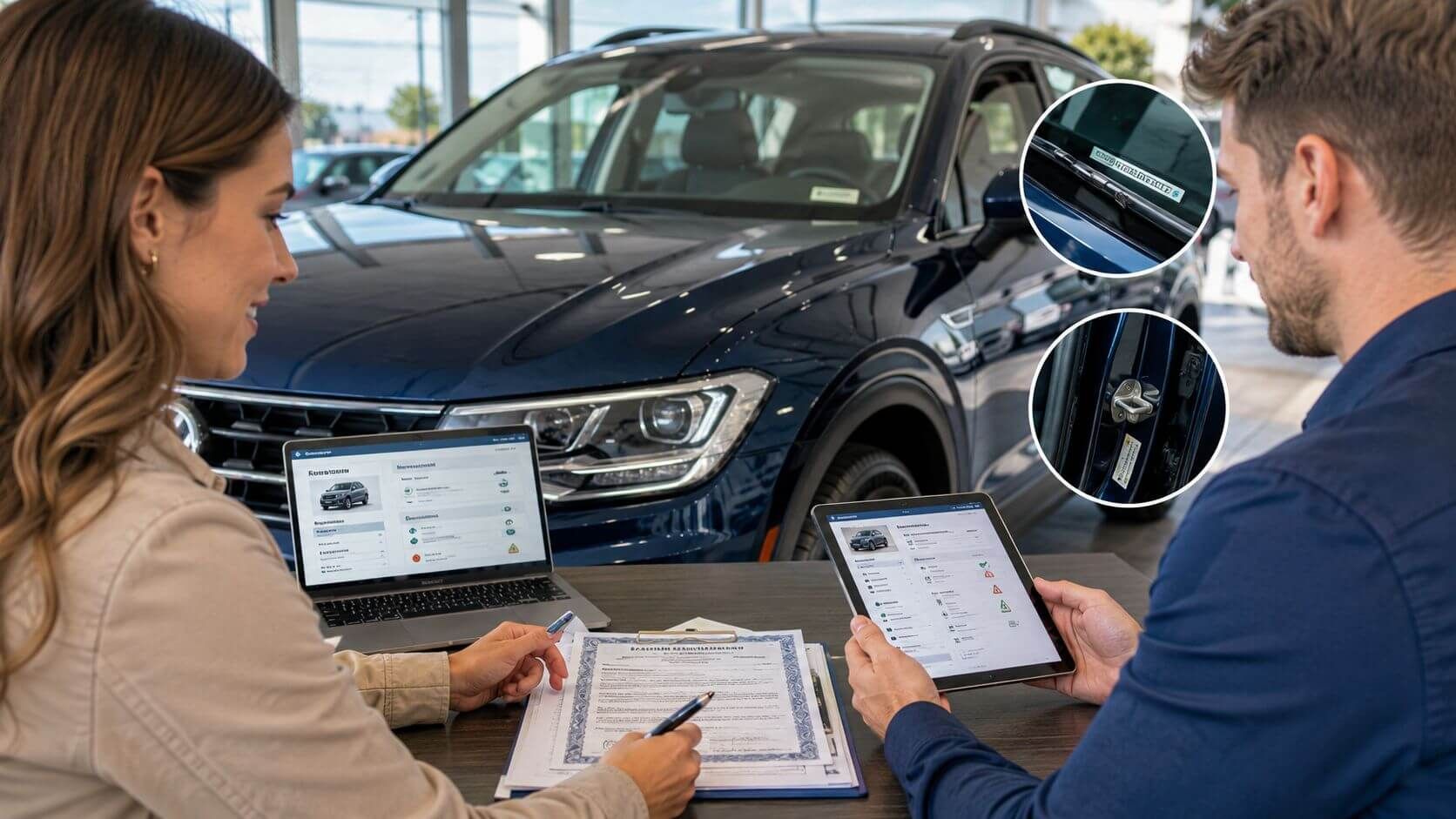
The safest approach is simple: verify the VIN, review the title, compare the seller’s documents, check for red flags, and complete the transfer properly before paying.
A North Carolina buyer should use the VIN to confirm the vehicle’s identity and history, then review the title for ownership, liens, odometer information, damage disclosure, title brands, and notarization requirements. If you only have the plate number from a listing, start with a license plate lookup and ask the seller for the VIN before moving forward.
Why a North Carolina VIN Check Matters
The VIN is the key identifier for a vehicle. It connects the car to title records, registration records, recall information, theft records, mileage readings, service history, accident clues, and other available data.
A VIN check can help you answer questions like:
- Does the vehicle match the seller’s listing?
- Is the year, make, model, and trim accurate?
- Are there title brand clues?
- Does the mileage history make sense?
- Are there accident or damage records?
- Are there theft or sale records?
- Are there open recall concerns?
- Does the vehicle history support the asking price?
A VIN check should not be your only step. It does not physically inspect the car, verify the seller’s identity, or guarantee that every event in the vehicle’s life appears in the report. Use it as an early screening tool, then verify the findings with the title, seller documents, and inspection.
VIN Check vs. Title Review
A VIN check and title review work together, but they are not the same thing.
A VIN check helps you understand the vehicle’s recorded history. A title review helps you confirm ownership and transfer risks.
| Check | What It Helps Verify | Why It Matters |
|---|---|---|
| VIN check | Vehicle identity, title clues, mileage, accidents, recalls, theft, sale history | Helps screen for hidden risk before purchase |
| Title review | Ownership, seller name, liens, title brands, odometer, damage disclosure | Helps confirm whether the seller can transfer ownership |
| Plate lookup | Early research when VIN is not listed | Useful as a starting point, not final proof |
| Inspection | Current mechanical and physical condition | Confirms problems that records may not show |
If you are serious about a car, do all of them before final payment.
Where to Find the VIN
Before checking records, confirm that you are using the correct VIN. A single wrong character can lead to the wrong report.
Check the VIN on:
- Dashboard near the windshield
- Driver-side door jamb label
- North Carolina title or out-of-state title
- Registration documents
- Insurance documents, if available
- Seller listing
- Service records, if provided
The VIN should match everywhere. If the VIN on the title, vehicle, or listing does not match, pause the purchase. A mismatch may be a simple paperwork error, but it can also signal title fraud, VIN cloning, theft risk, or a misrepresented vehicle.
What a North Carolina VIN Check Can Help Reveal
A VIN check may show different records depending on data availability. Not every vehicle will have the same level of detail, but the report can still help you spot important warning signs.
Look for:
- Vehicle specifications
- Title records
- Salvage, rebuilt, flood, junk, or other title brand clues
- Accident or damage records
- Theft records
- Sale or auction history
- Mileage records
- Recall information
- Prior-use clues
- Market value signals
A clean report is helpful, but it is not a guarantee. Some accidents, repairs, flood exposure, and maintenance work may never appear in available records. Always compare the report with the car’s condition and paperwork.
What to Check on a North Carolina Vehicle Title
The title is the ownership document. Before you pay for a used car in North Carolina, review the title carefully and make sure the seller can transfer it properly.
Check the title for:
- Correct VIN
- Seller’s legal name
- Buyer’s name and address section
- Date of sale or delivery
- Seller’s signature and printed name
- Odometer reading, when required
- Damage disclosure statement
- Lienholder information
- Title brands
- Notarization, if it is a North Carolina title
- Altered, erased, or crossed-out information
For a North Carolina title transfer, the back of the original title must be completed by both the original owner and the recipient. If it is a North Carolina title, it must also be notarized. Out-of-state titles follow the requirements of the issuing state.
If the title looks unclear or the seller’s explanation does not match the records, use a title check by VIN before moving forward.
Why Notarization Matters in North Carolina
North Carolina title transfers require careful paperwork. If the original title is a North Carolina title, the assignment must be notarized.
This matters because title mistakes can delay the transfer or create ownership problems after the sale. Be cautious with an “open title,” a title that is already signed by a seller but not properly completed with the buyer’s information. Open-title situations can create risk because the person selling the car may not be the legal owner shown on the title.
For a private sale, it is safer to complete the title transfer properly with the seller. Do not rely only on a bill of sale if the title transfer is incomplete.
Check for Liens Before Buying
A lien means another party may have a financial interest in the vehicle. This commonly happens when a car was financed and the loan has not been fully paid off.
Before buying, check whether a lienholder is listed on the title. If a lien appears, ask for proof that it has been released. Do not rely only on the seller saying the loan is paid.
Be careful if:
- The seller says the title will arrive later
- A lender is listed but no lien release is available
- The title is held by a bank or finance company
- The title is not in the seller’s name
- The seller wants full payment before clearing the lien
A lien issue can make it hard to title the car in your name. Resolve lien questions before handing over money.
Odometer and Damage Disclosure Checks
Mileage and damage disclosures are important in North Carolina title transfers. The title transfer information includes odometer reading when required and a damage disclosure statement.
Compare the odometer with:
- VIN report mileage records
- Title information
- Service records
- Inspection records
- Seller’s listing
- Wear on the seats, pedals, tires, and steering wheel
Watch for mileage that moves backward, large unexplained gaps, or mileage that does not match the car’s condition.
Also review the damage disclosure carefully. If damage is disclosed, ask what happened, who repaired it, and whether repair records are available. If no damage is disclosed but the vehicle shows paint mismatch, panel gaps, rust, flood clues, or warning lights, ask more questions.
Title Brands North Carolina Buyers Should Watch For
Title brands are important because they can affect safety, value, insurance, financing, and resale. Brand names and rules can vary by state, but buyers should be cautious if any report or title shows serious history.
Common title-related concerns include:
- Salvage
- Rebuilt or reconstructed
- Flood
- Fire
- Junk or parts-only
- Lemon history
- Odometer-related brand
- Theft recovery
A branded title does not always mean the vehicle is impossible to buy. However, it should change how you evaluate the car. Ask for repair records, inspection documents, title documents, insurance confirmation, and a price that reflects the added risk.
If a title brand appears, get a professional inspection before buying.
Recall and Safety Checks
A title review will not tell you everything about safety recalls. Recalls can involve airbags, brakes, steering, seat belts, fuel systems, electrical components, and other safety-related parts.
Before buying, run a VIN recall check and ask the seller whether recall repairs have been completed. If an open recall appears, contact a dealer to confirm whether a remedy is available.
An open recall does not always mean you should reject the car, but it should affect your questions, timing, and negotiation.
North Carolina Inspection and Emissions Notes
North Carolina registered vehicles must pass an annual safety inspection before registration renewal. Some vehicles registered in certain counties must also pass an emissions inspection.
As a buyer, this means you should ask:
- Is the vehicle currently registered?
- Is the inspection current?
- Will emissions testing apply in my county?
- Are there dashboard warning lights that may affect inspection?
- Has the vehicle recently failed inspection?
A valid inspection does not guarantee the car has no problems, but inspection status can still reveal useful clues about safety, emissions, and roadworthiness.
Private Seller vs. Dealer Purchase
Buying from a dealer and buying from a private seller are different experiences.
A dealer may handle more paperwork, but you should still review warranty terms, title timing, fees, disclosures, and vehicle history. A private seller may offer a lower price, but the buyer has more responsibility to verify title, VIN, lien status, and condition.
| Buying Source | Possible Advantage | Buyer Risk |
|---|---|---|
| Dealer | More paperwork support | Fees, warranty limits, and title timing still need review |
| Private seller | Potentially lower price | Buyer must verify title, liens, VIN, and condition carefully |
In either case, keep copies of all documents and do not sign until the paperwork matches the vehicle and the deal.
North Carolina Used Car Buyer Workflow
Use this process before buying a used car in North Carolina.
1. Ask for the VIN
A serious seller should usually provide the VIN before you visit. If the seller refuses, treat that as a warning sign.
2. Review the Vehicle History
Use the VIN to review available title, accident, theft, mileage, recall, specification, and sale records.
3. Compare the VIN Everywhere
Check the dashboard, door label, title, registration, listing, and service records. Every VIN should match exactly.
4. Review the Title
Check the seller name, VIN, lienholder information, odometer entry, damage disclosure, title brands, signatures, and notarization.
5. Inspect the Vehicle
Look for accident repairs, flood clues, rust, warning lights, uneven tire wear, leaks, poor repairs, and mismatched paint.
6. Verify Recalls
Check recall status close to the purchase date and ask whether any repairs have been completed.
7. Complete the Transfer Properly
Use the NCDMV title transfer process through a license plate agency or mail-in process, and make sure the title assignment is complete and notarized when required.
Red Flags to Watch For
Slow down or walk away if you notice:
- Seller refuses to provide the VIN
- VIN does not match the title or vehicle
- Title is missing, altered, or not in the seller’s name
- North Carolina title is not properly notarized
- Lienholder is listed with no release
- Seller offers an open title
- Damage disclosure does not match the vehicle condition
- Odometer records do not make sense
- Vehicle has a title brand that was not disclosed
- Seller refuses inspection
- Price is far below market with no clear reason
- Seller pressures you to pay quickly
A legitimate seller should be able to explain the vehicle’s title, VIN, mileage, ownership, and condition clearly.
North Carolina VIN and Title Check Checklist
| Item to Check | Why It Matters |
|---|---|
| VIN | Confirms the vehicle’s identity |
| Title | Shows ownership and transfer details |
| Seller name | Helps confirm legal transfer authority |
| Notarization | Required for North Carolina title assignment |
| Lienholder | Helps avoid unpaid-loan problems |
| Odometer information | Helps detect mileage inconsistencies |
| Damage disclosure | Helps identify serious prior damage |
| Title brand | Affects value, insurance, financing, and resale |
| Recall status | Helps identify unresolved safety concerns |
| Inspection status | Helps evaluate roadworthiness and registration issues |
Bottom Line
A North Carolina VIN check and used car title review can help you avoid vehicles with hidden title issues, lien problems, mileage concerns, accident history, recall risks, or identity mismatches.
Before paying, confirm the VIN, review the title, check for liens, verify odometer and damage disclosures, look for title brands, inspect the vehicle, and complete the transfer correctly. If the records, documents, and physical vehicle all match, you can move forward with more confidence. If they do not, pause the deal until the issue is fully explained.
FAQs
Should I run a VIN check before buying a used car in North Carolina?
Yes. A VIN check can help you review available title, accident, theft, mileage, recall, sale, and specification records before deciding whether a vehicle is worth buying.
Is a North Carolina VIN check the same as a title check?
No. A VIN check reviews available vehicle history records. A title check focuses more on ownership, liens, title brands, odometer details, damage disclosure, and transfer issues.
Does a North Carolina title need to be notarized?
If the original title is a North Carolina title, the title assignment must be notarized during transfer. Out-of-state titles follow the requirements of the state that issued them.
What should I check on a North Carolina vehicle title?
Check the VIN, seller name, buyer information, date of sale, seller signature and printed name, odometer reading when required, damage disclosure, lienholder information, title brands, and notarization.
Should I buy a car in North Carolina if there is a lien on the title?
Be careful. If a lienholder is listed, ask for proof that the lien has been released before paying. Without proof, you may have trouble transferring clear ownership.
Author
Nathan Whitmore
Nathan Whitmore is an automotive research writer focused on vehicle history reports, VIN analysis, title verification, and used-car background checks. He writes practical, consumer-friendly content that helps buyers understand how ownership records, accident history, branded titles, and lien data can affect a vehicle’s value and legal standing. His work is designed to make complex vehicle records easier to interpret before a sale is finalized.