
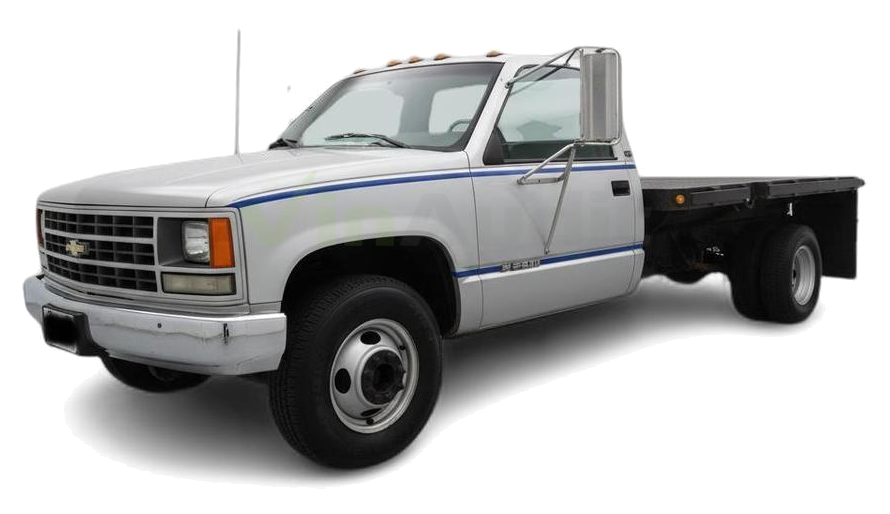
The 1990 Chevrolet GMT-400, also known as the C/K pickup, marked a significant redesign for Chevrolet's full-size trucks. Produced from 1988 to 2000, this generation introduced a more aerodynamic and modern appearance. Available in various body styles including regular cab, extended cab, and crew cab, and chassis configurations like 1500, 2500, and 3500 series. Popular trims included the base Work Truck (WT), Cheyenne, and the upscale Silverado. Its popularity stems from its robust build, versatile nature, and enduring capability, making it a favorite for work and recreation.
The Good
The 1990 Chevrolet GMT-400 offers a blend of hearty V8 performance and renowned Chevrolet truck reliability. Its spacious cabin provides surprising comfort for its era, while the updated design was a significant step forward. For practical buyers, its workhorse capability and value are key. Emotionally, its rugged charm and dependable nature evoke a sense of trust and nostalgia.
The Bad
Potential weaknesses of the 1990 Chevrolet GMT-400 include rust, particularly around wheel wells and rocker panels. Electrical gremlins can surface over time, and some older models may exhibit transmission issues or worn suspension components. Regular maintenance is crucial to mitigate these common concerns.
1990 Chevrolet GMT-400: Quick Overview
- Engine Options: The 1990 Chevrolet GMT-400 offered a range of gasoline engines. Key options included the 4.3L V6 (VIN Z), the 5.0L V8 (VIN E), and the 5.7L V8 (VIN K).
- Horsepower:
- 4.3L V6: Approximately 160-165 horsepower.
- 5.0L V8: Approximately 175-180 horsepower.
- 5.7L V8: Approximately 210-215 horsepower. - Fuel Economy: MPG varied significantly based on engine, drivetrain (2WD/4WD), and configuration. Expect figures in the range of 13-17 MPG city and 17-22 MPG highway for V8 models, with the V6 being slightly more efficient.
- 0-60 Times: Varies greatly by configuration. A 5.7L V8 2WD model might achieve 0-60 MPH in around 8-9 seconds. 4WD and heavier configurations would be slower.
- Towing Capacity: Depending on the specific model (1500, 2500, 3500), axle ratio, and engine, towing capacities could range from approximately 5,000 lbs for lighter configurations to over 10,000 lbs for heavy-duty 3500 models.
- Trim-Level Features:
- Base/Work Truck (WT): Basic interior, vinyl flooring, manual windows and locks, AM radio, durable exterior components.
- Cheyenne: More comfortable cloth or vinyl interior, upgraded dashboard trim, power windows and locks (often optional), better sound insulation.
- Silverado: Top trim with premium cloth seating, upgraded audio system (cassette/radio), carpeted floors, chrome accents, cruise control, tilt steering wheel (often standard or optional).
- Optional Features: Air conditioning, anti-lock brakes (ABS), limited-slip differential, premium sound systems, bed liners, towing packages, alloy wheels.
1990 Chevrolet GMT-400 Specifications
Vehicle Information
| Year | 1990 |
| Make | Chevrolet |
| Model | GMT-400 |
| Trim | - |
| Style | - |
| Type | Pickup Truck |
| Category | Standard Pickup Truck |
Manufacturing Details
| Made In | Canada |
| Manufacturing City | PONTIAC |
Dimensions
| Doors | 2-Door |
| Curb Weight | 5487 pounds |
| Gross Vehicle Weight Rating | 8600 pounds |
| Overall Height | 75.80 inches |
| Overall Length | 237.00 inches |
| Overall Width | 76.80 inches |
| Wheelbase Length | 155.50 inches |
| Standard Seating | 3 |
Engine & Performance
| Engine | 5.7L V8 |
| Engine Size | 5.7L |
| Engine Cylinders | 8 |
| Transmission | 3-Speed Automatic |
| Transmission Type | Automatic |
| Transmission Speeds | 3-Speed |
| Drivetrain | Four-Wheel Drive |
Additional Features
| Anti-Brake System | Non-ABS |
| Steering Type | Recirculating |
Pricing
| Manufacturer Suggested Retail Price (MSRP) | $17,823 |
| Invoice Price | - |
| Delivery Charges | - |
Vehicle History Report
Vehicle
Specifications
Specifications
Ownership
History
History
All History
Events
Events
NMVTIS Title
History Check
History Check
Salvage/Rebuilt
Check
Check
Accident
Check
Check
Theft
Check
Check
Open Lien
Check
Check
Past Sale
Listings
Listings
Safety
Recalls
Recalls
Odometer
Check
Check
Market Price
Analysis
Analysis
What Problems Does the 1990 Chevrolet GMT-400 Have?
The 1990 Chevrolet GMT-400 platform, while generally robust, has some commonly reported issues as it ages. One of the most prevalent concerns is rust. This is especially true in areas with harsh winters and road salt, with areas like the rocker panels, cab corners, rear quarter panels, and frame rails being particularly susceptible.
Electrical problems are also frequently mentioned. This can range from faulty turn signal switches and dashboard warning lights to issues with the power window motors and door lock actuators. The ABS system, if equipped, can also be a source of trouble, with sensors and the control module being prone to failure.
The transmission, particularly the 4L60E automatic transmission, can develop issues over time, such as slipping, harsh shifting, or complete failure, often due to wear and tear or fluid contamination. The engine itself is generally reliable, but items like intake manifold gaskets can develop leaks, and the cooling system (radiator, water pump, thermostat) requires regular attention to prevent overheating.
While specific widespread recalls for the 1990 model year itself aren't as prominent as some later years, general GM truck recalls concerning things like fuel pump modules or potential fire hazards could apply to certain VIN ranges. For long-term reliability, owners report that meticulous maintenance is key. Neglected fluid changes, especially for the transmission and differential, significantly shorten the lifespan of these components. The steering components, such as ball joints and tie rods, can also wear out, leading to clunking noises and alignment issues. Early models of the GMT-400 platform sometimes had minor issues with dashboard materials degrading or cracking due to sun exposure.
Electrical problems are also frequently mentioned. This can range from faulty turn signal switches and dashboard warning lights to issues with the power window motors and door lock actuators. The ABS system, if equipped, can also be a source of trouble, with sensors and the control module being prone to failure.
The transmission, particularly the 4L60E automatic transmission, can develop issues over time, such as slipping, harsh shifting, or complete failure, often due to wear and tear or fluid contamination. The engine itself is generally reliable, but items like intake manifold gaskets can develop leaks, and the cooling system (radiator, water pump, thermostat) requires regular attention to prevent overheating.
While specific widespread recalls for the 1990 model year itself aren't as prominent as some later years, general GM truck recalls concerning things like fuel pump modules or potential fire hazards could apply to certain VIN ranges. For long-term reliability, owners report that meticulous maintenance is key. Neglected fluid changes, especially for the transmission and differential, significantly shorten the lifespan of these components. The steering components, such as ball joints and tie rods, can also wear out, leading to clunking noises and alignment issues. Early models of the GMT-400 platform sometimes had minor issues with dashboard materials degrading or cracking due to sun exposure.
How long will the 1990 Chevrolet GMT-400 last?
Based on owner data and typical maintenance, a well-maintained 1990 Chevrolet GMT-400 can reasonably expect to reach 200,000 to 300,000 miles, and in some cases, even more. These trucks are known for their long-term durability, particularly the powertrains when properly serviced. The chassis and frame are robust. However, weaknesses that emerge over time often relate to rust and electrical components. Major engine or transmission rebuilds are not uncommon past 150,000 miles if maintenance has been spotty. With consistent oil changes, transmission fluid flushes, and addressing rust proactively, these trucks can serve reliably for decades.
What Technology & Safety Features are Included?
The 1990 Chevrolet GMT-400, being from the early 90s, offers a more basic technological and safety suite compared to modern vehicles.
Technology and Entertainment: Standard entertainment typically consisted of an AM/FM radio, often with a cassette player as an upgrade or on higher trims. Power windows and locks were becoming more common, especially on Cheyenne and Silverado trims, but were often optional on lower trims. Cruise control and tilt steering wheels were also popular optional features that enhanced driver convenience. The dashboard featured analog gauges for speed, RPM, fuel level, and engine temperature, along with indicator lights for various systems.
Driver-Assistance Features: True driver-assistance systems as we know them today were virtually nonexistent. Anti-lock braking system (ABS) was available as an option on some models, providing improved braking control, especially in slippery conditions. Traction control was not a common feature for this year.
Safety Features: Standard safety equipment included seat belts (lap and shoulder belts for front occupants). For 1990, seat belts were still primarily body-mounted or pillar-mounted. Airbags were not standard equipment on most trucks of this era; they began to appear more widely in the mid-90s. The GMT-400 offered a strong, body-on-frame construction, which provided a degree of passive safety.
Crash-Test Ratings: Official crash-test ratings from organizations like the NHTSA (National Highway Traffic Safety Administration) for vehicles from 1990 are less detailed and standardized than modern ratings. However, trucks of this era generally performed reasonably well in frontal impacts due to their robust construction, though side-impact protection and rollover resistance were areas where improvements would come in later generations.
Technology and Entertainment: Standard entertainment typically consisted of an AM/FM radio, often with a cassette player as an upgrade or on higher trims. Power windows and locks were becoming more common, especially on Cheyenne and Silverado trims, but were often optional on lower trims. Cruise control and tilt steering wheels were also popular optional features that enhanced driver convenience. The dashboard featured analog gauges for speed, RPM, fuel level, and engine temperature, along with indicator lights for various systems.
Driver-Assistance Features: True driver-assistance systems as we know them today were virtually nonexistent. Anti-lock braking system (ABS) was available as an option on some models, providing improved braking control, especially in slippery conditions. Traction control was not a common feature for this year.
Safety Features: Standard safety equipment included seat belts (lap and shoulder belts for front occupants). For 1990, seat belts were still primarily body-mounted or pillar-mounted. Airbags were not standard equipment on most trucks of this era; they began to appear more widely in the mid-90s. The GMT-400 offered a strong, body-on-frame construction, which provided a degree of passive safety.
Crash-Test Ratings: Official crash-test ratings from organizations like the NHTSA (National Highway Traffic Safety Administration) for vehicles from 1990 are less detailed and standardized than modern ratings. However, trucks of this era generally performed reasonably well in frontal impacts due to their robust construction, though side-impact protection and rollover resistance were areas where improvements would come in later generations.
What Colors Options are Available?
1990 Chevrolet GMT-400 Prices and Market Value
When new, the 1990 Chevrolet GMT-400 typically ranged from around $15,000 for a base model Work Truck to upwards of $25,000-$30,000 for a loaded Silverado or heavy-duty model. Trucks from this era experienced significant initial depreciation, as is common. Today, used market prices vary widely, from $2,000-$5,000 for project vehicles or high-mileage examples, to $8,000-$15,000+ for well-maintained, lower-mileage, or desirable trim levels (like 4x4 or specific engine configurations). Factors affecting resale value include condition (rust, interior wear, mechanical soundness), mileage, original options, 4WD capability, and demand for classic trucks. Well-preserved examples can hold their value or even appreciate slightly.
1990 Chevrolet GMT-400 Cost of Ownership
Owning a 1990 Chevrolet GMT-400 is generally considered economical, especially if you can perform some maintenance yourself. Fuel costs will depend on the engine and usage, with V8s being thirstier. Insurance is typically affordable, often classified as a classic or older vehicle. Maintenance for routine items like oil changes and filters is inexpensive. However, repair costs can vary; while parts are readily available and often affordable, major repairs like transmission rebuilds or rust remediation can be significant. Overall, for a truck of its capability and age, it offers good value, leaning towards economical ownership provided it's in decent mechanical shape.
1990 Chevrolet GMT-400 Fuel Efficiency
Fuel Type
Gasoline
Fuel Capacity
34.00 gallons
City Mileage
15 miles/gallon
Highway Mileage
17 miles/gallon
1990 Chevrolet GMT-400 Safety Rating
NHTSA
IIHS
1990 Chevrolet GMT-400 Warranty
Basic
Original warranty
0 months / No data
Estimated remaining
Expired
Powertrain
Original warranty
0 months / No data
Estimated remaining
Expired
Rust
Original warranty
0 months / No data
Estimated remaining
Expired
1990 Chevrolet GMT-400 Insurance
Insurance for a 1990 Chevrolet GMT-400 is moderately priced, reflecting its status as a Pickup Truck with strong safety ratings and
reasonable repair costs.
How Does the 1990 Chevrolet GMT-400 Compare to Other Pickup Truck?
The 1990 Chevrolet GMT-400 competed fiercely with contemporaries like the Ford F-Series and Dodge Ram.
Performance: Chevrolet's 5.7L V8 offered strong performance for its time, comparable to the Ford 5.0L V8 and slightly more powerful than Dodge's base V8. Its handling was truck-like but improved over previous generations.
Features: Features like power windows, locks, and better audio systems were often optional across all brands, with higher trims offering similar levels of comfort. The GMT-400's interior design was a significant upgrade for Chevrolet. Ford's F-Series often had a slight edge in payload capacity for comparable models. Dodge's Ram was known for its ruggedness and often distinctive styling.
Reliability: All three brands from this era had their quirks. Chevrolet's GMT-400 was generally reliable, but prone to rust like many vehicles of its time. Ford's F-Series is legendary for its durability, though certain engine variants had issues. Dodge Ram trucks from this period are also robust, particularly their transmissions.
Price: New prices were competitive across the board. Used, the 1990 GMT-400 often presents a strong value proposition, sometimes being more affordable than a similarly aged F-Series or Ram, especially in non-4WD configurations.
Alternatives:
- Similar: A 1990 Ford F-150/F-250 or a 1990 Dodge Ram 150/250 would be direct competitors offering similar capabilities and truck-like experiences.
- Potentially Better: If extreme durability is the absolute priority, a well-maintained Ford F-250 (especially with the 7.3L IDI diesel, though rare and slow) might be considered. However, for a balance of performance, comfort, and affordability on the used market, the 1990 GMT-400 remains a solid choice. Later model years within the GMT-400 generation (e.g., 1995 onwards) often incorporated more modern features and minor reliability improvements.
Performance: Chevrolet's 5.7L V8 offered strong performance for its time, comparable to the Ford 5.0L V8 and slightly more powerful than Dodge's base V8. Its handling was truck-like but improved over previous generations.
Features: Features like power windows, locks, and better audio systems were often optional across all brands, with higher trims offering similar levels of comfort. The GMT-400's interior design was a significant upgrade for Chevrolet. Ford's F-Series often had a slight edge in payload capacity for comparable models. Dodge's Ram was known for its ruggedness and often distinctive styling.
Reliability: All three brands from this era had their quirks. Chevrolet's GMT-400 was generally reliable, but prone to rust like many vehicles of its time. Ford's F-Series is legendary for its durability, though certain engine variants had issues. Dodge Ram trucks from this period are also robust, particularly their transmissions.
Price: New prices were competitive across the board. Used, the 1990 GMT-400 often presents a strong value proposition, sometimes being more affordable than a similarly aged F-Series or Ram, especially in non-4WD configurations.
Alternatives:
- Similar: A 1990 Ford F-150/F-250 or a 1990 Dodge Ram 150/250 would be direct competitors offering similar capabilities and truck-like experiences.
- Potentially Better: If extreme durability is the absolute priority, a well-maintained Ford F-250 (especially with the 7.3L IDI diesel, though rare and slow) might be considered. However, for a balance of performance, comfort, and affordability on the used market, the 1990 GMT-400 remains a solid choice. Later model years within the GMT-400 generation (e.g., 1995 onwards) often incorporated more modern features and minor reliability improvements.
Final Verdict: Is the 1990 Chevrolet GMT-400 a Good Pickup Truck?

The 1990 Chevrolet GMT-400 is ideal for buyers seeking a dependable, capable, and relatively affordable truck for work, light towing, or as a classic daily driver with character. It's worth buying, especially on the used market, provided it has been reasonably maintained and doesn't suffer from excessive rust. It's particularly good for those who appreciate a simpler, more analog driving experience. Look for models with the 5.0L or 5.7L V8 engines for a good balance of power and capability. 4WD versions are excellent for those needing traction in adverse conditions. Avoid heavily modified or neglected examples. For a budget-friendly workhorse or a project vehicle, the GMT-400 offers significant value.