
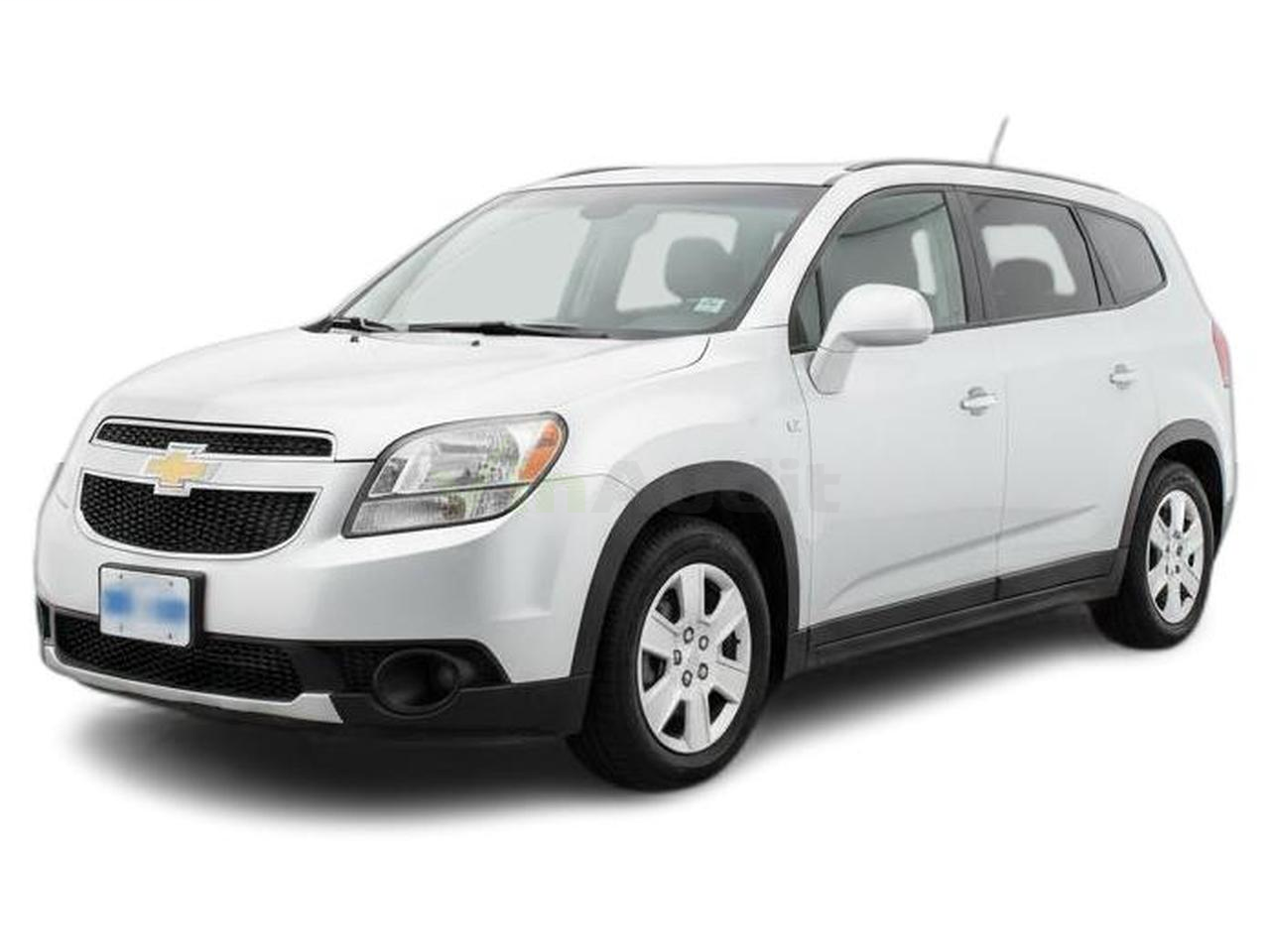
The Good
The 2013 Orlando offers a comfortable ride and a surprisingly refined interior for its class. Its eye-catching, almost European-inspired exterior design appeals to emotional buyers, while its practical seven-seat capacity and decent fuel economy cater to the practical needs of families seeking value.
The Bad
Owners often cite the Orlando's somewhat sluggish acceleration, particularly with the base engine, and the limited cargo space when the third row is in use. Some also note the interior plastics feel less premium than competitors, and the infotainment system can feel dated.
2013 Chevrolet Orlando: Quick Overview
- Engine Options: The 2013 Chevrolet Orlando was primarily offered with two engine choices in North America:
- A standard 2.4-liter Ecotec four-cylinder engine.
- An optional 1.4-liter turbocharged Ecotec four-cylinder engine (often paired with manual transmissions, though automatic was available).
- Horsepower:
- The 2.4-liter engine produced approximately 173 horsepower.
- The 1.4-liter turbocharged engine produced around 138 horsepower.
- Fuel Economy (EPA Estimates):
- For the 2.4-liter engine (FWD): Around 22 mpg city / 30 mpg highway.
- For the 1.4-liter turbocharged engine (FWD): Around 24 mpg city / 34 mpg highway. (Note: Fuel economy figures can vary slightly based on transmission and drivetrain).
- 0-60 Times:
- Generally, 0-60 mph times were in the range of 9-10 seconds for the 2.4L engine, and slightly slower for the 1.4L turbo, reflecting its focus on economy over performance.
- Towing Capacity:
- The 2013 Chevrolet Orlando was not designed for significant towing. Its towing capacity was typically rated at a modest 1,000 pounds, suitable for very light loads.
- Trim-Level Features:
- LS: Typically included standard features like air conditioning, power windows and locks, a six-speaker audio system, and 16-inch steel wheels.
- LT: Added features such as cruise control, a tilt-and-telescoping steering wheel, upgraded cloth upholstery, and satellite radio. Alloy wheels were often standard or optional.
- LTZ: Represented the top trim and usually included premium features like leather upholstery, heated front seats, automatic climate control, a rearview camera, a 7-inch touchscreen infotainment system (MyLink), and larger alloy wheels (often 18-inch).
2013 Chevrolet Orlando Specifications
Vehicle Information
| Year | 2013 |
| Make | Chevrolet |
| Model | Orlando |
| Trim | - |
| Style | - |
| Type | Wagon |
| Category | Standard Sport Utility Vehicle |
Manufacturing Details
| Made In | South Korea |
| Manufacturing City | - |
Dimensions
| Doors | - |
| Curb Weight | - |
| Gross Vehicle Weight Rating | 5000 pounds |
| Overall Height | - |
| Overall Length | - |
| Overall Width | - |
| Wheelbase Length | - |
| Standard Seating | - |
Engine & Performance
| Engine | - |
| Engine Size | - |
| Engine Cylinders | - |
| Transmission | - |
| Transmission Type | - |
| Transmission Speeds | - |
| Drivetrain | - |
Additional Features
| Anti-Brake System | - |
| Steering Type | - |
Pricing
| Manufacturer Suggested Retail Price (MSRP) | - |
| Invoice Price | - |
| Delivery Charges | - |
Vehicle History Report
Specifications
History
Events
History Check
Check
Check
Check
Check
Listings
Recalls
Check
Analysis
What Problems Does the 2013 Chevrolet Orlando Have?
Electrical gremlins are also not uncommon. This can include problems with the power windows not working, dashboard warning lights illuminating without a clear cause, and issues with the infotainment system, such as frozen screens or unresponsive touch controls. The turbocharger on the 1.4-liter engine has also been a source of problems for some owners, with reports of reduced power, boost leaks, and premature failure, often related to oil consumption or carbon buildup.
Brakes and suspension components can also show wear and tear earlier than expected in some cases, leading to squealing noises, vibrations, or a less confident braking experience. While there weren't widespread systemic issues that plagued every single 2013 Orlando, these recurring problems suggest areas where maintenance and inspection are particularly crucial. Owners should pay close attention to these potential pitfalls when considering a used 2013 Orlando, as repairs can sometimes be costly. Recalls for the 2013 model year have addressed various issues, including potential problems with the airbags, fuel system, and electrical components. It's advisable to check the NHTSA website for a comprehensive list of recalls specific to the VIN.
How long will the 2013 Chevrolet Orlando last?
What Technology & Safety Features are Included?
In terms of driver-assistance features, the 2013 Orlando was relatively basic. It did not typically offer advanced systems like adaptive cruise control or lane departure warnings that are common today. The primary driver assistance was the available rearview camera. However, safety was a strong suit, with the Orlando earning good crash-test ratings from the Insurance Institute for Highway Safety (IIHS). It achieved "Good" ratings in front-impact, side-impact, and roof-strength tests, and "Acceptable" in rear-impact tests. The National Highway Traffic Safety Administration (NHTSA) awarded the 2013 Orlando an overall safety rating of 5 stars, including 5 stars for frontal and side crash tests, and 4 stars for rollover resistance. Standard safety equipment included antilock brakes, stability control, traction control, and a suite of airbags (front, side-impact, and curtain airbags). The availability of electronic stability control was a critical safety feature that helped prevent skids and maintain control in emergency maneuvers.
What Colors Options are Available?
2013 Chevrolet Orlando Prices and Market Value
2013 Chevrolet Orlando Cost of Ownership
2013 Chevrolet Orlando Fuel Efficiency
2013 Chevrolet Orlando Insurance
reasonable repair costs.
How Does the 2013 Chevrolet Orlando Compare to Other Wagon?
When it comes to features, the Orlando offered a decent package, especially with the MyLink infotainment system on higher trims, which was competitive for its era. However, rivals like the Mazda5 often provided a more engaging driving experience and sometimes more practical cargo solutions. The Ford C-Max, particularly the hybrid variant, offered superior fuel efficiency, a key advantage for many buyers.
Reliability is where the Orlando faced some challenges. While not universally poor, it generally received average to below-average reliability ratings in consumer surveys, with noted concerns in areas like the transmission and cooling system. Rivals like the Mazda5, despite its age, often had a reputation for robust mechanicals and good long-term reliability. The C-Max also generally fared well in reliability assessments.
Price-wise, the Orlando was often positioned competitively, offering a unique style and three-row seating at a lower price point than some alternatives. However, its resale value tended to be lower than some rivals, reflecting its overall market perception and reliability concerns.
Similar Alternatives:
- Mazda5: Offers a more engaging driving dynamic and decent practicality with sliding rear doors.
- Ford C-Max: Superior fuel economy, especially the hybrid model, and a comfortable ride.
- Toyota Sienna/Honda Odyssey: If pure minivan practicality and reliability are paramount, these are superior choices, though more expensive.
- Compact SUVs (e.g., Honda CR-V, Toyota RAV4): Offer more cargo space and often better reliability, though typically lack a third row.
Final Verdict: Is the 2013 Chevrolet Orlando a Good Wagon?

Drew B
Drew is a seasoned automotive expert and contributor to VinCheck.info. With nearly 15 years of experience as a former Porsche technician, he brings a wealth of hands-on knowledge to his writing. Born in North Carolina, a region renowned for its deep-rooted NASCAR culture, Drew developed a passion for cars early in life, often building and working on vehicles from a young age. At VINCheck, Drew leverages his extensive technical background to provide in-depth analyses of various vehicles. His articles often focus on engine performance, reliability, and maintenance insights, offering readers practical information grounded in real-world experience. Some of his notable contributions include reviews on the Mazda CX-5's longevity and detailed examinations of engine options for models like the 2011 Toyota Camry and Tacoma