
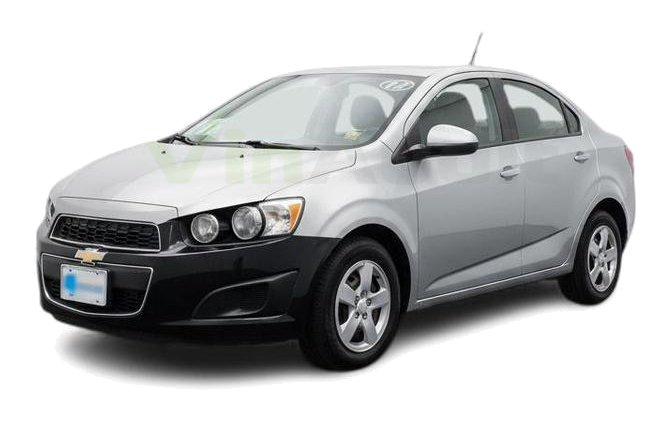
The Good
The 2013 Chevrolet Sonic boasts a strong set of advantages. Emotionally, its youthful design, available turbocharged engine for zippy performance, and American-made status appeal to buyers wanting a fun and distinct subcompact. Practically, it offers good fuel efficiency, especially with the standard engine, solid safety ratings, decent interior comfort and space for its class, and strong overall value in the used market.
The Bad
When considering a 2013 Chevrolet Sonic, potential weaknesses to watch out for include the base 1.8L engine feeling underpowered for some, especially with the automatic transmission. Interior materials, while durable, are mostly hard plastics. Some owners have reported issues with the automatic transmission, and road noise can be noticeable at highway speeds.
2013 Chevrolet Sonic: Quick Overview
The 2013 Chevrolet Sonic offered a compelling set of specifications for a subcompact.
Engine Options:
- 1.8-liter DOHC 4-cylinder: Standard on LS and LT trims, producing 138 horsepower at 6300 rpm and 125 lb-ft of torque at 3800 rpm.
- 1.4-liter DOHC Turbocharged 4-cylinder: Optional on LT, standard on LTZ and RS trims. Also rated at 138 horsepower, but achieved at 4900 rpm, with a more robust 148 lb-ft of torque starting at a low 1850 rpm. This engine provided a more spirited driving experience.
Fuel Economy (EPA Estimated):
- 1.8L with Manual Transmission: 26 MPG city / 35 MPG highway / 30 MPG combined.
- 1.8L with Automatic Transmission: 25 MPG city / 35 MPG highway / 29 MPG combined.
- 1.4L Turbo with Manual Transmission: 29 MPG city / 40 MPG highway / 33 MPG combined (the most efficient option).
- 1.4L Turbo with Automatic Transmission: 27 MPG city / 37 MPG highway / 31 MPG combined.
0-60 MPH Times:
- 1.8L Engine: Approximately 9-10 seconds.
- 1.4L Turbo Engine: Approximately 8-8.5 seconds, offering noticeably quicker acceleration due to its higher torque at lower RPMs.
Towing Capacity:
The 2013 Chevrolet Sonic was not officially rated or recommended for towing, consistent with most vehicles in its subcompact class.
Trim-Level Features:
- LS: The base model came with 15-inch steel wheels, power windows, remote keyless entry, OnStar telematics, Bluetooth phone connectivity, an auxiliary audio input, air conditioning, and a 4-speaker sound system.
- LT: Added desirable features like 15-inch alloy wheels, power-adjustable heated side mirrors, cruise control, steering-wheel-mounted audio controls, satellite radio, and upgraded cloth upholstery. It also allowed for optional features such as the Chevrolet MyLink infotainment system and fog lamps.
- LTZ: Stepped up the luxury with 17-inch alloy wheels, front fog lamps, heated front seats, leatherette upholstery, and the Chevrolet MyLink infotainment system as standard, which included a 7-inch touchscreen, Bluetooth audio streaming, and voice control. A rear vision camera was often included or optional.
- RS: The sporty RS trim, available exclusively with the 1.4L turbocharged engine, featured a sport-tuned suspension, unique exterior styling elements (including a body kit and specific grille), 17-inch painted alloy wheels, leatherette/suede seating surfaces, a flat-bottom steering wheel, and specific gear ratios for manual transmission models, enhancing its performance appeal.
2013 Chevrolet Sonic Specifications
Vehicle Information
| Year | 2013 |
| Make | Chevrolet |
| Model | Sonic |
| Trim | - |
| Style | - |
| Type | Sedan |
| Category | Compact Car |
Manufacturing Details
| Made In | Mexico |
| Manufacturing City | RAMOS ARIZPE |
Dimensions
| Doors | 4-Door |
| Curb Weight | - |
| Gross Vehicle Weight Rating | - |
| Overall Height | - |
| Overall Length | - |
| Overall Width | - |
| Wheelbase Length | - |
| Standard Seating | - |
Engine & Performance
| Engine | LUV |
| Engine Size | 1.4L |
| Engine Cylinders | 4 |
| Transmission | 6-Speed Automatic |
| Transmission Type | Automatic |
| Transmission Speeds | 6-Speed |
| Drivetrain | Front-Wheel Drive |
Additional Features
| Anti-Brake System | - |
| Steering Type | - |
Pricing
| Manufacturer Suggested Retail Price (MSRP) | $6,999 |
| Invoice Price | - |
| Delivery Charges | - |
Vehicle History Report
Specifications
History
Events
History Check
Check
Check
Check
Check
Listings
Recalls
Check
Analysis
What Problems Does the 2013 Chevrolet Sonic Have?
A significant area of concern revolves around the automatic transmission, specifically the 6T40/6T45 series. Owners have reported issues ranging from harsh or delayed shifts, "shift flares" (where RPMs rise without corresponding acceleration), and in some cases, complete transmission failure. These problems can often be traced to valve body issues, faulty solenoids, or internal wear, requiring costly repairs or replacement.
Another common trouble spot is the cooling system. Water pump failures are not uncommon, often accompanied by coolant leaks from the pump itself or the thermostat housing. Overheating can occur if these issues are not promptly addressed, potentially leading to more severe engine damage.
For models equipped with the more powerful 1.4-liter turbocharged engine, specific issues tend to surface. Problems with the PCV (Positive Crankcase Ventilation) valve and its integrated components are quite prevalent. A failing PCV system can lead to excessive crankcase pressure, causing oil leaks, increased oil consumption, and even potentially damaging the engine's rear main seal or valve cover. Turbocharger-related issues, such as oil leaks from the turbo lines or wastegate actuator problems, have also been reported, affecting boost and overall engine performance. While less common for 2013, early versions of the 1.4T engine in other GM applications sometimes showed timing chain stretch, though this was largely addressed by this model year.
Beyond powertrain concerns, some owners have noted suspension noises, particularly rattles from the front end, often attributable to worn sway bar links or strut mounts. Minor electrical glitches with the infotainment system or power window switches are also occasionally mentioned.
Regarding recalls, it is crucial for any prospective buyer to check the vehicle's VIN against the NHTSA database. Known recalls for the 2013 Sonic and similar GM vehicles have included issues like potential loss of electric power steering assist, certain side impact airbag inflators (related to the broader Takata recall), and in some cases, concerns regarding seatbelt buckle attachment bolts. Always verify that all applicable recalls have been addressed before purchasing. Awareness of these common problems allows for more informed purchasing decisions and proactive maintenance.
How long will the 2013 Chevrolet Sonic last?
However, weaknesses tend to emerge over time. The automatic transmission remains a long-term concern, often requiring significant repair or replacement as mileage accrues. Cooling system components, such as the water pump and thermostat housing, are prone to leaks and failures, necessitating replacement. For 1.4L turbo models, the PCV system and turbocharger itself can demand attention and repair over the years. Suspension components like sway bar links and struts will also predictably wear out, leading to noisier rides and less precise handling. Diligent fluid changes and addressing early warning signs are crucial for maximizing its longevity.
What Technology & Safety Features are Included?
Entertainment and Connectivity: Standard features on the base LS trim included OnStar telematics, Bluetooth phone connectivity, an auxiliary audio input, and a four-speaker sound system. Moving up to LT and LTZ trims, or as an option, buyers could enjoy the Chevrolet MyLink infotainment system. This advanced system for its time featured a 7-inch color touchscreen, Bluetooth audio streaming, a USB port for media devices, voice control, and satellite radio. A 6-speaker premium audio system was also available on higher trims, enhancing the in-cabin entertainment experience. Driver-assistance features were minimal, primarily limited to basic cruise control available on LT trims and above.
Safety Features: The Sonic truly shined in its safety offerings. It came standard with an impressive ten airbags, including dual front, front and rear side-impact, and full-length head curtain airbags, providing comprehensive occupant protection. Other standard safety equipment included anti-lock brakes (ABS), traction control, and GM's StabiliTrak electronic stability control system. A crucial optional safety enhancement, typically packaged with the MyLink system, was a rear vision camera, greatly aiding parking and maneuvering.
Crash-Test Ratings: The 2013 Sonic earned strong accolades in independent crash testing. The National Highway Traffic Safety Administration (NHTSA) awarded the Sonic an excellent 5-star overall safety rating, with 5 stars in frontal crash, 5 stars in side crash, and 4 stars in rollover resistance. The Insurance Institute for Highway Safety (IIHS) also gave the Sonic high marks, rating it "Good" in the moderate overlap frontal-offset, side impact, roof strength, and head restraints & seats tests. It received an "Acceptable" rating in the then-new and more stringent small overlap front test, which was a commendable result for its class at the time, earning it an IIHS "Top Safety Pick" designation. These ratings underscored the Sonic's commitment to occupant safety, making it a standout in its segment.
What Colors Options are Available?
2013 Chevrolet Sonic Prices and Market Value
Today, on the used market, the 2013 Sonic typically fetches prices between $4,000 and $8,000, though this can vary significantly based on condition, mileage, specific trim, and geographical location. Lower-mileage, well-maintained LTZ or RS hatchback models with the desirable 1.4L turbo engine tend to command the higher end of this range, while base LS sedans with higher mileage will be on the lower end.
Depreciation for subcompact vehicles like the Sonic is generally quite steep, especially in the initial years. While its affordable new price cushioned the absolute dollar loss, the percentage depreciation from new to current used values is substantial. Key factors affecting its current resale value include the overall mechanical and cosmetic condition, total mileage, and crucially, a documented service history addressing known issues like transmission or cooling system problems. Models with the more powerful and efficient 1.4L turbocharged engine and the hatchback body style often hold their value slightly better due to increased demand.
2013 Chevrolet Sonic Cost of Ownership
Routine maintenance, such as oil changes and tire rotations, is inexpensive, and parts are readily available. However, potential repair costs can elevate ownership expenses significantly if common problems like automatic transmission failure, extensive cooling system leaks, or major turbocharger issues arise. These repairs can be substantial relative to the vehicle's overall value. Therefore, while day-to-day running costs are low, the risk of costly, larger repairs means diligent pre-purchase inspection and ongoing preventative maintenance are crucial to keeping it truly economical long-term.
2013 Chevrolet Sonic Fuel Efficiency
2013 Chevrolet Sonic Safety Rating
NHTSA
2013 Chevrolet Sonic Recalls & Defects
Exterior Lighting:turn Signal
Electrical System
Fuel System, Gasoline:storage:tank Assembly:mounting
Exterior Lighting:brake Lights
Electrical System
Equipment:electrical
Electrical System:software
Equipment:electrical:radio/Tape Deck/Cd Etc.
AIR Bags:frontal:driver Side:inflator Module
2013 Chevrolet Sonic Insurance
reasonable repair costs.
How Does the 2013 Chevrolet Sonic Compare to Other Sedan?
In terms of Performance, the Sonic with its optional 1.4L turbocharged engine offered a distinct advantage over many competitors. Its 138 horsepower and robust 148 lb-ft of torque provided a zippier, more engaging driving experience than the typically underpowered base engines of the Toyota Yaris, Nissan Versa, or Hyundai Accent. The Ford Fiesta, especially with its 1.0L EcoBoost engine (though rare in 2013) or the ST variant, was arguably more agile, but the Sonic offered a good balance of power and comfort. The Honda Fit, while revvy, lacked the low-end torque of the Sonic's turbo.
Regarding Features, the Sonic was well-equipped for its class. Its standard 10 airbags were segment-leading, and the available Chevrolet MyLink infotainment system with its 7-inch touchscreen, Bluetooth audio streaming, and voice control was quite advanced, outshining the basic offerings of rivals like the Yaris and Versa. It was competitive with the tech offered in the Ford Fiesta, Hyundai Accent, and Kia Rio, which also offered strong feature sets for the price.
Reliability is where the Sonic sometimes lagged behind its top-tier Japanese rivals. While generally decent, known issues with its automatic transmission and cooling system could be costly. The Honda Fit and Toyota Yaris are often cited as benchmarks for bulletproof long-term reliability in this class, typically experiencing fewer powertrain issues. The Ford Fiesta had its own set of known transmission issues, particularly with its PowerShift automatic. Hyundai Accent and Kia Rio offered competitive reliability and often came with better warranties when new.
From a Price perspective, the Sonic was competitively priced new and now represents strong value on the used market. Its depreciation means buyers can acquire a well-equipped model for a reasonable sum compared to a used Honda Fit, which tends to hold its value exceptionally well.
Recommended Alternatives:
- For superior long-term reliability and exceptional practicality, the Honda Fit (2013-2014 generation) is often a better alternative, albeit potentially at a higher used price.
- For absolute bulletproof reliability, even if at the expense of performance, a Toyota Yaris from the same era is an excellent choice.
- For similar performance and feature sets, the Ford Fiesta (especially the hatchback) offers a comparable driving dynamic, though with its own reliability considerations, particularly for automatic transmissions.
- The Hyundai Accent and Kia Rio offer excellent value, good features, and competitive reliability, making them strong contenders for a similar ownership experience.
Final Verdict: Is the 2013 Chevrolet Sonic a Good Sedan?
Is it worth buying? Yes, but with important caveats, especially on the used market. It's certainly not an option new anymore. We recommend focusing on LTZ or RS trims, particularly those equipped with the 1.4L turbocharged engine, as they offer the best blend of features and performance. If possible, consider models with a manual transmission to bypass some of the reported issues with the automatic. Crucially, a comprehensive pre-purchase inspection by a trusted mechanic, focusing on the transmission, cooling system, and the 1.4L turbo's PCV components, is absolutely essential. Verify a solid maintenance history. If these conditions are met, the 2013 Sonic offers a commendable blend of style, safety, and driving enjoyment at an attractive used price, making it a viable and fun-to-drive budget-friendly option.

Eugene S
Eugene is an automotive enthusiast with over 15 years of experience in the used car market. As a writer at VINCheck.info, he brings deep industry insight and a passion for cars, helping readers make smart, informed decisions. Eugene has written hundreds of used car reviews and is known for breaking down complex automotive topics into clear, actionable advice. Over the years, he has driven and worked on a wide range of vehicles—starting with tuning street cars in his early days and eventually focusing on performance upgrades and reliability improvements. Today, he specializes in evaluating used vehicles through the lens of real-world ownership and enthusiast needs. A longtime fan of Porsche, Eugene especially appreciates vehicles that blend durability with driving enjoyment.