
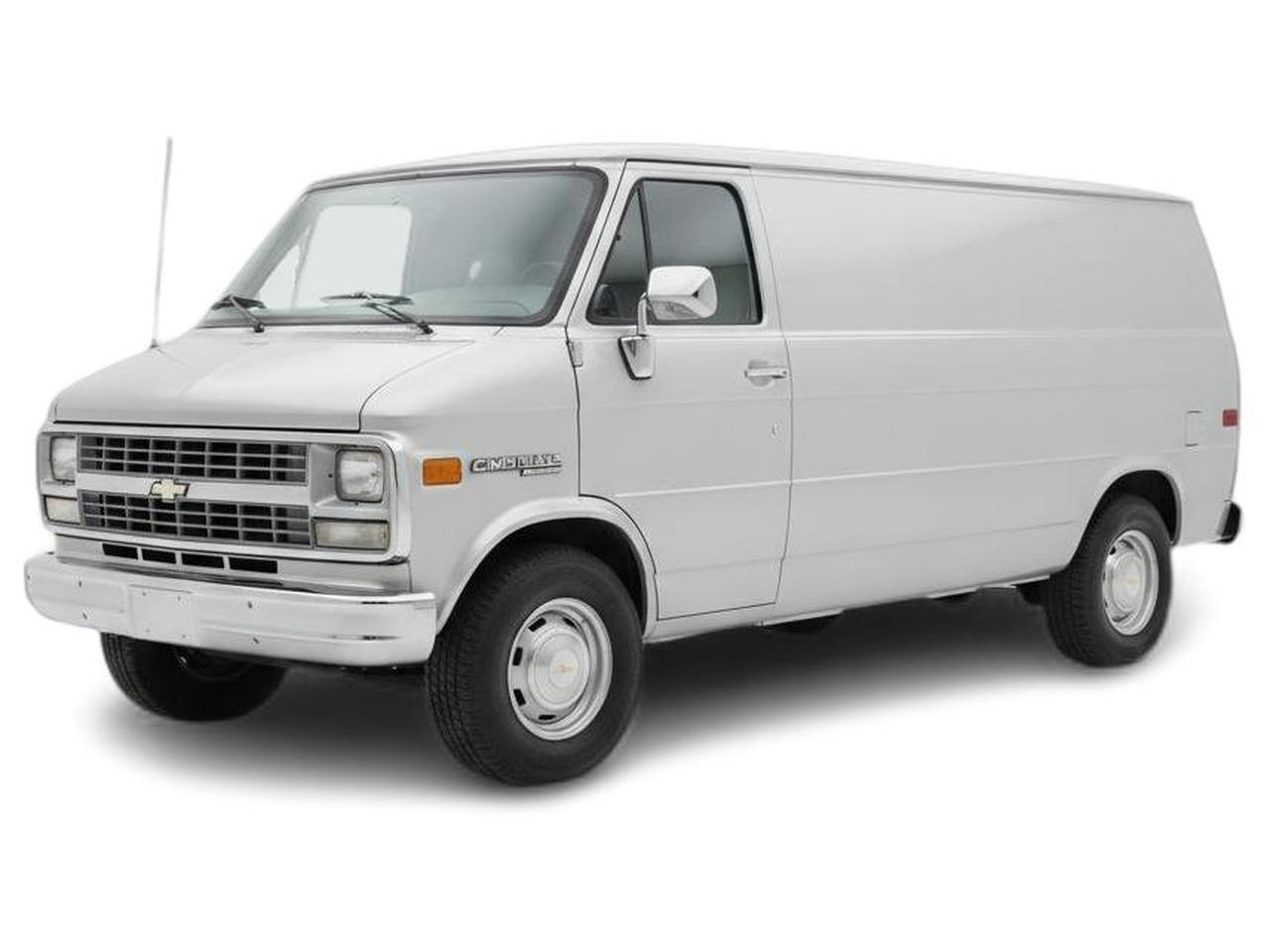
The 1995 Chevrolet Sportvan, part of the Chevy Van lineup which spanned from 1965 to 1996, is a full-size van known for its utilitarian design and spacious interior. Available in various body styles, including passenger and cargo configurations, its popularity stemmed from its versatility and affordability as a workhorse or family hauler. Key trims often included the base model and more equipped versions, with pricing varying based on configuration and options.
The Good
The 1995 Sportvan offers robust V8 power for capability, renowned Chevy truck reliability, and a spacious, adaptable cabin for comfort and utility. Its straightforward design prioritizes function, making it a practical choice with strong value for those needing hauling or passenger capacity.
The Bad
Potential weaknesses for the 1995 Sportvan include outdated interior tech, average fuel economy, and potential for rust, especially in certain climates. Older models may also exhibit wear and tear on suspension components and the powertrain, requiring diligent inspection.
1995 Chevrolet Sportvan: Quick Overview
- Engine Options: The 1995 Chevrolet Sportvan typically offered a choice of V8 engines. Common options included a 5.0-liter (305 cubic inch) V8 and a larger 5.7-liter (350 cubic inch) V8. Some models might have also been equipped with a 4.3-liter V6.
- Horsepower: Horsepower varied by engine. The 4.3L V6 generally produced around 160-180 horsepower. The 5.0L V8 typically offered between 170-190 horsepower, while the 5.7L V8 provided more power, in the range of 200-220 horsepower.
- Fuel Economy: Fuel economy was not a strong suit for these full-size vans. Expect figures in the low to mid-teens for city driving (around 10-14 MPG) and potentially up to 17-19 MPG on the highway, heavily dependent on the engine, drivetrain, and driving conditions.
- 0-60 Times: 0-60 mph acceleration times were generally leisurely due to the van's size and weight. With the larger V8 engines, times could range from approximately 9-11 seconds, while the V6 would be closer to 11-13 seconds.
- Towing Capacity: Towing capacity was a significant advantage. Properly equipped models with the V8 engines could typically tow between 5,000 to 7,000 pounds, making them suitable for hauling trailers, boats, or recreational vehicles.
- Trim-Level Features: Base models were spartan, focusing on functionality with vinyl seating and basic amenities. Higher trims, often designated by packages or specific model names within the Sportvan lineup, could include features like air conditioning, power windows and locks, upgraded upholstery, captain's chairs, AM/FM stereo with cassette player, and sometimes even enhanced interior lighting or carpeting. Passenger versions came with multiple rows of seating, designed for up to 7 or 8 occupants.
1995 Chevrolet Sportvan Specifications
Vehicle Information
| Year | 1995 |
| Make | Chevrolet |
| Model | Sportvan |
| Trim | - |
| Style | - |
| Type | Minivan |
| Category | Passenger Van |
Manufacturing Details
| Made In | United States |
| Manufacturing City | FLINT |
Dimensions
| Doors | 3-Door |
| Curb Weight | 4769 pounds |
| Gross Vehicle Weight Rating | 7000 pounds |
| Overall Height | 79.50 inches |
| Overall Length | 204.10 inches |
| Overall Width | 79.50 inches |
| Wheelbase Length | 125.00 inches |
| Standard Seating | 8 |
Engine & Performance
| Engine | 5.7L V8 |
| Engine Size | 5.7L |
| Engine Cylinders | 8 |
| Transmission | 4-Speed Automatic |
| Transmission Type | Automatic |
| Transmission Speeds | 4-Speed |
| Drivetrain | Rear-Wheel Drive |
Additional Features
| Anti-Brake System | 2-Wheel ABS |
| Steering Type | Recirculating |
Pricing
| Manufacturer Suggested Retail Price (MSRP) | $19,736 |
| Invoice Price | - |
| Delivery Charges | - |
Vehicle History Report
Vehicle
Specifications
Specifications
Ownership
History
History
All History
Events
Events
NMVTIS Title
History Check
History Check
Salvage/Rebuilt
Check
Check
Accident
Check
Check
Theft
Check
Check
Open Lien
Check
Check
Past Sale
Listings
Listings
Safety
Recalls
Recalls
Odometer
Check
Check
Market Price
Analysis
Analysis
What Problems Does the 1995 Chevrolet Sportvan Have?
The 1995 Chevrolet Sportvan, being a product of its era, can exhibit certain common issues as it ages. One frequent concern revolves around the transmission, particularly the 4L60E automatic transmission, which can develop issues like slipping gears or harsh shifting, often due to worn clutches or solenoid failures. Regular fluid and filter changes are crucial for longevity. Another area to inspect is the cooling system; radiators can develop leaks, and water pumps may fail over time, leading to overheating. The 4.3L V6 and the V8 engines are generally robust, but issues like intake manifold gasket leaks, especially on the 5.7L V8, have been reported, leading to coolant or vacuum leaks. Electrical gremlins are also not uncommon in vehicles of this age. This can manifest as intermittent issues with power windows, door locks, or dashboard warning lights. The instrument cluster itself can sometimes develop faulty gauges. On the exterior, rust is a significant concern, particularly around the wheel wells, rocker panels, and the rear bumper area, especially in regions with harsh winters and road salt. Suspension components, such as ball joints, tie rods, and shocks, will likely show wear after decades of use, leading to a less precise ride and potential steering issues. While no major model-year specific widespread recalls stand out for the 1995 Sportvan, it is always advisable to check the National Highway Traffic Safety Administration (NHTSA) website for any potential recalls that may have been issued for this specific VIN. Overall, long-term reliability is heavily dependent on the initial build quality and, more importantly, the maintenance history. A well-maintained Sportvan can still be a dependable vehicle, but potential buyers should be prepared for ongoing maintenance and potential repairs related to its age.
How long will the 1995 Chevrolet Sportvan last?
Based on owner data and typical maintenance habits, a 1995 Chevrolet Sportvan can realistically achieve 150,000 to 250,000 miles or more. Their long-term durability is often attributed to their sturdy construction and the reliability of their V8 engines. However, weaknesses tend to emerge over time. The automatic transmission is a key area that may require attention or rebuilds beyond 150,000 miles. Body rust, especially in corrosive environments, can significantly shorten its usable lifespan if not addressed. With consistent oil changes, coolant flushes, and proactive attention to minor issues like leaks, these vans can remain functional workhorses for many years, demonstrating remarkable resilience when properly cared for.
What Technology & Safety Features are Included?
The 1995 Chevrolet Sportvan, by modern standards, is quite basic in terms of technology, driver-assistance, and advanced safety features, reflecting its era. Built-in tech was primarily focused on functionality. Entertainment typically consisted of an AM/FM stereo radio, often with a cassette tape player. CD players were an optional upgrade but not standard on most models. Air conditioning was a common, though sometimes optional, feature for passenger comfort. Driver-assistance systems as we know them today (like adaptive cruise control, lane departure warning, etc.) were non-existent. The focus was on the mechanical aspects of driving.
Safety features were limited to the essentials of the time. Standard equipment usually included front airbags for the driver and front passenger, along with seatbelts. Anti-lock braking system (ABS) was typically available as an option, especially for the rear wheels, and became more common on higher trim levels or with certain engine configurations. Side-impact airbags were not available.
Crash-test ratings for vehicles like the 1995 Sportvan are not readily available in the same standardized format as modern vehicles. The Insurance Institute for Highway Safety (IIHS) and the National Highway Traffic Safety Administration (NHTSA) conducted tests, but comprehensive ratings for vans of this vintage, especially in frontal and side impacts comparable to today's data, are sparse. Generally, the heavy construction of these vans provided a degree of passive safety, but the lack of advanced crumple zones and modern restraint systems means their performance in severe impacts would likely be below contemporary standards. Optional features were generally geared towards comfort and convenience, such as power windows and locks, cruise control, and upgraded interior trim.
Safety features were limited to the essentials of the time. Standard equipment usually included front airbags for the driver and front passenger, along with seatbelts. Anti-lock braking system (ABS) was typically available as an option, especially for the rear wheels, and became more common on higher trim levels or with certain engine configurations. Side-impact airbags were not available.
Crash-test ratings for vehicles like the 1995 Sportvan are not readily available in the same standardized format as modern vehicles. The Insurance Institute for Highway Safety (IIHS) and the National Highway Traffic Safety Administration (NHTSA) conducted tests, but comprehensive ratings for vans of this vintage, especially in frontal and side impacts comparable to today's data, are sparse. Generally, the heavy construction of these vans provided a degree of passive safety, but the lack of advanced crumple zones and modern restraint systems means their performance in severe impacts would likely be below contemporary standards. Optional features were generally geared towards comfort and convenience, such as power windows and locks, cruise control, and upgraded interior trim.
What Colors Options are Available?
1995 Chevrolet Sportvan Prices and Market Value
When new, the 1995 Chevrolet Sportvan had a base price that could start in the mid-$20,000s, with fully optioned passenger models reaching into the $30,000s. As with most vehicles, depreciation was significant in the first few years. Today, current used market prices for the 1995 Sportvan vary widely, typically ranging from $2,000 to $8,000, depending heavily on condition, mileage, and trim level. Factors significantly affecting resale value include the presence of rust, the mechanical condition of the engine and transmission, overall cleanliness, and whether it has been maintained diligently. Well-preserved examples, especially cargo vans with lower mileage or specialized upfits, can command higher prices than average passenger versions.
1995 Chevrolet Sportvan Cost of Ownership
Owning a 1995 Chevrolet Sportvan can be economical in terms of initial purchase price and some repair costs, especially if you're handy with DIY maintenance. Insurance premiums are generally reasonable for a vehicle of this age, though higher for commercial use. Fuel costs are a significant factor due to its V8 engines and less-than-ideal MPG, making it less economical for daily commuting. Routine maintenance, such as oil changes and fluid checks, is straightforward. However, repairs on aging components, particularly transmission issues or significant rust remediation, can become costly. Overall, it's moderately costly to own, with fuel being the primary ongoing expense.
1995 Chevrolet Sportvan Fuel Efficiency
Fuel Type
Gasoline
Fuel Capacity
33.00 gallons
City Mileage
14 miles/gallon
Highway Mileage
16 miles/gallon
1995 Chevrolet Sportvan Safety Rating
NHTSA
IIHS
1995 Chevrolet Sportvan Warranty
Basic
Original warranty
0 months / No data
Estimated remaining
Expired
Powertrain
Original warranty
0 months / No data
Estimated remaining
Expired
Rust
Original warranty
0 months / No data
Estimated remaining
Expired
1995 Chevrolet Sportvan Insurance
Insurance for a 1995 Chevrolet Sportvan is moderately priced, reflecting its status as a Minivan with strong safety ratings and
reasonable repair costs.
How Does the 1995 Chevrolet Sportvan Compare to Other Minivan?
The 1995 Chevrolet Sportvan competed in the full-size van segment primarily against rivals like the Ford Econoline and Dodge Ram Van. In terms of performance, the Sportvan's V8 options generally offered competitive power, often on par with or slightly better than base V8 offerings from Ford and Dodge. Reliability was a mixed bag, with Chevy's V8s being generally robust, though transmissions could be a concern, similar to issues found in its rivals.
Feature-wise, the 1995 Sportvan was utilitarian. Its competitors offered similar basic amenities; none were known for cutting-edge tech in this era. The Ford Econoline often had a reputation for a slightly more truck-like ride, while the Dodge Ram Van was known for its distinctive styling and a rear-wheel-drive bias.
Price-wise, these vans were typically in the same ballpark when new, and their used market values reflect their age and condition, with no single dominant price leader.
**Alternatives:**
* Ford Econoline (1995): A very close competitor, offering similar powertrains and cargo/passenger configurations. Often considered slightly more robust in terms of chassis and suspension for heavy-duty use.
* Dodge Ram Van (1995): Another strong contender with its own loyal following. Known for its bold styling and often a slightly more engaging driving experience.
**Recommendation:** The 1995 Sportvan is a viable choice if found in good condition, especially for those prioritizing a V8 powertrain and Chevy truck heritage. However, if absolute reliability is paramount and you're looking for slightly more modern (though still basic) features, a well-maintained Ford Econoline might be a slightly safer bet. The Dodge Ram Van is a good alternative for those who prefer its aesthetic and driving dynamics. For buyers seeking more modern amenities and significantly better fuel efficiency, exploring minivan options from the late 1990s or early 2000s, or even compact cargo vans, would be necessary, though these sacrifice significant cargo and towing capacity.
Feature-wise, the 1995 Sportvan was utilitarian. Its competitors offered similar basic amenities; none were known for cutting-edge tech in this era. The Ford Econoline often had a reputation for a slightly more truck-like ride, while the Dodge Ram Van was known for its distinctive styling and a rear-wheel-drive bias.
Price-wise, these vans were typically in the same ballpark when new, and their used market values reflect their age and condition, with no single dominant price leader.
**Alternatives:**
* Ford Econoline (1995): A very close competitor, offering similar powertrains and cargo/passenger configurations. Often considered slightly more robust in terms of chassis and suspension for heavy-duty use.
* Dodge Ram Van (1995): Another strong contender with its own loyal following. Known for its bold styling and often a slightly more engaging driving experience.
**Recommendation:** The 1995 Sportvan is a viable choice if found in good condition, especially for those prioritizing a V8 powertrain and Chevy truck heritage. However, if absolute reliability is paramount and you're looking for slightly more modern (though still basic) features, a well-maintained Ford Econoline might be a slightly safer bet. The Dodge Ram Van is a good alternative for those who prefer its aesthetic and driving dynamics. For buyers seeking more modern amenities and significantly better fuel efficiency, exploring minivan options from the late 1990s or early 2000s, or even compact cargo vans, would be necessary, though these sacrifice significant cargo and towing capacity.
Final Verdict: Is the 1995 Chevrolet Sportvan a Good Minivan?
The 1995 Chevrolet Sportvan is ideal for budget-conscious buyers needing a versatile vehicle for hauling cargo, equipment, or a larger group of people, without requiring advanced technology or superior fuel economy. It's well-suited for small businesses, tradespeople, or families seeking a no-frills workhorse.
Whether it's worth buying hinges entirely on condition. A well-maintained, rust-free example with a strong mechanical history is a good value proposition. Avoid vehicles with significant rust, transmission issues, or neglected maintenance. Buying used is the only option, and prioritizing a lower-mileage example, especially in a cargo configuration, would be prudent. It's not a daily driver for fuel efficiency-conscious individuals but excels as a specific-purpose vehicle when acquired wisely.
