
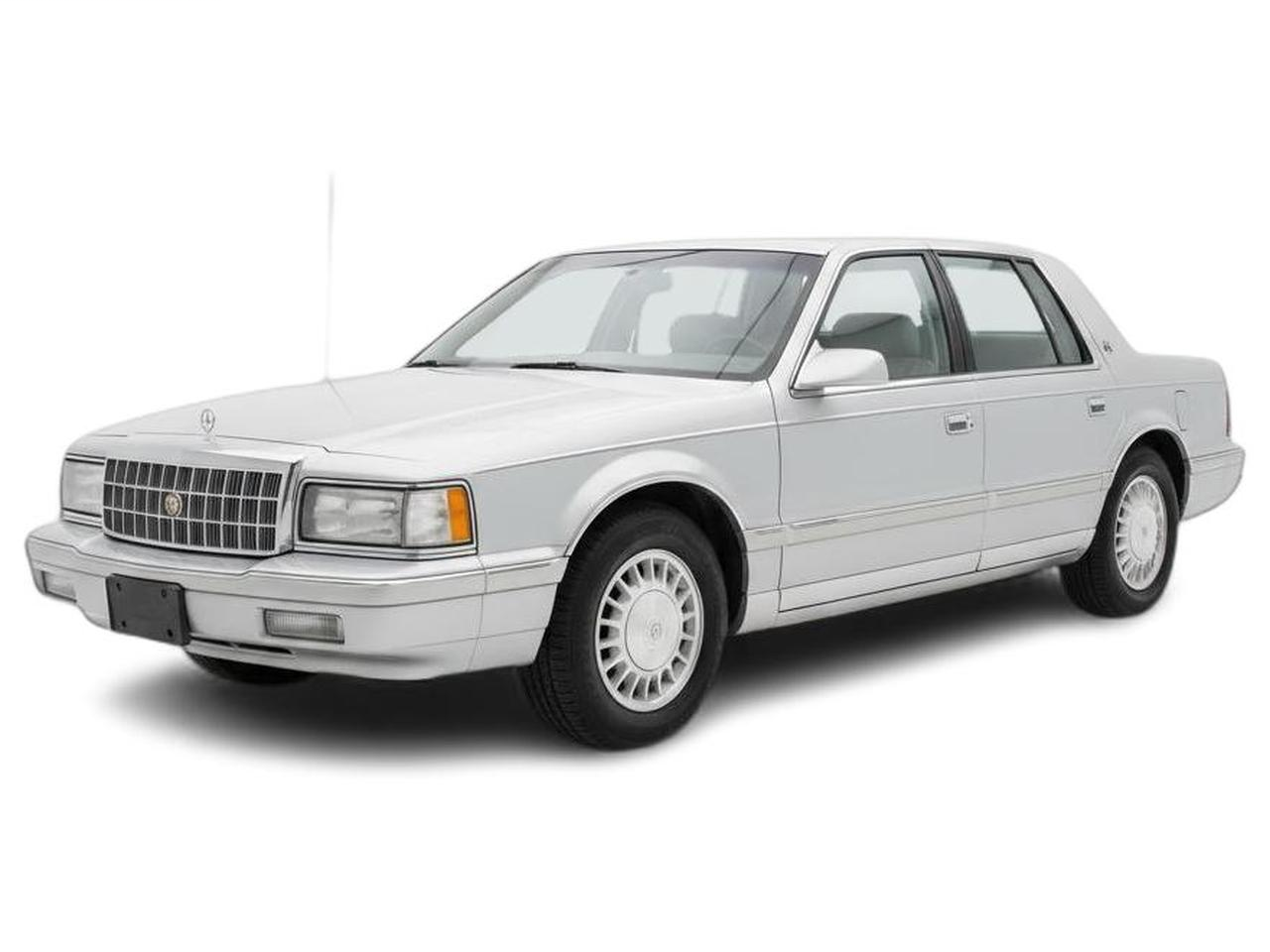
The 1991 Chrysler Imperial, part of the fifth generation (1990-1993), was a front-wheel-drive luxury sedan. Reintroduced after a hiatus, it aimed to recapture a market segment with its distinct styling and plush interior. It was offered in a single, well-appointed trim. Its popularity stemmed from its comfortable ride and sophisticated, albeit somewhat dated, American luxury appeal.
The Good
The 1991 Imperial offers a smooth, comfortable ride, a spacious and luxurious interior, and a distinctive, if polarizing, design. For the practical buyer, it represented attainable luxury with decent V6 power. Emotionally, it evoked a sense of classic American motoring comfort.
The Bad
Potential buyers should watch out for issues with its aging electronics, particularly the climate control system and power accessories. Transmission problems and rust, especially in the rocker panels and wheel wells, are also common concerns that require careful inspection.
1991 Chrysler Imperial: Quick Overview
- Engine Options: The 1991 Chrysler Imperial was exclusively equipped with a 3.3L V6 engine.
- Horsepower: This 3.3L V6 produced approximately 150 horsepower.
- Torque: It generated around 180 lb-ft of torque.
- Fuel Economy: Estimated fuel economy was in the range of 17 MPG city and 24 MPG highway.
- 0-60 MPH Times: Acceleration figures were generally around the 10-11 second mark, reflecting its luxury-oriented nature rather than sportiness.
- Towing Capacity: The 1991 Chrysler Imperial was not designed or equipped for towing significant loads, and therefore, has no official towing capacity.
- Transmission: It came standard with a 4-speed automatic transmission.
- Drivetrain: Front-wheel drive was standard.
- Key Trim-Level Features (Imperial trim):
- Leather-trimmed seats
- Power-adjustable front seats
- Automatic climate control
- Power windows, locks, and mirrors
- Cruise control
- AM/FM stereo with cassette player
- Tilt steering wheel
- Anti-lock Braking System (ABS)
- Driver and front passenger airbags
- Optional features often included a premium Infinity sound system, a power sunroof, and heated front seats.
1991 Chrysler Imperial Specifications
Vehicle Information
| Year | 1991 |
| Make | Chrysler |
| Model | Imperial |
| Trim | - |
| Style | - |
| Type | Sedan |
| Category | Compact Car |
Manufacturing Details
| Made In | Japan |
| Manufacturing City | MIZUSHIMA |
Dimensions
| Doors | 4-Door |
| Curb Weight | - |
| Gross Vehicle Weight Rating | - |
| Overall Height | - |
| Overall Length | - |
| Overall Width | - |
| Wheelbase Length | - |
| Standard Seating | - |
Engine & Performance
| Engine | 3.3 L 6-Cyl. |
| Engine Size | 3.3L |
| Engine Cylinders | 6 |
| Transmission | - |
| Transmission Type | - |
| Transmission Speeds | - |
| Drivetrain | Front-Wheel Drive |
Additional Features
| Anti-Brake System | - |
| Steering Type | - |
Pricing
| Manufacturer Suggested Retail Price (MSRP) | - |
| Invoice Price | - |
| Delivery Charges | - |
Vehicle History Report
Vehicle
Specifications
Specifications
Ownership
History
History
All History
Events
Events
NMVTIS Title
History Check
History Check
Salvage/Rebuilt
Check
Check
Accident
Check
Check
Theft
Check
Check
Open Lien
Check
Check
Past Sale
Listings
Listings
Safety
Recalls
Recalls
Odometer
Check
Check
Market Price
Analysis
Analysis
What Problems Does the 1991 Chrysler Imperial Have?
The 1991 Chrysler Imperial, like many vehicles of its era, has a list of common issues that owners report. One of the most prevalent concerns revolves around the electronic automatic climate control system. These units are notorious for failing, leading to a lack of temperature control or even a complete loss of function, often requiring expensive repairs. Power window motors and regulators can also become problematic, becoming slow or ceasing to operate. The transmission, particularly the 4-speed automatic, can experience shifting issues or outright failure with age and mileage, often stemming from internal wear or solenoid problems. Regarding long-term reliability, the engine itself, the 3.3L V6, is generally considered robust if properly maintained. However, the accompanying systems are where most weaknesses lie. Body rust is another significant concern, particularly in areas exposed to road salt and moisture, such as the rocker panels, wheel wells, and around the rear window. While there were no major widespread recalls that significantly impacted the model's fundamental design, individual component failures are not uncommon. The electrical system, in general, can be a source of frustration, with issues ranging from faulty sensors to intermittent problems with various accessories. Owners often report needing to address these electrical gremlins over time. It's important to note that these issues are more likely to manifest in vehicles that have not been meticulously maintained. Diligent fluid changes and addressing minor problems promptly can significantly extend the life and reduce the headaches associated with owning a 1991 Imperial.
How long will the 1991 Chrysler Imperial last?
With good maintenance, a 1991 Chrysler Imperial can reasonably be expected to last for 200,000 to 250,000 miles or more. Many owners have reported reaching these figures. The long-term durability of the 3.3L V6 engine is a strong point, often outlasting other components. However, the vehicle's weaknesses become apparent over time. The electronic climate control system is a frequent failure point that can occur around the 100,000-mile mark. Transmission issues can also arise between 150,000 and 200,000 miles if not serviced regularly. Rust can become a significant structural concern after 20-25 years, especially in harsher climates. Despite these potential pitfalls, a well-cared-for Imperial can provide many years of comfortable service.
What Technology & Safety Features are Included?
The 1991 Chrysler Imperial was equipped with a suite of features aimed at providing a comfortable and convenient driving experience for its era. Standard technology included an AM/FM stereo with a cassette player, a tilt steering wheel, and cruise control. The climate control system was automatic, offering a degree of sophisticated comfort for the time. Power accessories were abundant, including power windows, power door locks, and power-adjustable side mirrors. For safety, the Imperial came standard with driver and front passenger airbags, a significant safety advancement for the early 90s. The Anti-lock Braking System (ABS) was also standard, enhancing braking control during emergency situations. Optional features elevated the luxury quotient further. Many models were equipped with a premium Infinity sound system, offering a richer audio experience. A power sunroof was also a popular option, adding to the open-air feel of the cabin. Some vehicles might have featured heated front seats, further enhancing comfort during colder months. Regarding crash-test ratings, specific data for the 1991 Chrysler Imperial is not readily available from agencies like the NHTSA in a format directly comparable to modern standards. However, given its construction as a large luxury sedan and the inclusion of dual airbags and ABS, it was designed with occupant safety in mind for its time. Its size and weight would have provided a degree of passive safety in collisions. It's important to remember that automotive safety technology has advanced considerably since 1991, so while it offered contemporary safety features, it would not meet current safety benchmarks.
What Colors Options are Available?
1991 Chrysler Imperial Prices and Market Value
When new, the 1991 Chrysler Imperial had a starting MSRP in the range of approximately $23,000 to $26,000, placing it in the mid-to-upper luxury segment. Like most vehicles of its age, the Imperial experienced significant depreciation in its early years. Today, the used market value for a 1991 Chrysler Imperial is generally quite low, typically ranging from $1,000 to $4,000, with exceptionally well-maintained or low-mileage examples potentially fetching slightly more. Factors significantly affecting resale value include the vehicle's overall condition, mileage, maintenance history, and the presence of any major mechanical or cosmetic issues. Cars with fully functional electronics and minimal rust will command higher prices. The distinct styling can be a love-it-or-hate-it factor, also influencing demand.
1991 Chrysler Imperial Cost of Ownership
Owning a 1991 Chrysler Imperial is generally economical in terms of insurance and fuel costs compared to modern luxury vehicles. Insurance premiums are typically low due to its age and low market value. Fuel economy is moderate for its size. However, maintenance and repair costs can be a significant factor. While routine maintenance is reasonable, repairs to its aging electronics, particularly the climate control system, can be expensive. Finding specialized parts can also add to the cost. Overall, it's not a costly vehicle to own if you're diligent about maintenance and can handle minor repairs, but major component failures can quickly escalate expenses.
1991 Chrysler Imperial Fuel Efficiency
Fuel Type
Gasoline
Fuel Capacity
-
City Mileage
-
Highway Mileage
-
1991 Chrysler Imperial Safety Rating
NHTSA
1991 Chrysler Imperial Recalls & Defects
Service Brakes, Hydraulic:foundation Components:hoses, Lines/Piping, and Fittings
Recall date
1991-11-01
Recall no.
91v191000
Source
NHTSA
Summary
THE Anti-Lock Brake System High Pressure Hose MAY Leak or Detach AT ITS Crimped END Fitting Resulting IN THE Discharge OF Hydraulic Fluid.
Consequence
Fluid Discharge Eventually Causes THE Loss OF Both Theanti-Lock Brake System and Hydraulic Assist FOR THE Brake System, Resulting Inincreased Likelihood OF Brake Lockup and Increased Stopping Distances, Whichcould Result IN A Vehicle Accident.
Remedy
Replace THE ABS High Pressure Hose With A Hose OF Different Design and Construction.
Notes
System: Brakes.vehicle Description: Passenger Cars and Vans With Anti-Lock Brake Systems (Abs).
Seat Belts:front:anchorage
Recall date
1991-07-11
Recall no.
91v122000
Source
NHTSA
Summary
Front Outboard Safety Belt MAY Become Difficult TO Latch and or Unlatch DUE TO A Webbing Stiffener Entering THE Buckle Housing and Dislodging THE Buckle Latch Guide.
Consequence
Latch MAY Open During Accident or Sudden Stop, Exposingseat Occupant TO Increased Risk OF Injury.
Remedy
Replace Buckle Latch Engagement.
Notes
System: Safety Belt.vehicle Description: Passenger Vehicle.
Service Brakes, Hydraulic:antilock/Traction Control/Electronic Limited Slip
Recall date
1996-06-13
Recall no.
96v099000
Source
NHTSA
Summary
THE ABS Hydraulic Control Unit CAN Experience Excessive Brake Actuator Piston Seal Wear Causing Pump-Motor Deterioration.
Consequence
IF This Condition Occurs, THE ABS Function Could BE Lost and Reduced Power Assist Would BE Experienced During Vehicle Braking Increasing THE Potential FOR A Vehicle Accident.
Remedy
Dealers Will Test THE Vehicle's Anti-Lock Brake System and Repair THE Vehicles IF Necessary. Also THE Warranty ON All ABS Components Will BE Extended TO 10 Years or 100,000 Miles (Except FOR THE Brake Actuator Piston Assembly and THE Pump-Motor Assembly Which Will Have A Lifetime Coverage). Owners Will Also BE Reimbursed FOR Previous ABS Component Repair Costs.
Notes
System: Brakes; Hydraulic; Anti-Skid System. Vehicle Description: Passenger Vehicles and Mini-Vans Equipped With Anti-lock Brake Systems (Abs). Note: Owners WHO Take Their Vehicles TO AN Authorized Dealer ON AN Agreed Upon Service Date and DO NOT Receive THE Free Remedy Within A Reasonable Time Should Contact Chrysler AT 1-800-853-1403. Also Contact THE National Highway Traffic Safety Administration's Auto Safety Hotline AT 1-800-424-9393.
1991 Chrysler Imperial Insurance
Insurance for a 1991 Chrysler Imperial is moderately priced, reflecting its status as a Sedan with strong safety ratings and
reasonable repair costs.
How Does the 1991 Chrysler Imperial Compare to Other Sedan?
In its segment, the 1991 Chrysler Imperial competed against a range of domestic and import luxury sedans. Key rivals included the Ford Crown Victoria, Chevrolet Caprice, Cadillac Seville, and entry-level models from brands like Lexus (LS 400) and Infiniti (Q45). In terms of performance, the Imperial's 3.3L V6 was adequate for comfortable cruising but lagged behind the more powerful V8 engines offered by American competitors like the Crown Victoria and Caprice, and significantly behind the sophisticated powertrains of the Japanese luxury entries. Its handling was tuned for comfort, prioritizing a smooth ride over sporty dynamics, which was typical for American luxury sedans of the era but less engaging than some rivals. Feature-wise, the Imperial offered a respectable array of luxury amenities for its price point, including leather, automatic climate control, and airbags, which were competitive with domestic offerings. However, the Japanese luxury cars often provided a higher level of refinement and advanced technology, albeit at a higher price. Reliability is where the Imperial faced its biggest challenges compared to rivals, particularly the Lexus LS 400, which built a reputation for exceptional dependability. The Imperial's electronic systems and susceptibility to rust were more significant concerns than, say, a well-maintained Crown Victoria of similar vintage. Price-wise, the Imperial occupied a more accessible luxury niche, significantly undercutting premium imports like the Lexus LS 400. For a similar price and better reliability, a well-maintained Ford Crown Victoria or Chevrolet Caprice could be considered, though they offered a more traditional, less sleek design. If budget allows and long-term reliability is paramount, a used Lexus ES 300 or Infiniti G20 from the same era might be superior alternatives, offering a blend of comfort, features, and a much stronger reliability record. However, for those seeking a specific style of American luxury at a bargain, the Imperial remains a unique option.
Final Verdict: Is the 1991 Chrysler Imperial a Good Sedan?

The 1991 Chrysler Imperial is ideal for buyers seeking a comfortable, spacious, and stylishly American luxury sedan on a budget. It's particularly well-suited for those who prioritize a smooth ride and a plush interior over spirited performance and cutting-edge technology. It is worth buying, but with significant caveats. This vehicle is strictly a used car purchase. Buyers should be prepared for potential electronic and mechanical issues, especially with aging climate control systems and transmissions. Thorough pre-purchase inspections are non-negotiable. A well-maintained example with lower mileage and a documented service history is highly recommended. For budget-conscious individuals who appreciate its distinctive aesthetic and don't mind occasional maintenance, it can offer a rewarding ownership experience.