
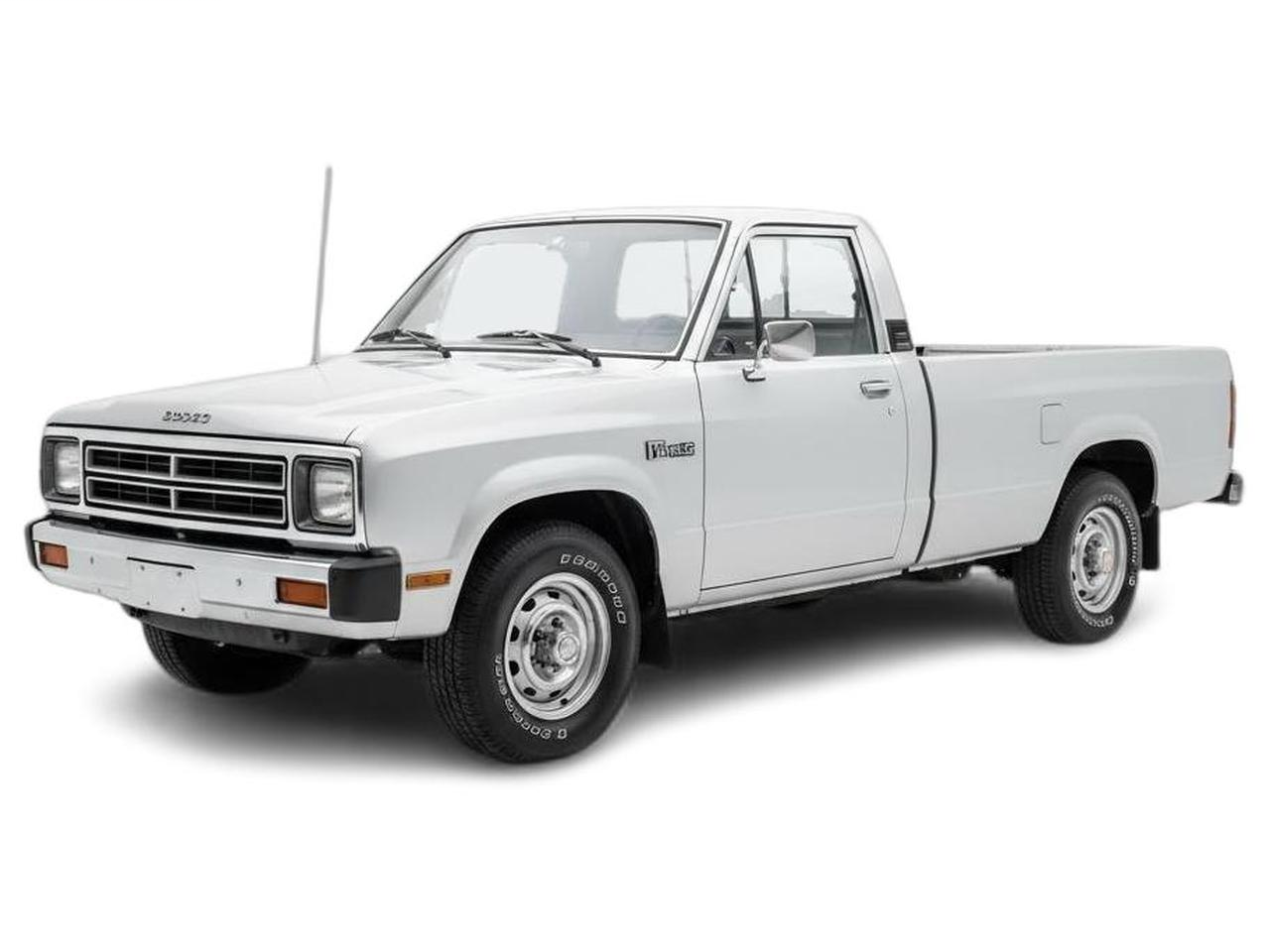
The Good
The 1986 Dodge D50 offered a compelling blend of practical efficiency and approachable design. Its nimble handling and fuel economy appealed to budget-conscious buyers, while its rugged, no-nonsense exterior and reliable powertrain resonated with those seeking a dependable work partner.
The Bad
Owners should be aware of potential rust issues, particularly in the wheel wells and rocker panels. Electrical gremlins, such as intermittent gauge failures or lighting problems, are also not uncommon. The older design might also lack modern safety features and advanced creature comforts.
1986 Dodge D50: Quick Overview
- Engine Options: The 1986 Dodge D50 was primarily offered with two engine choices:
- A 2.0-liter inline-four cylinder engine.
- A 2.6-liter inline-four cylinder engine (often referred to as the 'SOHC 4G63' by Mitsubishi enthusiasts).
- Horsepower:
- The 2.0-liter engine typically produced around 75-80 horsepower.
- The 2.6-liter engine offered a bit more grunt, with approximately 100-105 horsepower.
- Fuel Economy:
- Fuel economy varied depending on the engine, transmission, and drivetrain (2WD vs. 4WD), but generally ranged from the low to mid-20s miles per gallon combined. Specific EPA estimates for this model year can be hard to find and may differ from real-world performance.
- 0-60 Times:
- Performance was not a strong suit for the D50. 0-60 mph times were generally in the 12-15 second range, with the 2.6-liter engine being quicker.
- Towing Capacity (if applicable):
- As a compact pickup, the D50 had modest towing capabilities. Maximum towing capacity was typically around 2,000-2,500 pounds when properly equipped, suitable for small trailers or recreational equipment.
- Trim-Level Features:
- Base D50: This trim offered essential truck functionality. Features would include vinyl seating, a basic radio, manual windows and locks, and a simple interior. Steel wheels were standard.
- Royal Sport: This trim added some creature comforts and styling enhancements. It might have included upgraded interior trim, a better stereo system, more comfortable seating, and possibly some exterior badging or chrome accents. Options could include power steering and an automatic transmission.
- Common features across trims (optional or standard):?
- Column-mounted manual or automatic transmission selector.
- Heater and ventilation.
- Bench seat.
- Optional: Air conditioning, power steering, AM/FM radio, intermittent wipers.
- Column-mounted manual or automatic transmission selector.
1986 Dodge D50 Specifications
Vehicle Information
| Year | 1986 |
| Make | Dodge |
| Model | D50 |
| Trim | - |
| Style | 2WD |
| Type | Pickup Truck |
| Category | Medium Truck |
Manufacturing Details
| Made In | Japan |
| Manufacturing City | NAGOYA |
Dimensions
| Doors | 2-Door |
| Curb Weight | - |
| Gross Vehicle Weight Rating | - |
| Overall Height | - |
| Overall Length | - |
| Overall Width | - |
| Wheelbase Length | - |
| Standard Seating | - |
Engine & Performance
| Engine | 2.6L I4 |
| Engine Size | 2.6L |
| Engine Cylinders | 4 |
| Transmission | - |
| Transmission Type | - |
| Transmission Speeds | - |
| Drivetrain | Rear-Wheel Drive |
Additional Features
| Anti-Brake System | - |
| Steering Type | - |
Pricing
| Manufacturer Suggested Retail Price (MSRP) | - |
| Invoice Price | - |
| Delivery Charges | - |
Vehicle History Report
Specifications
History
Events
History Check
Check
Check
Check
Check
Listings
Recalls
Check
Analysis
What Problems Does the 1986 Dodge D50 Have?
Engine-related concerns, while generally robust for their time, can include issues with the carburetor (if equipped), leading to rough idling or starting problems. The 2.6-liter engine, while more powerful, can sometimes experience timing chain wear over high mileage. Overheating can also be a concern if the cooling system is not properly maintained.
Electrical systems are another area where owners might encounter problems. Older wiring harnesses can degrade, leading to intermittent failures of lights, gauges, or accessories. Starter motors and alternators can also wear out over time, requiring replacement.
Suspension and steering components, such as ball joints, tie rod ends, and bushings, will naturally wear out with age and mileage, leading to clunking noises, vague steering, or uneven tire wear.
Regarding recalls, specific to the 1986 model year, a general search doesn't reveal any widespread, major recalls that significantly impacted the overall reliability of the D50. However, it's always advisable for potential buyers to check the National Highway Traffic Safety Administration (NHTSA) database for any recalls that may have been issued for specific components or addressed by the manufacturer at the time.
In terms of long-term reliability, the D50's reputation is mixed. While the mechanical components can be durable with proper maintenance, the susceptibility to rust and the wear and tear on older electrical and suspension parts are significant factors. Owners who are diligent with maintenance, address rust issues proactively, and are prepared for occasional repairs can keep a D50 running for many years. Those seeking a completely trouble-free experience might find it challenging due to its age.
How long will the 1986 Dodge D50 last?
What Technology & Safety Features are Included?
Built-in Tech & Entertainment: Standard entertainment typically consisted of an AM radio. An AM/FM radio was a common and highly sought-after optional upgrade. Higher trim levels, like the Royal Sport, might have offered a more advanced (for the time) AM/FM radio, potentially with a cassette player. Climate control was generally limited to a heater and ventilation system. Air conditioning was an optional feature, but not universally equipped. There were no advanced digital displays, navigation systems, or connectivity options like Bluetooth or USB ports.
Driver-Assistance Features: Driver-assistance features as we know them today were virtually non-existent. Power steering was an available option on some models, which aided in maneuverability but was not a standard feature on all trims. Some trucks might have come with intermittent wipers as an option.
Safety Features: Safety in the 1986 D50 was rudimentary by today's standards. Standard safety equipment included seat belts (typically lap and shoulder belts for the driver and passenger), and basic three-point seat belts were becoming more common. Interior materials were generally vinyl and hard plastics. Anti-lock braking systems (ABS) were not available on this model. Side airbags, stability control, and modern crumple zones were also absent.
Optional Features: Beyond the aforementioned radio, A/C, and power steering, optional features might have included an automatic transmission (instead of the standard manual), upgraded interior trim, and perhaps fog lights.
Crash-Test Ratings: Obtaining specific crash-test ratings for the 1986 Dodge D50 from agencies like the NHTSA or IIHS is difficult, as comprehensive testing for trucks of this era was less standardized and publicly available than it is today. However, based on general automotive safety standards of the mid-1980s, it would likely be considered to have minimal crash protection compared to contemporary vehicles, lacking many of the advanced safety structures and passive safety systems found in modern trucks.
What Colors Options are Available?
1986 Dodge D50 Prices and Market Value
Currently, used market prices for the 1986 Dodge D50 are highly variable, often ranging from $1,000 for project vehicles with significant rust or mechanical issues, to $5,000-$8,000 for well-maintained, low-mileage examples, and potentially higher for exceptional, collector-grade specimens.
Depreciation was relatively steep in the initial years, as is common for most pickup trucks. However, due to their age, the D50 has largely completed its depreciation cycle. Its current resale value is primarily driven by its condition, mileage, originality, and whether it has been maintained or restored. Trucks with minimal rust, the more desirable 2.6-liter engine, and in good working order command higher prices. Well-preserved examples are becoming increasingly rare, which can also drive up value for enthusiasts.
1986 Dodge D50 Cost of Ownership
1986 Dodge D50 Fuel Efficiency
1986 Dodge D50 Warranty
Basic
Powertrain
Rust
1986 Dodge D50 Insurance
reasonable repair costs.
How Does the 1986 Dodge D50 Compare to Other Pickup Truck?
Performance: In terms of performance, the D50 was generally on par with its competitors. The optional 2.6-liter engine offered comparable horsepower to base engines in the Toyota and Nissan, while the Ford Ranger offered a wider range of engine options, including more powerful V6s that outshone the D50. However, for basic hauling and light-duty use, the D50's performance was adequate.
Features: Feature-wise, the D50 was fairly basic, aligning with most trucks in its class. The Toyota Pickup and Nissan Hardbody were known for their robust mechanicals and increasingly popular 4WD systems. The Ford Ranger often offered a slightly more modern interior and a broader array of available options, especially in later years. The D50's feature set was functional rather than luxurious.
Reliability: The reliability of the D50 is often debated. While mechanically sound with proper care, its significant weakness was rust, which was also a concern for some competitors, though often to a lesser extent than the D50. Toyota and Nissan pickups from this era built a strong reputation for bulletproof reliability and longevity, often surpassing the D50 in long-term durability, especially in harsher climates. The Ford Ranger also offered good reliability, though some engine options were more prone to issues than others.
Price: The D50 was typically very competitively priced, often undercutting its Japanese rivals when new, making it an attractive budget option. Used prices also reflect this, with D50s often being more affordable than comparable Toyotas or Nissans.
Alternatives: For those seeking strong reliability and better long-term durability, a Toyota Pickup (like the Hilux) or a Nissan Hardbody would be superior choices, assuming they can be found in good condition and are rust-free. The Ford Ranger offers a good balance of features, available power (with V6 engines), and decent reliability, making it another strong contender. If budget is the absolute primary concern and rust is manageable, the D50 can still be a viable option, but careful inspection is paramount.
Final Verdict: Is the 1986 Dodge D50 a Good Pickup Truck?
This truck is best purchased in the used market, as new ones are obviously unavailable. Buyers should be extremely cautious about rust, as this is the most significant factor affecting its worth and long-term viability. Opting for models with the 2.6-liter engine and 4WD can offer more capability and slightly better performance. It's not recommended for buyers seeking a daily driver without extensive pre-purchase inspection and a willingness to perform ongoing maintenance and potential repairs. A well-maintained, rust-free example, though rare, can still offer dependable service.

Simon A
Simon is a contributor to VinCheck, where he provides articles and reviews on various automotive topics. His work focuses on delivering accurate and up-to-date information about used cars, helping readers make informed decisions.