
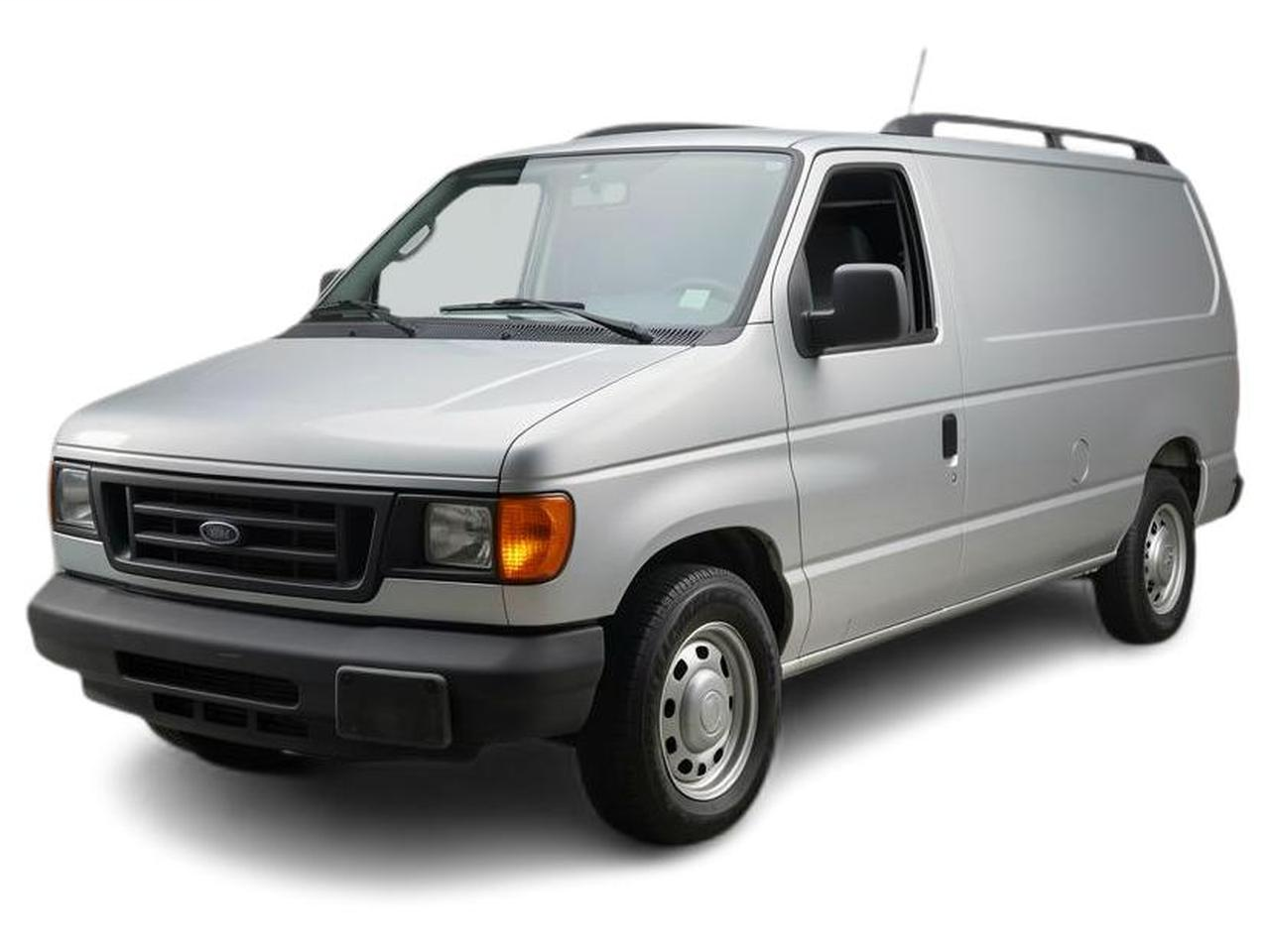
The 2006 Ford Econoline Cargo van, part of a long-standing lineage dating back to the 1960s, is a quintessential workhorse. Known for its rugged body-on-frame construction and spacious cargo area, it served as a popular choice for tradespeople and fleet operators. Available in various wheelbases and payload capacities, its core popularity stems from its unwavering utility and adaptability.
The Good
The 2006 Econoline Cargo excels in raw utility and dependable performance. Its robust build inspires confidence for tough jobs, while its cavernous interior offers immense practicality. For emotional buyers, its familiar and purposeful design evokes a sense of capability and heritage. For practical buyers, its straightforward mechanics and proven reliability translate into long-term value.
The Bad
Owners should be aware of potential issues such as rust, particularly around the wheel wells and rocker panels. Electrical gremlins and transmission problems can also arise with age and mileage. Fuel economy is generally poor, and the ride comfort is basic, reflecting its utilitarian focus.
2006 Ford Econoline Cargo: Quick Overview
- Engine Options: The 2006 Ford Econoline Cargo typically offered a choice between three V8 engines:
- 4.6L Triton V8: Producing around 215-225 horsepower and 280-290 lb-ft of torque.
- 5.4L Triton V8: Offering approximately 235-255 horsepower and 330-350 lb-ft of torque.
- 6.8L Triton V10: Delivering a more robust 305 horsepower and 420 lb-ft of torque.
- Horsepower: Ranges from approximately 215 hp to 305 hp depending on the engine.
- Fuel Economy: As a large, V8-powered cargo van, fuel economy is a significant drawback. Expect around 10-14 MPG combined, heavily influenced by engine choice, payload, and driving conditions.
- 0-60 Times: Precise 0-60 mph times are not typically a focus for this type of vehicle, but expect them to be in the 9-11 second range for the V8 models, and potentially quicker for the V10.
- Towing Capacity: Towing capacity varies significantly based on configuration, axle ratio, and engine. Properly equipped Econoline Cargo vans can tow upwards of 7,000 to 10,000 lbs.
- Trim-Level Features: The Econoline Cargo was generally offered in fewer distinct 'trims' than passenger vehicles, focusing more on the base work-ready configuration. Key features often included:
- Standard vinyl flooring and heavy-duty cloth seats.
- Ample cargo tie-down points.
- Power windows and locks (often optional on base models).
- Air conditioning.
- AM/FM stereo system.
- Optional equipment could include cruise control, a more advanced audio system, rear climate control, and various upfitting packages for specific trades (e.g., ladder racks, shelving).
2006 Ford Econoline Cargo Specifications
Vehicle Information
| Year | 2006 |
| Make | Ford |
| Model | Econoline |
| Trim | - |
| Style | 5-Speed |
| Type | Van |
| Category | Cargo Van |
Manufacturing Details
| Made In | United States |
| Manufacturing City | AVON LAKE |
Dimensions
| Doors | 3-Door |
| Curb Weight | 5340 pounds |
| Gross Vehicle Weight Rating | 9500 pounds |
| Overall Height | 83.40 inches |
| Overall Length | 211.90 inches |
| Overall Width | 79.30 inches |
| Wheelbase Length | 138.00 inches |
| Standard Seating | 2 |
Engine & Performance
| Engine | 6.8L V10 |
| Engine Size | 6.8L |
| Engine Cylinders | 8 |
| Transmission | 5-Speed Automatic |
| Transmission Type | Automatic |
| Transmission Speeds | 5-Speed |
| Drivetrain | Rear-Wheel Drive |
Additional Features
| Anti-Brake System | 4-Wheel ABS |
| Steering Type | Recirculating |
Pricing
| Manufacturer Suggested Retail Price (MSRP) | $26,585 |
| Invoice Price | $23,674 |
| Delivery Charges | $795 |
Vehicle History Report
Vehicle
Specifications
Specifications
Ownership
History
History
All History
Events
Events
NMVTIS Title
History Check
History Check
Salvage/Rebuilt
Check
Check
Accident
Check
Check
Theft
Check
Check
Open Lien
Check
Check
Past Sale
Listings
Listings
Safety
Recalls
Recalls
Odometer
Check
Check
Market Price
Analysis
Analysis
What Problems Does the 2006 Ford Econoline Cargo Have?
The 2006 Ford Econoline Cargo, like many vehicles of its era, has its share of commonly reported issues. One persistent concern is the potential for the 4R70W transmission to overheat or fail, especially under heavy use or with insufficient maintenance. This can manifest as slipping gears or a complete loss of drive. Another frequent complaint revolves around the fuel pump, which can become unreliable and lead to hard starting or stalling. Body rust is a significant long-term concern, particularly affecting the rocker panels, wheel wells, and the rear bumper area. This is exacerbated in regions with harsh winters and road salt. Electrical issues are also not uncommon, with reports of faulty sensors, malfunctioning power windows, and problems with the interior lighting. The cooling system, including the radiator and water pump, can also require attention over time, potentially leading to overheating. While specific recalls for the 2006 model year might be limited, general maintenance items like spark plugs, ignition coils, and exhaust components are typical wear items. The Triton V8 and V10 engines are generally robust, but they can suffer from intake manifold cracks and oil leaks as they age. For long-term reliability, consistent fluid changes, regular inspections for rust, and addressing minor electrical quirks promptly are crucial. While the Econoline is built tough, neglect will accelerate wear and tear, impacting its overall lifespan and requiring more significant repairs.
How long will the 2006 Ford Econoline Cargo last?
The 2006 Ford Econoline Cargo is renowned for its longevity, with many owners reporting service lives well over 200,000 miles, and some even exceeding 300,000 miles with diligent maintenance. Its body-on-frame construction contributes significantly to its durability. The primary weaknesses that emerge over time are often related to the drivetrain (transmission issues can surface, especially with heavy use) and corrosion. Regular oil changes, timely transmission fluid flushes, and attention to rust prevention are key to maximizing its lifespan. Despite potential repairs, its robust underlying mechanicals allow it to serve reliably for many years and hundreds of thousands of miles.
What Technology & Safety Features are Included?
The 2006 Ford Econoline Cargo is a utilitarian vehicle, so its built-in technology, entertainment, and driver-assistance features are quite basic, reflecting its primary purpose as a work van. Standard entertainment typically consisted of an AM/FM radio, possibly with a CD player. Higher trim levels or optional packages might have included a more advanced audio system with more speakers. Bluetooth connectivity, touchscreens, or integrated navigation systems were virtually non-existent in this model year.
Safety features were also rudimentary by modern standards. Standard safety equipment usually included front airbags for the driver and passenger, anti-lock brakes (ABS) for the front wheels, and a rearview mirror. Traction control and stability control were not commonly available or were optional on higher configurations.
Driver-assistance features were very limited, focusing on fundamental aspects like power steering. Features like backup cameras, parking sensors, or blind-spot monitoring were not offered.
Crash-test ratings for commercial vans like the Econoline are often tested differently or not tested as extensively as passenger cars by organizations like the NHTSA or IIHS. While Ford emphasized the structural integrity and safety of the Econoline for its intended use, specific detailed crash-test data for the 2006 model year might be scarce and not directly comparable to contemporary passenger vehicles. The focus was more on occupant protection in a work environment and the vehicle's robustness rather than advanced active safety systems. Overall, expect a functional but unpretentious technological and safety suite, prioritizing essential functionality over modern conveniences.
Safety features were also rudimentary by modern standards. Standard safety equipment usually included front airbags for the driver and passenger, anti-lock brakes (ABS) for the front wheels, and a rearview mirror. Traction control and stability control were not commonly available or were optional on higher configurations.
Driver-assistance features were very limited, focusing on fundamental aspects like power steering. Features like backup cameras, parking sensors, or blind-spot monitoring were not offered.
Crash-test ratings for commercial vans like the Econoline are often tested differently or not tested as extensively as passenger cars by organizations like the NHTSA or IIHS. While Ford emphasized the structural integrity and safety of the Econoline for its intended use, specific detailed crash-test data for the 2006 model year might be scarce and not directly comparable to contemporary passenger vehicles. The focus was more on occupant protection in a work environment and the vehicle's robustness rather than advanced active safety systems. Overall, expect a functional but unpretentious technological and safety suite, prioritizing essential functionality over modern conveniences.
What Colors Options are Available?
2006 Ford Econoline Cargo Prices and Market Value
When new, the 2006 Ford Econoline Cargo van likely had an MSRP ranging from around $25,000 to $35,000, depending heavily on configuration, engine choice, and any added options. Today, its used market value is significantly lower. Prices can range from approximately $3,000 to $8,000 for models in fair to good condition with average to high mileage. Depreciation has been substantial, as is typical for commercial vehicles that often undergo heavy use. Factors heavily affecting resale value include overall condition (especially rust and mechanical health), mileage, service history, and the presence of any specialized upfits. Well-maintained examples with lower mileage and in rust-free condition will command higher prices.
2006 Ford Econoline Cargo Cost of Ownership
Owning a 2006 Ford Econoline Cargo can be relatively economical in terms of initial purchase and basic maintenance, but fuel costs can be significant due to its V8 engines and poor fuel economy. Insurance rates are generally moderate for a commercial vehicle, though they can vary based on usage and driver history. Routine maintenance like oil changes, tire rotations, and brake jobs are standard. However, repairs to the transmission or potential body rust can become costly. Overall, while not the most economical choice due to fuel consumption, its durability and relatively affordable parts availability can make long-term ownership manageable if well-maintained.
2006 Ford Econoline Cargo Fuel Efficiency
Fuel Type
Gasoline
Fuel Capacity
35.00 gallons
City Mileage
-
Highway Mileage
-
2006 Ford Econoline Cargo Safety Rating
NHTSA
IIHS
2006 Ford Econoline Cargo Recalls & Defects
Equipment Adaptive/Mobility
Recall date
2008-12-15
Recall no.
08v662000
Source
NHTSA
Summary
Sunset Vans IS Recalling 267 MY 2005-2007 Econoline, G Series and Sprinter Trucks Built ON Dodge, Ford and Chevrolet Chassis and Equipped With Ricon Platform Style Wheelchair Lifts. These Vehicles Fail TO Comply With THE Requirements OF Federal Motor Vehicle Safety Standard NO. 404, "platform Lift Installations IN Motor Vehicles." THE Threshold Warning System MAY NOT Detect THE Presence OF A Wheelchair or Mobility AID User IN A Certain Spot Within THE Defined Threshold Area.
Consequence
THE User OF THE Lift Could BE Injured Should THE Lift Move Unintentionally.
Remedy
Sunset Vans IS Working With Ricon TO Correct THE Wheelchair Lifts Free OF Charge (Please SEE 07e095). Owners MAY Contact Ricon AT 1-818-267-3000 or Sunset Vans AT 1-888-280-8267.
Notes
Customers MAY Also Contact THE National Highway Traffic Safety Administration's Vehicle Safety Hotline AT 1-888-327-4236 (Tty 1-800-424-9153), or GO TO <A Href=http://Www.safercar.gov>http://www.safercar.gov</a> .
Equipment Adaptive/Mobility
Recall date
2008-12-16
Recall no.
08v663000
Source
NHTSA
Summary
Sunset Vans IS Recalling 169 MY 2005-2007 Econoline, G Series and Sprinter Trucks Built ON Dodge, Ford and Chevrolet Chassis and Equipped With Ricon Platform Style Wheelchair Lifts. These Lifts Fail TO Comply With THE Requirements OF Federal Motor Vehicle Safety Standard NO. 403, "platform Lift System Accessible FOR Motor Vehicles." THE Anti-Stow Interlock MAY NOT Detect THE Presence OF A Wheelchair or Mobility AID User. THE Pressure Sensing Switch That Detects THE Presence OF Weight ON THE Platform WAS NOT Adjusted TO THE Necessary Sensitivity Level. THE Lift Could Stow Even Though Someone or Something IS Still ON THE Lift.
Consequence
A Lift Occupant CAN BE Injured Should THE Lift Begin TO Stow Unintentionally.
Remedy
Sunset Vans IS Working With Ricon TO Correct THE Wheelchair Lifts Free OF Charge (Please SEE 07e097). Owners MAY Contact Ricon AT 1-818-267-3000 or Sunset Vans AT 1-888-280-8267.
Notes
Customers MAY Also Contact THE National Highway Traffic Safety Administration's Vehicle Safety Hotline AT 1-888-327-4236 (Tty 1-800-424-9153), or GO TO <A Href=http://Www.safercar.gov>http://www.safercar.gov</a> .
2006 Ford Econoline Cargo Warranty
Basic
Original warranty
36 months / 36,000 miles
Estimated remaining
Expired
Powertrain
Original warranty
36 months / 36,000 miles
Estimated remaining
Expired
Rust
Original warranty
60 months / unlimited miles
Estimated remaining
Expired
2006 Ford Econoline Cargo Insurance
Insurance for a 2006 Ford Econoline Cargo is moderately priced, reflecting its status as a Van with strong safety ratings and
reasonable repair costs.
How Does the 2006 Ford Econoline Cargo Compare to Other Van?
The 2006 Ford Econoline Cargo primarily competed against the Chevrolet Express/GMC Savana twins and the Mercedes-Benz Sprinter. In terms of performance, the Econoline offered strong V8 power options, often outperforming the base engines of its competitors. Its towing capacity was also competitive. Feature-wise, the Econoline was generally more basic, lacking the refinement and advanced options found in the Sprinter, and often trailing the Express/Savana in available creature comforts and tech for the time.
Reliability is a mixed bag. The Econoline's powertrain is generally robust, but it's prone to rust and can have transmission issues. The Chevrolet Express/GMC Savana twins are known for their solid chassis and V8 engines but can also suffer from electrical gremlins and rust. The Mercedes-Benz Sprinter, while offering superior fuel economy (especially with its diesel engines) and a more modern interior, often came with a significantly higher price tag and potentially more complex, costly repairs.
Price-wise, the 2006 Econoline was typically the most affordable new option, and its used market price reflects this. The Express/Savana were comparable, while the Sprinter was substantially more expensive.
Similar Alternatives:
Reliability is a mixed bag. The Econoline's powertrain is generally robust, but it's prone to rust and can have transmission issues. The Chevrolet Express/GMC Savana twins are known for their solid chassis and V8 engines but can also suffer from electrical gremlins and rust. The Mercedes-Benz Sprinter, while offering superior fuel economy (especially with its diesel engines) and a more modern interior, often came with a significantly higher price tag and potentially more complex, costly repairs.
Price-wise, the 2006 Econoline was typically the most affordable new option, and its used market price reflects this. The Express/Savana were comparable, while the Sprinter was substantially more expensive.
Similar Alternatives:
- 2006 Chevrolet Express / GMC Savana: Offer similar utilitarian focus, robust V8s, and competitive pricing. They are mechanically similar to the Econoline in many ways, with their own set of common issues.
- 2006 Mercedes-Benz Sprinter: If fuel efficiency (especially the diesel), cargo volume, and a more modern driving experience are priorities, and budget allows for potentially higher maintenance costs.
- Later model year Econoline/Express/Savana: If you can find one with more modern safety features and improved technology, though still within the same utilitarian van segment.
Final Verdict: Is the 2006 Ford Econoline Cargo a Good Van?
The 2006 Ford Econoline Cargo is ideal for small business owners, tradespeople, or individuals who need a no-nonsense, highly practical, and robust hauler. It's for buyers who prioritize cargo capacity and towing ability over modern amenities, fuel efficiency, or cutting-edge technology.
It is certainly worth buying if you find a well-maintained example with a solid service history, especially one that has been regularly inspected for rust. Focus on models with lower mileage and the V8 engines for a good balance of power and durability. Avoid those with significant rust issues or a history of transmission problems. As a used vehicle, it offers exceptional value for its utility, provided you are prepared for its thirst for fuel and potential for age-related maintenance. It's not a vehicle for those seeking comfort or economy, but for pure workhorse capability, it remains a strong contender in the used market.
