
Warning: Undefined array key "year" in /home/dev2/public_html/wp-content/themes/Divi-child/shortcodes.php on line 298
Warning: Undefined array key "make" in /home/dev2/public_html/wp-content/themes/Divi-child/shortcodes.php on line 298
Warning: Undefined array key "model" in /home/dev2/public_html/wp-content/themes/Divi-child/shortcodes.php on line 298
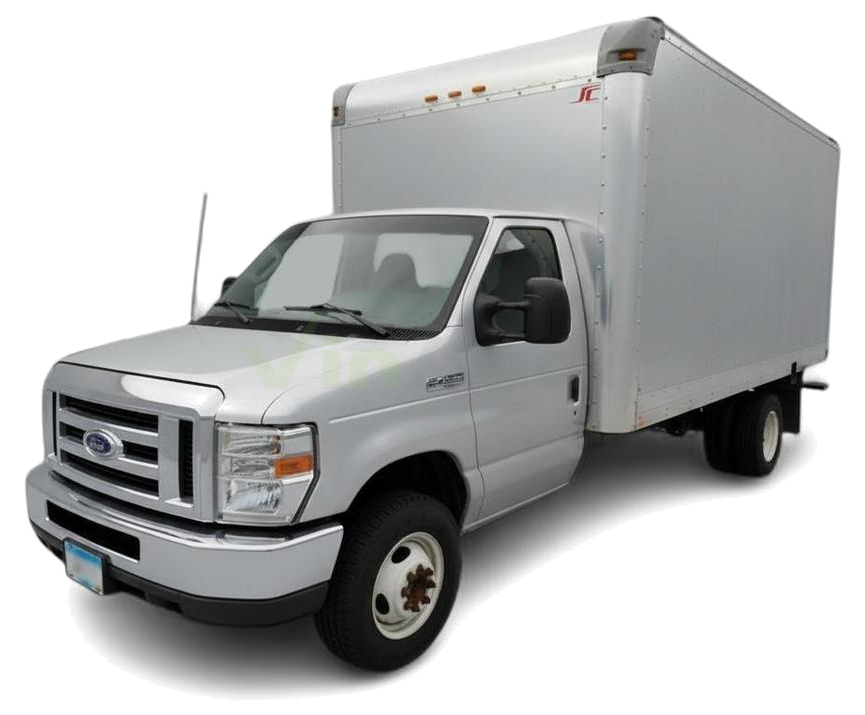
The Good
The 2016 Ford Econoline Commercial Cutaway excels in raw capability and unwavering dependability. Its V8 engines offer potent performance for hauling and towing, instilling confidence. For the practical buyer, its legendary reliability and ease of maintenance translate to lower long-term costs. Emotionally, its proven track record and robust build provide peace of mind, making it a trusted partner for demanding work.
The Bad
When considering the 2016 Ford Econoline Commercial Cutaway, potential buyers should be aware of its aging design, which impacts fuel efficiency and modern technology integration. Ride comfort can be utilitarian rather than luxurious, and some owners report issues with interior plastics and infotainment systems compared to newer competitors. Exhaust manifold issues have also been noted.
2016 Ford Econoline Commercial Cutaway: Quick Overview
- Engine Options: The 2016 Ford Econoline Commercial Cutaway was primarily offered with two robust V8 engine options:
- 4.6L Triton V8: This engine provided a balance of power and efficiency for lighter-duty applications.
- 5.4L Triton V8: Offering more torque and horsepower, this option was suited for heavier loads and more demanding tasks.
- Horsepower:
- The 4.6L V8 typically produced around 225 horsepower.
- The 5.4L V8 generally delivered approximately 255 horsepower.
- Fuel Economy: As a commercial vehicle with a focus on power, fuel economy was not a primary design consideration. Expect MPG in the range of 10-15 MPG combined, highly dependent on engine choice, load, and driving conditions. Official EPA estimates for these older configurations are less precise than for modern passenger vehicles.
- 0-60 Times: Specific 0-60 times are rarely published for commercial cutaway vans as they are not designed for acceleration performance. When equipped with a V8 engine and an empty chassis, acceleration would be adequate for merging onto highways, likely in the 9-12 second range depending on engine and configuration.
- Towing Capacity: While the cutaway chassis itself doesn't have a defined towing capacity independent of the upfitted body, the robust frame and powertrain are designed to support significant Gross Vehicle Weight Ratings (GVWR) and Gross Combined Weight Ratings (GCWR), enabling the completed vehicle (e.g., a box truck) to tow trailers as needed for its intended commercial purpose. Specific ratings depend heavily on the final upfit.
- Trim-Level Features: The concept of traditional trim levels is different for a cutaway chassis. Instead, the focus is on the available packages and optional equipment for the cab and chassis. These could include:
- Heavy-duty alternators and batteries for powering auxiliary equipment.
- Different rear axle ratios to optimize for towing or fuel economy.
- Optional integrated trailer brake controllers.
- Various seating configurations for the cabin.
- Basic audio systems and essential comfort features for the driver.
- Power windows and locks were often optional.
- Air conditioning was standard or optional depending on the initial configuration.
2016 Ford Econoline Commercial Cutaway Specifications
Vehicle History Report
What Problems Does the 2016 Ford Econoline Commercial Cutaway Have?
Another area that sometimes requires attention is the transmission, specifically the automatic transmission. While generally robust, excessive wear or improper maintenance can lead to shifting issues or eventual failure, especially if the vehicle has been used for heavy hauling or towing consistently. Fluid changes are critical for longevity.
Some owners have also reported issues with the fuel pump, which can become less reliable with age and mileage, potentially leading to starting problems or stalling. Electrical gremlins, while not pervasive, can sometimes manifest as issues with sensors, dashboard lights, or power accessories, though these are often minor and repairable.
Recalls for the 2016 model year are typically related to specific components or systems and are usually addressed by Ford through official service bulletins. Common recall areas for Ford vehicles of this period could involve airbag inflators, braking system components, or fuel system leaks. Owners should always check for outstanding recalls with their VIN.
Regarding long-term reliability, the Econoline's construction is designed for durability. The frame and drivetrain are stout. However, the interior components, while functional, are more basic and may show wear and tear over many years of commercial use. Rust can also be a concern in regions with harsh winters and road salt usage, particularly around the frame rails and body panels.
It's important to note that the cutaway nature means the reliability of the upfitted body (box, liftgate, refrigeration unit, etc.) is separate from the chassis and will have its own set of potential issues and maintenance requirements.
How long will the 2016 Ford Econoline Commercial Cutaway last?
What Technology & Safety Features are Included?
Driver-assistance features are virtually non-existent in the modern sense. Electronic Stability Control (ESC) and ABS (Anti-lock Braking System) were standard, providing essential safety and control. Backup cameras and parking sensors were not commonly integrated into the cutaway chassis itself but could be added as aftermarket or specialized upfitter options depending on the final body configuration.
Safety features are primarily focused on structural integrity and basic passive systems. Standard safety equipment includes front airbags for the driver and front passenger. Seatbelt pretensioners are also standard. Due to its heavy-duty construction, the Econoline generally offers good occupant protection in a frontal collision for its class and era. However, comprehensive crash-test ratings from organizations like the NHTSA or IIHS are not typically available or applicable in the same way as for passenger vehicles, as the cutaway chassis is designed to be integrated into a larger, specialized vehicle. Individual crashworthiness will depend significantly on the final body upfit.
The focus for this vehicle is on a robust frame, reliable braking systems, and a functional cabin environment designed for the demands of commercial use, rather than sophisticated driver aids or extensive infotainment systems. Optional equipment often centered on enhancing utility, such as heavy-duty alternators, larger fuel tanks, or specific towing packages.
What Colors Options are Available?
2016 Ford Econoline Commercial Cutaway Prices and Market Value
2016 Ford Econoline Commercial Cutaway Cost of Ownership
2016 Ford Econoline Commercial Cutaway Fuel Efficiency
2016 Ford Econoline Commercial Cutaway Insurance
reasonable repair costs.
How Does the 2016 Ford Econoline Commercial Cutaway Compare to Other Vehicle?
Performance: The Econoline's V8 engines offered robust towing and hauling power, often exceeding the base engines of its competitors. While the Sprinter offered more refined engines and better fuel economy options, the Econoline's V8s provided a more traditional, strong American truck-like performance. The Chevrolet Express also offered V8 power, making it a direct competitor in terms of raw output.
Features: In terms of features, the 2016 Econoline was decidedly utilitarian. It lacked the modern infotainment, advanced driver aids, and interior refinement found in the more premium Mercedes-Benz Sprinter. The Chevrolet Express was also a relatively basic offering in its class, similar to the Ford. If modern tech was a priority, the Sprinter would be the superior choice, though at a significantly higher price point.
Reliability: The Ford Econoline has a legendary reputation for reliability and durability, built on decades of proven engineering. While the Sprinter is a capable vehicle, its complexity can sometimes lead to more expensive repairs. The Chevrolet Express also has a good reliability record, but the Econoline is often perceived as the benchmark for ruggedness and longevity in this class. The core components of the Econoline are known to be stout.
Price: The Econoline typically offered a strong value proposition, often being more affordable to purchase both new and used than the Mercedes-Benz Sprinter. It was generally priced competitively with the Chevrolet Express.
Alternatives: For buyers prioritizing fuel efficiency and modern amenities, the Mercedes-Benz Sprinter is a compelling, albeit more expensive, alternative. It offers better MPG, a more comfortable ride, and a more advanced feature set. The Chevrolet Express Cutaway is a very similar alternative in terms of purpose and capability, often differing only in brand preference and specific option availability. For businesses that can adapt to a different form factor, cutaway versions of modern chassis from manufacturers like Freightliner (e.g., the MT45/MT55) might offer newer designs and updated powertrains, but often come with a higher initial cost. However, for a no-nonsense, reliable, and capable commercial cutaway chassis, the 2016 Ford Econoline remains a strong contender, especially if budget is a key consideration.
Final Verdict: Is the 2016 Ford Econoline Commercial Cutaway a Good Vehicle?
2016 Ford Econoline Commercial Cutaway Owner Reviews

Drew B
Drew is a seasoned automotive expert and contributor to VinCheck.info. With nearly 15 years of experience as a former Porsche technician, he brings a wealth of hands-on knowledge to his writing. Born in North Carolina, a region renowned for its deep-rooted NASCAR culture, Drew developed a passion for cars early in life, often building and working on vehicles from a young age. At VINCheck, Drew leverages his extensive technical background to provide in-depth analyses of various vehicles. His articles often focus on engine performance, reliability, and maintenance insights, offering readers practical information grounded in real-world experience. Some of his notable contributions include reviews on the Mazda CX-5's longevity and detailed examinations of engine options for models like the 2011 Toyota Camry and Tacoma