
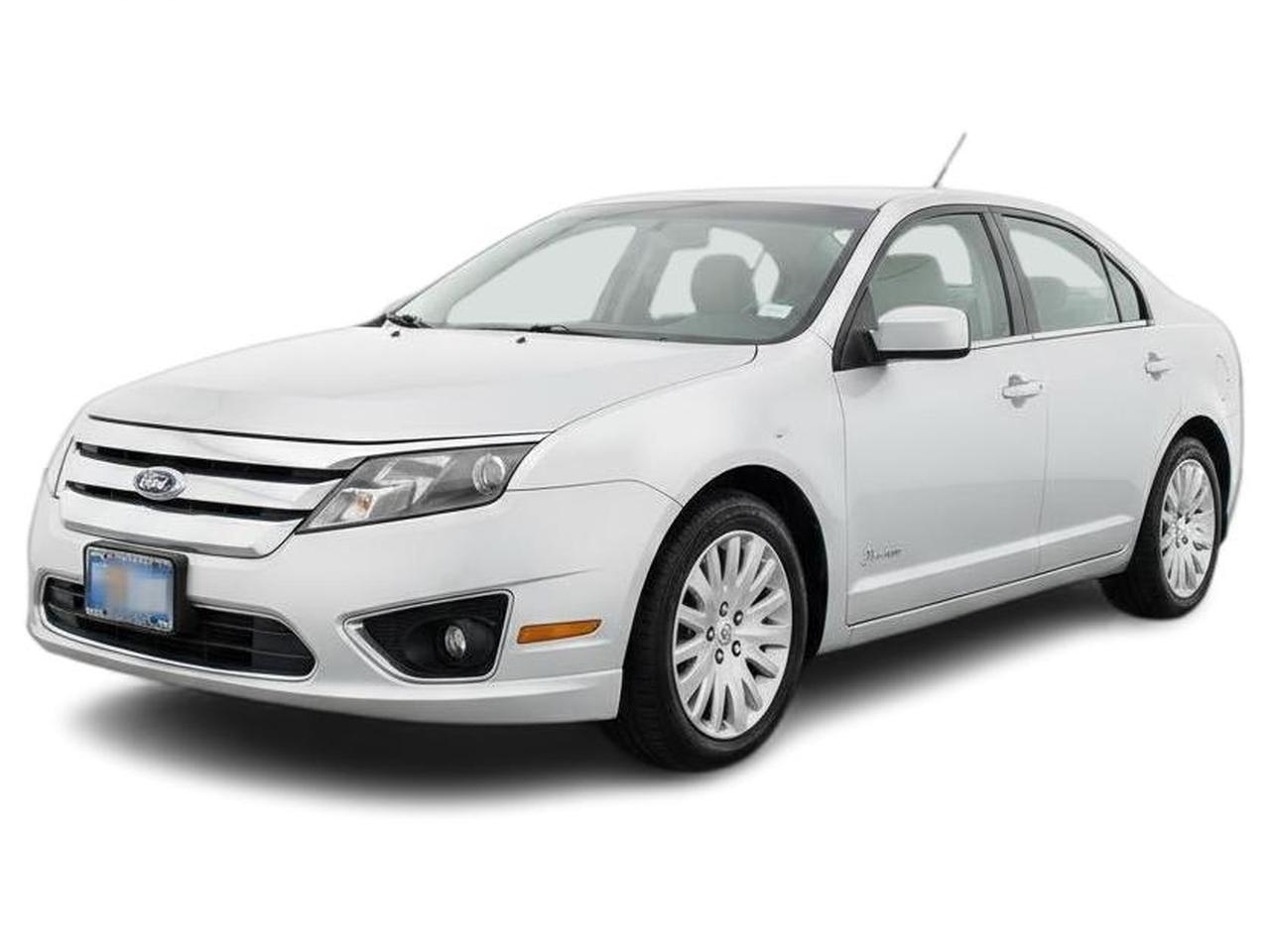
The Good
The 2010 Ford Fusion Hybrid excels in fuel efficiency, offering significant savings at the pump, appealing to practical buyers. Its comfortable and quiet ride, coupled with a familiar sedan design, provides emotional reassurance. Reliability is generally good, and its value proposition makes it an attractive choice for budget-conscious consumers seeking eco-friendly transportation.
The Bad
Potential owners of the 2010 Ford Fusion Hybrid should be aware of possible battery degradation over time, which can impact fuel economy. Some owners have reported issues with the continuously variable transmission (CVT) and electronic components. Infotainment system glitches have also been noted.
2010 Ford Fusion Hybrid: Quick Overview
- Engine Options: The 2010 Ford Fusion Hybrid features a single powertrain configuration: a 2.5-liter four-cylinder gasoline engine paired with an electric motor and a Nickel-Metal Hydride (NiMH) battery pack.
- Horsepower: The combined system output is approximately 191 horsepower. The gasoline engine produces around 156 horsepower, while the electric motor contributes the remaining power.
- Fuel Economy: EPA estimated fuel economy ratings for the 2010 Ford Fusion Hybrid are 41 mpg in the city and 36 mpg on the highway, for a combined rating of 39 mpg. This was very competitive for its class at the time.
- 0-60 Times: Acceleration figures for the 2010 Fusion Hybrid are typically around 9.5 to 10.0 seconds for the 0-60 mph sprint. While not sporty, it's adequate for everyday driving.
- Towing Capacity: The 2010 Ford Fusion Hybrid is not designed for towing and therefore has no official towing capacity.
- Trim-Level Features: The 2010 Ford Fusion Hybrid was generally offered in a single, well-appointed trim level, often referred to as the Fusion Hybrid. Key standard features typically included:
- Leather upholstery
- Heated front seats
- Dual-zone automatic climate control
- Power-adjustable driver's seat
- Ford SYNC infotainment system (voice-activated connectivity)
- Premium audio system
- Alloy wheels
- Automatic headlights
- Keyless entry
- Hybrid-specific instrumentation displaying energy flow and fuel economy
- Power windows, locks, and mirrors
- Cruise control
- Anti-lock brakes (ABS)
- Electronic stability control
- Front and side airbags
2010 Ford Fusion Hybrid Specifications
Vehicle Information
| Year | 2010 |
| Make | Ford |
| Model | Fusion |
| Trim | - |
| Style | 4-Door |
| Type | Sedan |
| Category | Mid-Size Car |
Manufacturing Details
| Made In | Mexico |
| Manufacturing City | HERMOSILLO |
Dimensions
| Doors | 4-Door |
| Curb Weight | 1687.36 kg |
| Gross Vehicle Weight Rating | 2132.34 kg |
| Overall Height | 144.53 cm |
| Overall Length | 484.12 cm |
| Overall Width | 183.39 cm |
| Wheelbase Length | 272.8 cm |
| Standard Seating | 5 |
Engine & Performance
| Engine | 2.5L I4 |
| Engine Size | 2.5L |
| Engine Cylinders | 4 |
| Transmission | 5-Speed Manual |
| Transmission Type | Manual |
| Transmission Speeds | 5-Speed |
| Drivetrain | Front-Wheel Drive |
Additional Features
| Anti-Brake System | 4-Wheel ABS |
| Steering Type | Rack & Pinion |
Pricing
| Manufacturer Suggested Retail Price (MSRP) | $27,270 USD |
| Invoice Price | $24,988 USD |
| Delivery Charges | $725 USD |
Vehicle History Report
Specifications
History
Events
History Check
Check
Check
Check
Check
Listings
Recalls
Check
Analysis
What Problems Does the 2010 Ford Fusion Hybrid Have?
How long will the 2010 Ford Fusion Hybrid last?
What Technology & Safety Features are Included?
In terms of driver-assistance features, the 2010 Fusion Hybrid was relatively basic by today's standards, but it did include standard features like electronic stability control and traction control, which are crucial for maintaining vehicle control in slippery conditions. A rearview camera was not standard but could have been an optional feature on some models.
Safety was a priority, and the 2010 Fusion Hybrid was equipped with a comprehensive set of airbags, including front airbags, front side airbags, and side curtain airbags. Anti-lock brakes (ABS) were also standard.
Crash-test ratings from the National Highway Traffic Safety Administration (NHTSA) for the 2010 Ford Fusion (which the hybrid shares structural components with) generally indicated good performance. The 2010 Ford Fusion received an overall 5-star safety rating from NHTSA, with 5 stars for frontal driver and passenger impact, and 5 stars for side impact. The Insurance Institute for Highway Safety (IIHS) also rated the 2010 Fusion as a "Top Safety Pick", achieving "Good" ratings in frontal offset and side impact crash tests. Optional features could have included a navigation system and a power moonroof, enhancing the premium feel of the interior.
What Colors Options are Available?
2010 Ford Fusion Hybrid Prices and Market Value
2010 Ford Fusion Hybrid Cost of Ownership
2010 Ford Fusion Hybrid Fuel Efficiency
2010 Ford Fusion Hybrid Safety Rating
NHTSA
IIHS
2010 Ford Fusion Hybrid Recalls & Defects
Seats:front Assembly:recliner
Power Train:automatic Transmission
Wheels:lugs/Nuts/Bolts/studs
Equipment
Fuel System, Gasoline:storage:auxillary Tank
AIR Bags:frontal:passenger Side:inflator Module
AIR Bags:frontal:passenger Side:inflator Module
AIR Bags:frontal:passenger Side:inflator Module
Service Brakes, Hydraulic:antilock/Traction Control/Electronic Limited Slip:control Unit/module
AIR Bags:frontal:passenger Side:inflator Module
AIR Bags:frontal:driver Side:inflator Module
AIR Bags:frontal:passenger Side:inflator Module
AIR Bags:frontal:driver Side:inflator Module
AIR Bags:frontal
AIR Bags:frontal:passenger Side:inflator Module
AIR Bags:frontal:driver Side:inflator Module
AIR Bags:frontal
2010 Ford Fusion Hybrid Warranty
Basic
Powertrain
Rust
2010 Ford Fusion Hybrid Insurance
reasonable repair costs.
How Does the 2010 Ford Fusion Hybrid Compare to Other Sedan?
Performance: In terms of performance, the 2010 Fusion Hybrid offered a combined 191 horsepower, which was competitive, though often felt less responsive than its gasoline counterparts. The Camry Hybrid of the same year offered similar power and a smoother transition between electric and gasoline power. The Accord Hybrid was also a strong contender.
Features: The Fusion Hybrid was well-equipped for its time, featuring the innovative Ford SYNC system. The Camry Hybrid and Accord Hybrid also offered strong feature sets, with their own proprietary infotainment and connectivity options. All three vehicles provided comfortable interiors and good standard safety equipment.
Reliability: Historically, Toyota has held a slight edge in long-term hybrid reliability, with the Camry Hybrid often cited for its robust powertrain and battery longevity. Honda also has a strong reputation for reliability. The 2010 Fusion Hybrid, being an earlier iteration, had some reported issues with its hybrid battery and electronics, which could be a concern compared to the more established hybrid systems of its rivals.
Price: The 2010 Fusion Hybrid was often priced very competitively, sometimes offering a more affordable entry point into the hybrid segment compared to the Camry Hybrid.
Alternatives:
- Toyota Camry Hybrid (2007-2011): Generally considered the benchmark for hybrid sedans, offering excellent reliability, comfort, and impressive fuel economy. It might command a slightly higher used price.
- Honda Accord Hybrid (2005-2007, then later generations): The 2007 model was a good option, though the 2010 model year was not produced. Later generations are also excellent but likely more expensive.
- Hyundai Sonata Hybrid (2011+): While slightly newer, the Sonata Hybrid offered strong value, good fuel economy, and a lengthy warranty, making it a comparable alternative if budget allows for a newer model.
For buyers prioritizing bulletproof long-term hybrid reliability, the Camry Hybrid is often the safest bet. However, the Fusion Hybrid offers a strong value proposition and a comfortable ride, especially if found at a good price with well-maintained records.
Final Verdict: Is the 2010 Ford Fusion Hybrid a Good Sedan?
It is worth buying, but with caveats. As a used vehicle, it offers excellent value, especially if purchased at a lower price point. Buyers should prioritize examples with meticulously documented maintenance history.
Conditions for purchase:
- Used vs. New: Buying used is the only realistic option.
- Specific Trims: It was primarily offered in one well-equipped trim, so focus on condition and mileage.
- Inspection: A pre-purchase inspection by a mechanic familiar with hybrids is highly recommended, paying close attention to the battery and transmission.
If its potential hybrid battery replacement cost is factored into the purchase decision, it remains a compelling economical option for efficient, comfortable transportation.

Cathleen V
Cathleen is an exceptional freelance writer covering hot topics in the automotive world from a gearhead's perspective. Her articles delve into various aspects of automotive technology and history, offering readers detailed insights into engine performance, reliability, and maintenance. Through her engaging and informative writing, Cathleen provides valuable information to automotive enthusiasts and consumers alike, helping them make informed decisions about vehicle maintenance and purchases.