
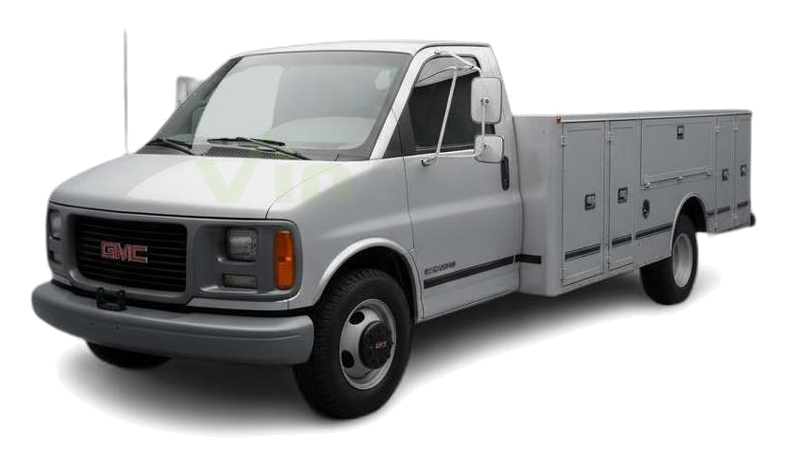
The 2000 GMC Savana 3500 is a full-size van known for its robust capability and spacious interior. Part of the first generation of Savana vans, which debuted in 1996, it offered a versatile platform for various needs. Available in different wheelbase configurations and body styles like passenger and cargo vans, it was popular for its hauling and towing prowess. Key trims often included base models and more optioned versions. Pricing at the time varied significantly based on configuration and options.
The Good
The 2000 GMC Savana 3500 excels in raw capability, offering powerful engine options for towing and hauling needs. Its practical, spacious design appeals to businesses and families alike. While not built for luxury, it provides a functional and durable ride, making it a reliable workhorse for the long haul, offering excellent value for its utility.
The Bad
Owners of the 2000 GMC Savana 3500 should watch for potential transmission issues, especially with higher mileage. Rust, particularly around the wheel wells and rocker panels, is a common concern for vehicles of this age. Fuel economy is also a significant drawback, and some interior materials may show wear over time.
2000 GMC Savana 3500: Quick Overview
- Engine Options: The 2000 GMC Savana 3500 was typically offered with a choice of robust V8 engines. Common options included:
- 4.3L V6 (less common in the 3500 series, more prevalent in lighter duty models)
- 5.0L V8
- 5.7L V8
- 7.4L V8
- Horsepower: Horsepower varied significantly by engine:
- 4.3L V6: Approximately 190-200 horsepower
- 5.0L V8: Approximately 220 horsepower
- 5.7L V8: Approximately 250-260 horsepower
- 7.4L V8: Approximately 310-320 horsepower
- Fuel Economy: Fuel economy is a notable weakness for the Savana 3500, as expected for a heavy-duty van. Estimates range from 10-14 MPG combined, depending heavily on the engine and driving conditions.
- 0-60 Times: Precise 0-60 mph times are rarely a primary concern for this vehicle, but they would be in the range of 9-12 seconds for the more powerful engine options, under ideal load conditions.
- Towing Capacity: The Savana 3500 is built for towing. Depending on the configuration, engine, and drivetrain (2WD/4WD), towing capacities could range from 7,000 lbs up to well over 10,000 lbs when properly equipped with towing packages.
- Trim-Level Features: GMC Savana 3500 models were primarily work-oriented, with fewer distinct trim levels compared to passenger vehicles. Key features would vary:
- Base/Work Van: Focus on functionality with durable interior materials, basic seating, minimal creature comforts, and ample cargo space.
- Optional Packages: Often equipped with packages that included air conditioning, power windows and locks (on some models), upgraded audio systems, cruise control, and sometimes passenger-focused amenities for conversion vans.
- Passenger Van Variants: Featured multiple rows of seating, often with interior trim upgrades and amenities to make it more comfortable for carrying people.
2000 GMC Savana 3500 Specifications
Vehicle Information
| Year | 2000 |
| Make | GMC |
| Model | Savana 3500 |
| Trim | - |
| Style | - |
| Type | Van |
| Category | Cargo Van |
Manufacturing Details
| Made In | United States |
| Manufacturing City | WENTZVILLE |
Dimensions
| Doors | 3-Door |
| Curb Weight | 5345 pounds |
| Gross Vehicle Weight Rating | 9500 pounds |
| Overall Height | 83.90 inches |
| Overall Length | 218.70 inches |
| Overall Width | 79.40 inches |
| Wheelbase Length | 135.00 inches |
| Standard Seating | 2 |
Engine & Performance
| Engine | 5.7L V8 |
| Engine Size | 5.7L |
| Engine Cylinders | 8 |
| Transmission | 4-Speed Automatic |
| Transmission Type | Automatic |
| Transmission Speeds | 4-Speed |
| Drivetrain | Rear-Wheel Drive |
Additional Features
| Anti-Brake System | 2-Wheel ABS |
| Steering Type | Recirculating |
Pricing
| Manufacturer Suggested Retail Price (MSRP) | $23,253 |
| Invoice Price | $20,343 |
| Delivery Charges | - |
Vehicle History Report
Vehicle
Specifications
Specifications
Ownership
History
History
All History
Events
Events
NMVTIS Title
History Check
History Check
Salvage/Rebuilt
Check
Check
Accident
Check
Check
Theft
Check
Check
Open Lien
Check
Check
Past Sale
Listings
Listings
Safety
Recalls
Recalls
Odometer
Check
Check
Market Price
Analysis
Analysis
What Problems Does the 2000 GMC Savana 3500 Have?
The 2000 GMC Savana 3500, like many vehicles of its era, has some commonly reported issues. One of the most frequent concerns revolves around the transmission. Automatic transmissions, particularly with the heavier V8 engines and under significant load, could experience issues like slipping, delayed shifting, or outright failure if not maintained meticulously. Regular fluid changes are crucial.
Rust is another significant concern, especially for models that have lived in areas with harsh winters or are exposed to road salt. Areas prone to rust include the rocker panels, wheel wells (especially rear), and the undercarriage. Early detection and treatment are vital for longevity.
Engine cooling systems can also be a point of concern. Radiator leaks, failing water pumps, and thermostat issues are not uncommon as the vehicle ages. Overheating can lead to more severe engine damage, so monitoring coolant levels and the temperature gauge is important.
Some owners have reported issues with electrical components, such as malfunctioning power windows, door locks, or dashboard warning lights. Sensor failures, like those for the oxygen sensors or crank position sensors, can also lead to check engine lights and performance problems.
Suspension and steering components, including ball joints, tie rod ends, and bushings, will wear over time due to the vehicle's weight and intended use, leading to clunks, rattles, or imprecise steering. Brake wear is also a consistent maintenance item.
Regarding recalls, specific recalls for the 2000 model year might vary, but general areas of concern for vans of this vintage often include potential issues with airbags, brake systems, or fuel system components. It is always recommended to check the NHTSA (National Highway Traffic Safety Administration) website for any active recalls associated with a specific VIN.
Long-term reliability hinges heavily on consistent maintenance. Those that have been regularly serviced, with fluid changes and timely repairs, tend to be more dependable. However, the inherent complexity of aging transmissions and the susceptibility to rust are factors that can impact long-term ownership costs and reliability.
Rust is another significant concern, especially for models that have lived in areas with harsh winters or are exposed to road salt. Areas prone to rust include the rocker panels, wheel wells (especially rear), and the undercarriage. Early detection and treatment are vital for longevity.
Engine cooling systems can also be a point of concern. Radiator leaks, failing water pumps, and thermostat issues are not uncommon as the vehicle ages. Overheating can lead to more severe engine damage, so monitoring coolant levels and the temperature gauge is important.
Some owners have reported issues with electrical components, such as malfunctioning power windows, door locks, or dashboard warning lights. Sensor failures, like those for the oxygen sensors or crank position sensors, can also lead to check engine lights and performance problems.
Suspension and steering components, including ball joints, tie rod ends, and bushings, will wear over time due to the vehicle's weight and intended use, leading to clunks, rattles, or imprecise steering. Brake wear is also a consistent maintenance item.
Regarding recalls, specific recalls for the 2000 model year might vary, but general areas of concern for vans of this vintage often include potential issues with airbags, brake systems, or fuel system components. It is always recommended to check the NHTSA (National Highway Traffic Safety Administration) website for any active recalls associated with a specific VIN.
Long-term reliability hinges heavily on consistent maintenance. Those that have been regularly serviced, with fluid changes and timely repairs, tend to be more dependable. However, the inherent complexity of aging transmissions and the susceptibility to rust are factors that can impact long-term ownership costs and reliability.
How long will the 2000 GMC Savana 3500 last?
With proper and consistent maintenance, the 2000 GMC Savana 3500 can achieve 200,000 to 250,000 miles or more. Many owners report reaching these figures or even exceeding them, particularly with the larger V8 engines, which are often considered more robust. The long-term durability of the Savana 3500 is largely dependent on how it has been used and maintained. Vehicles used primarily for light-duty passenger transport and meticulously serviced often prove to be very reliable workhorses for years. However, those subjected to heavy towing, constant commercial use, or neglected maintenance are more prone to significant component failures, especially concerning the transmission and suspension. Rust is a major weakness that can significantly curtail its lifespan if not addressed proactively.
What Technology & Safety Features are Included?
The 2000 GMC Savana 3500 prioritizes functionality and utility over cutting-edge technology, which is typical for a commercial van of its era. Built-in tech and entertainment features were relatively basic.
Standard Tech & Entertainment:
Driver-Assistance Features:
Driver-assistance features were virtually non-existent on the 2000 Savana 3500. Systems like cruise control were often optional, and modern aids such as rearview cameras, lane departure warnings, or adaptive cruise control were not offered.
Safety Features:
Safety features were also more rudimentary compared to modern vehicles.
Optional Features & Conversion Van Upgrades:
Many Savana 3500 vans were purchased as platforms for conversion into RVs or specialized vehicles. These conversions could include:
Crash-Test Ratings:
Official government crash-test ratings (like those from the NHTSA or IIHS) for individual model years of the 2000 GMC Savana 3500 can be difficult to find and may not have been comprehensively tested in the same way as passenger cars. Vans of this era generally performed acceptably in frontal impacts for their class, but side-impact and rollover protection were less advanced. Owners should rely on the standard safety equipment like airbags and ABS as the primary safety provisions. Maintenance of these systems is crucial for their effectiveness.
Standard Tech & Entertainment:
- Audio System: Most models came standard with an AM/FM radio. Optional upgrades included a CD player, and for some higher trims or conversion van configurations, a more advanced stereo system with more speakers was available.
- Climate Control: Manual air conditioning and heating were standard or optional depending on the configuration.
Driver-Assistance Features:
Driver-assistance features were virtually non-existent on the 2000 Savana 3500. Systems like cruise control were often optional, and modern aids such as rearview cameras, lane departure warnings, or adaptive cruise control were not offered.
Safety Features:
Safety features were also more rudimentary compared to modern vehicles.
- Airbags: Standard front airbags for the driver and front passenger were typically included.
- Braking: Four-wheel anti-lock braking system (ABS) was generally standard on the 3500 models, aiding in controlled stops, especially when loaded.
- Seatbelts: Standard three-point seatbelts for front occupants.
Optional Features & Conversion Van Upgrades:
Many Savana 3500 vans were purchased as platforms for conversion into RVs or specialized vehicles. These conversions could include:
- Upgraded interior trim and upholstery
- Entertainment systems with TVs, VCRs/DVD players, and enhanced sound
- Auxiliary power outlets
- Comfort features like captain's chairs or rear bench seating
- Exterior enhancements
Crash-Test Ratings:
Official government crash-test ratings (like those from the NHTSA or IIHS) for individual model years of the 2000 GMC Savana 3500 can be difficult to find and may not have been comprehensively tested in the same way as passenger cars. Vans of this era generally performed acceptably in frontal impacts for their class, but side-impact and rollover protection were less advanced. Owners should rely on the standard safety equipment like airbags and ABS as the primary safety provisions. Maintenance of these systems is crucial for their effectiveness.
What Colors Options are Available?
2000 GMC Savana 3500 Prices and Market Value
When new in 2000, the GMC Savana 3500 had a wide price range, typically starting around $25,000-$30,000 for a base cargo van and climbing significantly for passenger versions or those equipped with larger engines and optional packages, potentially reaching $40,000 or more. As a 2000 model, its original MSRP is now largely irrelevant for current market value.
Today, used 2000 GMC Savana 3500 prices vary drastically, ranging from as low as $2,000-$3,000 for vehicles with high mileage and condition issues, to $8,000-$12,000 or more for well-maintained, low-mileage examples, especially those converted into recreational vehicles. Depreciation has been steep, as expected for a vehicle of this age and type. Factors affecting resale value include overall condition (mechanical and cosmetic), mileage, rust prevalence, maintenance history, and whether it's a cargo or passenger configuration. Conversion van versions often hold higher values due to their specialized utility.
2000 GMC Savana 3500 Cost of Ownership
Owning a 2000 GMC Savana 3500 can be costly, primarily due to its fuel consumption and potential repair needs. Insurance costs will vary by driver and location but are generally moderate for a commercial vehicle. Fuel is a major expense, with V8 engines delivering poor MPG. Maintenance is essential; regular oil changes, transmission fluid services, and brake checks are crucial. Repair costs can be significant, especially for transmission work or rust remediation. Overall, while the initial purchase price might be low on the used market, the Savana 3500 is not an economical vehicle to own long-term due to its thirst for fuel and potential for expensive repairs.
2000 GMC Savana 3500 Fuel Efficiency
Fuel Type
Gasoline
Fuel Capacity
31.00 gallons
City Mileage
12 miles/gallon
Highway Mileage
16 miles/gallon
2000 GMC Savana 3500 Safety Rating
NHTSA
IIHS
2000 GMC Savana 3500 Recalls & Defects
Fuel System, Gasoline
Recall date
2006-05-19
Recall no.
06e043000
Source
NHTSA
Summary
Certain Replacement Fuel Filters, Fram Brand Name P/N G3727, With Date Codes X52911 Through X60801 Sequentially or X600141 and A Mexico Country or Origin Marking ON THE Fuel Filter Housing Manufactured From October 18, 2005, Through March 21, 2006, Sold FOR USE ON THE Vehicles Listed Above and ON Certain School Buses. (TO SEE THE School Bus Engine Sizes, Click ON "document Search" and Then "bus Applications"). THE Connector ON THE Fuel Filter WAS NOT Manufactured TO Honeywell's Specification. AS A Result, THE O-Ring MAY NOT Seat Correctly ON THE Fuel Line.
Consequence
This Condition MAY Cause AN Inadequate Seal AT THE Connection, Potentially Leading TO A Fuel Leak. IN THE Presence OF AN Ignition Source, A Fire Could Occur.
Remedy
Honeywell Will Notify Owners and Replace THE Fuel Filters Free OF Charge. THE Recall Began ON October 18, 2006. Owners MAY Contact Fram Customer Service AT 1-800-890-2075 (Option 1).
Notes
This Recall Only Pertains TO Aftermarket Fram Fuel Filters and HAS NO Relation TO ANY Original Equipment Installed ON THE Vehicles Listed.customers MAY Contact THE National Highway Traffic Safety Administration's Vehicle Safety Hotline AT 1-888-327-4236 (Tty: 1-800-424-9153); or GO TO Http://Www.safercar.gov.
Equipment
Recall date
2007-10-24
Recall no.
07e088000
Source
NHTSA
Summary
Certain Honeywell Fram Racing Brand HP4 and HP8 OIL Filters That Were Manufactured From MAY 25, 2006, Through September 14, 2007, and Sold FOR USE AS Replacement Equipment FOR Vehicles List Above. THE Affected Filters ARE Marked With A Date Code A61451 Through A72571 Sequentially. THE Date Code and Part Number Appear ON THE Filter Housing. Fram Racing HP4 and HP8 OIL Filters NOT Bearing A Date Code IN This Range ARE NOT Affected BY This Recall. THE Gasket OF THE OIL Filter Becomes More Pliable Under High Temperatures and Pressures.
Consequence
This Condition MAY Cause Inadequate Sealing and Loss OF Engine Oil, Possibly Resulting IN A Fire.
Remedy
Honeywell Will Replace THE Affected OIL Filters Free OF Charge. THE Recall Began During November 2007. Owners CAN Contact Fram Customer Service Toll-Free AT 1-800-890-2075.
Notes
Customers MAY Contact THE National Highway Traffic Safety Administration's Vehicle Safety Hotline AT 1-888-327-4236 (Tty: 1-800-424-9153); or GO TO Http://Www.safercar.gov.
2000 GMC Savana 3500 Warranty
Basic
Original warranty
36 months / 36,000 miles
Estimated remaining
Expired
Powertrain
Original warranty
36 months / 36,000 miles
Estimated remaining
Expired
Rust
Original warranty
72 months / 100,000 miles
Estimated remaining
Expired
2000 GMC Savana 3500 Insurance
Insurance for a 2000 GMC Savana 3500 is moderately priced, reflecting its status as a Van with strong safety ratings and
reasonable repair costs.
How Does the 2000 GMC Savana 3500 Compare to Other Van?
The 2000 GMC Savana 3500 competed directly with other full-size vans like the Chevrolet Express 3500 (its corporate sibling, sharing many components), the Ford E-Series (E-350), and the Dodge Ram Van (though its production ended around this time for personal use, commercial versions persisted).
Performance: In terms of raw power and towing capacity, the Savana 3500 and its direct competitors were generally well-matched, offering powerful V8 engine options. The larger V8s in the Savana and Express, particularly the 7.4L, offered significant grunt for hauling and towing, comparable to Ford's larger V8s. Dodge's offerings were also potent but had a shorter lifespan in this segment.
Features: Feature-wise, the 2000 model year vans were relatively basic across the board. Driver comforts and technological advancements were minimal compared to today's standards. The Savana and Express offered a similar, functional interior. The Ford E-Series might have had slight advantages in certain optional feature availability or interior design nuances depending on the trim. Conversion van options often blurred these lines, with aftermarket customization being a significant factor.
Reliability: Reliability is a mixed bag for all these vans of this vintage. Common issues like transmission problems, rust, and electrical gremlins are prevalent across the Savana, Express, and E-Series. However, well-maintained examples of any of these could be quite durable. The Ford E-Series often had a reputation for robust chassis and drivetrains, while the GM twins (Savana/Express) shared many strengths and weaknesses. Dodge's offerings were generally considered less durable long-term.
Price: When new, prices were competitive. In the used market today, the 2000 Savana 3500 and its Chevrolet Express counterpart often represent a slightly more affordable entry point than comparable Ford E-Series vans, especially if mileage is high or condition is average. However, specific configurations (like RV conversions) can command higher prices.
Alternatives:
Performance: In terms of raw power and towing capacity, the Savana 3500 and its direct competitors were generally well-matched, offering powerful V8 engine options. The larger V8s in the Savana and Express, particularly the 7.4L, offered significant grunt for hauling and towing, comparable to Ford's larger V8s. Dodge's offerings were also potent but had a shorter lifespan in this segment.
Features: Feature-wise, the 2000 model year vans were relatively basic across the board. Driver comforts and technological advancements were minimal compared to today's standards. The Savana and Express offered a similar, functional interior. The Ford E-Series might have had slight advantages in certain optional feature availability or interior design nuances depending on the trim. Conversion van options often blurred these lines, with aftermarket customization being a significant factor.
Reliability: Reliability is a mixed bag for all these vans of this vintage. Common issues like transmission problems, rust, and electrical gremlins are prevalent across the Savana, Express, and E-Series. However, well-maintained examples of any of these could be quite durable. The Ford E-Series often had a reputation for robust chassis and drivetrains, while the GM twins (Savana/Express) shared many strengths and weaknesses. Dodge's offerings were generally considered less durable long-term.
Price: When new, prices were competitive. In the used market today, the 2000 Savana 3500 and its Chevrolet Express counterpart often represent a slightly more affordable entry point than comparable Ford E-Series vans, especially if mileage is high or condition is average. However, specific configurations (like RV conversions) can command higher prices.
Alternatives:
- Similar: The 2000 Chevrolet Express 3500 is essentially the same vehicle, offering identical performance and reliability characteristics.
- Better (for specific needs): If absolute towing power and a long-standing reputation for ruggedness are paramount, a 2000 Ford E-350 Super Duty might be considered, though it can be more expensive. For those seeking newer technology and potentially better fuel efficiency, looking at newer generations of vans or even modern cargo vans from Mercedes-Benz (Sprinter) or Ford (Transit) would be advisable, though at a significantly higher price point. For the budget-conscious looking for utility, the Savana 3500 remains a viable, albeit older, option.
Final Verdict: Is the 2000 GMC Savana 3500 a Good Van?
The 2000 GMC Savana 3500 is ideal for budget-conscious buyers needing substantial hauling or towing capacity, or for those looking for a base vehicle for van conversions (RVs, work vans). It's worth buying primarily in the used market, as new models are long discontinued. It is best suited for individuals or businesses with mechanical aptitude or access to affordable repair services, and for those prioritizing utility over modern amenities and fuel efficiency. A thorough pre-purchase inspection, with a strong focus on transmission health and rust, is absolutely critical. Cargo van configurations are generally more straightforward and potentially more reliable than heavily modified or older passenger versions. It is a vehicle for practical, heavy-duty tasks, not for those seeking a comfortable daily driver or a fuel-sipper.