
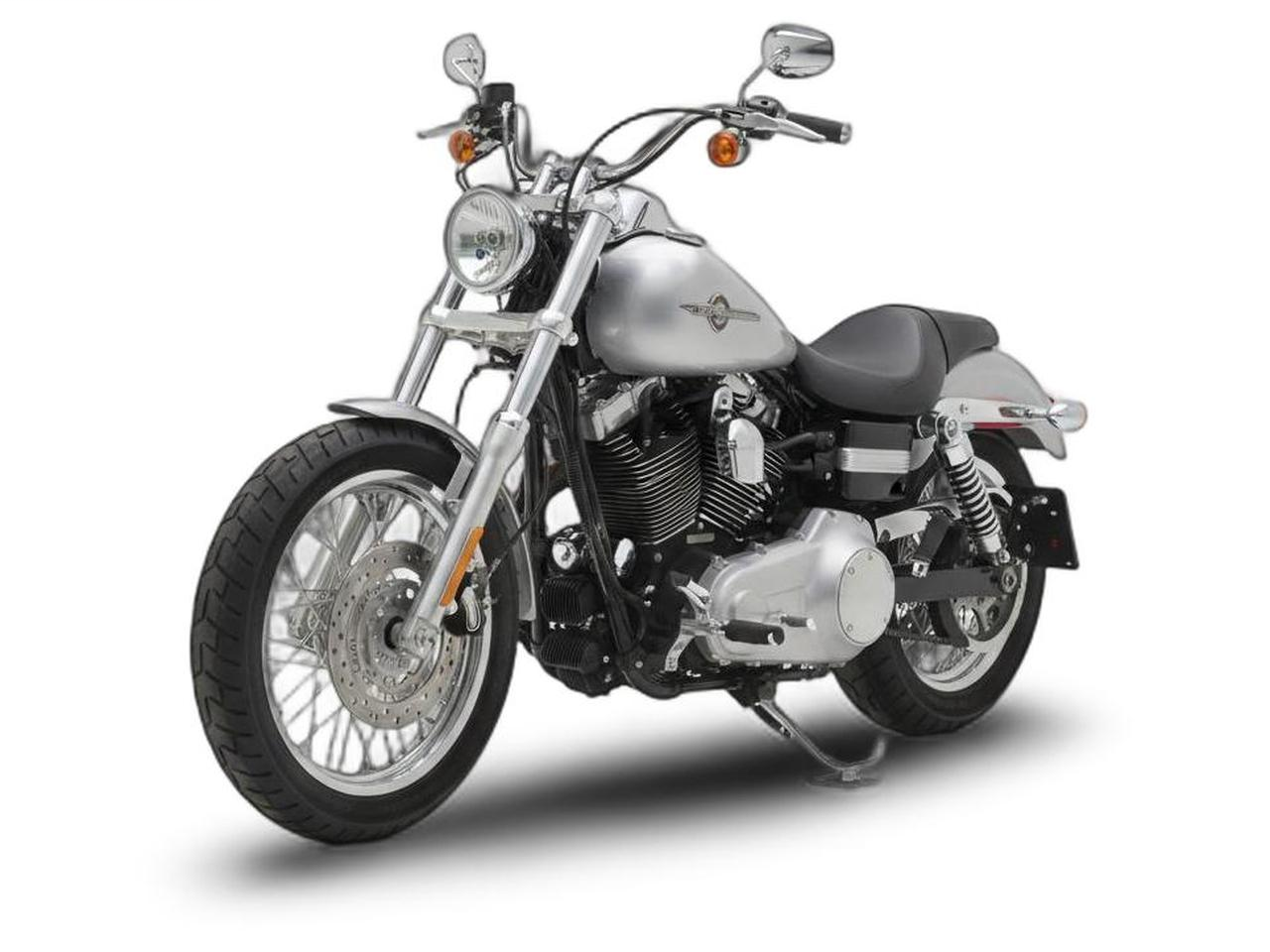
The Good
The 2013 Dyna Street Bob offers a potent V-twin rumble and agile handling for spirited rides, appealing to performance enthusiasts. Its iconic, customizable design captivates emotionally, while its robust build and reasonable fuel economy provide practical benefits for everyday riders and commuters seeking a classic American motorcycle experience.
The Bad
Potential buyers of the 2013 Dyna Street Bob should be aware of a firm suspension that can be harsh on rough roads, and a limited fuel range due to its smaller tank. Some owners report minor electrical gremlins and clutch engagement issues over time.
2013 Harley-Davidson Dyna Street: Quick Overview
- Engine: The 2013 Harley-Davidson Dyna Street Bob came standard with the 1600cc (96 cubic inch) Twin Cam 96 V-twin engine. This air-cooled engine featured electronic sequential port fuel injection (ESPFI) for efficient combustion.
- Horsepower: While Harley-Davidson doesn't officially publish horsepower figures, the Twin Cam 96 engine typically produced around 75-80 horsepower at the crank.
- Torque: The engine delivered strong low-end torque, crucial for cruising, with figures around 96 lb-ft at 3,000 RPM.
- Fuel Economy: Estimated fuel economy for the 2013 Dyna Street Bob is around 40-45 miles per gallon (MPG) in mixed riding conditions.
- 0-60 MPH: Acceleration is brisk due to the ample torque. 0-60 MPH times are generally in the 4.5 to 5.0-second range.
- Towing Capacity: As a motorcycle, the Dyna Street Bob does not have a towing capacity.
- Trim-Level Features (Street Bob):
- Stripped-down bobber styling: Minimalist design with a solo seat, chopped rear fender, and a low-profile handlebar.
- Handlebar-mounted mini-fairing: A small fairing for basic wind deflection and a distinctive look.
- Blacked-out components: Many parts, including the engine covers, exhaust, wheels, and forks, were finished in black for a stealthy appearance.
- Mid-mount foot controls: Providing a classic cruiser riding position.
- Dual disc front brakes: Offering adequate stopping power.
- 2.1-gallon fuel tank: Contributes to the compact silhouette but limits range.
- Analog speedometer: Simple instrumentation.
2013 Harley-Davidson Dyna Street Specifications
Vehicle Information
| Year | 2013 |
| Make | Harley-Davidson |
| Model | Dyna Street |
| Trim | - |
| Style | - |
| Type | Motorcycle |
| Category | Motorcycle |
Manufacturing Details
| Made In | United States |
| Manufacturing City | KANSAS CITY |
Dimensions
| Doors | - |
| Curb Weight | - |
| Gross Vehicle Weight Rating | - |
| Overall Height | - |
| Overall Length | - |
| Overall Width | - |
| Wheelbase Length | - |
| Standard Seating | - |
Engine & Performance
| Engine | 1584CC |
| Engine Size | 1584L |
| Engine Cylinders | 2 |
| Transmission | - |
| Transmission Type | - |
| Transmission Speeds | - |
| Drivetrain | - |
Additional Features
| Anti-Brake System | - |
| Steering Type | - |
Pricing
| Manufacturer Suggested Retail Price (MSRP) | - |
| Invoice Price | - |
| Delivery Charges | - |
Vehicle History Report
Specifications
History
Events
History Check
Check
Check
Check
Check
Listings
Recalls
Check
Analysis
What Problems Does the 2013 Harley-Davidson Dyna Street Have?
Another point of discussion is the fuel tank size. The 2.1-gallon tank, while contributing to the bike's compact and bobber-like appearance, results in a relatively limited riding range. This means more frequent stops for refueling, which can be a drawback for riders embarking on longer journeys.
Some owners have reported minor issues related to the clutch, such as a slightly vague engagement or requiring adjustment more frequently than expected. While not a universal problem, it's something to check during a pre-purchase inspection.
Regarding electrical systems, while generally reliable, older Harley-Davidsons can sometimes develop minor electrical gremlins over time, such as issues with lights, horn, or sensor readings. Regular maintenance and ensuring all connections are clean and secure can help mitigate these.
For the 2013 model year specifically, there were no widespread, model-defining recalls that significantly impacted the Dyna Street Bob's reliability. However, as with any vehicle, it's always advisable to check the NHTSA website or a dealer for any specific recalls that may have been issued for this particular VIN or model year.
Long-term reliability for the Twin Cam engine is generally considered good with proper maintenance. Regular oil changes, filter replacements, and checks of the primary drive and transmission fluid are crucial. The powertrain is robust, but components like the voltage regulator and stator can be points of failure on older Harleys, though not necessarily specific to the 2013 Street Bob.
How long will the 2013 Harley-Davidson Dyna Street last?
What Technology & Safety Features are Included?
Built-in Tech: The primary technological feature is the analog speedometer located on the handlebar riser. This gauge provides essential speed readings. Below the speedometer, a small LCD screen integrated into the instrument cluster displays the odometer, trip meter, gear indicator (if equipped), and basic warning lights. There is no built-in navigation, connectivity features like Bluetooth, or USB ports.
Entertainment: Entertainment is derived from the iconic Harley-Davidson V-twin engine sound and the open road experience. There is no factory-installed audio system. Riders looking for entertainment would need to add aftermarket solutions such as a portable audio device with headphones.
Driver-Assistance Features: The 2013 Dyna Street Bob comes with no electronic driver-assistance features. This includes no traction control, ABS (Anti-lock Braking System) – although ABS was available as an option on some Dyna models in 2013, it was not standard on the Street Bob trim and often an additional cost – no rider modes, and no cruise control. The focus is on direct rider input and control.
Safety Features: Safety features are basic, centered around mechanical aspects. The bike is equipped with dual disc brakes on the front wheel and a single disc on the rear, providing stopping power. Lighting includes a halogen headlight and standard tail and turn signals. As mentioned, ABS was an optional extra and not standard for the Street Bob.
Optional Features: While the Street Bob is defined by its simplicity, optional accessories from Harley-Davidson and the aftermarket could include things like ABS (if not originally equipped), alarm systems, upgraded lighting, and custom seats.
Crash-Test Ratings: Motorcycles are not subjected to the same standardized crash-testing protocols as passenger cars (like NHTSA or Euro NCAP). Therefore, there are no official crash-test ratings available for the 2013 Harley-Davidson Dyna Street Bob or any other motorcycle.
What Colors Options are Available?
2013 Harley-Davidson Dyna Street Prices and Market Value
Harley-Davidson motorcycles, especially popular models like the Dyna, tend to hold their value reasonably well compared to many other brands. Depreciation is strongest in the first few years, but after that, the rate slows considerably. Factors significantly affecting resale value include the bike's overall condition (cosmetic and mechanical), mileage, maintenance history, original equipment, and the presence of desirable aftermarket modifications. A well-maintained bike with low mileage and tasteful upgrades will command a higher price.
2013 Harley-Davidson Dyna Street Cost of Ownership
2013 Harley-Davidson Dyna Street Fuel Efficiency
2013 Harley-Davidson Dyna Street Warranty
Basic
Powertrain
Rust
2013 Harley-Davidson Dyna Street Insurance
reasonable repair costs.
How Does the 2013 Harley-Davidson Dyna Street Compare to Other Motorcycle?
Performance: Compared to Japanese rivals like the Honda Shadow or Yamaha Bolt, the Dyna Street Bob offers a more visceral V-twin experience with stronger torque and a distinct rumble. Japanese bikes might offer smoother acceleration and higher horsepower-to-weight ratios, but often lack the same character. The Indian Scout, a contemporary rival, offers a more modern interpretation of American power with a liquid-cooled engine, generally outperforming the Dyna in acceleration but often at a higher price point.
Features: The Street Bob is deliberately sparse on features, focusing on minimalism. Rivals like the Honda Shadow might offer more creature comforts like better wind protection or more comfortable seating out of the box. The Yamaha Bolt also leans towards a minimalist aesthetic but may include slightly more modern instrumentation. Higher-end cruisers from other brands or even within Harley's own Softail line offer more advanced tech and amenities.
Reliability: Harley-Davidson's Twin Cam engines are known for their durability with proper maintenance. However, Japanese motorcycles generally have a reputation for slightly better long-term reliability and lower repair costs, with fewer intricate electrical systems and a broader aftermarket for affordable parts. The Indian Scout, being newer technology, also boasts good reliability but is a newer platform.
Price: The used market price for the 2013 Dyna Street Bob ($7,000-$11,000) positions it competitively. A similar vintage Honda Shadow or Yamaha Bolt will typically be less expensive. The Indian Scout, even from similar model years, often holds a higher used price due to its more modern performance and branding.
Recommendations:
- Similar Alternative: For a very similar stripped-down, bobber-style experience with classic V-twin character, the 2013 Yamaha Bolt is an excellent alternative. It's often more affordable, lighter, and potentially more nimble.
- More Performance/Modern: If raw acceleration and modern tech are priorities, consider the Indian Scout (around 2015 onwards). It offers a more potent engine and contemporary features but comes at a higher price.
- Budget-Friendly Classic: For a more budget-conscious classic cruiser, a well-maintained Honda Shadow 750 or Kawasaki Vulcan 900 would be suitable, offering good reliability and comfortable ergonomics, though with less outright power and character than the Harley.
Final Verdict: Is the 2013 Harley-Davidson Dyna Street a Good Motorcycle?
This bike is best purchased used, as new models are no longer produced. When buying used, prioritize models with thorough maintenance records. While ABS was an option, it's not essential for this bike's intended use but can be a nice-to-have. It's a solid choice for city commuting, weekend rides, and riders who value style and character over advanced technology and maximum comfort on long hauls.

Jovan
Jovan specializes in interpreting vehicle records and making sense of VIN data. With over 10 years of experience in the automotive data industry, his work ensures that every report is clear, accurate, and useful for car buyers.