
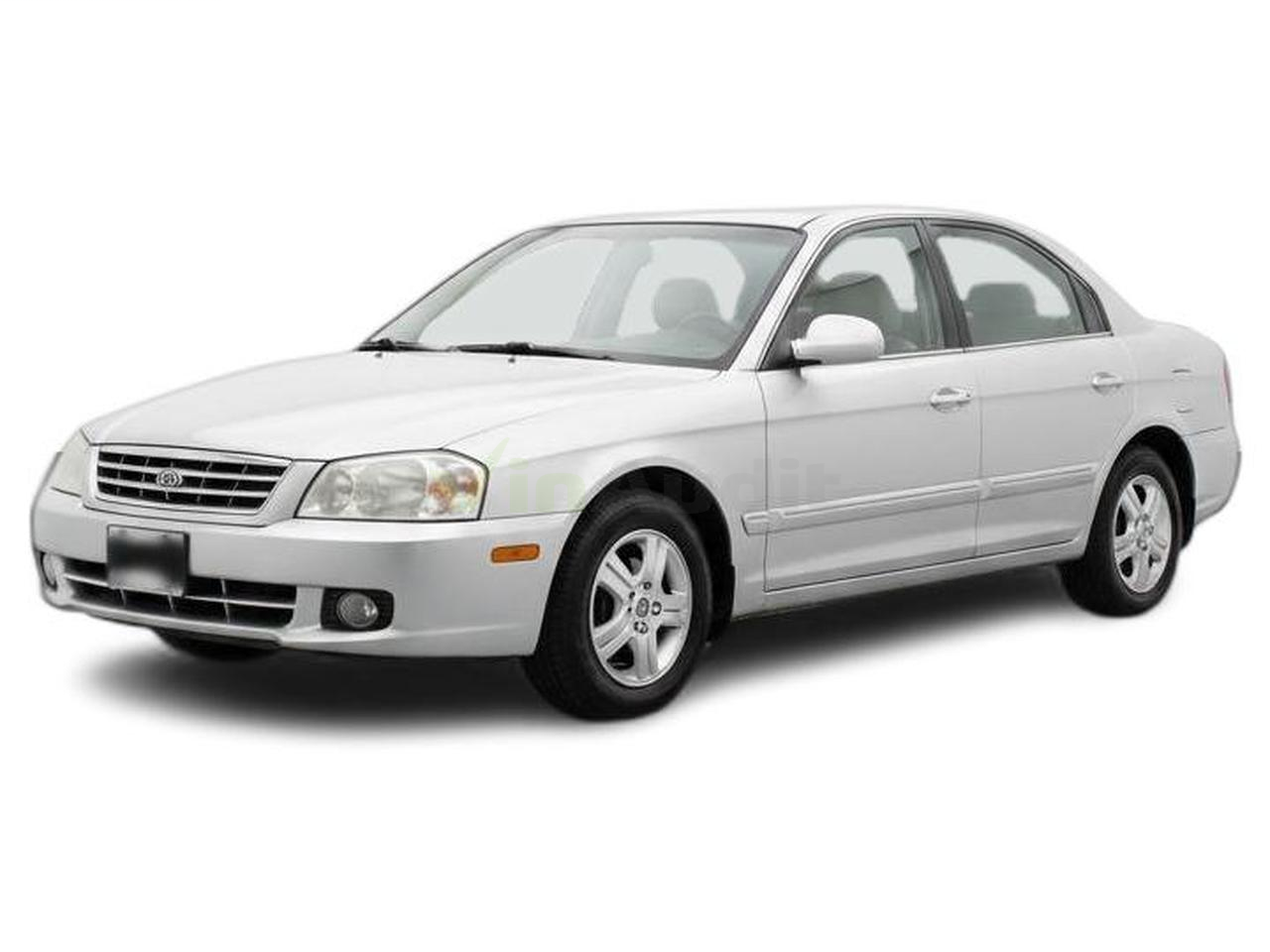
The Good
The 2001 Kia Optima offered a compelling blend of affordability and comfort. Its practical value proposition appealed to pragmatic buyers, while its spacious interior and smooth ride offered a pleasant, if not exciting, driving experience. It was a reliable choice for everyday commuting.
The Bad
Owners of the 2001 Kia Optima should be aware of potential issues with its automatic transmission, particularly concerning premature failure. Rust can also be a concern on the body panels and subframes. Interior wear and tear, especially on seats and dashboard plastics, is also common.
2001 KIA Optima: Quick Overview
- Engine Options: The 2001 Kia Optima was primarily offered with two engine choices:
- A 2.4-liter inline-4 cylinder engine.
- An optional 2.5-liter V6 engine.
- Horsepower:
- The 2.4-liter inline-4 engine produced approximately 149 horsepower.
- The 2.5-liter V6 engine offered around 164 horsepower.
- Fuel Economy:
- Estimates for the 2.4-liter engine averaged around 20 MPG city / 28 MPG highway.
- The 2.5-liter V6 engine typically returned around 18 MPG city / 25 MPG highway. (Note: These are approximate figures and can vary based on driving conditions and maintenance.)
- 0-60 Times:
- Models equipped with the 4-cylinder engine typically accelerated from 0-60 mph in the 9-10 second range.
- V6 models were slightly quicker, often achieving 0-60 mph in the 8-9 second range.
- Towing Capacity: The 2001 Kia Optima was not designed for towing and typically has a towing capacity of 0 lbs.
- Trim-Level Features:
- LX Trim: Typically included standard features like air conditioning, power windows and locks, an AM/FM/CD audio system, and tilt steering wheel.
- SE Trim: Built upon the LX trim and often added features such as alloy wheels, cruise control, upgraded upholstery, and a power-adjustable driver's seat. Optional features might have included a sunroof and a premium audio system.
2001 KIA Optima Specifications
Vehicle Information
| Year | 2001 |
| Make | Kia |
| Model | Magentis |
| Trim | - |
| Style | 4-Door |
| Type | Sedan |
| Category | Mid-Size Car |
Manufacturing Details
| Made In | South Korea |
| Manufacturing City | WHASUNG |
Dimensions
| Doors | 4-Door |
| Curb Weight | 1446.96 kg |
| Gross Vehicle Weight Rating | - |
| Overall Height | 140.97 cm |
| Overall Length | 471.93 cm |
| Overall Width | 181.61 cm |
| Wheelbase Length | 270 cm |
| Standard Seating | 5 |
Engine & Performance
| Engine | 2.4L I4 |
| Engine Size | 2.4L |
| Engine Cylinders | 4 |
| Transmission | 5-Speed Manual |
| Transmission Type | Manual |
| Transmission Speeds | 5-Speed |
| Drivetrain | Front-Wheel Drive |
Additional Features
| Anti-Brake System | Non-ABS 4-Wheel ABS |
| Steering Type | Rack & Pinion |
Pricing
| Manufacturer Suggested Retail Price (MSRP) | $17,599 USD |
| Invoice Price | $14,237 USD |
| Delivery Charges | $495 USD |
Vehicle History Report
Specifications
History
Events
History Check
Check
Check
Check
Check
Listings
Recalls
Check
Analysis
What Problems Does the 2001 KIA Optima Have?
Another significant concern is related to rust. Due to its age and the materials used, rust can develop aggressively on the undercarriage, brake lines, and body panels, especially in areas with harsh winter climates where road salt is used. This can compromise structural integrity and lead to safety concerns.
Other common complaints include issues with the engine's serpentine belt tensioner, which can fail and lead to accessory failure. Leaks from the power steering system and oil pan gasket are also not uncommon. Some owners have reported problems with the catalytic converter, leading to reduced engine performance and check engine lights. Electrical gremlins, such as malfunctioning power windows, door locks, and interior lights, can also pop up.
While specific recalls for the 2001 model year are not extensive, it's always advisable to check the NHTSA website for any safety recalls that may have been issued. Long-term reliability is often dependent on meticulous maintenance. Vehicles that have been regularly serviced, with timely fluid changes and inspections, are more likely to have avoided some of these major issues. However, the inherent transmission weakness remains a significant factor for potential buyers to consider when evaluating a used 2001 Optima.
How long will the 2001 KIA Optima last?
Long-term durability is a mixed bag. The powertrain, apart from the automatic transmission, can be reasonably robust if cared for. The chassis and body, however, are susceptible to significant rust over time, particularly in adverse climates, which can limit its usable lifespan. Early and consistent attention to rust prevention and repair is crucial for extending its life. With diligent maintenance and addressing potential weak points like the transmission and rust, the Optima can offer several years of service, but it requires vigilance.
What Technology & Safety Features are Included?
Entertainment: Standard entertainment typically included an AM/FM radio with a CD player. Higher trims, like the SE, might have offered an upgraded audio system with more speakers, aiming for a richer sound experience for the time. Aux or USB inputs were not standard in this model year.
Driver-Assistance Features: Driver-assistance features were quite basic for the 2001 Optima. Features like cruise control were available, particularly on the SE trim, to aid in highway driving comfort. Anti-lock Braking System (ABS) was often included as a standard or optional safety feature, enhancing braking control. Traction control was not commonly offered or standard on this model.
Safety Features: Standard safety equipment typically comprised front airbags for the driver and passenger. Side airbags were not commonly available or standard. Seatbelt pretensioners were also usually standard to help secure occupants during a collision. The vehicle's construction aimed for basic occupant protection.
Crash-Test Ratings: Specific crash-test ratings from agencies like the NHTSA or IIHS for the 2001 Kia Optima are not readily available or may be limited. However, vehicles from this period generally performed moderately in crash tests, with newer vehicles often demonstrating superior safety performance due to advancements in automotive safety engineering. It's advisable to consult official safety rating databases for any available data, though comprehensive results for this specific model might be scarce.
Optional Features: Beyond what was standard or included in higher trims, optional features could have included a power sunroof and potentially a more advanced alarm system.
What Colors Options are Available?
2001 KIA Optima Prices and Market Value
Currently, used 2001 Kia Optima prices are very low, often falling in the $1,000 to $3,000 range, depending heavily on condition, mileage, and maintenance history. Well-maintained examples with lower mileage might fetch slightly more, but the overall market value is minimal. Factors severely affecting resale value include the known transmission issues, potential for rust, and the vehicle's age. Buyers often prioritize cars with documented maintenance and minimal signs of wear or corrosion. The Optima's value is primarily as a budget-friendly transportation option, not an investment.
2001 KIA Optima Cost of Ownership
2001 KIA Optima Fuel Efficiency
2001 KIA Optima Safety Rating
NHTSA
IIHS
2001 KIA Optima Recalls & Defects
AIR Bags:side/Window
Electrical System:starter Assembly
Suspension:front
2001 KIA Optima Warranty
Basic
Powertrain
Rust
2001 KIA Optima Insurance
reasonable repair costs.
How Does the 2001 KIA Optima Compare to Other Sedan?
Performance: In terms of performance, the Optima's base 4-cylinder engine was adequate for daily driving but lagged behind the smoother and more powerful engines found in the Camry and Accord. The V6 offered a bit more pep but still wasn't class-leading. Rivals like the Accord often offered a more engaging driving experience with better handling.
Features: Kia equipped the Optima with a respectable amount of features for its price point, often including items that were optional on competitors. However, rivals like the Camry and Accord generally offered a more refined interior and higher quality materials, along with more advanced optional features for their time.
Reliability: This is where the Optima faced its biggest challenges. While the Camry and Accord built reputations for exceptional long-term reliability, the 2001 Optima is known for significant issues, most notably its automatic transmission. This reliability deficit is a major drawback compared to its Japanese competitors, which are often lauded for their durability.
Price: The Optima's primary advantage was its price. It was significantly more affordable than a comparable Toyota Camry or Honda Accord, making it an attractive proposition for budget buyers.
Alternatives: For buyers prioritizing reliability and long-term value, the Toyota Camry and Honda Accord (around the same model years) are generally superior choices, despite their higher used prices. They offer better build quality and a proven track record. If budget is the absolute primary concern and reliability is less critical, the Ford Focus could be considered, though it offered a smaller interior. A similar alternative in terms of value-for-money from the same era might be a Hyundai Sonata, which shared some engineering with the Optima but sometimes had its own distinct set of common issues.
Final Verdict: Is the 2001 KIA Optima a Good Sedan?
Whether it's worth buying depends heavily on the specific vehicle. A well-maintained example with lower mileage, especially with documented transmission service, might be a reasonable purchase for under $2,000. However, a poorly maintained Optima, particularly one showing signs of transmission trouble or significant rust, is likely not worth the investment.
Buying new was never the Optima's strong suit due to rapid depreciation and its value proposition being primarily in the used market. When considering used models, focus on the LX and SE trims; the SE offers more amenities but doesn't fundamentally change the car's core strengths and weaknesses. Overall, it's a gamble that can pay off for the frugal, but requires cautious inspection and realistic expectations regarding its long-term reliability.

Simon A
Simon is a contributor to VinCheck, where he provides articles and reviews on various automotive topics. His work focuses on delivering accurate and up-to-date information about used cars, helping readers make informed decisions.