
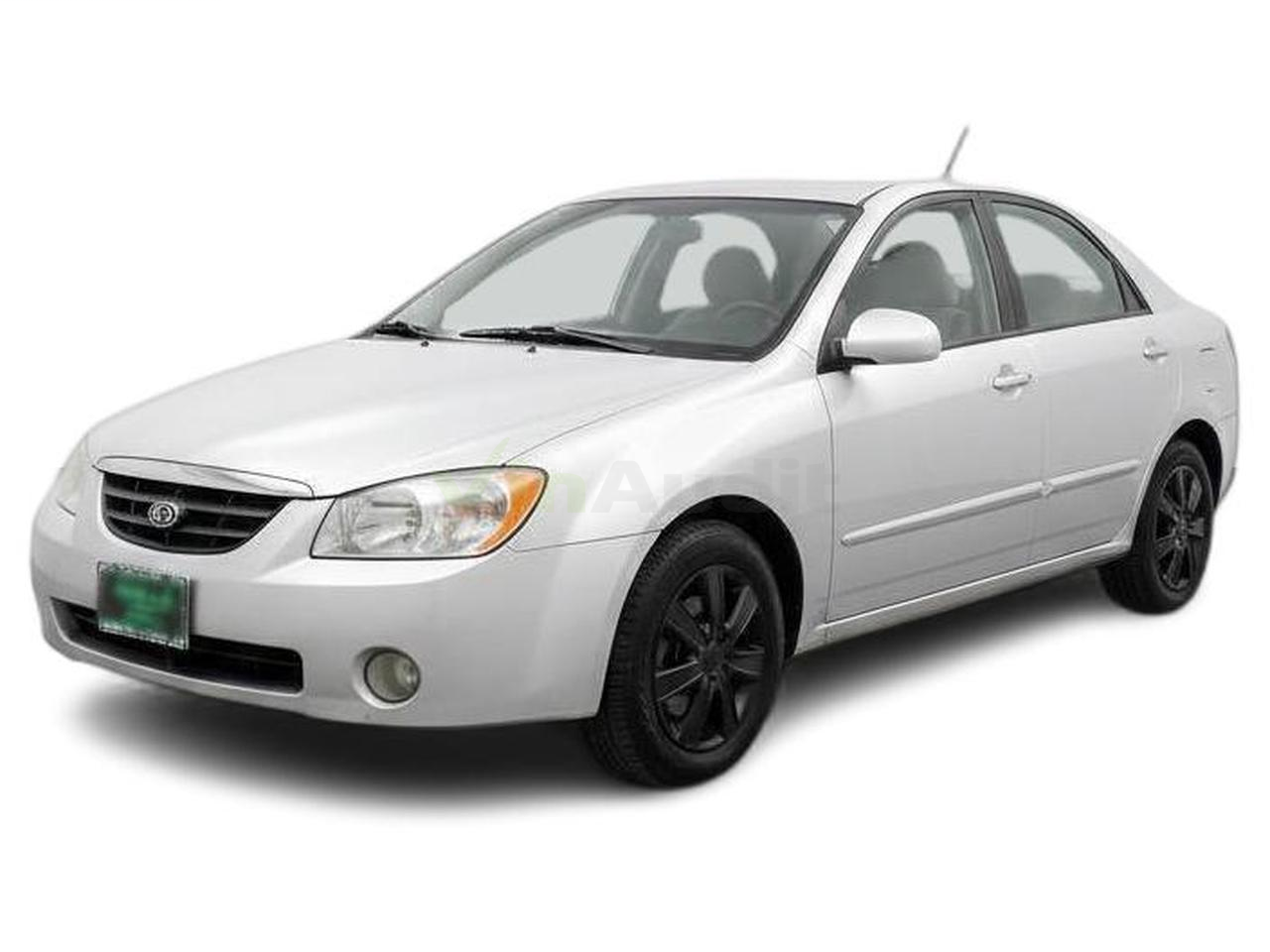
The Good
The 2004 KIA Spectra offers a compelling blend of value and practicality. Its key advantages include an affordable purchase price, surprisingly spacious interior for its class, and a comfortable ride, appealing to budget-conscious buyers. For those seeking peace of mind, its solid build quality and straightforward mechanics contribute to a reliable ownership experience.
The Bad
When considering a 2004 KIA Spectra, potential buyers should be aware of common weaknesses. These include less refined engine performance compared to some rivals, potential for interior material wear over time, and a tendency for the suspension to feel less robust on rougher roads. Rust can also be a concern in certain climates.
2004 KIA Spectra: Quick Overview
- Engine Options: The 2004 KIA Spectra was primarily offered with a single engine option in most markets: a 2.0-liter DOHC inline-4 cylinder engine.
- Horsepower: This 2.0-liter engine typically produced around 125-138 horsepower, depending on the specific market and tune.
- Fuel Economy: Fuel economy figures for the 2004 Spectra were competitive for its class. EPA estimates generally ranged from approximately 24-26 MPG in city driving and 32-35 MPG on the highway, depending on transmission and driving conditions.
- 0-60 Times: Acceleration from 0 to 60 mph was generally in the 9-10 second range for models equipped with the manual transmission, and slightly slower for automatic transmissions. This placed it in the average to slightly below-average performance bracket for its segment.
- Towing Capacity: The 2004 KIA Spectra was not designed for towing. It does not have a specified towing capacity.
- Trim-Level Features:
GS (Base Trim): Typically included essential features like air conditioning, power steering, a tilt steering wheel, a basic AM/FM/CD audio system, and power windows and locks were often optional or standard on higher trims. 14-inch steel wheels were common.
GSX (Higher Trim): This trim often added features such as alloy wheels (15-inch), fog lights, a more premium audio system, cruise control, upgraded interior upholstery, and sometimes a sunroof. Antilock Braking System (ABS) was also more commonly standard or available on the GSX trim.
2004 KIA Spectra Specifications
Vehicle Information
| Year | 2004 |
| Make | Kia |
| Model | Spectra |
| Trim | - |
| Style | EX Sedan FWD 5MT 2.0L I4 |
| Type | Sedan |
| Category | passenger |
Manufacturing Details
| Made In | Korea |
| Manufacturing City | WHASUNG |
Dimensions
| Doors | 4-Door |
| Curb Weight | 2900 pounds |
| Gross Vehicle Weight Rating | - |
| Overall Height | 56.5 inches |
| Overall Length | 178.3 inches |
| Overall Width | 68.1 inches |
| Wheelbase Length | 104.3 inches |
| Standard Seating | 5 |
Engine & Performance
| Engine | 2L I4 |
| Engine Size | 2L |
| Engine Cylinders | 4 |
| Transmission | 5-Speed Manual |
| Transmission Type | Manual |
| Transmission Speeds | 5-Speed |
| Drivetrain | Front-Wheel Drive |
Additional Features
| Anti-Brake System | 4-Wheel ABS |
| Steering Type | Rack & Pinion |
Pricing
| Manufacturer Suggested Retail Price (MSRP) | $15,500 |
| Invoice Price | $14,500 |
| Delivery Charges | $600 |
Vehicle History Report
Specifications
History
Events
History Check
Check
Check
Check
Check
Listings
Recalls
Check
Analysis
What Problems Does the 2004 KIA Spectra Have?
Another area of concern is the suspension and steering components. Owners have reported accelerated wear on ball joints, tie rod ends, and struts. This can lead to noisy operation, especially over bumps, and affect steering precision. In some cases, premature failure of these parts can be a safety concern.
Engine performance can also be a point of contention. While generally adequate, some Spectras have exhibited issues such as rough idling, misfires, and potential catalytic converter problems. Spark plugs, ignition coils, and oxygen sensors are components that may require attention.
Electrical issues are not uncommon. This can range from minor annoyances like malfunctioning power windows and door locks to more significant problems with the onboard computer or charging system. The alternator and battery are also items that can require replacement.
Rust is a significant concern, especially for Spectras that have been driven in areas with harsh winters or exposure to road salt. The rocker panels, wheel wells, and undercarriage are particularly susceptible. Thorough inspection for rust is highly recommended.
While there aren't widespread, model-defining recalls for the 2004 model year that stand out dramatically, it's always advisable to check the National Highway Traffic Safety Administration (NHTSA) website for any specific recalls that may apply to the VIN. Overall, while the Spectra can be a reliable car with diligent maintenance, these common issues can contribute to higher-than-average repair costs over the long term.
How long will the 2004 KIA Spectra last?
What Technology & Safety Features are Included?
Entertainment and Tech: Standard on most trims was an AM/FM stereo with a CD player, providing basic audio playback. Higher trims, like the GSX, might have offered a more advanced sound system with additional speakers. Features like steering wheel-mounted audio controls were generally not available. While Bluetooth connectivity or USB ports were non-existent in this era, the Spectra delivered a straightforward audio experience.
Driver-Assistance Features: Antilock Braking System (ABS) was available, often as an option on lower trims and more commonly standard on the GSX. Power windows and door locks were standard on higher trims and often optional on the base model. Cruise control was typically found on the more equipped GSX model.
Safety Features: Standard safety equipment included front airbags for the driver and front passenger. Side airbags were not commonly offered, and neither were advanced electronic stability or traction control systems, which were still emerging technologies in the compact car segment. Seatbelt pretensioners were also a standard safety feature.
Crash-Test Ratings: According to the National Highway Traffic Safety Administration (NHTSA), the 2004 KIA Spectra received generally favorable crash test ratings for its class. It achieved four out of five stars in the frontal driver and frontal passenger impact tests. In side impact tests, it also scored well, receiving four stars for the rear passenger. However, it's important to note that these ratings are based on older testing methodologies. The Insurance Institute for Highway Safety (IIHS) also conducted tests, and while specific ratings can vary, the Spectra generally performed adequately for its segment, though some areas like rear-passenger side impact protection might have been less robust compared to modern vehicles. Optional fog lights were available to improve visibility in poor weather conditions.
What Colors Options are Available?
2004 KIA Spectra Prices and Market Value
2004 KIA Spectra Cost of Ownership
2004 KIA Spectra Fuel Efficiency
2004 KIA Spectra Insurance
reasonable repair costs.
How Does the 2004 KIA Spectra Compare to Other Sedan?
Performance: In terms of performance, the Spectra generally lagged behind competitors like the Honda Civic and Toyota Corolla, which often offered more refined engines with better power delivery and smoother acceleration. The Spectra's 2.0-liter engine was adequate but not particularly inspiring. Rivals like the Ford Focus offered more engaging handling.
Features: At its price point, the Spectra offered a decent array of features, often matching or exceeding some base models of its competitors. However, higher trims of the Civic and Corolla might have offered more advanced features or better build quality in their interiors.
Reliability: Historically, the Honda Civic and Toyota Corolla have set the benchmark for reliability in this class, boasting fewer common issues and a reputation for longevity. While the Spectra aimed for value, its long-term reliability has been more variable, with certain components showing wear sooner than in its Japanese counterparts. The Chevrolet Cavalier and Ford Focus, while also affordable, had their own sets of common issues that could impact reliability.
Price: The Spectra's primary advantage was its aggressive pricing, often undercutting its main rivals when new. This affordability extends to the used market, making it a very budget-friendly choice.
Recommendations: If reliability and long-term durability are paramount, the Honda Civic and Toyota Corolla remain superior alternatives, though they will command higher prices on the used market. For those seeking a more engaging driving experience, the Ford Focus could be a comparable alternative, though its own reliability can be a question mark. If the absolute lowest purchase price is the main priority, the 2004 KIA Spectra is a viable option, but buyers should be prepared for potentially higher maintenance and repair costs down the line compared to its more established rivals.
Final Verdict: Is the 2004 KIA Spectra a Good Sedan?

Drew B
Drew is a seasoned automotive expert and contributor to VinCheck.info. With nearly 15 years of experience as a former Porsche technician, he brings a wealth of hands-on knowledge to his writing. Born in North Carolina, a region renowned for its deep-rooted NASCAR culture, Drew developed a passion for cars early in life, often building and working on vehicles from a young age. At VINCheck, Drew leverages his extensive technical background to provide in-depth analyses of various vehicles. His articles often focus on engine performance, reliability, and maintenance insights, offering readers practical information grounded in real-world experience. Some of his notable contributions include reviews on the Mazda CX-5's longevity and detailed examinations of engine options for models like the 2011 Toyota Camry and Tacoma