
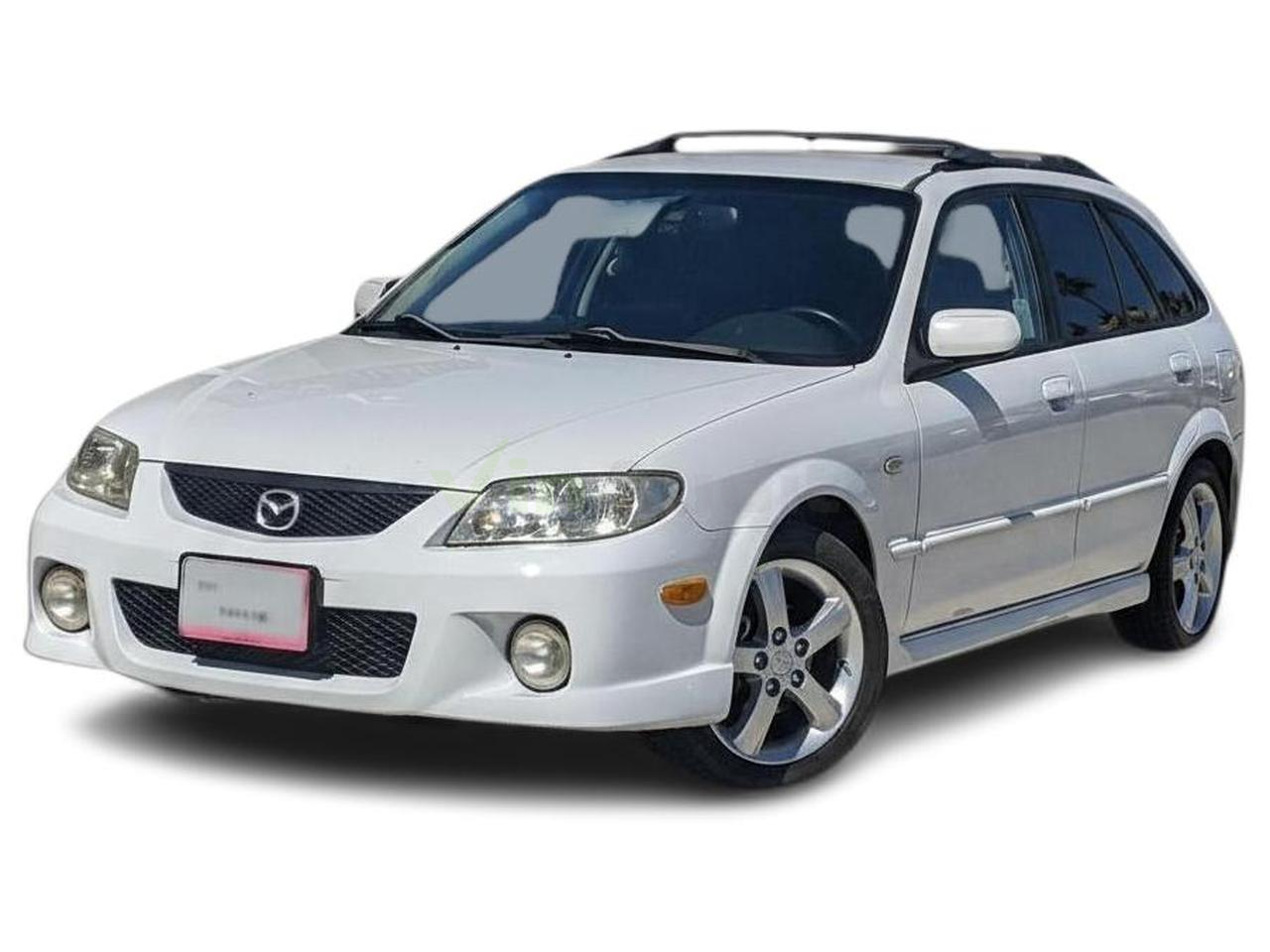
The Good
The Protegé5 offers a "zoom-zoom" driving experience with its nimble handling and responsive steering, appealing to emotional buyers seeking fun. For practical buyers, it boasts a versatile hatchback design, respectable fuel economy, generally solid reliability, and excellent used market value, making it a smart, economical choice for daily commuting and utility.
The Bad
Key weaknesses include significant susceptibility to rust, particularly in northern climates affecting wheel wells, rocker panels, and subframes. Owners should also watch for front suspension component wear, potential A/C system issues, and some interior plastic longevity concerns. It also lacks significant power for spirited acceleration.
2003 Mazda Protege5: Quick Overview
- Engine: The 2003 Mazda Protegé5 is powered by a single engine option: a 2.0-liter DOHC (Dual Overhead Camshaft) 16-valve inline four-cylinder engine. This engine is known for its adequate power delivery for daily driving and reasonable efficiency.
- Horsepower: The 2.0L engine produces 130 horsepower at 6,000 rpm and 135 lb-ft of torque at 4,500 rpm. This provides a lively, albeit not blistering, performance feel, well-suited to the car's agile chassis.
- Fuel Economy: Estimated fuel economy figures are approximately 22-24 miles per gallon (MPG) in the city and 28-30 MPG on the highway, depending on transmission type (manual typically slightly better). These figures were competitive for its class in 2003.
- 0-60 Times: The 0-60 mph acceleration time for the Protegé5 typically ranges from around 8.5 to 9.5 seconds, with manual transmission models often being slightly quicker. While not a performance car, it feels responsive in urban settings.
- Towing Capacity: The 2003 Mazda Protegé5 is generally not officially rated or recommended for significant towing. While small hitches for bicycle racks or light utility might be installed, towing capacity is minimal and not a primary design consideration for this compact car.
- Trim-Level Features: The Protegé5 essentially existed as its own well-equipped sporty trim. Standard features included:
- Exterior: 16-inch five-spoke aluminum-alloy wheels, P205/50R16 performance tires, sport-tuned suspension, four-wheel disc brakes, roof rack, fog lights, body-color bumpers and side mirrors.
- Interior: Sport bucket seats with unique cloth upholstery, leather-wrapped steering wheel and shift knob, power windows, power door locks with remote keyless entry, power mirrors, air conditioning, cruise control, a tilt steering column, a split-folding rear seat, and an AM/FM/CD audio system with four speakers.
- Safety: Dual front airbags were standard, with an Anti-lock Braking System (ABS) being an optional extra.
2003 Mazda Protege5 Specifications
Vehicle Information
| Year | 2003 |
| Make | Mazda |
| Model | Protege5 |
| Trim | - |
| Style | - |
| Type | Hatchback |
| Category | Small Station Wagon |
Manufacturing Details
| Made In | Japan |
| Manufacturing City | YAMAGUCHI |
Dimensions
| Doors | 4-Door |
| Curb Weight | 1246.92 kg |
| Gross Vehicle Weight Rating | 1637.92 kg |
| Overall Height | 146.81 cm |
| Overall Length | 433.07 cm |
| Overall Width | 170.43 cm |
| Wheelbase Length | 261.11 cm |
| Standard Seating | 5 |
Engine & Performance
| Engine | 2L I4 |
| Engine Size | 2L |
| Engine Cylinders | 4 |
| Transmission | 5-Speed Manual |
| Transmission Type | Manual |
| Transmission Speeds | 5-Speed |
| Drivetrain | Front-Wheel Drive |
Additional Features
| Anti-Brake System | Non-ABS 4-Wheel ABS |
| Steering Type | Rack & Pinion |
Pricing
| Manufacturer Suggested Retail Price (MSRP) | $16,895 USD |
| Invoice Price | $15,794 USD |
| Delivery Charges | $520 USD |
Vehicle History Report
Specifications
History
Events
History Check
Check
Check
Check
Check
Listings
Recalls
Check
Analysis
What Problems Does the 2003 Mazda Protege5 Have?
Beyond rust, owners frequently report issues with the front suspension components. This includes premature wear of the lower control arm bushings, sway bar end links, and strut mounts. These can lead to clunking noises over bumps, uneven tire wear, and degraded handling. Replacement of these components is a common maintenance item for older Protegé5s. The brake calipers can also be prone to seizing, especially the rears, due to rust and lack of lubrication, requiring regular inspection and maintenance.
Less critical but still common issues include:
- Air Conditioning (A/C) System: Compressor failures or leaks are not uncommon, leading to inoperable A/C.
- Electrical Issues: Minor electrical gremlins such as failing power window switches, intermittent dashboard lights, or issues with the radio may arise.
- Engine Leaks: Some owners report minor oil leaks, often from the valve cover gasket or oil pan, which are typically manageable. EGR valve and O2 sensor failures can also occur, impacting emissions and engine performance.
Regarding recalls, the 2003 Protegé and Protegé5 models have had a few. Notably, some vehicles were subject to recalls related to the lower control arms, where excessive corrosion could cause them to separate from the subframe, particularly in salt-belt states. There was also a recall concerning a potential fuel tank leak, which could increase the risk of fire. Owners should always check the NHTSA website for any open recalls by VIN. While not a specific model year issue for 2003, some later Takata airbag recalls affected a wide range of Mazda vehicles, and it's always prudent to check. Overall, the engine and transmissions are generally robust if maintained, but rust and front-end suspension components are the primary long-term concerns.
How long will the 2003 Mazda Protege5 last?
However, long-term durability is heavily compromised by its primary weakness: rust. Unchecked corrosion in the chassis, subframe, and body panels can render an otherwise mechanically sound vehicle unsafe or uneconomical to repair. Suspension components (bushings, struts) are also wear items that will require replacement over time to maintain handling and comfort. Proactive rust prevention, regular fluid changes, and timely replacement of wear-and-tear parts are crucial for maximizing the Protegé5's lifespan.
What Technology & Safety Features are Included?
Driver-assistance features are largely absent from the 2003 Protegé5. You will not find modern amenities such as electronic stability control (ESC), traction control, blind-spot monitoring, lane-keeping assist, or adaptive cruise control. The driving experience was, by design, more analog and directly engaging for the driver, relying solely on human input.
In terms of safety features, the 2003 Protegé5 was equipped with standard dual front airbags for the driver and front passenger. A significant optional safety feature was the 4-wheel Anti-lock Braking System (ABS), which was highly recommended for improved stopping power and control under emergency braking. Side airbags or curtain airbags were not available or common for compact cars in this class and price point during that period.
For crash-test ratings:
- The National Highway Traffic Safety Administration (NHTSA) awarded the 2003 Mazda Protegé sedan (which shares much of its structure with the Protegé5) 4 out of 5 stars for both frontal driver and frontal passenger protection. For side-impact protection, it received 3 out of 5 stars for the front occupant and 4 out of 5 stars for the rear occupant.
- The Insurance Institute for Highway Safety (IIHS) gave the Protegé a "Good" rating in its moderate overlap frontal crash test, which was a strong result for the time. IIHS did not conduct side-impact tests on vehicles without available side airbags during that specific model year, nor did it perform roof strength or rear impact evaluations.
What Colors Options are Available?
2003 Mazda Protege5 Prices and Market Value
Today, its current used market prices are significantly lower, reflecting two decades of depreciation. Expect to find examples generally priced between $1,500 and $4,000+. Exceptional, low-mileage, rust-free models in desirable regions might command higher prices.
The vehicle has experienced its most substantial depreciation over its initial years, and is now near the bottom of its depreciation curve. Resale value is heavily influenced by several factors: the presence and severity of rust (which can drastically reduce value), overall mechanical and cosmetic condition, documented maintenance history, mileage, and whether it's a manual or automatic transmission (manuals are often more sought after by enthusiasts). Location also plays a role, with vehicles from dry climates fetching more.
2003 Mazda Protege5 Cost of Ownership
Repair costs can be economical for most mechanical issues, but major rust repairs, especially to structural components, can quickly become prohibitive. Proactive attention to rust prevention and suspension wear helps keep costs down. Overall, the Protegé5 offers a very low barrier to entry and affordable running costs, making it a budget-friendly long-term choice, provided significant rust isn't an issue.
2003 Mazda Protege5 Fuel Efficiency
2003 Mazda Protege5 Safety Rating
NHTSA
IIHS
2003 Mazda Protege5 Warranty
Basic
Powertrain
Rust
2003 Mazda Protege5 Insurance
reasonable repair costs.
How Does the 2003 Mazda Protege5 Compare to Other Hatchback?
In terms of performance, the Protegé5 was lauded for its "zoom-zoom" handling and sport-tuned suspension, often considered more engaging and fun-to-drive than the standard Civic or Corolla. It held its own against the Ford Focus ZX5 in dynamics, but generally couldn't match the outright power of a Civic Si or some turbocharged VW Golf variants. Its 130 hp engine offered adequate acceleration but wasn't a powerhouse.
Features were competitive across the board for the segment. The Protegé5 offered a good standard equipment list including 16-inch alloys, power accessories, and a CD player, often feeling a bit more "upscale" and sporty than base Honda Civics or Toyota Corollas. The Golf often provided a slightly more premium interior feel, while the Matrix focused more on ultimate practicality.
Reliability is where the Protegé5 presents a mixed picture. While its engine and transmissions are generally robust and reliable, its significant Achilles' heel is rust susceptibility, particularly in salt-belt states. This is a weakness not shared to the same extent by Honda Civic or Toyota Corolla/Matrix models, which are often considered benchmarks for long-term reliability. The Ford Focus had its own set of common issues, and while VW Golfs were well-built, their maintenance could sometimes be more complex. Subaru Imprezas were reliable but came with the added complexity and cost of AWD.
Regarding price, all these vehicles were competitively priced when new. Today, they are all very affordable on the used market, with condition, mileage, and rust being the primary drivers of price.
Alternatives:
- For superior reliability and rust resistance: Consider the Honda Civic Hatchback (e.g., Si for performance) or the Toyota Matrix/Corolla hatchback. These often offer bulletproof powertrains and better long-term body integrity.
- For similar driving enjoyment and Euro-feel: The Ford Focus ZX5 or the Volkswagen Golf (MK4) are good alternatives. They share a similar sporty hatchback ethos, though the Focus can also have some common issues, and the Golf can be pricier to maintain.
- For AWD capability: The Subaru Impreza Outback Sport offers all-wheel drive, a feature none of the others in this list typically provide in this class, appealing to those in snowy climates or with mild off-road needs, but comes with different mechanical characteristics.
Final Verdict: Is the 2003 Mazda Protege5 a Good Hatchback?
Is it worth buying? Absolutely, but with significant caveats. It is definitively worth buying only as a used vehicle in 2024. The crucial condition is finding an example with minimal to no significant rust, especially in structural areas like the subframe and rocker panels. A professional pre-purchase inspection is non-negotiable to assess corrosion, as well as the condition of the suspension and mechanicals.
While all Protegé5s are essentially a single sporty trim, a manual transmission variant is often preferred for a more engaging driving experience. If you can locate a well-maintained, rust-free Protegé5, it offers exceptional value as a cheap, reliable, and surprisingly fun daily driver that punches above its weight in driving dynamics.

Simon A
Simon is a contributor to VinCheck, where he provides articles and reviews on various automotive topics. His work focuses on delivering accurate and up-to-date information about used cars, helping readers make informed decisions.