
The Good
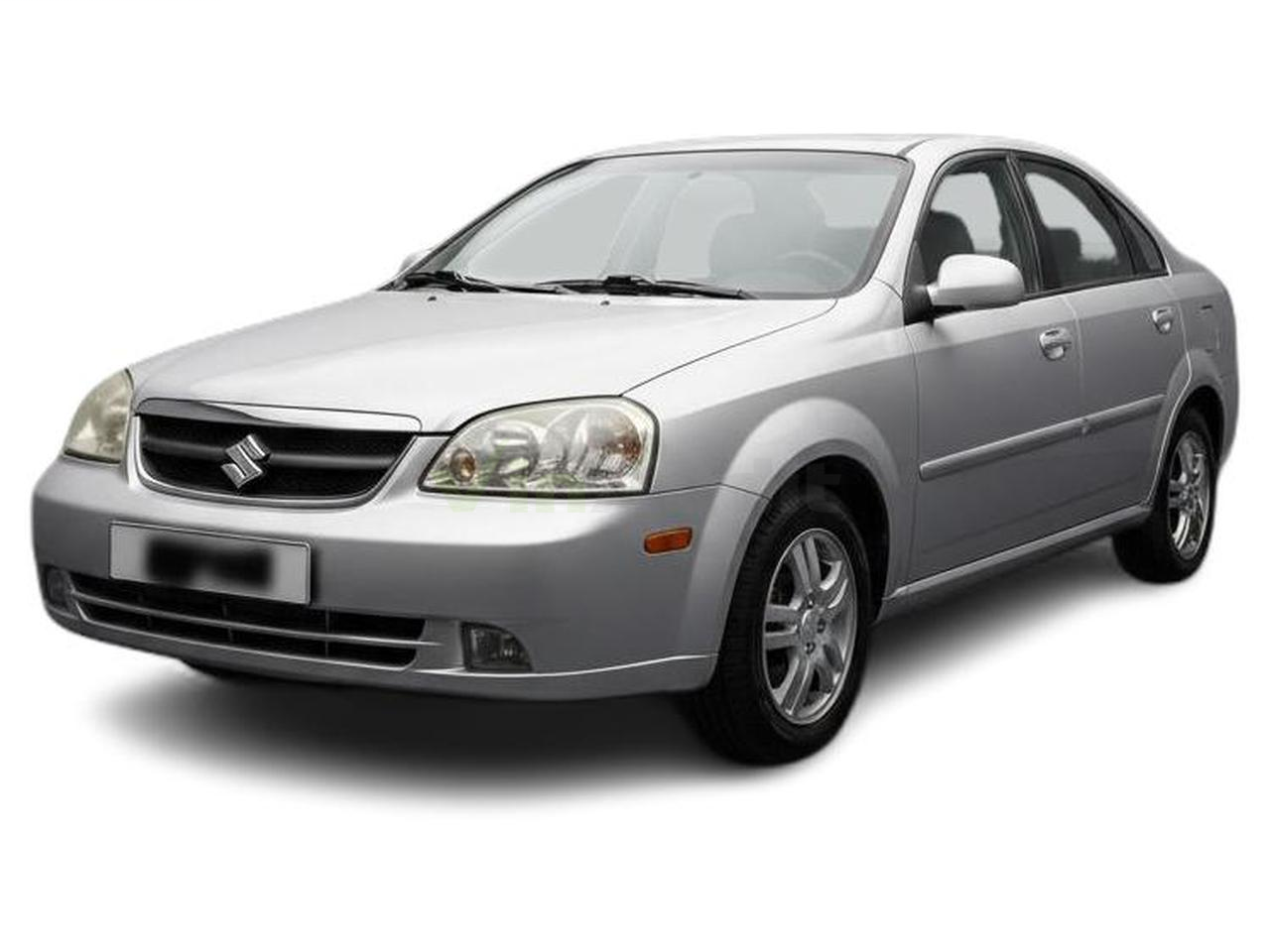
The 2006 Suzuki Forenza offered an economical purchase price and respectable fuel efficiency, appealing to practical budgets. Its comfortable ride and surprisingly spacious interior for its class offered a pleasant experience, while its unassuming design provided understated reliability for daily commutes.
The Bad
Potential buyers of the 2006 Suzuki Forenza should be aware of common issues such as transmission problems, particularly with automatic transmissions, and potential electrical gremlins. Engine performance can feel sluggish, and overall build quality might not match some competitors.
2006 Suzuki Forenza: Quick Overview
- Engine Options: The 2006 Suzuki Forenza was primarily offered with a 2.0-liter inline-4 cylinder engine.
- Horsepower: This engine typically produced around 127 horsepower.
- Fuel Economy: Estimated fuel economy for the 2006 Forenza was approximately 22-24 MPG in the city and 29-31 MPG on the highway, depending on transmission and body style.
- 0-60 Times: Acceleration figures were generally in the 9-11 second range, reflecting its economy-focused nature.
- Towing Capacity: Towing capacity was not a significant feature for this vehicle and is generally not recommended.
- Trim-Level Features:
- Base Trim: Typically included essential features like power steering, air conditioning, power windows and locks, a tilt steering wheel, and an AM/FM/CD audio system.
- Premium Trim: Added features such as alloy wheels, cruise control, a more premium interior trim, and potentially upgraded audio systems.
- LX Trim: Usually represented the top-tier offering with the most amenities, potentially including leatherette seating, heated mirrors, and a sunroof.
The Forenza also offered optional features like anti-lock brakes (ABS) and side curtain airbags on certain trims, enhancing its safety profile. The hatchback variant provided more versatile cargo space compared to the sedan.
2006 Suzuki Forenza Specifications
Vehicle Information
| Year | 2006 |
| Make | Suzuki |
| Model | Forenza |
| Trim | - |
| Style | - |
| Type | Sedan |
| Category | Compact Car |
Manufacturing Details
| Made In | Korea |
| Manufacturing City | BUPYEONG |
Dimensions
| Doors | 4-Door |
| Curb Weight | - |
| Gross Vehicle Weight Rating | - |
| Overall Height | - |
| Overall Length | - |
| Overall Width | - |
| Wheelbase Length | - |
| Standard Seating | - |
Engine & Performance
| Engine | 2.0 L 4-Cyl. |
| Engine Size | 2L |
| Engine Cylinders | 4 |
| Transmission | - |
| Transmission Type | - |
| Transmission Speeds | - |
| Drivetrain | Front-Wheel Drive |
Additional Features
| Anti-Brake System | - |
| Steering Type | - |
Pricing
| Manufacturer Suggested Retail Price (MSRP) | - |
| Invoice Price | - |
| Delivery Charges | - |
Vehicle History Report
Specifications
History
Events
History Check
Check
Check
Check
Check
Listings
Recalls
Check
Analysis
What Problems Does the 2006 Suzuki Forenza Have?
Electrical issues are also not uncommon in the Forenza. This can manifest in various ways, including malfunctioning power windows, faulty door locks, intermittent dashboard lights, and problems with the infotainment system. Issues with the ABS system and related sensors have also been reported. Some owners have noted problems with suspension components, leading to premature wear on shocks and struts, and the potential for rattling noises.
While specific recalls for the 2006 model year were not as extensive as some other manufacturers, it is always advisable to check the National Highway Traffic Safety Administration (NHTSA) website for any outstanding recalls related to the vehicle's Vehicle Identification Number (VIN). Long-term reliability is often a mixed bag with the Forenza. While some owners report trouble-free ownership for many years with diligent maintenance, a larger number of reports suggest that the vehicle's durability might not match that of more established Japanese or American brands in the same segment.
How long will the 2006 Suzuki Forenza last?
What Technology & Safety Features are Included?
Driver-assistance features were limited. Anti-lock brakes (ABS) were often optional or standard on higher trims, providing an essential safety net for braking emergencies. Stability control and traction control were generally not available on the 2006 Forenza.
Safety was addressed through standard airbags, typically front airbags for the driver and passenger. Optional side curtain airbags were available on some configurations, offering enhanced protection in side-impact collisions.
Crash-test ratings for the 2006 Suzuki Forenza, based on available data from organizations like the Insurance Institute for Highway Safety (IIHS) and the National Highway Traffic Safety Administration (NHTSA), were generally mixed to average. For example, the IIHS rated it "Acceptable" in frontal offset crash tests, indicating a decent but not outstanding performance. Side-impact test results could vary depending on whether side airbags were equipped. NHTSA ratings also typically showed a few out of five stars in various categories. It's crucial for potential buyers to consult the latest IIHS and NHTSA reports for the most precise and up-to-date safety performance data for this specific model year. Overall, the 2006 Forenza provided basic safety equipment but lacked the advanced driver-assistance systems that are commonplace in today's vehicles.
What Colors Options are Available?
2006 Suzuki Forenza Prices and Market Value
Currently, the used market prices for a 2006 Suzuki Forenza are generally quite low, reflecting its age and market positioning. You can expect to find them in the range of $2,000 to $4,000, with prices heavily influenced by mileage, condition, and location.
The Forenza has experienced significant depreciation, as is common with most economy cars. Factors affecting its resale value include its overall reliability reputation, which is not the strongest, and the availability of newer, more feature-rich, and fuel-efficient alternatives. Maintenance history and the presence of any significant mechanical issues will also heavily impact its current market worth.
2006 Suzuki Forenza Cost of Ownership
2006 Suzuki Forenza Fuel Efficiency
2006 Suzuki Forenza Safety Rating
NHTSA
2006 Suzuki Forenza Recalls & Defects
Exterior Lighting:headlights
Electrical System:wiring:interior/Under Dash
Exterior Lighting:headlights
Exterior Lighting
Seat Belts:front:buckle Assembly
2006 Suzuki Forenza Insurance
reasonable repair costs.
How Does the 2006 Suzuki Forenza Compare to Other Sedan?
Performance: In terms of performance, the Forenza's 2.0-liter engine, producing around 127 horsepower, was generally outmatched by competitors like the Honda Civic and Toyota Corolla, which offered more refined power delivery and better acceleration. The Ford Focus and Chevrolet Cobalt also offered comparable or slightly better performance depending on their engine options.
Features: While the Forenza offered a decent set of standard features for its price point, competitors like the Honda Civic and Toyota Corolla often boasted more advanced technology, better interior materials, and a more user-friendly interface. The Ford Focus and Chevrolet Cobalt also provided a competitive feature list.
Reliability: This is where the Forenza often fell short compared to its Japanese rivals. The Honda Civic and Toyota Corolla are renowned for their exceptional long-term reliability and lower rates of mechanical issues. The Ford Focus and Chevrolet Cobalt had their own reliability concerns, but generally, the Forenza had a reputation for more frequent and sometimes more significant problems, particularly with its transmission.
Price: The Forenza's primary advantage was its aggressive pricing, often being one of the most affordable options in its class when new and on the used market. This made it attractive to budget-conscious buyers.
Alternatives: For buyers prioritizing reliability and a proven track record, the Honda Civic and Toyota Corolla are significantly better alternatives, even if they command a slightly higher price on the used market. For a more American-made option with potentially better performance and a more robust feel, the Ford Focus (especially newer generations) or even a well-maintained Chevrolet Cobalt could be considered. If budget is the absolute primary concern and a very basic mode of transportation is needed, the Forenza might serve, but its known issues warrant caution. The Hyundai Elantra or Kia Spectra from the same era could also be considered similar alternatives in terms of price and value proposition, though reliability comparisons would still favor the Japanese brands.
Final Verdict: Is the 2006 Suzuki Forenza a Good Sedan?
Whether it's worth buying depends heavily on the specific vehicle's condition and price. A well-maintained, low-mileage example with a documented service history at a rock-bottom price might be a reasonable gamble. However, given its known reliability concerns, especially with the transmission, buying one without thorough pre-purchase inspection by a trusted mechanic is not recommended. It is certainly not worth buying new, and as a used vehicle, its value is highly conditional. Focus on lower-trim models if possible, as they may have fewer complex systems to fail, but prioritize overall condition over trim level. For most buyers seeking dependable, long-term transportation, better alternatives exist in its class.

Eugene S
Eugene is an automotive enthusiast with over 15 years of experience in the used car market. As a writer at VINCheck.info, he brings deep industry insight and a passion for cars, helping readers make smart, informed decisions. Eugene has written hundreds of used car reviews and is known for breaking down complex automotive topics into clear, actionable advice. Over the years, he has driven and worked on a wide range of vehicles—starting with tuning street cars in his early days and eventually focusing on performance upgrades and reliability improvements. Today, he specializes in evaluating used vehicles through the lens of real-world ownership and enthusiast needs. A longtime fan of Porsche, Eugene especially appreciates vehicles that blend durability with driving enjoyment.