
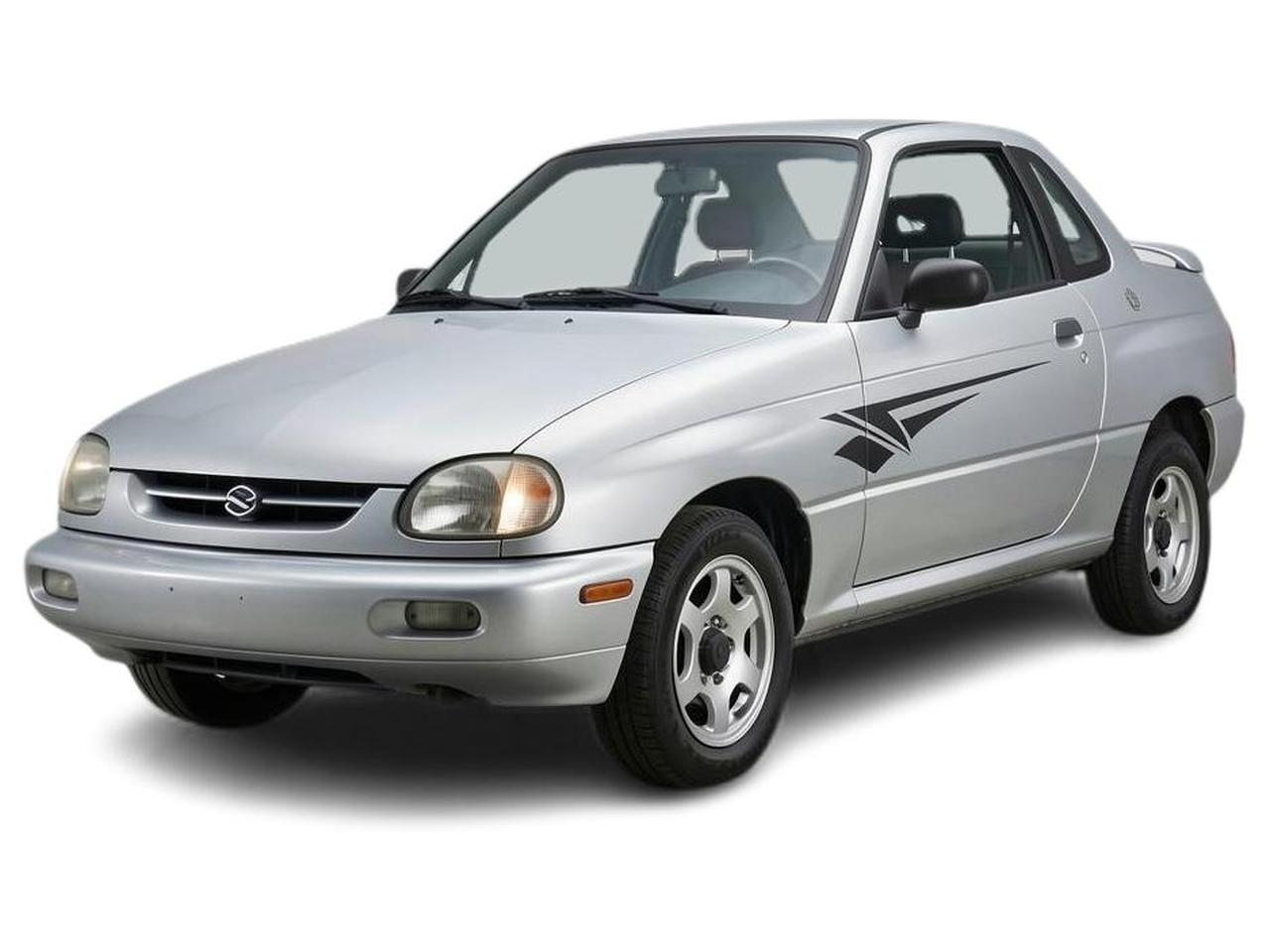
It featured a distinctive removable T-top roof and was marketed as a lifestyle vehicle.
The X-90 was offered in a single trim level, often equipped with either a standard roof or the T-top option.
Its unconventional styling and small, rugged appearance made it stand out, appealing to those seeking something unique rather than practicality.
Pricing when new ranged from approximately $14,000 to $16,000.
The Good
The X-90's key advantages lie in its unique, playful design and surprising off-road capability for its size.
It offers a fun, open-air driving experience with its T-top.
For practical buyers, its compact size aids in urban maneuverability and its fuel efficiency is decent.
It's a value proposition for those seeking a distinctive, budget-friendly, and character-filled vehicle.
The Bad
Key weaknesses include its extremely limited interior space, particularly for passengers and cargo, making it impractical for families or extensive hauling.
The powertrain is underpowered for highway driving or spirited acceleration.
Reliability concerns can arise with age, especially regarding rust and electrical components.
Its unique design is polarizing, and parts can be difficult to source.
1996 Suzuki X-90: Quick Overview
- Engine Options: The 1996 Suzuki X-90 came with a single engine option.
- Engine Type: A 1.6-liter, 16-valve inline-4 cylinder engine.
- Horsepower: This engine produced approximately 95 horsepower at 5,500 rpm.
- Torque: It generated around 98 lb-ft of torque at 3,500 rpm.
- Transmission: Available with either a 5-speed manual transmission or a 4-speed automatic transmission.
- Drivetrain: Offered in both 2WD (rear-wheel drive) and 4WD (four-wheel drive) configurations.
- Fuel Economy: Estimated EPA mileage was around 22 mpg city / 25 mpg highway for 2WD models and slightly less for 4WD models. These figures can vary significantly with age and condition.
- 0-60 Times: Due to its modest power, 0-60 mph acceleration times were generally in the range of 11-13 seconds, depending on transmission and drive configuration.
- Towing Capacity: The X-90 was not designed for towing and typically had a very limited or no official towing capacity specified. It is not recommended for towing.
- Trim-Level Features (Single Trim):
The X-90 was essentially offered in one main trim with variations for the roof.
Standard features often included:- Power steering
- Power windows and locks
- Air conditioning
- AM/FM stereo with cassette player
- Tachometer
- Tilt steering wheel
- Driver and passenger airbags
- Anti-lock brakes (ABS) - often standard on 4WD models
- Removable T-top roof panels (optional on some models, standard on others depending on market)
- 15-inch alloy wheels
- Full-size spare tire
- High-mounted stop lamp
- Intermittent rear wiper
- Body-colored bumpers and mirrors
- Fog lights
- CD player
- Leather-wrapped steering wheel
- Metallic paint
1996 Suzuki X-90 Specifications
Vehicle Information
| Year | 1996 |
| Make | Suzuki |
| Model | X-90 |
| Trim | - |
| Style | 2WD |
| Type | Sport Utility Vehicle |
| Category | Standard Sport Utility Vehicle |
Manufacturing Details
| Made In | Japan |
| Manufacturing City | IWATA |
Dimensions
| Doors | 2-Door |
| Curb Weight | 2542 pounds |
| Gross Vehicle Weight Rating | 4000 pounds |
| Overall Height | 60.50 inches |
| Overall Length | 146.10 inches |
| Overall Width | 66.70 inches |
| Wheelbase Length | 86.60 inches |
| Standard Seating | 2 |
Engine & Performance
| Engine | 1.6L I4 |
| Engine Size | 1.6L |
| Engine Cylinders | 4 |
| Transmission | 5-Speed Manual |
| Transmission Type | Manual |
| Transmission Speeds | 5-Speed |
| Drivetrain | Rear-Wheel Drive |
Additional Features
| Anti-Brake System | 4-Wheel ABS |
| Steering Type | Recirculating |
Pricing
| Manufacturer Suggested Retail Price (MSRP) | $13,499 |
| Invoice Price | - |
| Delivery Charges | - |
Vehicle History Report
Specifications
History
Events
History Check
Check
Check
Check
Check
Listings
Recalls
Check
Analysis
What Problems Does the 1996 Suzuki X-90 Have?
One of the most pervasive concerns is rust, particularly in regions with harsh winters or high humidity. Frame rails, rocker panels, wheel wells, and suspension components are prime areas to inspect for corrosion.
The 1.6-liter engine, while generally simple, can suffer from wear and tear over time. Issues like head gasket failures, worn timing belts (requiring regular replacement), and oil leaks can occur. Ignition system components, such as spark plugs, wires, and coils, may also need attention.
The automatic transmission can sometimes develop issues, including slipping or rough shifting, especially if it hasn't been properly maintained with regular fluid changes.
Electrical gremlins are not uncommon in older vehicles, and the X-90 is no exception. Power window motors can fail, central locking systems may become unreliable, and the dashboard lights or gauges can sometimes malfunction.
The exhaust system is another area prone to rust and eventual failure. Catalytic converters can clog, and mufflers and pipes can rust through.
Suspension components, including ball joints, tie rods, and bushings, will wear out over time, leading to clunking noises, poor handling, and uneven tire wear.
While specific major recalls for the 1996 model year X-90 are not as widely documented as some other vehicles, it's always advisable to check with the National Highway Traffic Safety Administration (NHTSA) for any open recalls related to the specific vehicle identification number (VIN).
Long-term reliability largely depends on the vehicle's maintenance history and exposure to the elements. Vehicles kept in dry climates and meticulously maintained are more likely to be reliable than those subjected to rigorous off-roading, harsh weather, or neglected service schedules.
There aren't significant model-year specific widespread problems distinctly attributed to the 1996 X-90 compared to the 1997 model, as the platform was largely consistent. However, the overall reputation of Suzuki vehicles from this era often points to a need for proactive maintenance to ensure continued functionality.
How long will the 1996 Suzuki X-90 last?
The long-term durability of the X-90 is heavily influenced by its maintenance history and environmental exposure.
Weaknesses that tend to manifest over time include significant rust, especially in the frame and body panels, which can compromise structural integrity.
Suspension components and exhaust systems also degrade with age and mileage.
Electrical systems, while often functional, can become finicky with higher mileage.
The compact 1.6-liter engine is known for its simplicity and potential longevity if oil changes are consistent and the timing belt is replaced at recommended intervals. However, component failures due to age, such as seals and gaskets, are more probable in vehicles with over 150,000 miles.
What Technology & Safety Features are Included?
Entertainment: Standard entertainment typically consisted of an AM/FM radio with a cassette player. Higher trims or optional packages might have included a CD player. Speaker quality was basic, suited for casual listening rather than audiophile experiences.
Tech: Built-in technology was minimal. Features like power windows and door locks were available, as was power steering and a tilt steering wheel for driver comfort. Air conditioning was also a common convenience feature. There were no advanced infotainment systems, navigation, or connectivity options like Bluetooth.
Driver-Assistance: Driver-assistance features were virtually nonexistent by modern standards. ABS (Anti-lock Braking System) was available, often standard on 4WD models, which helped improve braking control, especially on slippery surfaces. Cruise control was not a common feature and would likely be considered an aftermarket addition if found.
Safety Features: Standard safety equipment included driver and front passenger airbags. Seatbelt pretensioners were also included. The vehicle's small size and construction meant it offered less passive safety protection compared to larger, more modern vehicles.
Optional Features: Optional features, as mentioned, could include a CD player, fog lights, and metallic paint. The T-top roof itself was a unique, albeit not strictly safety-related, feature that offered an open-air driving experience.
Crash-Test Ratings: Specific, comprehensive crash-test ratings from organizations like the NHTSA or IIHS for the 1996 Suzuki X-90 are not readily available or may be limited. Given its size, age, and design philosophy, it is unlikely to have achieved high scores in modern crash safety benchmarks. The focus of its design was more on maneuverability and unique styling than on advanced crashworthiness. Buyers should consider its structural limitations compared to contemporary vehicles.
What Colors Options are Available?
1996 Suzuki X-90 Prices and Market Value
Today, current used market prices for the 1996 Suzuki X-90 can range widely from around $2,000 to $7,000, with pristine, low-mileage examples in excellent condition commanding the higher end of this spectrum.
The X-90 experienced significant depreciation from its original MSRP, as is common with niche or less popular vehicles.
Factors significantly affecting its resale value include: condition (rust is a major detractor), mileage, maintenance history, originality of parts, and rarity. Models with the desirable 4WD system and a T-top roof in good working order tend to hold value better than their 2WD counterparts. Its quirky appeal also means it can find a dedicated buyer base, influencing its value in specific markets.
1996 Suzuki X-90 Cost of Ownership
Insurance: Premiums are typically low due to its age, modest value, and basic safety features.
Fuel: Its 1.6-liter engine offers decent fuel economy (around 22-25 mpg), making it relatively inexpensive to fuel.
Maintenance: Routine maintenance like oil changes and tire rotations is affordable.
Repair: While parts availability can sometimes be a challenge and specialized mechanics may be required for certain repairs, the X-90 has a simple mechanical design. Common repairs often involve addressing age-related issues like rust or suspension wear.
Overall, the X-90 is considered a cost-effective vehicle to own, with the primary long-term cost concern being potential rust repair and sourcing of specific parts.
1996 Suzuki X-90 Fuel Efficiency
1996 Suzuki X-90 Safety Rating
NHTSA
IIHS
1996 Suzuki X-90 Warranty
Basic
Powertrain
Rust
1996 Suzuki X-90 Insurance
reasonable repair costs.
How Does the 1996 Suzuki X-90 Compare to Other Sport Utility Vehicle?
Performance: The X-90's 1.6-liter engine with around 95 horsepower was decidedly underpowered, especially for highway speeds. Rivals like the Geo Tracker/Suzuki Sidekick (which shared a platform but was a more conventional small SUV) offered similar modest performance. The Jeep Wrangler, a more capable off-roader, also had relatively weak base engines but offered more power in higher trims.
Features: For its price point, the X-90 offered basic creature comforts like power windows and AC, but lacked advanced tech. Rivals like the Jeep Wrangler offered more robust off-road focused features. Other small SUVs from the era, like the Toyota RAV4 or Honda CR-V (though these were larger and more expensive), offered significantly more refinement, space, and features.
Reliability: Suzuki vehicles from this era generally had average to above-average reliability for their class, but parts availability for the X-90 can be a concern due to its limited production run and unique nature. The Geo Tracker/Sidekick twins were generally reliable, though rust could be an issue. The Jeep Wrangler has a reputation for ruggedness but also for requiring frequent maintenance.
Price: The X-90 was competitively priced for a new vehicle, fitting into the lower end of the SUV market. Used, they remain very affordable.
Recommendations:
Similar Alternatives: If you're drawn to the X-90's compact, somewhat rugged nature and affordability, consider a used Geo Tracker / Suzuki Sidekick (especially early models with the removable soft top or hard top). They offer more practicality with rear seats and a larger cargo area. A Daihatsu Terios (if available in your market) also offers a similar compact SUV appeal.
Better Alternatives (for practicality/performance): For a more capable and practical small SUV with better performance and more modern features, consider a used Toyota RAV4 (first generation) or Honda CR-V (first generation). These offer four doors, more cargo space, and more refined driving dynamics. If off-road prowess is key, a used Jeep Wrangler (TJ generation) is a more robust choice, though likely more expensive to maintain. The X-90 remains unique, but for many buyers, these alternatives offer a more sensible package.
Final Verdict: Is the 1996 Suzuki X-90 a Good Sport Utility Vehicle?
It is NOT ideal for anyone needing practicality, passenger space, or robust highway performance.
Whether it's worth buying depends entirely on the buyer's priorities. As a used vehicle, it offers character at a low price.
It is absolutely worth buying under specific conditions: a well-maintained example with minimal rust, preferably the 4WD version for added capability, and ideally with the T-top roof in good condition.
Expect to pay a premium for rarity and condition. For most buyers, more practical alternatives exist, but for those who appreciate its individuality, the X-90 can be a rewarding, albeit niche, purchase.

Drew B
Drew is a seasoned automotive expert and contributor to VinCheck.info. With nearly 15 years of experience as a former Porsche technician, he brings a wealth of hands-on knowledge to his writing. Born in North Carolina, a region renowned for its deep-rooted NASCAR culture, Drew developed a passion for cars early in life, often building and working on vehicles from a young age. At VINCheck, Drew leverages his extensive technical background to provide in-depth analyses of various vehicles. His articles often focus on engine performance, reliability, and maintenance insights, offering readers practical information grounded in real-world experience. Some of his notable contributions include reviews on the Mazda CX-5's longevity and detailed examinations of engine options for models like the 2011 Toyota Camry and Tacoma