
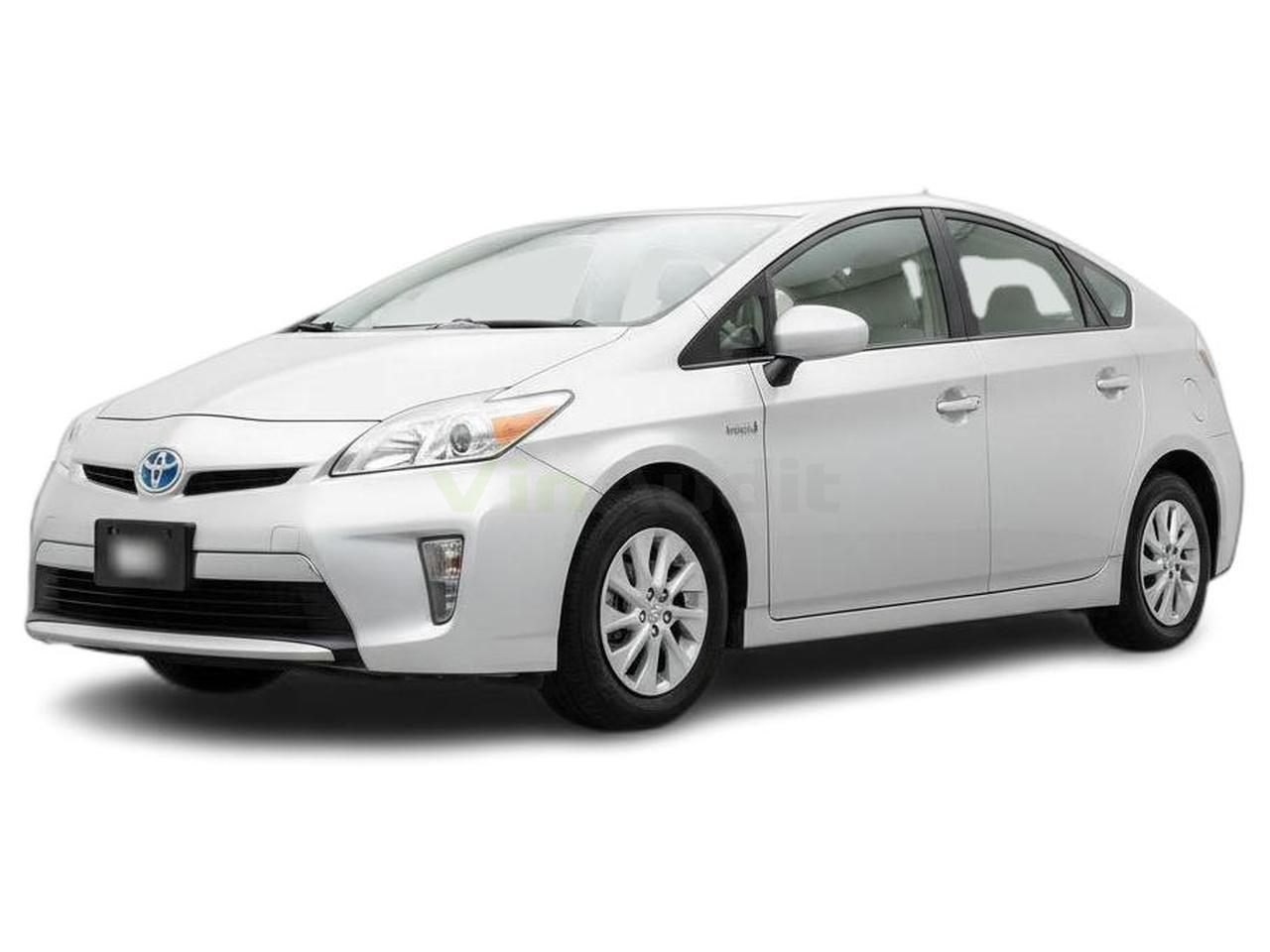
The 2014 Toyota Prius Plug-In, a variant of the iconic hybrid, entered the market as a hatchback offering extended electric-only range. As part of the Prius family, known for its pioneering hybrid technology, the Plug-In model appealed to eco-conscious buyers seeking greater electric flexibility. Primarily offered in a single, well-equipped trim, it boasted an original MSRP generally ranging from around $30,000 to $40,000. Its popularity stemmed from its ability to run on pure electricity for significant distances, bridging the gap between traditional hybrids and full EVs, all within the familiar and trusted Prius package.
The Good
The 2014 Prius Plug-In excels in exceptional fuel efficiency and the ability to travel significant distances on electric power, offering a silent, smooth ride. Its renowned Toyota reliability provides peace of mind, while the spacious interior ensures comfort for everyday commutes. This combination of environmental consciousness and practicality offers significant long-term value.
The Bad
Potential buyers of the 2014 Toyota Prius Plug-In should be aware of its somewhat sluggish acceleration compared to non-hybrid vehicles. The regenerative braking system can feel different to drivers accustomed to traditional brakes, and the battery's lifespan and replacement cost are considerations for long-term ownership.
2014 Toyota Prius Plug-In: Quick Overview
- Engine Options: A 1.8-liter four-cylinder gasoline engine paired with an electric motor and a lithium-ion battery pack.
- Horsepower: Combined system output is 134 horsepower.
- Fuel Economy: Estimated 95 MPGe (miles per gallon equivalent) combined when running in electric/hybrid mode. In gasoline-only mode, it achieves an EPA-estimated 50 MPG city and 54 MPG highway.
- Electric-Only Range: Approximately 11 miles on a full charge.
- 0-60 Times: Approximately 10.2 to 10.8 seconds, depending on driving conditions and battery charge.
- Towing Capacity: Not applicable. The Prius Plug-In is not designed for towing.
- Trim-Level Features (Typically a single, well-equipped trim):
- Exterior: LED taillights, 15-inch alloy wheels, automatic headlights, keyless entry and ignition.
- Interior: Heated front seats, SofTex faux-leather upholstery, automatic climate control, 6.1-inch touchscreen display, rearview camera, Bluetooth connectivity, USB port, auxiliary audio jack.
- Technology & Infotainment: Toyota Entune infotainment system, optional navigation system.
- Safety: Anti-lock brakes (ABS), stability and traction control, airbags (front, side, curtain), knee airbags. Advanced safety features like adaptive cruise control and lane departure warning were available as part of optional packages.
- Charging: Can be charged using a standard 120V outlet (approximately 3 hours for a full charge) or a 240V outlet (approximately 1.5 hours for a full charge).
2014 Toyota Prius Plug-In Specifications
Vehicle Information
| Year | 2014 |
| Make | Toyota |
| Model | Prius |
| Trim | - |
| Style | 5-Door |
| Type | Hatchback |
| Category | Mid-Size Car |
Manufacturing Details
| Made In | Japan |
| Manufacturing City | TOYOTA CITY |
Dimensions
| Doors | 5-Door |
| Curb Weight | 1379.83 kg |
| Gross Vehicle Weight Rating | 1804.84 kg |
| Overall Height | 149.1 cm |
| Overall Length | 448.06 cm |
| Overall Width | 174.5 cm |
| Wheelbase Length | 270 cm |
| Standard Seating | 5 |
Engine & Performance
| Engine | 1.8L I4 |
| Engine Size | 1.8L |
| Engine Cylinders | 4 |
| Transmission | Automatic |
| Transmission Type | Automatic |
| Transmission Speeds | Continuously Variable |
| Drivetrain | Front-Wheel Drive |
Additional Features
| Anti-Brake System | 4-Wheel ABS |
| Steering Type | Rack & Pinion |
Pricing
| Manufacturer Suggested Retail Price (MSRP) | $25,765 USD |
| Invoice Price | $23,985 USD |
| Delivery Charges | $810 USD |
Vehicle History Report
Vehicle
Specifications
Specifications
Ownership
History
History
All History
Events
Events
NMVTIS Title
History Check
History Check
Salvage/Rebuilt
Check
Check
Accident
Check
Check
Theft
Check
Check
Open Lien
Check
Check
Past Sale
Listings
Listings
Safety
Recalls
Recalls
Odometer
Check
Check
Market Price
Analysis
Analysis
What Problems Does the 2014 Toyota Prius Plug-In Have?
The 2014 Toyota Prius Plug-In, building on the strong reliability reputation of the standard Prius, generally exhibits excellent long-term durability. However, like any vehicle, it has some reported issues. One common concern, particularly as the vehicle ages, relates to the hybrid battery system. While Toyota batteries are known for their longevity, degradation over time is inevitable, potentially leading to reduced electric-only range and eventually requiring replacement, which can be a significant expense. Owners have also reported occasional issues with the infotainment system, such as freezing or unresponsiveness, though these are often resolved with software updates or resets.
Another area to watch is the braking system. Some owners have noted a spongy or inconsistent feel from the regenerative brakes, which is characteristic of hybrid systems but can take some getting used to. For the 2014 model year specifically, there were a few recalls. One notable recall involved the fuel pump, where a faulty component could potentially lead to an engine stall. Another recall addressed potential issues with the hybrid system's inverter, which could lead to a vehicle shutdown. It is crucial for prospective buyers to check if any outstanding recalls have been addressed for the specific vehicle they are considering.
Regarding long-term reliability, the core powertrain and mechanical components of the Prius Plug-In have proven to be robust. The body and interior also tend to hold up well, reflecting Toyota's build quality. The primary long-term concerns revolve around the hybrid battery and, to a lesser extent, potential electronic glitches. Regular maintenance, as recommended by Toyota, is key to maximizing the lifespan of all components and avoiding premature failures.
Another area to watch is the braking system. Some owners have noted a spongy or inconsistent feel from the regenerative brakes, which is characteristic of hybrid systems but can take some getting used to. For the 2014 model year specifically, there were a few recalls. One notable recall involved the fuel pump, where a faulty component could potentially lead to an engine stall. Another recall addressed potential issues with the hybrid system's inverter, which could lead to a vehicle shutdown. It is crucial for prospective buyers to check if any outstanding recalls have been addressed for the specific vehicle they are considering.
Regarding long-term reliability, the core powertrain and mechanical components of the Prius Plug-In have proven to be robust. The body and interior also tend to hold up well, reflecting Toyota's build quality. The primary long-term concerns revolve around the hybrid battery and, to a lesser extent, potential electronic glitches. Regular maintenance, as recommended by Toyota, is key to maximizing the lifespan of all components and avoiding premature failures.
How long will the 2014 Toyota Prius Plug-In last?
Based on owner data and Toyota's reputation for durability, the 2014 Toyota Prius Plug-In is expected to provide reliable service for well over 200,000 miles, and often much more, with proper maintenance. Many owners report reaching 250,000 to 300,000 miles without major powertrain issues. The long-term durability is a significant selling point, especially for the gasoline engine and electric motor components. The primary weakness over time is the hybrid battery pack, which typically has an extended warranty (often 8-10 years or 100,000-150,000 miles) but will eventually degrade. Replacement cost is a factor, but the rest of the vehicle is built to last, making it a very durable choice for commuters.
What Technology & Safety Features are Included?
The 2014 Toyota Prius Plug-In came equipped with a respectable array of technology for its time, focusing on connectivity and convenience. Standard features typically included a 6.1-inch touchscreen display that served as the hub for the Toyota Entune infotainment system. This system offered AM/FM/CD/MP3 playback, USB connectivity for music and charging, an auxiliary audio jack, and Bluetooth hands-free phone and audio streaming capabilities. A rearview camera was also standard, aiding in parking maneuvers.
Optional technology features often included an upgraded navigation system, providing turn-by-turn directions and traffic information. For audiophiles, an optional premium sound system was available. The Plug-In model also featured an advanced multi-information display that provided detailed information on energy usage, driving modes, and the battery status, appealing to the eco-conscious driver.
In terms of driver-assistance features, the 2014 Prius Plug-In offered some advanced systems, though availability often depended on option packages. These could include adaptive cruise control, which automatically adjusted the vehicle's speed to maintain a set distance from the car ahead, and a lane departure warning system, which alerted the driver if the vehicle began to drift out of its lane without signaling.
Safety was a strong suit for the Prius Plug-In, benefiting from Toyota's commitment to occupant protection. Standard safety features included anti-lock brakes (ABS), electronic brake-force distribution (EBD), brake assist, stability control, and traction control. A comprehensive set of airbags was also standard, including front-seat airbags, front-side airbags, side curtain airbags, and a driver's knee airbag. While specific crash-test ratings for the Plug-In variant might vary slightly from the standard Prius, the Prius family generally performed very well in tests conducted by the Insurance Institute for Highway Safety (IIHS) and the National Highway Traffic Safety Administration (NHTSA), typically earning top marks in frontal, side, and rear impact tests.
Optional technology features often included an upgraded navigation system, providing turn-by-turn directions and traffic information. For audiophiles, an optional premium sound system was available. The Plug-In model also featured an advanced multi-information display that provided detailed information on energy usage, driving modes, and the battery status, appealing to the eco-conscious driver.
In terms of driver-assistance features, the 2014 Prius Plug-In offered some advanced systems, though availability often depended on option packages. These could include adaptive cruise control, which automatically adjusted the vehicle's speed to maintain a set distance from the car ahead, and a lane departure warning system, which alerted the driver if the vehicle began to drift out of its lane without signaling.
Safety was a strong suit for the Prius Plug-In, benefiting from Toyota's commitment to occupant protection. Standard safety features included anti-lock brakes (ABS), electronic brake-force distribution (EBD), brake assist, stability control, and traction control. A comprehensive set of airbags was also standard, including front-seat airbags, front-side airbags, side curtain airbags, and a driver's knee airbag. While specific crash-test ratings for the Plug-In variant might vary slightly from the standard Prius, the Prius family generally performed very well in tests conducted by the Insurance Institute for Highway Safety (IIHS) and the National Highway Traffic Safety Administration (NHTSA), typically earning top marks in frontal, side, and rear impact tests.
What Colors Options are Available?
2014 Toyota Prius Plug-In Prices and Market Value
When new, the 2014 Toyota Prius Plug-In had an original MSRP that typically ranged from approximately $30,000 to $40,000, depending on selected options and packages. Today, the used market prices for a 2014 Prius Plug-In vary significantly based on mileage, condition, location, and trim level, but generally fall between $8,000 and $15,000. The Prius Plug-In experienced a relatively moderate depreciation curve, typical for well-regarded hybrid vehicles. Factors affecting its resale value include its excellent fuel economy, Toyota's reputation for reliability, and the ongoing demand for fuel-efficient vehicles. However, the limited electric-only range compared to newer plug-in hybrids and electric vehicles can impact its desirability for some buyers, potentially leading to slightly steeper depreciation than a standard Prius in some markets.
2014 Toyota Prius Plug-In Cost of Ownership
The 2014 Toyota Prius Plug-In is generally economical to own. Insurance costs are typically moderate, comparable to other compact sedans with similar safety ratings. Fuel costs are exceptionally low, especially if regularly charged at home to maximize electric-only driving. Maintenance costs are also reasonable, with standard oil changes and routine checks. Repair costs can be higher if the hybrid battery needs replacement outside of warranty, which is the most significant potential expense. However, with its robust build and proven reliability, major repairs outside of the battery are uncommon, making it a cost-effective vehicle for long-term ownership.
2014 Toyota Prius Plug-In Fuel Efficiency
Fuel Type
HEV
Fuel Capacity
14.38 liters
City Mileage
1.57 km/l
Highway Mileage
1.7 km/l
2014 Toyota Prius Plug-In Safety Rating
IIHS
2014 Toyota Prius Plug-In Warranty
Basic
Original warranty
36 months / 36,000 miles
Estimated remaining
Expired
Powertrain
Original warranty
60 months / 60,000 miles
Estimated remaining
Expired
Rust
Original warranty
60 months / unlimited miles
Estimated remaining
Expired
2014 Toyota Prius Plug-In Insurance
Insurance for a 2014 Toyota Prius Plug-In is moderately priced, reflecting its status as a Hatchback with strong safety ratings and
reasonable repair costs.
How Does the 2014 Toyota Prius Plug-In Compare to Other Hatchback?
The 2014 Toyota Prius Plug-In occupied a unique niche, directly competing with other early plug-in hybrids and some more fuel-efficient conventional hybrids. Key rivals included the Ford Fusion Energi, Chevrolet Volt, and perhaps the Honda Accord Plug-in Hybrid. In terms of performance, the Prius Plug-In was not a powerhouse; its acceleration was modest, prioritizing efficiency. The Chevrolet Volt offered a more engaging driving experience and a longer electric-only range (around 35 miles) at the time, while the Fusion Energi also provided more spirited driving. The Prius Plug-In's strength lay in its 11-mile electric range, sufficient for many short commutes.
Regarding features, the 2014 Prius Plug-In was generally well-equipped with standard tech like a touchscreen, Bluetooth, and rearview camera. Competitors offered similar or sometimes more advanced infotainment systems and driver-assistance options. The Volt often had more premium interior materials.
Reliability is where the Prius Plug-In truly shone, leveraging Toyota's legendary reputation. While competitors like the Volt also had good reliability, Toyota's track record in hybrid systems was virtually unmatched. Long-term ownership concerns for rivals often centered on battery longevity and more complex systems.
In terms of price, the Prius Plug-In was competitively positioned, often falling within a similar range to its plug-in hybrid competitors when new. Today, used prices reflect their market appeal.
Recommendations:
Regarding features, the 2014 Prius Plug-In was generally well-equipped with standard tech like a touchscreen, Bluetooth, and rearview camera. Competitors offered similar or sometimes more advanced infotainment systems and driver-assistance options. The Volt often had more premium interior materials.
Reliability is where the Prius Plug-In truly shone, leveraging Toyota's legendary reputation. While competitors like the Volt also had good reliability, Toyota's track record in hybrid systems was virtually unmatched. Long-term ownership concerns for rivals often centered on battery longevity and more complex systems.
In terms of price, the Prius Plug-In was competitively positioned, often falling within a similar range to its plug-in hybrid competitors when new. Today, used prices reflect their market appeal.
Recommendations:
- Similar Alternative: If the 11-mile electric range is sufficient and reliability is paramount, the 2014 Prius Plug-In remains a solid choice.
- Better Alternative (if electric range is key): For significantly more electric-only capability and a more engaging drive, consider a used Chevrolet Volt (especially later models with increased range) or a Ford Fusion Energi. These offer a more substantial plug-in experience.
- More Traditional Hybrid: If a plug-in isn't essential and maximum fuel efficiency in a non-plug-in package is desired, a standard 2014 Toyota Prius or a Honda Insight would be excellent, often more affordable, alternatives.
Final Verdict: Is the 2014 Toyota Prius Plug-In a Good Hatchback?

The 2014 Toyota Prius Plug-In is an excellent choice for budget-conscious commuters who can charge regularly and have short daily driving distances. It's ideal for individuals or small families prioritizing exceptional fuel economy, low running costs, and Toyota's renowned reliability. If your daily commute is under 10 miles, you can leverage the electric-only range for near-gas-free travel most days. Buying used is definitely the way to go, as new models are no longer available, and prices have depreciated significantly. It is worth buying if you find one in good condition with a healthy battery and understand its limited electric range compared to modern EVs. Focus on well-maintained examples, and confirm any outstanding recalls have been addressed. It represents solid value for a dependable, eco-friendly option.