
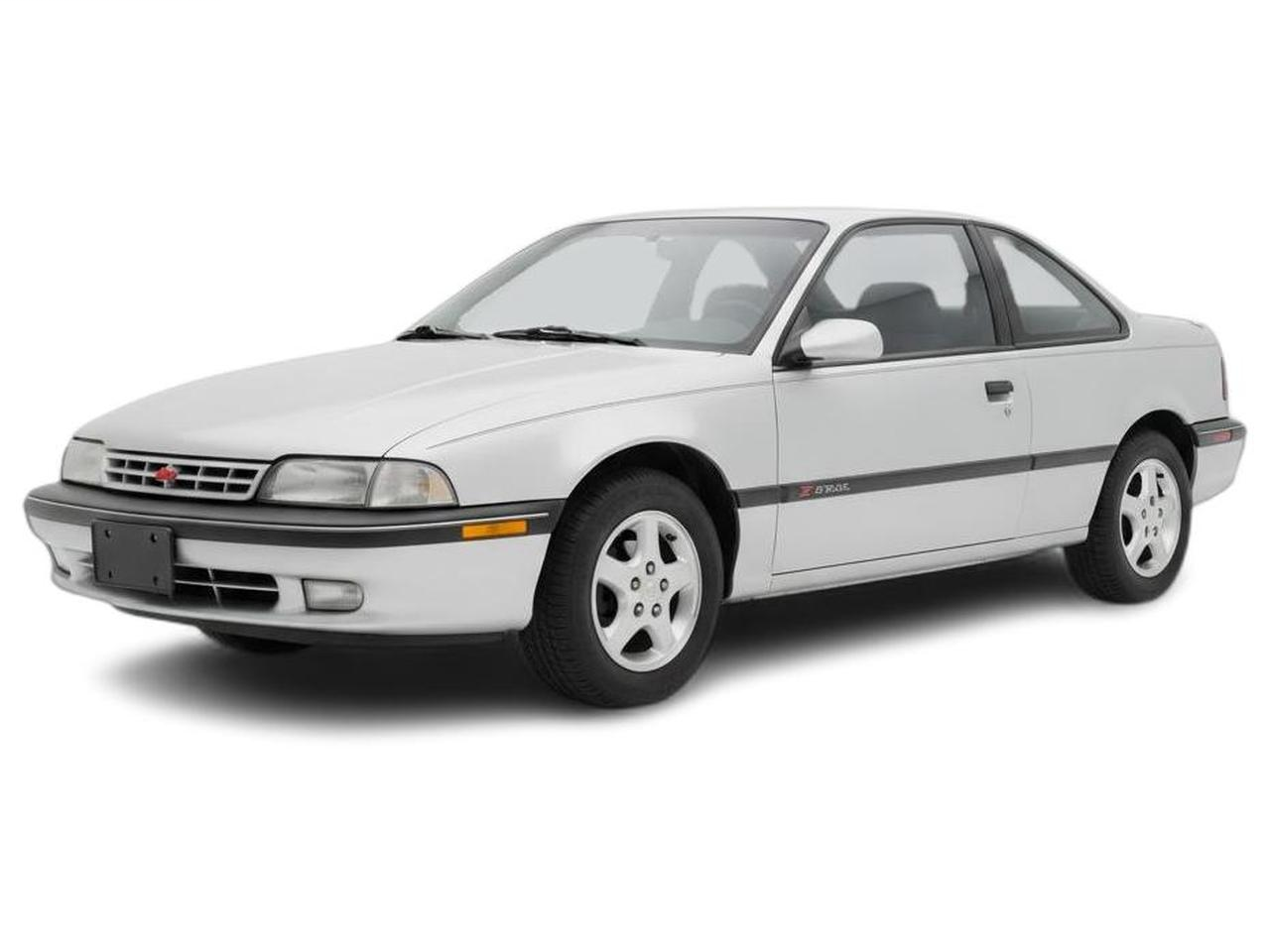
The 1996 Chevrolet Beretta is a sporty compact coupe that was produced from 1987 to 1996. Known for its sleek, aerodynamic styling, it offered a more performance-oriented alternative within Chevrolet's lineup. Key trims included the base, Z26, and the performance-oriented GT. Its popularity stemmed from its aggressive looks and accessible price point, appealing to buyers seeking a stylish and somewhat sporty coupe without a hefty price tag.
The Good
The 1996 Chevrolet Beretta boasts a stylish, eye-catching design that appeals to emotion. Practically, it offers decent fuel efficiency and a generally affordable ownership experience, making it a value-oriented choice for those seeking a sporty aesthetic without breaking the bank.
The Bad
When considering a 1996 Chevrolet Beretta, potential buyers should be aware of common issues like interior wear and tear, electrical gremlins, and potential transmission problems, particularly on higher mileage examples. Rust can also be a concern in certain climates, so thorough inspection is recommended.
1996 Chevrolet Beretta: Quick Overview
- Engine Options: The 1996 Chevrolet Beretta was available with a few engine choices:
- 2.2L I4 (L40): Standard on base models.
- 3.1L V6 (L82): Optional on base and standard on Z26 models, offering more power.
- Horsepower:
- 2.2L I4: Approximately 120-125 horsepower.
- 3.1L V6: Approximately 160 horsepower.
- Fuel Economy (EPA Estimates): Varies by engine and transmission, but generally in the range of:
- 2.2L I4: Around 22 mpg city / 30 mpg highway.
- 3.1L V6: Around 19 mpg city / 27 mpg highway.
- 0-60 Times: These varied significantly based on engine and transmission.
- With the 2.2L engine, expect times in the 9-10 second range.
- With the 3.1L V6, times could be closer to 7-8 seconds.
- Towing Capacity: The Chevrolet Beretta was not designed or equipped for towing, and therefore, it does not have a specified towing capacity.
- Trim-Level Features:
- Base: Typically included power steering, power brakes, intermittent wipers, and a basic AM/FM stereo. Air conditioning and power windows/locks were often optional.
- Z26: Stepped up with the more powerful 3.1L V6 engine, sport suspension, alloy wheels, a rear spoiler, body-colored mirrors, and often included upgraded interior features like sport seats and a premium sound system. The Z26 was designed to offer a more performance-oriented experience.
1996 Chevrolet Beretta Specifications
Vehicle Information
| Year | 1996 |
| Make | Chevrolet |
| Model | Beretta |
| Trim | - |
| Style | - |
| Type | - |
| Category | - |
Manufacturing Details
| Made In | - |
| Manufacturing City | - |
Dimensions
| Doors | - |
| Curb Weight | - |
| Gross Vehicle Weight Rating | - |
| Overall Height | - |
| Overall Length | - |
| Overall Width | - |
| Wheelbase Length | - |
| Standard Seating | - |
Engine & Performance
| Engine | - |
| Engine Size | - |
| Engine Cylinders | - |
| Transmission | - |
| Transmission Type | - |
| Transmission Speeds | - |
| Drivetrain | - |
Additional Features
| Anti-Brake System | - |
| Steering Type | - |
Pricing
| Manufacturer Suggested Retail Price (MSRP) | - |
| Invoice Price | - |
| Delivery Charges | - |
Vehicle History Report
Vehicle
Specifications
Specifications
Ownership
History
History
All History
Events
Events
NMVTIS Title
History Check
History Check
Salvage/Rebuilt
Check
Check
Accident
Check
Check
Theft
Check
Check
Open Lien
Check
Check
Past Sale
Listings
Listings
Safety
Recalls
Recalls
Odometer
Check
Check
Market Price
Analysis
Analysis
What Problems Does the 1996 Chevrolet Beretta Have?
The 1996 Chevrolet Beretta, like many vehicles of its era, is prone to certain recurring issues that owners should be aware of. One of the most frequently reported problems revolves around the automatic transmission. While not exclusive to the 1996 model year, these transmissions can experience premature wear, leading to slipping, delayed shifting, or outright failure. Proper maintenance, including regular fluid changes, can help mitigate this, but it remains a concern for older models.
Another common area of concern is the electrical system. Owners have reported issues with various components, including power windows and locks that may become slow or stop working altogether, malfunctioning dashboard gauges, and problems with the starter or alternator. These electrical gremlins can be frustrating and costly to diagnose and repair.
Cooling system issues are also not uncommon. Over time, components like the radiator, water pump, and thermostat can degrade, leading to overheating. Leaks in the system are a frequent culprit.
Interior wear and tear is also typical for a car of this age. Upholstery can tear or fade, dashboard plastics can become brittle and crack, and headliners can sag. These are often cosmetic but can impact the overall appeal and comfort of the vehicle.
Regarding recalls, while specific recalls for the 1996 model year might be few and far between, it is always advisable to check the NHTSA website for any outstanding recalls that may apply to the vehicle's VIN. Long-term reliability can be a mixed bag. While some Berettas have proven to be relatively dependable with diligent maintenance, others have been plagued by a series of persistent issues, particularly as they age. The 3.1L V6 engine generally offers more power but might be slightly less fuel-efficient and potentially more complex than the 2.2L four-cylinder. Rust, especially in areas with harsh winters and road salt, can be a significant long-term concern, affecting body panels, suspension components, and the undercarriage.
Another common area of concern is the electrical system. Owners have reported issues with various components, including power windows and locks that may become slow or stop working altogether, malfunctioning dashboard gauges, and problems with the starter or alternator. These electrical gremlins can be frustrating and costly to diagnose and repair.
Cooling system issues are also not uncommon. Over time, components like the radiator, water pump, and thermostat can degrade, leading to overheating. Leaks in the system are a frequent culprit.
Interior wear and tear is also typical for a car of this age. Upholstery can tear or fade, dashboard plastics can become brittle and crack, and headliners can sag. These are often cosmetic but can impact the overall appeal and comfort of the vehicle.
Regarding recalls, while specific recalls for the 1996 model year might be few and far between, it is always advisable to check the NHTSA website for any outstanding recalls that may apply to the vehicle's VIN. Long-term reliability can be a mixed bag. While some Berettas have proven to be relatively dependable with diligent maintenance, others have been plagued by a series of persistent issues, particularly as they age. The 3.1L V6 engine generally offers more power but might be slightly less fuel-efficient and potentially more complex than the 2.2L four-cylinder. Rust, especially in areas with harsh winters and road salt, can be a significant long-term concern, affecting body panels, suspension components, and the undercarriage.
How long will the 1996 Chevrolet Beretta last?
Based on owner data and typical maintenance, a well-maintained 1996 Chevrolet Beretta can reasonably expect to reach mileage in the range of 150,000 to 200,000 miles or more. Many owners report keeping their Berettas for 10 to 15 years. Long-term durability is heavily influenced by the level of care. Cars with consistent oil changes, timely replacement of wear items, and attention to early signs of trouble tend to fare much better. However, weaknesses like the automatic transmission and electrical components can become more pronounced with age and mileage, potentially limiting its lifespan if not addressed. Neglected maintenance will significantly shorten its service life, leading to more frequent and costly repairs.
What Technology & Safety Features are Included?
The 1996 Chevrolet Beretta offered a modest suite of technology and safety features for its time, focusing more on its sporty aesthetic and affordability rather than cutting-edge innovation.
Entertainment: Standard entertainment typically consisted of an AM/FM stereo radio, often with a cassette player. Higher trims or optional packages might have included a more advanced stereo system with more speakers, possibly a CD player for the later years of production, though this was less common for 1996. Power windows and power door locks were frequently optional on base models but standard on higher trims like the Z26. Cruise control was another common option.
Driver-Assistance Features: Active driver-assistance features as we know them today were virtually non-existent in the 1996 Beretta. Features were limited to power steering and power-assisted brakes, which were standard across the board to enhance drivability. Anti-lock Braking System (ABS) was an available option, particularly on higher trims or as part of a package, and it provided a significant safety boost during emergency braking situations.
Safety Features: Standard safety equipment included seat belts, a collapsible steering column, and front and rear crumple zones designed to absorb impact energy in a collision. Airbags were standard for the driver and front passenger.
Crash-Test Ratings: Specific crash-test ratings for the 1996 Chevrolet Beretta are not readily available from modern sources like the NHTSA or IIHS in the detailed format we see today. However, vehicles from this era generally performed moderately in frontal and side impact tests conducted by the IIHS at the time. It's important to remember that safety standards and testing methodologies have evolved considerably since the mid-1990s, so direct comparisons to contemporary vehicles would not be entirely accurate. Overall, the 1996 Beretta provided a basic level of safety and convenience features, typical for its class and price point during that period.
Entertainment: Standard entertainment typically consisted of an AM/FM stereo radio, often with a cassette player. Higher trims or optional packages might have included a more advanced stereo system with more speakers, possibly a CD player for the later years of production, though this was less common for 1996. Power windows and power door locks were frequently optional on base models but standard on higher trims like the Z26. Cruise control was another common option.
Driver-Assistance Features: Active driver-assistance features as we know them today were virtually non-existent in the 1996 Beretta. Features were limited to power steering and power-assisted brakes, which were standard across the board to enhance drivability. Anti-lock Braking System (ABS) was an available option, particularly on higher trims or as part of a package, and it provided a significant safety boost during emergency braking situations.
Safety Features: Standard safety equipment included seat belts, a collapsible steering column, and front and rear crumple zones designed to absorb impact energy in a collision. Airbags were standard for the driver and front passenger.
Crash-Test Ratings: Specific crash-test ratings for the 1996 Chevrolet Beretta are not readily available from modern sources like the NHTSA or IIHS in the detailed format we see today. However, vehicles from this era generally performed moderately in frontal and side impact tests conducted by the IIHS at the time. It's important to remember that safety standards and testing methodologies have evolved considerably since the mid-1990s, so direct comparisons to contemporary vehicles would not be entirely accurate. Overall, the 1996 Beretta provided a basic level of safety and convenience features, typical for its class and price point during that period.
What Colors Options are Available?
1996 Chevrolet Beretta Prices and Market Value
When new, the 1996 Chevrolet Beretta had an original MSRP that typically ranged from around $15,000 to $20,000, depending on the trim level and options. Today, the used market prices for a 1996 Beretta are quite low, generally ranging from $1,000 to $4,000 for most examples. Exceptional, low-mileage, pristine condition vehicles might command slightly more, but these are rare.
The Beretta experienced significant depreciation from its original price, a common trend for coupes in this segment. Factors affecting its current resale value include its overall condition, mileage, maintenance history, and the presence of rust. Buyers are primarily seeking these vehicles as affordable, basic transportation or as project cars for enthusiasts. A well-maintained example with the more desirable V6 engine might hold slightly more value than a base model with the four-cylinder. Market demand for these older coupes is relatively niche.
1996 Chevrolet Beretta Cost of Ownership
The 1996 Chevrolet Beretta is generally considered an economical vehicle to own. Insurance premiums are typically low due to its age and modest market value. Fuel costs are reasonable, especially with the 2.2L engine, offering decent MPG. Maintenance costs are generally average for a car of its vintage; routine services like oil changes and brake replacements are inexpensive. However, repairs for specific issues, such as transmission problems or electrical gremlins, can become more costly as the car ages. Long-term ownership hinges on proactive maintenance to address potential weaknesses and prevent more significant, expensive failures. Parts are generally available and affordable.
1996 Chevrolet Beretta Fuel Efficiency
Fuel Type
-
Fuel Capacity
-
City Mileage
-
Highway Mileage
-
1996 Chevrolet Beretta Recalls & Defects
Interior Lighting
Recall date
1998-02-17
Recall no.
98v027000
Source
NHTSA
Summary
Vehicle Description: Passenger Vehicles. These Vehicles Were Built With THE Potential FOR THE Interior Lamps TO Come ON Unexpectedly While THE Vehicles ARE Being Driven. This Does NOT Meet THE Requirements OF Fmvss NO. 101, "controls and Displays."
Consequence
THE Interior Lamps Coming ON Unexpectedly Could Startle A Driver Causing A Momentary Loss OF Control Increasing THE Risk OF A Vehicle Accident.
Remedy
Dealers Will RUN A Diagnostic Test ON THE Lamp Control Module And, IF Necessary, Replace IT.
Notes
Owner Notification IS Expected TO Begin During February 1998.owners WHO Take Their Vehicles TO AN Authorized Dealer ON AN Agreed Upon Service Date and DO NOT Receive THE Free Remedy Within A Reasonable Time Should Contact Chevrolet AT 1-800-222-1020, Buick AT 1-800-521-7300,pontiac AT 1-800-762-2737, or Oldsmobile AT 1-800-442-6537. Also Contact THE National Highway Traffic Safety Administration's Auto Safety Hotline AT 1-888-dash-2-dot (1-888-327-4236).
Fuel System, Other:storage:tank Assembly:pressure Relief Devices
Recall date
2007-03-12
Recall no.
07e021000
Source
NHTSA
Summary
Certain Delphi Fuel Pressure Regulators, P/Nos. Fp10020-11b1, Fp10026-11b1, and Fp10027-11b1, Sold After January 9, 2007, AS Aftermarket Equipment FOR Various Passenger Vehicles Listed Above. THE Universal Pressure Regulators (Upr) Were Produced Without AN O'ring and Retainer.
Consequence
Fuel MAY Leak, Possibly Resulting IN A Fire.
Remedy
Delphi Will Notify Owners and Replace THE UPR Free OF Charge. THE Recall Began ON April 23, 2007. Owners CAN Contact Delphi AT 877-411-8770.
Notes
This Recall Only Pertains TO Aftermarket Delphi Fuel Pressure Regulators and HAS NO Relation TO ANY Original Equipment Installed BY General Motors.customers MAY Contact THE National Highway Traffic Safety Administration's Vehicle Safety Hotline AT 1-888-327-4236 (Tty: 1-800-424-9153); or GO TO Http://Www.safercar.gov.
1996 Chevrolet Beretta Insurance
Insurance for a 1996 Chevrolet Beretta is moderately priced, reflecting its status as a Vehicle with strong safety ratings and
reasonable repair costs.
How Does the 1996 Chevrolet Beretta Compare to Other Vehicle?
The 1996 Chevrolet Beretta competed in the compact sporty coupe segment against rivals such as the Ford Probe, Dodge Avenger, and perhaps the Toyota Celica or Honda Prelude in a slightly higher price bracket.
Performance: The Beretta's performance, especially with the 3.1L V6, was competitive for its price point, offering decent acceleration. However, rivals like the Celica GT or Prelude often provided more refined handling and potent engine options. The Ford Probe GT, for instance, offered a more engaging driving experience.
Features: In 1996, the Beretta offered basic amenities. While it had standard airbags and ABS as an option, rivals like the Celica or Prelude often featured more advanced optional technology, better infotainment systems (for the era), and more sophisticated interior designs. The Dodge Avenger offered a unique styling and a V6 option that was competitive.
Reliability: Reliability is a mixed bag for the Beretta. While generally considered average for its class, it could be prone to electrical issues and transmission problems, particularly as it aged. Competitors like the Toyota Celica and Honda Prelude generally held a stronger reputation for long-term reliability and build quality, often requiring fewer significant repairs over their lifespan. The Ford Probe had its own set of reliability concerns, particularly with its powertrain.
Price: The Beretta's key advantage was its affordability. It was typically priced below its more import-focused rivals, making it an attractive option for budget-conscious buyers seeking a sporty look.
Alternatives: If a similar sporty coupe aesthetic is desired with potentially better reliability and refinement, one might consider a used Honda Civic Coupe (particularly Si models), a Toyota Celica (older generations), or perhaps a Ford Mustang if a rear-wheel-drive experience is preferred and budget allows. For those prioritizing affordability and a sporty look above all else, the Dodge Avenger is a comparable American alternative, though often facing similar reliability expectations. The Beretta remains a budget-friendly option for those who understand its potential quirks.
Performance: The Beretta's performance, especially with the 3.1L V6, was competitive for its price point, offering decent acceleration. However, rivals like the Celica GT or Prelude often provided more refined handling and potent engine options. The Ford Probe GT, for instance, offered a more engaging driving experience.
Features: In 1996, the Beretta offered basic amenities. While it had standard airbags and ABS as an option, rivals like the Celica or Prelude often featured more advanced optional technology, better infotainment systems (for the era), and more sophisticated interior designs. The Dodge Avenger offered a unique styling and a V6 option that was competitive.
Reliability: Reliability is a mixed bag for the Beretta. While generally considered average for its class, it could be prone to electrical issues and transmission problems, particularly as it aged. Competitors like the Toyota Celica and Honda Prelude generally held a stronger reputation for long-term reliability and build quality, often requiring fewer significant repairs over their lifespan. The Ford Probe had its own set of reliability concerns, particularly with its powertrain.
Price: The Beretta's key advantage was its affordability. It was typically priced below its more import-focused rivals, making it an attractive option for budget-conscious buyers seeking a sporty look.
Alternatives: If a similar sporty coupe aesthetic is desired with potentially better reliability and refinement, one might consider a used Honda Civic Coupe (particularly Si models), a Toyota Celica (older generations), or perhaps a Ford Mustang if a rear-wheel-drive experience is preferred and budget allows. For those prioritizing affordability and a sporty look above all else, the Dodge Avenger is a comparable American alternative, though often facing similar reliability expectations. The Beretta remains a budget-friendly option for those who understand its potential quirks.
Final Verdict: Is the 1996 Chevrolet Beretta a Good Vehicle?
The 1996 Chevrolet Beretta is ideal for budget-conscious buyers seeking a car with a sporty aesthetic without the premium price tag. It's best suited as a second car, a reliable daily commuter for short distances, or a project vehicle for someone who enjoys working on cars. It is worth buying primarily in the used market, as finding new examples is impossible.
When considering a purchase, prioritize well-maintained examples, ideally with the 3.1L V6 engine for better performance, though the 2.2L is more fuel-efficient. Thoroughly inspect for rust, check the transmission's condition, and be prepared for potential electrical gremlins. If you find a clean, low-mileage unit with a solid maintenance history, it can offer an affordable and stylish mode of transportation. Avoid heavily modified or neglected examples, as these will likely lead to higher repair costs.