
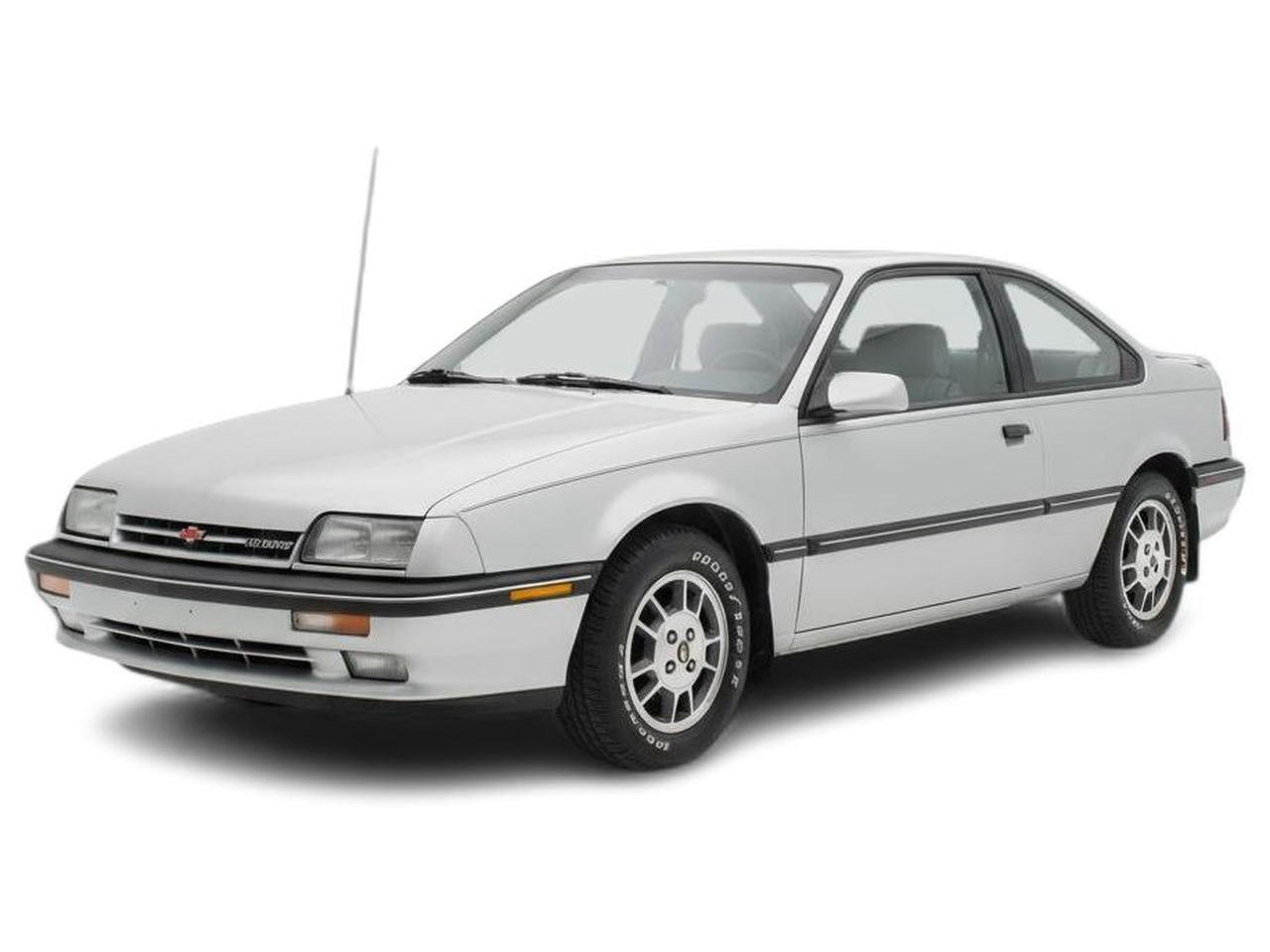
The 1989 Chevrolet Beretta, a sporty two-door coupe, emerged from Chevrolet's renowned car lineup, produced from 1987 to 1994. Key trims included the base, CL, Z26, and GT. When new, prices typically ranged from approximately $9,000 to over $14,000. Its distinctive aerodynamic styling and affordable performance made it a popular choice for buyers seeking a stylish, engaging drive without breaking the bank. The Beretta stood out for its European-inspired design and accessible sports car feel.
The Good
The 1989 Chevrolet Beretta offers an appealing blend of sporty design and accessible performance. Its agile handling and available potent engines cater to driving enthusiasts, while its affordable price and decent fuel economy appeal to practical buyers. The stylish coupe silhouette provides an emotional draw, making it a fun and engaging car for its era.
The Bad
When considering a 1989 Chevrolet Beretta, common weaknesses include potential electrical issues, particularly with window regulators and dashboard components. Rust can be a concern, especially in the lower body panels and wheel wells. Some owners report interior wear and tear, and certain engine variants might exhibit oil leaks over time.
1989 Chevrolet Beretta: Quick Overview
- Engine Options: The 1989 Chevrolet Beretta offered a few distinct engine choices to suit different performance and efficiency needs.
- 2.0L Inline-4 (TBI): This was the base engine, designed for economy and adequate everyday driving.
- 2.0L Inline-4 (MPI): A fuel-injected version of the 2.0L, offering a slight bump in power and refinement.
- 2.8L V6 (MPFI): The optional V6 provided a significant increase in power and torque for more spirited driving.
- 2.0L Inline-4 (TBI): This was the base engine, designed for economy and adequate everyday driving.
- Horsepower:
- 2.0L TBI: Approximately 90-100 hp
- 2.0L MPI: Approximately 110-115 hp
- 2.8L V6: Approximately 125-130 hp
- Fuel Economy:
- Generally ranged from the mid-to-high 20s MPG in combined city/highway driving for the 4-cylinder engines, with the V6 being slightly lower, perhaps in the low 20s MPG combined.
- 0-60 Times:
- Base 4-cylinder models could take anywhere from 11-13 seconds.
- With the V6 engine and sportier trims, 0-60 times could be in the 9-10 second range.
- Towing Capacity: The Chevrolet Beretta was not designed or equipped for towing. It is not applicable.
- Trim-Level Features:
- Base: Standard AM/FM radio, manual windows, manual locks, cloth interior.
- CL: Added features like power windows, power locks, cruise control, upgraded interior trim, and often a better sound system.
- GT/Z26: These sport-oriented trims typically featured the V6 engine, sport suspension tuning, alloy wheels, fog lights, a rear spoiler, and more aggressive styling cues. Interior upgrades might include sport seats and additional gauges.
1989 Chevrolet Beretta Specifications
Vehicle Information
| Year | 1989 |
| Make | Chevrolet |
| Model | Beretta |
| Trim | - |
| Style | - |
| Type | Coupe |
| Category | Compact Car |
Manufacturing Details
| Made In | United States |
| Manufacturing City | BOWLING GREEN |
Dimensions
| Doors | 2-Door |
| Curb Weight | 2661 pounds |
| Gross Vehicle Weight Rating | - |
| Overall Height | 55.30 inches |
| Overall Length | 187.20 inches |
| Overall Width | 68.20 inches |
| Wheelbase Length | 103.40 inches |
| Standard Seating | 5 |
Engine & Performance
| Engine | 2.8L V6 |
| Engine Size | 2.8L |
| Engine Cylinders | 6 |
| Transmission | 3-Speed Automatic |
| Transmission Type | Automatic |
| Transmission Speeds | 3-Speed |
| Drivetrain | Front-Wheel Drive |
Additional Features
| Anti-Brake System | Non-ABS |
| Steering Type | Rack & Pinion |
Pricing
| Manufacturer Suggested Retail Price (MSRP) | $11,090 |
| Invoice Price | - |
| Delivery Charges | - |
Vehicle History Report
Vehicle
Specifications
Specifications
Ownership
History
History
All History
Events
Events
NMVTIS Title
History Check
History Check
Salvage/Rebuilt
Check
Check
Accident
Check
Check
Theft
Check
Check
Open Lien
Check
Check
Past Sale
Listings
Listings
Safety
Recalls
Recalls
Odometer
Check
Check
Market Price
Analysis
Analysis
What Problems Does the 1989 Chevrolet Beretta Have?
The 1989 Chevrolet Beretta, like many vehicles of its era, has a few commonly reported issues that prospective owners should be aware of. Electrical gremlins are a frequent complaint, with problems often arising in the power window regulators, power lock actuators, and the dashboard instrument cluster. The climate control system's blend door actuators can also fail, leading to ineffective heating or cooling.
Another area of concern is the potential for rust. While not exclusive to the 1989 model year, the lower body panels, rocker arms, and areas around the wheel wells are susceptible to corrosion, especially in regions with harsh winters or high humidity. This can compromise the structural integrity and appearance of the vehicle.
Engine-related issues, while not universally problematic, can include oil leaks from valve cover gaskets or the oil pan. Some owners have reported issues with the ignition system, such as faulty spark plug wires or distributor components, which can lead to misfires or starting problems. Transmission issues, particularly with the automatic transmissions, have also been noted, though this is often dependent on how well the vehicle has been maintained.
Specific to the 1989 model year, while major recalls were not overly numerous, it's always prudent to check for any outstanding recalls that may have been issued for this specific vehicle. Long-term reliability can vary significantly based on the original build quality and, more importantly, the maintenance history. Vehicles that have been regularly serviced with oil changes, fluid flushes, and timely repairs tend to fare much better than those that have been neglected. Owners often suggest keeping an eye on the cooling system, as overheating can lead to more serious engine damage. While the Beretta was generally considered a decent car for its time, its reliability can be hit or miss, leaning towards needing regular attention as it ages.
Another area of concern is the potential for rust. While not exclusive to the 1989 model year, the lower body panels, rocker arms, and areas around the wheel wells are susceptible to corrosion, especially in regions with harsh winters or high humidity. This can compromise the structural integrity and appearance of the vehicle.
Engine-related issues, while not universally problematic, can include oil leaks from valve cover gaskets or the oil pan. Some owners have reported issues with the ignition system, such as faulty spark plug wires or distributor components, which can lead to misfires or starting problems. Transmission issues, particularly with the automatic transmissions, have also been noted, though this is often dependent on how well the vehicle has been maintained.
Specific to the 1989 model year, while major recalls were not overly numerous, it's always prudent to check for any outstanding recalls that may have been issued for this specific vehicle. Long-term reliability can vary significantly based on the original build quality and, more importantly, the maintenance history. Vehicles that have been regularly serviced with oil changes, fluid flushes, and timely repairs tend to fare much better than those that have been neglected. Owners often suggest keeping an eye on the cooling system, as overheating can lead to more serious engine damage. While the Beretta was generally considered a decent car for its time, its reliability can be hit or miss, leaning towards needing regular attention as it ages.
How long will the 1989 Chevrolet Beretta last?
Based on owner data and typical maintenance habits, a well-maintained 1989 Chevrolet Beretta can realistically be expected to reach an average mileage of 150,000 to 200,000 miles. However, achieving this depends heavily on consistent upkeep. The long-term durability of the Beretta is moderate; its chassis and powertrain are generally robust enough for high mileage, but electrical components and susceptibility to rust are definite weaknesses that emerge over time. Regular attention to fluid changes, timely replacement of wear items like belts and hoses, and addressing rust proactively are crucial for extending its service life. Cars that have been garage-kept and driven in less harsh climates tend to exhibit better long-term durability.
What Technology & Safety Features are Included?
The 1989 Chevrolet Beretta offered a respectable, albeit basic, suite of technology and safety features for its time, prioritizing functionality over cutting-edge innovation.
Entertainment: Standard entertainment typically included an AM/FM radio, often with a cassette player. Higher trim levels or optional packages could upgrade this to a more powerful stereo system with multiple speakers. While rudimentary by today's standards, these systems provided the essential audio experience for the late 80s.
Driver-Assistance Features: Driver-assistance technology was very limited in 1989. The Beretta did not feature advanced systems like cruise control (though often available as an option on higher trims), anti-lock braking systems (ABS) were not standard and may have been optional on some V6 models. Power steering and power brakes were standard, providing ease of operation.
Safety Features: Safety features were consistent with the era. Standard equipment included three-point seat belts for the front occupants and lap belts for the rear. The vehicle featured a collapsible steering column designed to absorb impact energy. Side-guard door beams were also incorporated into the door construction for improved crash protection.
Optional Features: Many of the convenience and comfort features were optional, particularly on the base models. These could include power windows, power door locks, air conditioning, and tilt steering wheel. As mentioned, ABS was an option, and some performance-oriented trims might have had upgraded braking components.
Crash-Test Ratings: Specific crash-test ratings for the 1989 Chevrolet Beretta are not readily available from modern, comprehensive databases like the NHTSA's current ratings system. However, vehicles from this era generally performed moderately in frontal and side impact tests, with safety standards and testing methodologies being less rigorous than today. It's important to note that crash safety has evolved significantly since 1989, and its safety performance should be viewed in the context of its time.
Entertainment: Standard entertainment typically included an AM/FM radio, often with a cassette player. Higher trim levels or optional packages could upgrade this to a more powerful stereo system with multiple speakers. While rudimentary by today's standards, these systems provided the essential audio experience for the late 80s.
Driver-Assistance Features: Driver-assistance technology was very limited in 1989. The Beretta did not feature advanced systems like cruise control (though often available as an option on higher trims), anti-lock braking systems (ABS) were not standard and may have been optional on some V6 models. Power steering and power brakes were standard, providing ease of operation.
Safety Features: Safety features were consistent with the era. Standard equipment included three-point seat belts for the front occupants and lap belts for the rear. The vehicle featured a collapsible steering column designed to absorb impact energy. Side-guard door beams were also incorporated into the door construction for improved crash protection.
Optional Features: Many of the convenience and comfort features were optional, particularly on the base models. These could include power windows, power door locks, air conditioning, and tilt steering wheel. As mentioned, ABS was an option, and some performance-oriented trims might have had upgraded braking components.
Crash-Test Ratings: Specific crash-test ratings for the 1989 Chevrolet Beretta are not readily available from modern, comprehensive databases like the NHTSA's current ratings system. However, vehicles from this era generally performed moderately in frontal and side impact tests, with safety standards and testing methodologies being less rigorous than today. It's important to note that crash safety has evolved significantly since 1989, and its safety performance should be viewed in the context of its time.
What Colors Options are Available?
1989 Chevrolet Beretta Prices and Market Value
When new, the 1989 Chevrolet Beretta had an attractive price point, typically ranging from around $9,000 for a base model to over $14,000 for a well-equipped GT or Z26 trim. As with most vehicles, it experienced significant depreciation in its early years. Currently, the used market for a 1989 Beretta sees prices vary widely based on condition, mileage, and trim level. Expect prices from a few hundred dollars for project cars to perhaps $3,000-$5,000 for exceptionally clean, low-mileage examples, especially those with desirable V6 engines or the GT/Z26 trims. Factors affecting resale value include the presence of rust, the condition of the interior, mechanical soundness, and whether it's an original, unmodified example. Well-preserved models with desirable features hold their value best.
1989 Chevrolet Beretta Cost of Ownership
The 1989 Chevrolet Beretta is generally considered economical to own. Insurance costs are typically low due to its age and market value. Fuel costs depend on the engine; the 4-cylinder models offer good MPG, making them efficient for daily driving. Maintenance and repair costs are moderate. Parts are generally available and affordable, though some specialized components might be harder to find. Routine maintenance like oil changes and tune-ups are straightforward. Long-term ownership costs are kept down by its affordability as a used car and its generally non-exotic nature, making it a budget-friendly option for those willing to perform or budget for occasional repairs.
1989 Chevrolet Beretta Fuel Efficiency
Fuel Type
Gasoline
Fuel Capacity
13.60 gallons
City Mileage
24 miles/gallon
Highway Mileage
31 miles/gallon
1989 Chevrolet Beretta Recalls & Defects
Fuel System, Gasoline:storage:tank Assembly
Recall date
1988-12-06
Recall no.
88v189000
Source
NHTSA
Summary
A Fuel Tank Leak Could Occur DUE TO Small Creases ON THE Tank Underside Cracking During Pressure Cycling Which Occurs During Normal Operation.
Consequence
IN Presence OF AN Ignition Source, This Condition Couldresult IN A Fire.
Remedy
Replace Fuel Tank.
Notes
System: Fuel Tank.vehicle Description: Passenger Cars With 2.0l or 2.8l Engines.
Seats
Recall date
1989-05-22
Recall no.
89v087000
Source
NHTSA
Summary
THE Front Seat Frame Assembly MAY Contain AN Improper, Missing And/Or Mislocated Weld That Could Fracture.
Consequence
This Could Cause Unexpected Seat Movement and Result Inpersonal Injury And/Or Loss OF Control OF THE Car.
Remedy
Replace Both Front Seat Assemblies.
Notes
System: Front Seat Frame.vehicle Description: Passenger Cars.
Seat Belts
Recall date
1989-03-10
Recall no.
89v034000
Source
NHTSA
Summary
Front Seat Belt Latch Plates MAY NOT Engage THE Buckle Assemblies.
Consequence
IN Event OF AN Accident, Unbelted or Improperly Beltedoccupants ARE More AT Risk TO Injury Than IF Belts ARE Properly Buckled.
Remedy
Replace Improperly Functioning Buckle Assemblies.
Notes
System: Front Seat Belt Latch/Fmvss 209.vehicle Description: Passenger Cars.
Seat Belts
Recall date
1991-11-26
Recall no.
91v206000
Source
NHTSA
Summary
THE Front Shoulder Belt Retractors MAY Have Reduced Sensitivity OF THE Lock-Up Feature and Would NOT Function IN A Sudden Deceleration or Crash.
Consequence
Failure OF THE Shoulder Belt Retractor Would Result Inthe Seat Occupant Only Being Restrained BY THE LAP Belt IN A Crash or Suddenstop, and AN Increased Possibility OF Injury.
Remedy
Notes
System: Safety Belts (Passive Restraint).vehicle Description: Passenger Cars Equipped With Door Mounted Shoulder and Lapsafety Belt Systems.corective Action: Replace THE Front Shoulder Belt Retractors and Assemblies.
Fuel System, Gasoline
Recall date
2006-05-19
Recall no.
06e043000
Source
NHTSA
Summary
Certain Replacement Fuel Filters, Fram Brand Name P/N G3727, With Date Codes X52911 Through X60801 Sequentially or X600141 and A Mexico Country or Origin Marking ON THE Fuel Filter Housing Manufactured From October 18, 2005, Through March 21, 2006, Sold FOR USE ON THE Vehicles Listed Above and ON Certain School Buses. (TO SEE THE School Bus Engine Sizes, Click ON "document Search" and Then "bus Applications"). THE Connector ON THE Fuel Filter WAS NOT Manufactured TO Honeywell's Specification. AS A Result, THE O-Ring MAY NOT Seat Correctly ON THE Fuel Line.
Consequence
This Condition MAY Cause AN Inadequate Seal AT THE Connection, Potentially Leading TO A Fuel Leak. IN THE Presence OF AN Ignition Source, A Fire Could Occur.
Remedy
Honeywell Will Notify Owners and Replace THE Fuel Filters Free OF Charge. THE Recall Began ON October 18, 2006. Owners MAY Contact Fram Customer Service AT 1-800-890-2075 (Option 1).
Notes
This Recall Only Pertains TO Aftermarket Fram Fuel Filters and HAS NO Relation TO ANY Original Equipment Installed ON THE Vehicles Listed.customers MAY Contact THE National Highway Traffic Safety Administration's Vehicle Safety Hotline AT 1-888-327-4236 (Tty: 1-800-424-9153); or GO TO Http://Www.safercar.gov.
1989 Chevrolet Beretta Warranty
Basic
Original warranty
0 months / No data
Estimated remaining
Expired
Powertrain
Original warranty
0 months / No data
Estimated remaining
Expired
Rust
Original warranty
0 months / No data
Estimated remaining
Expired
1989 Chevrolet Beretta Insurance
Insurance for a 1989 Chevrolet Beretta is moderately priced, reflecting its status as a Coupe with strong safety ratings and
reasonable repair costs.
How Does the 1989 Chevrolet Beretta Compare to Other Coupe?
The 1989 Chevrolet Beretta competed in the compact sporty coupe segment against rivals like the Ford Probe, Pontiac Grand Am Coupe, and perhaps even some lower-end models of the Toyota Celica or Honda Prelude.
Performance: The Beretta, especially with its V6 engine, offered respectable performance for its price, often outperforming base models of rivals. The Ford Probe offered more advanced suspension and sometimes sharper handling, while the Grand Am Coupe provided a similar V6 option. The Japanese competitors, like the Celica and Prelude, generally offered more sophisticated powertrains and a more refined driving experience, but at a higher price point.
Features: Features were competitive for the era. The Beretta offered a decent array of convenience options, comparable to the Grand Am. The Probe often came with more modern-feeling interiors and features. The Celica and Prelude typically led in advanced technology and interior design, though again, at a premium.
Reliability: This is where the Beretta often lagged behind its Japanese rivals. While the V6 was generally a robust engine, the Beretta was more prone to electrical issues and interior component wear than the typically more durable Honda and Toyota offerings. The Ford Probe's reliability was also often a point of contention. The Pontiac Grand Am shared some GM components and could have similar reliability quirks.
Price: The Beretta's key advantage was its price. It offered a sporty aesthetic and decent performance at a more accessible cost than many of its competitors, particularly the Japanese models.
Recommendations:
Performance: The Beretta, especially with its V6 engine, offered respectable performance for its price, often outperforming base models of rivals. The Ford Probe offered more advanced suspension and sometimes sharper handling, while the Grand Am Coupe provided a similar V6 option. The Japanese competitors, like the Celica and Prelude, generally offered more sophisticated powertrains and a more refined driving experience, but at a higher price point.
Features: Features were competitive for the era. The Beretta offered a decent array of convenience options, comparable to the Grand Am. The Probe often came with more modern-feeling interiors and features. The Celica and Prelude typically led in advanced technology and interior design, though again, at a premium.
Reliability: This is where the Beretta often lagged behind its Japanese rivals. While the V6 was generally a robust engine, the Beretta was more prone to electrical issues and interior component wear than the typically more durable Honda and Toyota offerings. The Ford Probe's reliability was also often a point of contention. The Pontiac Grand Am shared some GM components and could have similar reliability quirks.
Price: The Beretta's key advantage was its price. It offered a sporty aesthetic and decent performance at a more accessible cost than many of its competitors, particularly the Japanese models.
Recommendations:
- Similar Alternatives: For a similar driving experience and price point, the Pontiac Grand Am Coupe is a close contemporary. The Ford Probe (early models) also offered a sporty coupe alternative, though its design and driving dynamics were different.
- Better Alternatives (if budget allows): For superior reliability, refined driving dynamics, and often better build quality, consider earlier models of the Honda Prelude or Toyota Celica. These will likely command higher prices but offer a more polished and dependable ownership experience. If a focus is on raw American muscle in a smaller package, and a slightly different style, a late 80s/early 90s Ford Mustang could be considered, though it's a different type of performance car.
Final Verdict: Is the 1989 Chevrolet Beretta a Good Coupe?
The 1989 Chevrolet Beretta is ideal for budget-conscious buyers seeking a stylish, sporty coupe that offers decent performance, especially with the V6 engine. It's a good choice for first-time car buyers or those looking for an affordable second vehicle for weekend cruising.
Whether it's worth buying depends heavily on the specific vehicle. As a used car, it can be a great value if found in good condition with a solid maintenance history, particularly avoiding rust. The base models are less exciting, so prioritizing a GT or Z26 trim with the V6 engine is recommended for a more engaging experience. It's not worth buying if it requires extensive rust repair or has significant electrical issues. For those willing to overlook some of its dated quirks and potential maintenance needs, the Beretta offers a fun, affordable entry into classic sporty coupes.
