
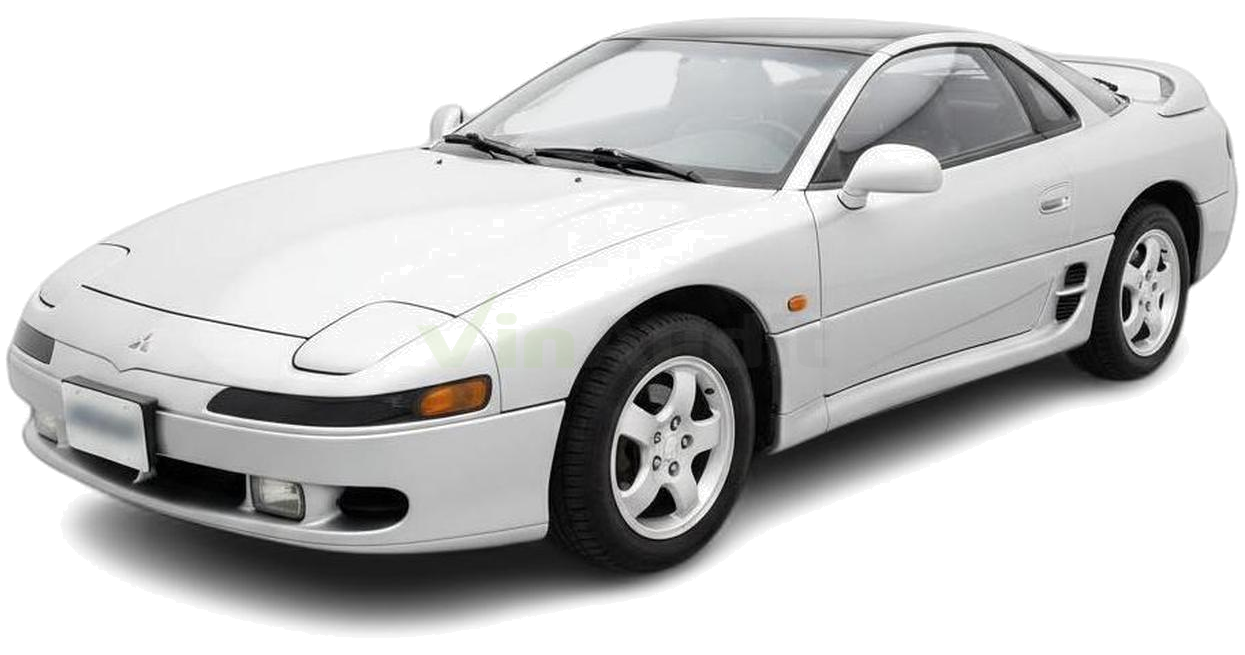
The Good
The 1999 Mitsubishi 3000GT offers a compelling blend of advantages. Emotionally, its bold, futuristic design and exhilarating VR-4 performance with advanced AWD and twin-turbo power are highly appealing. Practically, it provides a surprisingly comfortable ride for a sports coupe, and its distinctive styling ensures it stands out. While not the most efficient, it represents a unique performance value in the used market.
The Bad
The 1999 3000GT's advanced technology can be its biggest weakness. Watch out for complex active aerodynamics, electronic controlled suspension, and all-wheel-drive systems, which are expensive to repair when they fail. Other concerns include potential lifter tick, timing belt maintenance, heavy curb weight, and limited rear seat space. Parts availability for specialized components can also be a challenge.
1999 Mitsubishi 3000GT: Quick Overview
The 1999 Mitsubishi 3000GT offered a range of specifications across its trims:
- Engine Options:
- Base: 3.0-liter SOHC 24-valve V6.
- SL: 3.0-liter DOHC 24-valve V6 (naturally aspirated).
- VR-4: 3.0-liter DOHC 24-valve Twin-Turbocharged V6.
- Horsepower:
- Base: 161 hp.
- SL: 222 hp.
- VR-4: 320 hp.
- Fuel Economy (EPA estimated, Manual Transmission where applicable):
- Base (FWD): 18 MPG City / 24 MPG Highway.
- SL (FWD, often Automatic): Approximately 17 MPG City / 22 MPG Highway (manual very rare for 1999).
- VR-4 (AWD): 18 MPG City / 24 MPG Highway.
- 0-60 MPH Acceleration:
- Base: Approximately 8.5-9.0 seconds.
- SL: Approximately 7.0-7.5 seconds.
- VR-4: Approximately 4.8-5.5 seconds, making it a serious performer.
- Towing Capacity: Not officially rated or recommended for towing.
- Trim-Level Features:
- Base: Front-wheel drive, 5-speed manual or 4-speed automatic transmission, power windows/locks/mirrors, air conditioning, AM/FM/cassette stereo.
- SL: Adds to Base features with DOHC engine, often 4-speed automatic transmission, anti-lock brakes (ABS), automatic climate control, cruise control, leather seating surfaces, power driver's seat, premium Infinity sound system, fog lights.
- VR-4: The flagship model with All-Wheel Drive, 6-speed manual transmission, twin-turbo engine, active aerodynamics (retracting front air dam, active rear spoiler), Electronic Controlled Suspension (ECS) with Sport/Touring modes, All-Wheel Steering (AWS), larger performance brakes, full leather interior, premium Infinity CD stereo, and all features of the SL.
1999 Mitsubishi 3000GT Specifications
Vehicle Information
| Year | 1999 |
| Make | Mitsubishi |
| Model | 3000GT |
| Trim | - |
| Style | 4-Speed |
| Type | Hatchback |
| Category | Subcompact Car |
Manufacturing Details
| Made In | Japan |
| Manufacturing City | NAGOYA |
Dimensions
| Doors | 2-Door |
| Curb Weight | 3370 pounds |
| Gross Vehicle Weight Rating | - |
| Overall Height | 50.60 inches |
| Overall Length | 180.70 inches |
| Overall Width | 72.40 inches |
| Wheelbase Length | 97.20 inches |
| Standard Seating | 4 |
Engine & Performance
| Engine | 3L V6 |
| Engine Size | 3L |
| Engine Cylinders | 6 |
| Transmission | 4-Speed Automatic |
| Transmission Type | Automatic |
| Transmission Speeds | 4-Speed |
| Drivetrain | Front-Wheel Drive |
Additional Features
| Anti-Brake System | 4-Wheel ABS |
| Steering Type | Rack & Pinion |
Pricing
| Manufacturer Suggested Retail Price (MSRP) | $33,400 |
| Invoice Price | $29,394 |
| Delivery Charges | - |
Vehicle History Report
Specifications
History
Events
History Check
Check
Check
Check
Check
Listings
Recalls
Check
Analysis
What Problems Does the 1999 Mitsubishi 3000GT Have?
One of the most common issues across the DOHC engine variants is the infamous "lifter tick". This sound, originating from the hydraulic lash adjusters, is often an annoyance rather than a critical failure, though proper oil changes and sometimes updated parts can mitigate it.
For the high-performance VR-4 models, the very features that made it stand out—the active aerodynamics, Electronic Controlled Suspension (ECS), and All-Wheel Steering (AWS)—are frequently sources of expensive malfunctions. Actuator failures, wiring issues, and sensor problems can render these systems inoperable, with replacement parts often scarce or prohibitively expensive, leading many owners to disable or remove them.
Engine maintenance is critical, particularly the timing belt service, which must be performed diligently every 60,000 miles. Neglecting this crucial service can lead to catastrophic engine damage. Related components like the water pump and tensioners are typically replaced at the same time, adding to the cost.
VR-4 owners also commonly report issues with the transfer case, which can leak or fail, especially if subjected to hard driving without regular fluid changes. Power steering system leaks are also a common age-related problem.
Furthermore, general electrical gremlins can plague various components, including window motors, gauge cluster lights, and original stereo head units. Turbocharger reliability on the VR-4 depends heavily on prior maintenance; neglected oil changes or aggressive boost modifications without proper supporting modifications can lead to premature turbo failure. While not specific to 1999, recalls for the 3000GT platform over its lifespan have included issues like steering shaft corrosion or fuel hose routing, so checking service history for recall completions is wise. Overall, while the core mechanicals can be durable, the complexity of its advanced systems makes long-term ownership potentially costly.
How long will the 1999 Mitsubishi 3000GT last?
However, over time, several weaknesses become apparent. The advanced electronic systems, such as active aerodynamics, ECS, and AWS, are prone to failure due to age, leading to expensive repairs or system bypasses. Interior components like leather upholstery, dash plastics, and electronic displays can show wear and degradation. Rust can also become an issue in neglected areas or colder climates. Furthermore, the increasing scarcity of specific OEM parts can make repairs more challenging and costly as the vehicle ages.
What Technology & Safety Features are Included?
For the VR-4, the most prominent technological advancements included Active Aerodynamics, which featured a retracting front air dam and an active rear spoiler that adjusted based on vehicle speed to optimize downforce. The Electronic Controlled Suspension (ECS) allowed the driver to select between "Sport" and "Touring" modes, altering suspension damping for either stiffer handling or a more comfortable ride. All-Wheel Steering (AWS) subtly turned the rear wheels to enhance high-speed stability and low-speed maneuverability. Complementing these was the advanced All-Wheel Drive (AWD) system, providing superior traction and handling. Non-VR-4 trims were front-wheel drive.
Entertainment features across the range included AM/FM/cassette stereos, with higher trims like the SL and VR-4 often equipped with a premium Infinity sound system and a CD player. Automatic climate control was standard on SL and VR-4 models, adding to comfort.
Driver-assistance features were basic by today's standards, primarily consisting of cruise control available on SL and VR-4 trims.
In terms of safety, all 1999 3000GT models came standard with dual front airbags. Anti-lock brakes (ABS) were standard on the SL and VR-4, significantly improving braking performance and control. The vehicle's robust chassis contributed to its overall structural integrity. However, specific crash-test ratings from modern organizations like NHTSA or IIHS are generally not available for a limited-production sports coupe from this model year. Owners rely on the built-in safety features of the time and the vehicle's inherent design.
What Colors Options are Available?
1999 Mitsubishi 3000GT Prices and Market Value
Today, the used market prices for the 1999 3000GT are highly variable. Base and SL models can be found from $5,000 to $15,000, depending heavily on condition and mileage. The coveted VR-4 models, however, have seen a resurgence in value. Well-maintained examples typically range from $15,000 to $40,000, with exceptionally clean, low-mileage, and original VR-4s often fetching upward of $50,000 or even more, making them collectible. Factors like trim level (VR-4 being most desirable), comprehensive maintenance records, originality, and overall condition significantly impact resale value. Modifications, especially irreversible ones, can negatively affect value unless they are high-quality and widely sought after.
1999 Mitsubishi 3000GT Cost of Ownership
Maintenance is critical and expensive. The timing belt service alone is a significant expense every 60,000 miles. Repair costs are elevated due to the vehicle's complexity, specialized components (e.g., active aero, ECS, AWS on VR-4), and the increasing scarcity of parts. Finding mechanics knowledgeable about these older, intricate systems can also add to labor costs. Therefore, the 3000GT is far from an economical vehicle to own; it's a passion purchase that demands a healthy budget for upkeep.
1999 Mitsubishi 3000GT Fuel Efficiency
1999 Mitsubishi 3000GT Safety Rating
NHTSA
IIHS
1999 Mitsubishi 3000GT Recalls & Defects
Power Train:transfer Case (4-Wheel Drive)
Equipment:other:labels
1999 Mitsubishi 3000GT Warranty
Basic
Powertrain
Rust
1999 Mitsubishi 3000GT Insurance
reasonable repair costs.
How Does the 1999 Mitsubishi 3000GT Compare to Other Hatchback?
Compared to the revered Toyota Supra Twin Turbo (MkIV), the 3000GT VR-4 offered comparable acceleration but was generally heavier and less focused on outright track performance. The Supra's 2JZ engine had a legendary reputation for robustness and tunability, arguably surpassing the 3000GT's 6G72TT in raw potential and aftermarket support. The Mazda RX-7 (FD) offered a much lighter, more agile, and purer sports car experience with its unique rotary engine, but it came with its own well-known reliability and maintenance challenges that the 3000GT avoided.
Against American muscle like the Chevrolet Corvette C5, the 3000GT VR-4 offered a different philosophy. The C5 provided simpler, raw V8 power, superior reliability, and lower long-term maintenance costs due to its less complex architecture and readily available parts.
In terms of features, the 3000GT VR-4 was arguably the most technologically packed of the Japanese rivals, while the C5 was more about pure, uncomplicated performance. Reliability-wise, the Supra TT often takes the crown for engine longevity, while the RX-7 demands specialist care. The 3000GT and 300ZX are somewhere in between – robust if maintained, but expensive when complex systems fail.
For pricing, while new, they were all premium sports cars. In the current used market, the Supra TT and RX-7 FD have seen significant appreciation, often commanding much higher prices than comparable 3000GT VR-4s or 300ZX TTs, which still offer excellent performance value.
As alternatives, a well-maintained Nissan 300ZX Twin Turbo offers a very similar experience with perhaps a slightly larger aftermarket. If reliability and raw V8 power are priorities, a C5 Corvette is a fantastic, more economical choice. For something more exotic but still a GT, a Porsche 944 S2 or 968 could be considered, though with different performance metrics.
Final Verdict: Is the 1999 Mitsubishi 3000GT a Good Hatchback?
Is it worth buying? Absolutely, but only under certain conditions. As a used vehicle, it's crucial to seek out examples with comprehensive maintenance records, ideally from an owner who understood its specific needs. The VR-4 is the most desirable for its performance and collectibility, but it demands the largest budget for potential repairs due to its complex active systems. An SL model offers a great balance of style and power with fewer complex systems to fail, making it a potentially more reliable and affordable entry point. It is not suitable as an economical daily driver or for buyers who aren't prepared for potentially high maintenance and repair costs. For the right enthusiast, however, it remains a rewarding and unique ownership experience.

Jovan
Jovan specializes in interpreting vehicle records and making sense of VIN data. With over 10 years of experience in the automotive data industry, his work ensures that every report is clear, accurate, and useful for car buyers.