
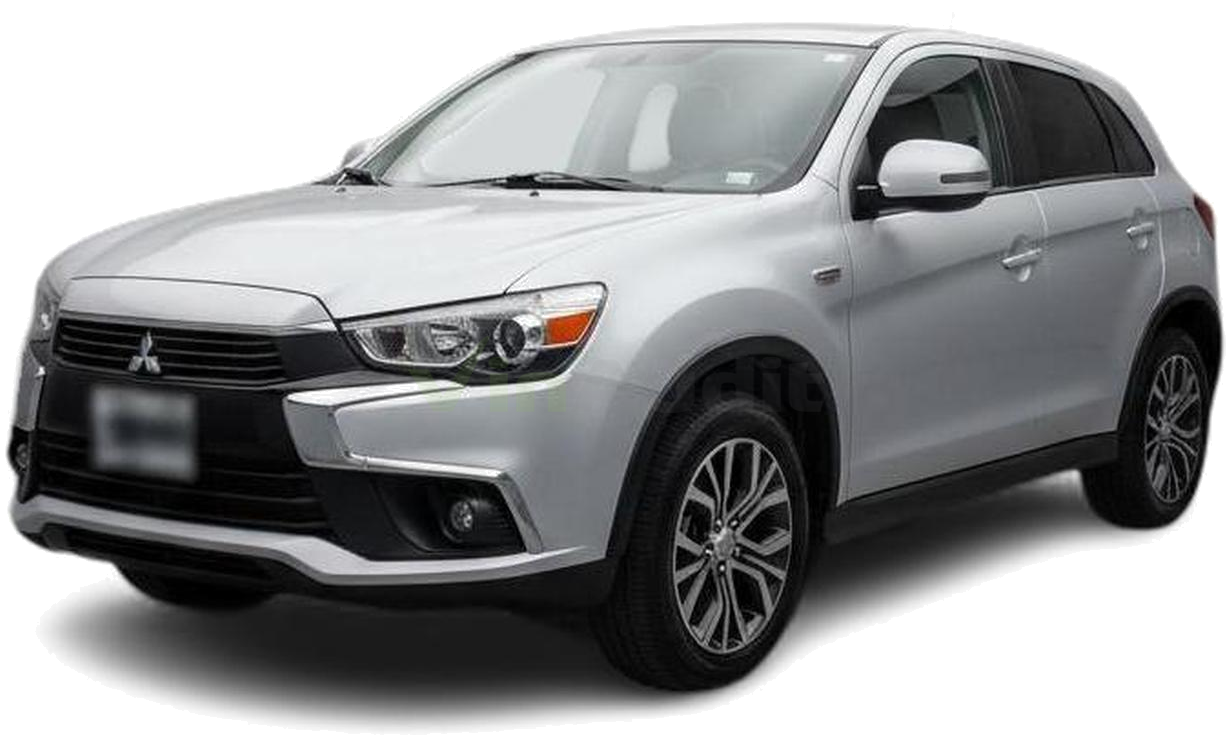
The 2017 Mitsubishi Outlander Sport is a compact crossover SUV, a smaller, sportier sibling to the larger Outlander. Part of its first generation (launched globally in 2011), it typically came in ES, SE, SEL, and GT trims, with new pricing ranging from approximately $19,795 to $27,695. It stands out for its affordability, maneuverable size, and available all-wheel drive (AWD), making it a popular choice for budget-conscious urban drivers.
The Good
Key advantages include its excellent value proposition and commendable fuel efficiency, appealing to practical buyers seeking economy. Its compact, sporty design and available AWD satisfy emotional desires for a versatile and capable vehicle. Generally reliable, it offers decent comfort for its class, making it a sensible daily driver.
The Bad
Known weaknesses include its somewhat underpowered base engine and a noisy continuously variable transmission (CVT), which can detract from driving refinement. The interior materials can feel less premium than rivals, and cargo space is limited. The ride can also be on the firmer side, especially over rougher pavement.
2017 Mitsubishi Outlander Sport: Quick Overview
- Engine Options:
- 2.0-liter MIVEC 4-cylinder
- 2.4-liter MIVEC 4-cylinder - Horsepower:
- 2.0L: 148 hp @ 6,000 rpm
- 2.4L: 168 hp @ 6,000 rpm - Fuel Economy (EPA estimated MPG city/highway):
- 2.0L FWD (5-speed manual): 23/29 MPG
- 2.0L FWD (CVT): 24/30 MPG
- 2.0L AWD (CVT): 23/29 MPG
- 2.4L FWD (CVT): 23/28 MPG
- 2.4L AWD (CVT): 23/28 MPG - 0-60 Times: Typically ranges from 9 to 10 seconds, depending on engine and drivetrain.
- Towing Capacity: Not officially rated for towing in most markets; very limited capacity (e.g., 1,500 lbs) if equipped for it, but generally not advertised or recommended.
- Trim-Level Features:
- ES: (Base trim) 2.0L engine, 18-inch alloy wheels, LED taillights, heated power side mirrors, automatic climate control, tilt-and-telescoping steering wheel, 4-speaker sound system, USB port, Bluetooth hands-free phone system, FUSE Voice Link system.
- SE: (Adds to ES) 2.0L (or optional 2.4L engine), fog lights, power-folding side mirrors, push-button start, heated front seats, 7-inch touchscreen display, rearview camera, Apple CarPlay® and Android Auto™ compatibility, 6-speaker audio system, HD Radio®.
- SEL: (Adds to SE) 2.4L engine standard, leather seating surfaces, power driver's seat, automatic headlights, rain-sensing wipers, roof rails.
- GT: (Adds to SEL) 2.4L engine standard, HID headlights, panoramic glass roof, power driver's seat, Black exterior trim accents.
2017 Mitsubishi Outlander Sport Specifications
Vehicle Information
| Year | 2017 |
| Make | Mitsubishi |
| Model | Outlander Sport |
| Trim | - |
| Style | - |
| Type | Sport Utility Vehicle |
| Category | Small Sport Utility Vehicle |
Manufacturing Details
| Made In | Japan |
| Manufacturing City | MIZUSHIMA |
Dimensions
| Doors | 4-Door |
| Curb Weight | - |
| Gross Vehicle Weight Rating | - |
| Overall Height | - |
| Overall Length | - |
| Overall Width | - |
| Wheelbase Length | - |
| Standard Seating | 5 |
Engine & Performance
| Engine | 2.4 DOHC MIVEC |
| Engine Size | 2.4L |
| Engine Cylinders | 4 |
| Transmission | continuously Variable |
| Transmission Type | Automatic |
| Transmission Speeds | Continuously Variable |
| Drivetrain | Four-Wheel Drive |
Additional Features
| Anti-Brake System | Standard |
| Steering Type | - |
Pricing
| Manufacturer Suggested Retail Price (MSRP) | $24,195 |
| Invoice Price | $23,389 |
| Delivery Charges | $940 |
Vehicle History Report
Vehicle
Specifications
Specifications
Ownership
History
History
All History
Events
Events
NMVTIS Title
History Check
History Check
Salvage/Rebuilt
Check
Check
Accident
Check
Check
Theft
Check
Check
Open Lien
Check
Check
Past Sale
Listings
Listings
Safety
Recalls
Recalls
Odometer
Check
Check
Market Price
Analysis
Analysis
What Problems Does the 2017 Mitsubishi Outlander Sport Have?
The 2017 Mitsubishi Outlander Sport generally holds a decent reliability record, but certain areas warrant attention. A frequently reported concern revolves around the continuously variable transmission (CVT). Owners sometimes note excessive noise, rough operation, or, at higher mileages (especially above 100,000 miles), potential for failure. Regular and timely CVT fluid changes are crucial for longevity. Suspension components, such as shocks and struts, may exhibit accelerated wear, leading to a diminished ride quality or rattling noises over time. Minor electrical issues, including sensor malfunctions, have been reported but are not widespread.
For the 2017 model year, several recalls were issued by NHTSA. Recall 17V369000 addressed potential corrosion of the rear lower control arm bolts, primarily affecting vehicles in "salt belt" states where road salt is used, which could lead to detachment. Recall 17V609000 concerned the drive belt auto tensioner bolt potentially loosening, increasing the risk of an engine stall. Additionally, recall 18V644000, affecting many Mitsubishi models, addressed a software issue that could prevent the back-up camera image from displaying, reducing rear visibility. Long-term reliability is generally positive for the engine, but proper maintenance, especially regarding the CVT, is paramount to avoiding costly repairs. Interior rattles can develop, and rust prevention is important in harsher climates.
How long will the 2017 Mitsubishi Outlander Sport last?
With diligent maintenance, a 2017 Mitsubishi Outlander Sport can realistically achieve an average of 150,000 to 200,000 miles, translating to 10 to 15 years of service. Its MIVEC engines are generally robust and durable, often outlasting other components. Long-term durability is a strong point for the powertrain itself, provided the critical CVT is well-maintained with regular fluid changes; otherwise, it becomes the primary long-term weakness. Beyond the CVT, common long-term issues include wear of suspension components like struts and bushings, and the potential for rust in severe climates, especially around the rear control arms as highlighted by recalls. Interior plastics may also show signs of age and minor rattles over time, but the overall structure tends to hold up well.
What Technology & Safety Features are Included?
The 2017 Mitsubishi Outlander Sport offered a decent array of built-in tech and entertainment features for its price point. Base ES models included a 4-speaker audio system, Bluetooth® hands-free phone system, a USB port, and Mitsubishi's FUSE Voice Link system. Stepping up to SE and higher trims significantly upgraded the experience with a 7-inch touchscreen audio display, rearview camera, and notably, Apple CarPlay® and Android Auto™ compatibility, which was a strong selling point for 2017. These higher trims also offered a 6-speaker audio system, HD Radio®, and SiriusXM® satellite radio capability. An optional premium Rockford Fosgate® audio system was available on select trims.
Driver-assistance features were quite limited, reflecting its budget-friendly nature. The primary feature was the standard rearview camera on SE and above trims. Advanced driver-assistance systems like adaptive cruise control, blind-spot monitoring, or forward collision mitigation were not offered.
Standard safety features included a comprehensive airbag system with front, front-seat-mounted side, side-curtain, and a driver's knee airbag. Other standard safety tech included Active Stability Control (ASC), Traction Control Logic (TCL), Anti-lock Braking System (ABS) with Electronic Brake-force Distribution (EBD), and Brake Assist. The 2017 Outlander Sport achieved generally good crash-test ratings:
Driver-assistance features were quite limited, reflecting its budget-friendly nature. The primary feature was the standard rearview camera on SE and above trims. Advanced driver-assistance systems like adaptive cruise control, blind-spot monitoring, or forward collision mitigation were not offered.
Standard safety features included a comprehensive airbag system with front, front-seat-mounted side, side-curtain, and a driver's knee airbag. Other standard safety tech included Active Stability Control (ASC), Traction Control Logic (TCL), Anti-lock Braking System (ABS) with Electronic Brake-force Distribution (EBD), and Brake Assist. The 2017 Outlander Sport achieved generally good crash-test ratings:
- NHTSA (National Highway Traffic Safety Administration):
- Overall Safety Rating: 4 out of 5 Stars
- Frontal Crash: 4 Stars
- Side Crash: 5 Stars
- Rollover: 4 Stars - IIHS (Insurance Institute for Highway Safety):
- Moderate Overlap Front: Good
- Side: Good
- Roof Strength: Good
- Head Restraints & Seats: Good
- Small Overlap Front (driver's side): Acceptable
- Small Overlap Front (passenger's side): Marginal
- Headlights: Poor
- Front Crash Prevention: Not available
What Colors Options are Available?
2017 Mitsubishi Outlander Sport Prices and Market Value
When new in 2017, the Mitsubishi Outlander Sport had an MSRP ranging from approximately $19,795 for the base ES FWD model up to around $27,695 for the top-tier GT AWC trim. Fast forward to the current used market (late 2023/early 2024), prices for a 2017 model typically fall between $8,000 and $14,000, varying significantly by condition, mileage, and trim level. Mitsubishi vehicles, including the Outlander Sport, generally experience higher depreciation rates compared to rivals from brands like Honda or Toyota. This depreciation makes it an attractive used purchase but means less resale value for the original owner. Factors affecting its resale value include the availability of AWD (which commands higher prices), overall vehicle condition, maintenance history, and local market demand. Concerns about the CVT's long-term reliability can also slightly depress used values.
2017 Mitsubishi Outlander Sport Cost of Ownership
The 2017 Mitsubishi Outlander Sport is generally an economical vehicle to own. Insurance costs are typically lower due to its compact SUV classification, modest performance, and lower new vehicle price. Fuel costs are also favorable, thanks to its respectable EPA fuel economy ratings. Routine maintenance, such as oil changes and tire rotations, is usually inexpensive, with parts being readily available and competitively priced. Repair costs for common issues are also reasonable. However, a major CVT transmission repair or replacement, while not guaranteed, can be a significant expense if it occurs at higher mileage. Overall, for most owners, the Outlander Sport offers a budget-friendly long-term ownership experience.
2017 Mitsubishi Outlander Sport Fuel Efficiency
Fuel Type
Gasoline
Fuel Capacity
24 gallons
City Mileage
22 miles/gallon
Highway Mileage
27 miles/gallon
2017 Mitsubishi Outlander Sport Safety Rating
NHTSA
2017 Mitsubishi Outlander Sport Insurance
Insurance for a 2017 Mitsubishi Outlander Sport is moderately priced, reflecting its status as a Sport Utility Vehicle with strong safety ratings and
reasonable repair costs.
How Does the 2017 Mitsubishi Outlander Sport Compare to Other Sport Utility Vehicle?
When stacking the 2017 Mitsubishi Outlander Sport against key rivals like the Honda HR-V, Mazda CX-3, Subaru Crosstrek, and Nissan Rogue Sport, its positioning becomes clear. In terms of performance, the Outlander Sport generally lags; its engines, even the 2.4L, feel less refined and powerful than the HR-V's or CX-3's, and its CVT is often criticized for noise and uninspired response. The Mazda CX-3, in particular, offers a much more engaging and athletic driving experience. For features, the Outlander Sport was competitive, especially with the inclusion of Apple CarPlay® and Android Auto™ on higher trims, but it lacked the advanced driver-assistance systems found in some rivals, like Subaru's EyeSight®.
Reliability is a mixed bag. The Outlander Sport's engines are quite robust, but the long-term durability of the CVT is a significant concern for many compared to the more consistently reliable powertrains of Honda, Subaru, and Mazda. Nissan's CVT-equipped Rogue Sport shares similar reliability perceptions. The Outlander Sport's strongest suit is its price. Both new and used, it was often the most affordable option in its segment, offering a compelling value proposition.
Alternatives:
Reliability is a mixed bag. The Outlander Sport's engines are quite robust, but the long-term durability of the CVT is a significant concern for many compared to the more consistently reliable powertrains of Honda, Subaru, and Mazda. Nissan's CVT-equipped Rogue Sport shares similar reliability perceptions. The Outlander Sport's strongest suit is its price. Both new and used, it was often the most affordable option in its segment, offering a compelling value proposition.
Alternatives:
- Better Alternatives (if budget allows): The Honda HR-V offers more cargo space, a more refined powertrain, and higher resale value. The Subaru Crosstrek provides superior standard AWD capability, better ground clearance, and a strong reliability reputation. The Mazda CX-3 excels in driving dynamics, interior quality, and overall refinement.
- Similar Alternative (budget-focused): The Nissan Rogue Sport presents similar compromises in performance and refinement but can also be found at a competitive price point.
Final Verdict: Is the 2017 Mitsubishi Outlander Sport a Good Sport Utility Vehicle?
The 2017 Mitsubishi Outlander Sport is ideal for budget-conscious buyers, first-time SUV owners, or those needing a compact, maneuverable crossover for urban commuting with the option of AWD for light adventuring. It's a practical choice for individuals or small families prioritizing affordability over cutting-edge performance or premium interior materials.
Is it worth buying? Yes, but primarily as a used vehicle. Its significant depreciation makes it an excellent value on the secondary market. For optimal experience, aim for an SE or SEL trim, which offer the more capable 2.4L engine and desirable tech like Apple CarPlay®/Android Auto™. A thorough pre-purchase inspection, focusing on the CVT's health and documented maintenance records, is absolutely crucial. If found in good condition and with realistic expectations about its capabilities, the 2017 Outlander Sport can be a dependable and economical choice for a secondary vehicle or a cost-effective daily driver.