
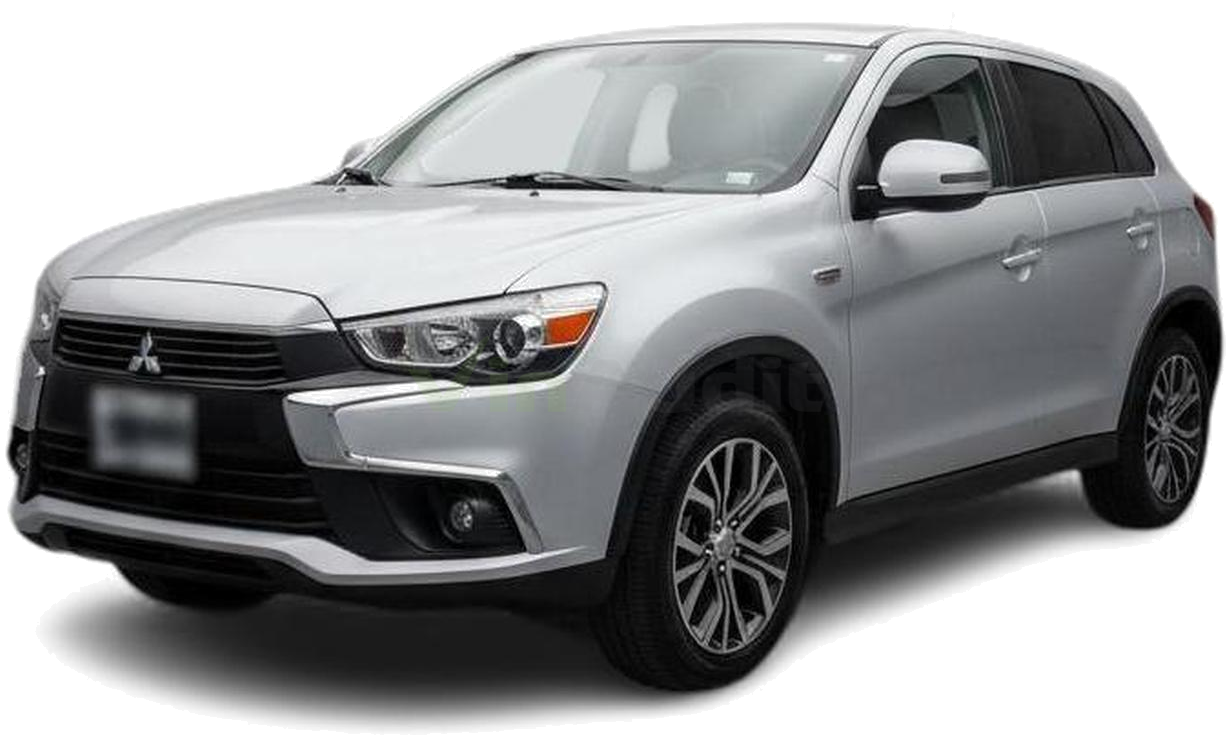
The Good
Key advantages include its excellent value proposition and commendable fuel efficiency, appealing to practical buyers seeking economy. Its compact, sporty design and available AWD satisfy emotional desires for a versatile and capable vehicle. Generally reliable, it offers decent comfort for its class, making it a sensible daily driver.
The Bad
Known weaknesses include its somewhat underpowered base engine and a noisy continuously variable transmission (CVT), which can detract from driving refinement. The interior materials can feel less premium than rivals, and cargo space is limited. The ride can also be on the firmer side, especially over rougher pavement.
2017 Mitsubishi Outlander Sport: Quick Overview
- Engine Options:
- 2.0-liter MIVEC 4-cylinder
- 2.4-liter MIVEC 4-cylinder - Horsepower:
- 2.0L: 148 hp @ 6,000 rpm
- 2.4L: 168 hp @ 6,000 rpm - Fuel Economy (EPA estimated MPG city/highway):
- 2.0L FWD (5-speed manual): 23/29 MPG
- 2.0L FWD (CVT): 24/30 MPG
- 2.0L AWD (CVT): 23/29 MPG
- 2.4L FWD (CVT): 23/28 MPG
- 2.4L AWD (CVT): 23/28 MPG - 0-60 Times: Typically ranges from 9 to 10 seconds, depending on engine and drivetrain.
- Towing Capacity: Not officially rated for towing in most markets; very limited capacity (e.g., 1,500 lbs) if equipped for it, but generally not advertised or recommended.
- Trim-Level Features:
- ES: (Base trim) 2.0L engine, 18-inch alloy wheels, LED taillights, heated power side mirrors, automatic climate control, tilt-and-telescoping steering wheel, 4-speaker sound system, USB port, Bluetooth hands-free phone system, FUSE Voice Link system.
- SE: (Adds to ES) 2.0L (or optional 2.4L engine), fog lights, power-folding side mirrors, push-button start, heated front seats, 7-inch touchscreen display, rearview camera, Apple CarPlay® and Android Auto™ compatibility, 6-speaker audio system, HD Radio®.
- SEL: (Adds to SE) 2.4L engine standard, leather seating surfaces, power driver's seat, automatic headlights, rain-sensing wipers, roof rails.
- GT: (Adds to SEL) 2.4L engine standard, HID headlights, panoramic glass roof, power driver's seat, Black exterior trim accents.
2017 Mitsubishi Outlander Sport Specifications
Vehicle Information
| Year | 2017 |
| Make | Mitsubishi |
| Model | Outlander Sport |
| Trim | - |
| Style | ES SUV FWD CVT 2.0L I4 |
| Type | Sport Utility Vehicle |
| Category | passenger |
Manufacturing Details
| Made In | Japan |
| Manufacturing City | OKAZAKI |
Dimensions
| Doors | 4-Door |
| Curb Weight | 3190 pounds |
| Gross Vehicle Weight Rating | - |
| Overall Height | 64.2 inches |
| Overall Length | 171.5 inches |
| Overall Width | 71.3 inches |
| Wheelbase Length | 105.1 inches |
| Standard Seating | 5 |
Engine & Performance
| Engine | 2L I4 |
| Engine Size | 2L |
| Engine Cylinders | 4 |
| Transmission | Continuously Variable Transmission |
| Transmission Type | CVT |
| Transmission Speeds | 1-Speed |
| Drivetrain | Front-Wheel Drive |
Additional Features
| Anti-Brake System | 4-Wheel ABS |
| Steering Type | Rack & Pinion |
Pricing
| Manufacturer Suggested Retail Price (MSRP) | $20,595 |
| Invoice Price | $19,500 |
| Delivery Charges | $895 |
Vehicle History Report
Specifications
History
Events
History Check
Check
Check
Check
Check
Listings
Recalls
Check
Analysis
What Problems Does the 2017 Mitsubishi Outlander Sport Have?
For the 2017 model year, several recalls were issued by NHTSA. Recall 17V369000 addressed potential corrosion of the rear lower control arm bolts, primarily affecting vehicles in "salt belt" states where road salt is used, which could lead to detachment. Recall 17V609000 concerned the drive belt auto tensioner bolt potentially loosening, increasing the risk of an engine stall. Additionally, recall 18V644000, affecting many Mitsubishi models, addressed a software issue that could prevent the back-up camera image from displaying, reducing rear visibility. Long-term reliability is generally positive for the engine, but proper maintenance, especially regarding the CVT, is paramount to avoiding costly repairs. Interior rattles can develop, and rust prevention is important in harsher climates.
How long will the 2017 Mitsubishi Outlander Sport last?
What Technology & Safety Features are Included?
Driver-assistance features were quite limited, reflecting its budget-friendly nature. The primary feature was the standard rearview camera on SE and above trims. Advanced driver-assistance systems like adaptive cruise control, blind-spot monitoring, or forward collision mitigation were not offered.
Standard safety features included a comprehensive airbag system with front, front-seat-mounted side, side-curtain, and a driver's knee airbag. Other standard safety tech included Active Stability Control (ASC), Traction Control Logic (TCL), Anti-lock Braking System (ABS) with Electronic Brake-force Distribution (EBD), and Brake Assist. The 2017 Outlander Sport achieved generally good crash-test ratings:
- NHTSA (National Highway Traffic Safety Administration):
- Overall Safety Rating: 4 out of 5 Stars
- Frontal Crash: 4 Stars
- Side Crash: 5 Stars
- Rollover: 4 Stars - IIHS (Insurance Institute for Highway Safety):
- Moderate Overlap Front: Good
- Side: Good
- Roof Strength: Good
- Head Restraints & Seats: Good
- Small Overlap Front (driver's side): Acceptable
- Small Overlap Front (passenger's side): Marginal
- Headlights: Poor
- Front Crash Prevention: Not available
What Colors Options are Available?
2017 Mitsubishi Outlander Sport Prices and Market Value
2017 Mitsubishi Outlander Sport Cost of Ownership
2017 Mitsubishi Outlander Sport Fuel Efficiency
2017 Mitsubishi Outlander Sport Warranty
Basic
Powertrain
Rust
2017 Mitsubishi Outlander Sport Insurance
reasonable repair costs.
How Does the 2017 Mitsubishi Outlander Sport Compare to Other Sport Utility Vehicle?
Reliability is a mixed bag. The Outlander Sport's engines are quite robust, but the long-term durability of the CVT is a significant concern for many compared to the more consistently reliable powertrains of Honda, Subaru, and Mazda. Nissan's CVT-equipped Rogue Sport shares similar reliability perceptions. The Outlander Sport's strongest suit is its price. Both new and used, it was often the most affordable option in its segment, offering a compelling value proposition.
Alternatives:
- Better Alternatives (if budget allows): The Honda HR-V offers more cargo space, a more refined powertrain, and higher resale value. The Subaru Crosstrek provides superior standard AWD capability, better ground clearance, and a strong reliability reputation. The Mazda CX-3 excels in driving dynamics, interior quality, and overall refinement.
- Similar Alternative (budget-focused): The Nissan Rogue Sport presents similar compromises in performance and refinement but can also be found at a competitive price point.
Final Verdict: Is the 2017 Mitsubishi Outlander Sport a Good Sport Utility Vehicle?
Is it worth buying? Yes, but primarily as a used vehicle. Its significant depreciation makes it an excellent value on the secondary market. For optimal experience, aim for an SE or SEL trim, which offer the more capable 2.4L engine and desirable tech like Apple CarPlay®/Android Auto™. A thorough pre-purchase inspection, focusing on the CVT's health and documented maintenance records, is absolutely crucial. If found in good condition and with realistic expectations about its capabilities, the 2017 Outlander Sport can be a dependable and economical choice for a secondary vehicle or a cost-effective daily driver.

Jovan
Jovan specializes in interpreting vehicle records and making sense of VIN data. With over 10 years of experience in the automotive data industry, his work ensures that every report is clear, accurate, and useful for car buyers.