
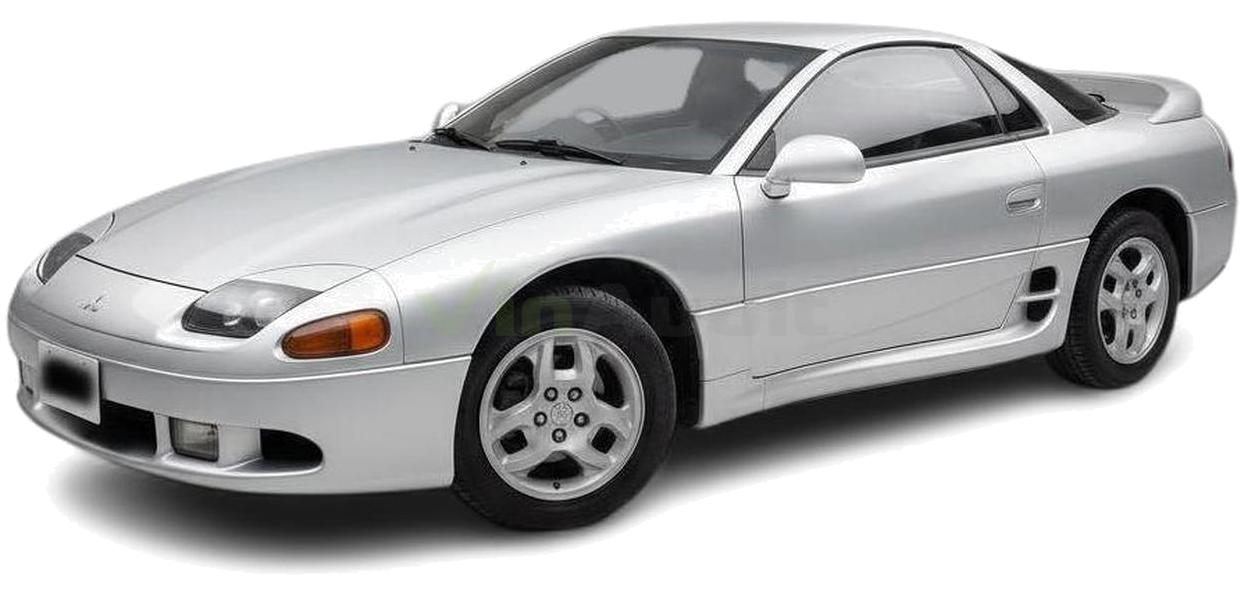
The 1998 Mitsubishi 3000GT, also known as the GTO in Japan, is a sports car produced from 1990 to 2000. This striking coupe, known for its advanced technology and aggressive styling, featured key trims like the SL, VR-4, and Spyder. Its unique pop-up headlights and available all-wheel-drive and twin-turbocharged V6 engine made it a standout in its era, appealing to enthusiasts seeking performance and a distinctive look. Original pricing varied significantly by trim, but generally ranged from the mid-$30,000s to over $50,000.
The Good
The 1998 3000GT boasts exhilarating performance, especially in the VR-4 trim, with its potent twin-turbo V6 and AWD system. Its sleek, aerodynamic design appeals to emotional desires for a sports car, while its surprisingly comfortable interior and decent practicality for a coupe offer a balanced ownership experience. While not a fuel-sipper, its performance for the price offers good value.
The Bad
Owners of the 1998 3000GT should be aware of potential maintenance complexities, particularly with the twin-turbocharged engines. Corrosion can be an issue in certain climates, and the car's age means wear and tear on various components is expected. Electrical gremlins can also surface in older vehicles.
1998 Mitsubishi 3000GT: Quick Overview
- Engine Options:
- 3.0L V6 SOHC (non-turbo)
- 3.0L V6 DOHC Twin-Turbocharged
- Horsepower:
- 218 hp (SOHC)
- 320 hp (DOHC Twin-Turbocharged)
- Fuel Economy (EPA Estimated):
- SOHC: Approximately 18 MPG city / 24 MPG highway
- Twin-Turbo: Approximately 16 MPG city / 22 MPG highway
- 0-60 Times (Approximate):
- SOHC: Around 7.5 seconds
- Twin-Turbo: Around 5.0 - 5.5 seconds
- Towing Capacity: Not applicable for this vehicle.
- Trim-Level Features:
- SL (Standard Luxury):
- 3.0L V6 SOHC engine
- Front-wheel drive
- Automatic transmission (standard, manual optional)
- Leather-trimmed seats
- Power accessories (windows, locks, mirrors)
- Cruise control
- Air conditioning
- Optional: Sunroof
- VR-4 (Visceral Racing-4):
- 3.0L V6 DOHC Twin-Turbocharged engine
- All-wheel drive (AWD)
- Active Aero system (retractable front air dam and rear wing)
- Four-wheel steering (4WS)
- Sport-tuned suspension
- Limited-slip differential
- Bigger brakes
- Premium audio system
- Typically equipped with manual transmission
- Optional: Leather interior, sunroof
- Spyder (Convertible):
- Available in SL and VR-4 versions
- Retractable hardtop roof
- Shared mechanicals with their coupe counterparts
- Enhanced chassis bracing due to convertible nature
- SL (Standard Luxury):
1998 Mitsubishi 3000GT Specifications
Vehicle Information
| Year | 1998 |
| Make | Mitsubishi |
| Model | 3000GT |
| Trim | - |
| Style | 4-Speed Automatic |
| Type | Hatchback |
| Category | Subcompact Car |
Manufacturing Details
| Made In | Japan |
| Manufacturing City | NAGOYA |
Dimensions
| Doors | 2-Door |
| Curb Weight | 3351 pounds |
| Gross Vehicle Weight Rating | 4057 pounds |
| Overall Height | 49.10 inches |
| Overall Length | 180.30 inches |
| Overall Width | 72.40 inches |
| Wheelbase Length | 97.20 inches |
| Standard Seating | 4 |
Engine & Performance
| Engine | 3.0-L V-6 DOHC 24V |
| Engine Size | 3L |
| Engine Cylinders | 6 |
| Transmission | 4-Speed Automatic |
| Transmission Type | Automatic |
| Transmission Speeds | 4-Speed |
| Drivetrain | Front-Wheel Drive |
Additional Features
| Anti-Brake System | Non-ABS 4-Wheel ABS |
| Steering Type | Rack & Pinion |
Pricing
| Manufacturer Suggested Retail Price (MSRP) | $35,190 |
| Invoice Price | $28,848 |
| Delivery Charges | - |
Vehicle History Report
Vehicle
Specifications
Specifications
Ownership
History
History
All History
Events
Events
NMVTIS Title
History Check
History Check
Salvage/Rebuilt
Check
Check
Accident
Check
Check
Theft
Check
Check
Open Lien
Check
Check
Past Sale
Listings
Listings
Safety
Recalls
Recalls
Odometer
Check
Check
Market Price
Analysis
Analysis
What Problems Does the 1998 Mitsubishi 3000GT Have?
The 1998 Mitsubishi 3000GT, while a capable machine, is not without its potential issues, especially given its age. Commonly reported problems often revolve around the twin-turbo system in the VR-4 models, which can be complex and expensive to repair. Issues such as failing turbochargers, worn wastegate actuators, and boost leaks are not uncommon. The active aero system, while innovative, can also become a source of headaches if not maintained, with motors and actuators failing.
Clutch failures can occur, particularly if the car has been driven hard. For the automatic transmissions, occasional rough shifting can be a sign of impending problems. The 4-wheel steering (4WS) system, while offering excellent maneuverability, can develop issues with sensors or the hydraulic pump.
Electrical gremlins are a perennial concern for older vehicles, and the 3000GT is no exception. This can manifest as faulty power windows, erratic gauge readings, or issues with the climate control system. Corrosion is another significant concern, especially on the undercarriage, around the wheel wells, and on brake lines. Thorough inspections are crucial in rust-prone areas.
While specific recalls for the 1998 model year are not extensively documented as major safety concerns, routine maintenance and addressing minor issues proactively are key to long-term reliability. Given the complexity of the VR-4 models, finding a well-maintained example is paramount. The non-turbo SOHC models tend to be more reliable due to their simpler mechanicals, but still require diligent care. Long-term reliability heavily depends on the previous owner's maintenance habits and the car's history.
Clutch failures can occur, particularly if the car has been driven hard. For the automatic transmissions, occasional rough shifting can be a sign of impending problems. The 4-wheel steering (4WS) system, while offering excellent maneuverability, can develop issues with sensors or the hydraulic pump.
Electrical gremlins are a perennial concern for older vehicles, and the 3000GT is no exception. This can manifest as faulty power windows, erratic gauge readings, or issues with the climate control system. Corrosion is another significant concern, especially on the undercarriage, around the wheel wells, and on brake lines. Thorough inspections are crucial in rust-prone areas.
While specific recalls for the 1998 model year are not extensively documented as major safety concerns, routine maintenance and addressing minor issues proactively are key to long-term reliability. Given the complexity of the VR-4 models, finding a well-maintained example is paramount. The non-turbo SOHC models tend to be more reliable due to their simpler mechanicals, but still require diligent care. Long-term reliability heavily depends on the previous owner's maintenance habits and the car's history.
How long will the 1998 Mitsubishi 3000GT last?
Based on owner data and typical maintenance patterns, a 1998 Mitsubishi 3000GT can reasonably be expected to last for 150,000 to 200,000 miles or more, provided it receives consistent and diligent maintenance. The naturally aspirated SOHC models tend to exhibit better long-term durability due to their simpler powertrain. However, the twin-turbocharged VR-4 models, while offering superior performance, can be more susceptible to issues related to the complex turbo system and active aerodynamics. Neglect in maintenance, especially with fluid changes and timing belt replacements, can significantly shorten the lifespan of these vehicles. Regular servicing, addressing minor issues promptly, and driving the car gently are crucial for maximizing its longevity and avoiding costly repairs over time.
What Technology & Safety Features are Included?
The 1998 Mitsubishi 3000GT offered a respectable array of technology and safety features for its time, aiming to blend performance with modern convenience. Standard on most trims were power windows, power locks, and power mirrors, along with cruise control and air conditioning. The entertainment system typically included an AM/FM stereo with a cassette player and CD player, often with multiple speakers for a decent audio experience.
Driver-assistance features were relatively limited by today's standards, but the VR-4 models stood out with their advanced Active Aero system, which automatically adjusted the front splitter and rear wing for optimal downforce at higher speeds, and the innovative four-wheel steering (4WS) system, which enhanced handling and maneuverability.
Safety features included anti-lock brakes (ABS) on all wheels and dual front airbags. For the VR-4 models, the sophisticated all-wheel-drive system also contributed to enhanced traction and stability. Optional features could include a premium sound system, leather upholstery, and a sunroof.
Crash-test ratings for the 1998 Mitsubishi 3000GT are not readily available from modern organizations like the IIHS or NHTSA in detailed formats comparable to contemporary vehicles. However, the car was designed with a robust structure for its era. It's important to note that the primary safety technology available was mechanical and passive, rather than active driver-assistance systems common today. For current owners, ensuring the functional integrity of the airbags and ABS is crucial.
Driver-assistance features were relatively limited by today's standards, but the VR-4 models stood out with their advanced Active Aero system, which automatically adjusted the front splitter and rear wing for optimal downforce at higher speeds, and the innovative four-wheel steering (4WS) system, which enhanced handling and maneuverability.
Safety features included anti-lock brakes (ABS) on all wheels and dual front airbags. For the VR-4 models, the sophisticated all-wheel-drive system also contributed to enhanced traction and stability. Optional features could include a premium sound system, leather upholstery, and a sunroof.
Crash-test ratings for the 1998 Mitsubishi 3000GT are not readily available from modern organizations like the IIHS or NHTSA in detailed formats comparable to contemporary vehicles. However, the car was designed with a robust structure for its era. It's important to note that the primary safety technology available was mechanical and passive, rather than active driver-assistance systems common today. For current owners, ensuring the functional integrity of the airbags and ABS is crucial.
What Colors Options are Available?
1998 Mitsubishi 3000GT Prices and Market Value
When new, the 1998 Mitsubishi 3000GT had a starting price around $35,000 for the base SL model, with the high-performance VR-4 variant commanding prices well over $45,000, and the Spyder models being even more expensive. The 3000GT has experienced significant depreciation over the years, as is typical for performance cars.
Currently, used market prices for a 1998 3000GT can range from as low as $4,000-$7,000 for models in fair condition with higher mileage, to $10,000-$20,000 or more for exceptionally well-maintained, low-mileage VR-4 or Spyder models. Factors affecting resale value include the trim level (VR-4 commands a premium), overall condition, maintenance history, mileage, and originality. Originality and a clean title are paramount for higher valuations.
1998 Mitsubishi 3000GT Cost of Ownership
Owning a 1998 Mitsubishi 3000GT can be moderately to significantly costly, depending on the specific model and condition. Insurance costs can be higher than average for a sports car, especially for the VR-4. Fuel consumption is also a factor, with the twin-turbo V6 being thirsty. Maintenance, especially for the VR-4, requires specialized knowledge and can be expensive due to the complexity of its systems. Repair costs can be substantial, particularly for engine components, turbochargers, and the active aero system. While not the most economical to own, its unique driving experience and performance can be worth the investment for enthusiasts who are prepared for the upkeep. Finding a well-maintained example is key to managing long-term costs.
1998 Mitsubishi 3000GT Fuel Efficiency
Fuel Type
Gasoline
Fuel Capacity
19.80 gallons
City Mileage
18 miles/gallon
Highway Mileage
24 miles/gallon
1998 Mitsubishi 3000GT Safety Rating
NHTSA
IIHS
1998 Mitsubishi 3000GT Warranty
Basic
Original warranty
0 months / No data
Estimated remaining
Expired
Powertrain
Original warranty
0 months / No data
Estimated remaining
Expired
Rust
Original warranty
0 months / No data
Estimated remaining
Expired
1998 Mitsubishi 3000GT Insurance
Insurance for a 1998 Mitsubishi 3000GT is moderately priced, reflecting its status as a Hatchback with strong safety ratings and
reasonable repair costs.
How Does the 1998 Mitsubishi 3000GT Compare to Other Hatchback?
The 1998 Mitsubishi 3000GT VR-4 competed in a fierce segment against titans like the Nissan 300ZX (Z32) and the Toyota Supra (Mk4). In terms of performance, the 3000GT VR-4, with its twin-turbo V6 and all-wheel-drive, offered exhilarating acceleration and handling, often rivaling or exceeding the Supra and 300ZX in certain metrics, particularly with its advanced AWD and 4WS systems. However, the Supra often held an edge in raw horsepower potential for tuning, and the 300ZX was praised for its sleek design and driving dynamics.
Features were a strong suit for the 3000GT, with its active aero and 4WS being significant technological advancements. The Supra and 300ZX also offered cutting-edge tech for their time, like sequential turbos and advanced suspension systems.
Reliability is where comparisons get nuanced. Generally, the naturally aspirated Toyota Supra and Nissan 300ZX were perceived as slightly more reliable and less complex to maintain than the twin-turbocharged versions of all three cars. The 3000GT VR-4's complexity, particularly its active aero and 4WS, could lead to more frequent and costly repairs if not meticulously maintained. The non-turbo 3000GT SL was more in line with the naturally aspirated competitors in terms of reliability.
Price-wise, the 3000GT VR-4 was often priced competitively, sometimes slightly less than comparably equipped Supras or 300ZXs, making it a strong value proposition for the technology and performance offered.
Alternatives: For those prioritizing raw power and tuning potential, a Mk4 Toyota Supra is a legendary choice, though often more expensive. For sleek styling and a more direct driving feel, the Nissan 300ZX is a great option. If simpler maintenance and excellent naturally aspirated performance are key, the naturally aspirated versions of the Supra or 300ZX, or even a Mazda RX-7 (FD) for its rotary charm (with its own set of maintenance considerations), could be considered. For a more budget-friendly sporty coupe with good handling, a later model Nissan 240SX or a Ford Mustang GT might be worth exploring, though they offer a different driving experience.
Features were a strong suit for the 3000GT, with its active aero and 4WS being significant technological advancements. The Supra and 300ZX also offered cutting-edge tech for their time, like sequential turbos and advanced suspension systems.
Reliability is where comparisons get nuanced. Generally, the naturally aspirated Toyota Supra and Nissan 300ZX were perceived as slightly more reliable and less complex to maintain than the twin-turbocharged versions of all three cars. The 3000GT VR-4's complexity, particularly its active aero and 4WS, could lead to more frequent and costly repairs if not meticulously maintained. The non-turbo 3000GT SL was more in line with the naturally aspirated competitors in terms of reliability.
Price-wise, the 3000GT VR-4 was often priced competitively, sometimes slightly less than comparably equipped Supras or 300ZXs, making it a strong value proposition for the technology and performance offered.
Alternatives: For those prioritizing raw power and tuning potential, a Mk4 Toyota Supra is a legendary choice, though often more expensive. For sleek styling and a more direct driving feel, the Nissan 300ZX is a great option. If simpler maintenance and excellent naturally aspirated performance are key, the naturally aspirated versions of the Supra or 300ZX, or even a Mazda RX-7 (FD) for its rotary charm (with its own set of maintenance considerations), could be considered. For a more budget-friendly sporty coupe with good handling, a later model Nissan 240SX or a Ford Mustang GT might be worth exploring, though they offer a different driving experience.
Final Verdict: Is the 1998 Mitsubishi 3000GT a Good Hatchback?
The 1998 Mitsubishi 3000GT is ideal for the enthusiast who appreciates advanced technology, distinctive styling, and thrilling performance, particularly the VR-4 model. It's a car that offers a unique driving experience with its twin-turbo V6, AWD, and 4WS.
It is worth buying for those who understand its potential maintenance needs and are willing to invest in proper care. The non-turbo SL models offer a more budget-friendly entry into the 3000GT ownership experience with better reliability.
Buying conditions are crucial: always opt for a used model, as new ones are long gone. Prioritize vehicles with meticulous maintenance records, especially for VR-4 models, as complex repairs can be costly. A pre-purchase inspection by a specialist is highly recommended. Specific trims like the VR-4 offer the pinnacle of performance, but the SL provides a more reliable and affordable entry into the 3000GT ownership experience. It's a car best suited for those who enjoy tinkering and have access to knowledgeable mechanics.

It is worth buying for those who understand its potential maintenance needs and are willing to invest in proper care. The non-turbo SL models offer a more budget-friendly entry into the 3000GT ownership experience with better reliability.
Buying conditions are crucial: always opt for a used model, as new ones are long gone. Prioritize vehicles with meticulous maintenance records, especially for VR-4 models, as complex repairs can be costly. A pre-purchase inspection by a specialist is highly recommended. Specific trims like the VR-4 offer the pinnacle of performance, but the SL provides a more reliable and affordable entry into the 3000GT ownership experience. It's a car best suited for those who enjoy tinkering and have access to knowledgeable mechanics.