The 1987 Mercury Sable, a mid-size sedan and station wagon, was part of the Sable's initial generation, produced from 1986 to 2005. As a sibling to the Ford Taurus, it shared its platform and styling. Key trims often included the base model and the more upscale GS. Introduced as a forward-thinking, aerodynamic design, the Sable stood out for its distinctive light bar across the front grille and its comfortable, spacious interior, making it a popular choice for families seeking a stylish and modern American car.
The Good
The 1987 Mercury Sable offered a smooth ride and composed handling, appealing to those seeking comfort. Its distinctive aerodynamic design turned heads. For practical buyers, it provided decent fuel economy and a spacious cabin, representing good value for a family car.

The Bad
Potential buyers of the 1987 Mercury Sable should watch out for issues with the transmission, particularly in higher-mileage examples. Electrical gremlins and rust, especially around the wheel wells and rocker panels, are also common concerns that require careful inspection.
1987 Mercury Sable: Quick Overview
- Engine Options: The 1987 Mercury Sable was primarily offered with two engine options:
- 2.5L Inline-4 (less common, primarily for fuel economy focus)
- 3.0L Vulcan V6 (standard for most models)
- 3.8L Essex V6 (optional for improved performance)
- Horsepower:
- 2.5L I4: Approximately 100 hp
- 3.0L V6: Around 140 hp
- 3.8L V6: Approximately 150-160 hp
- Fuel Economy: Varies by engine and transmission, but generally in the range of 18-22 mpg city and 25-30 mpg highway for the V6 models. The 4-cylinder would be slightly better.
- 0-60 Times: Expect 0-60 mph times in the 9-11 second range for V6 models, with the 4-cylinder being considerably slower.
- Towing Capacity: Not a primary feature, and towing capacity was generally not a significant selling point or advertised feature for the Sable. It was designed more for passenger comfort than heavy hauling.
- Trim-Level Features:
- Base Model: Included essential features like power steering, power brakes, automatic transmission, AM/FM radio, cloth upholstery, and a tilt steering wheel.
- GS Trim: Added features such as power windows, power door locks, cruise control, upgraded interior trim, a more premium sound system, and often alloy wheels.
- Optional features across trims: Could include air conditioning, a sunroof, a rear window defroster, intermittent wipers, and upgraded seat fabrics or power driver's seat. The exterior featured a unique full-width light bar between the headlights.
1987 Mercury Sable Specifications
Vehicle Information
| Year | 1987 |
| Make | Mercury |
| Model | Sable |
| Trim | - |
| Style | - |
| Type | Sedan |
| Category | Compact Car |
Manufacturing Details
| Made In | United States |
| Manufacturing City | CHICAGO |
Dimensions
| Doors | 4-Door |
| Curb Weight | - |
| Gross Vehicle Weight Rating | - |
| Overall Height | - |
| Overall Length | - |
| Overall Width | - |
| Wheelbase Length | - |
| Standard Seating | - |
Engine & Performance
| Engine | 2.5 CFI |
| Engine Size | 2.5L |
| Engine Cylinders | 4 |
| Transmission | - |
| Transmission Type | - |
| Transmission Speeds | - |
| Drivetrain | Front-Wheel Drive |
Additional Features
| Anti-Brake System | - |
| Steering Type | - |
Pricing
| Manufacturer Suggested Retail Price (MSRP) | - |
| Invoice Price | - |
| Delivery Charges | - |
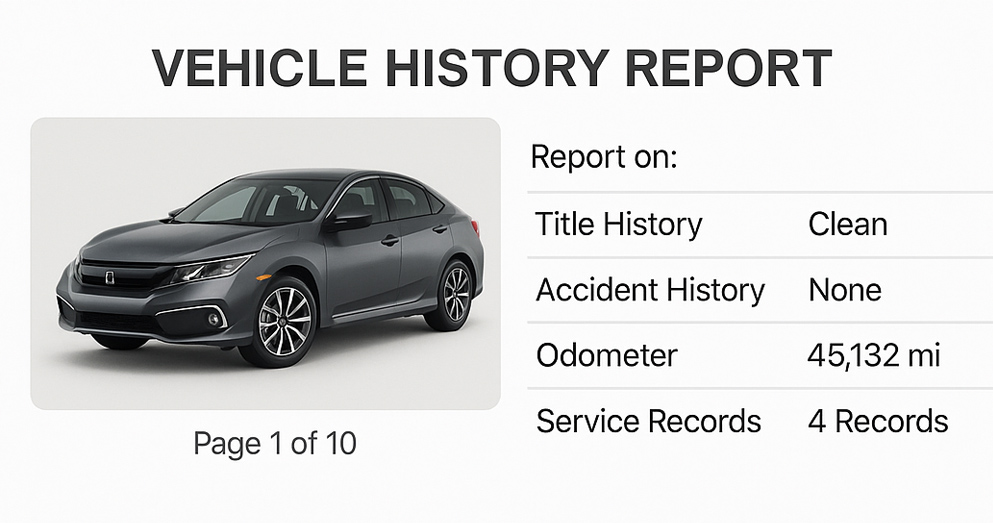
Vehicle History Report
Vehicle
Specifications
Specifications
Ownership
History
History
All History
Events
Events
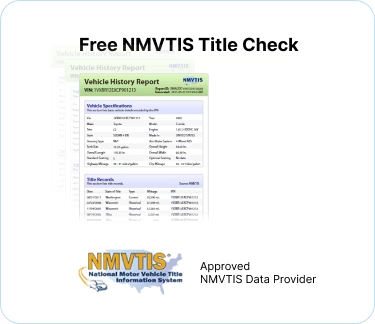
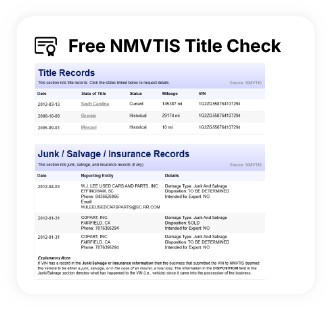
NMVTIS Title
History Check
History Check
Salvage/Rebuilt
Check
Check
Accident
Check
Check
Theft
Check
Check
Open Lien
Check
Check
Past Sale
Listings
Listings
Safety
Recalls
Recalls
Odometer
Check
Check
Market Price
Analysis
Analysis
What Problems Does the 1987 Mercury Sable Have?
The 1987 Mercury Sable, like many vehicles of its era, has a list of commonly reported issues that owners and mechanics are familiar with. One of the most persistent problems is with the automatic transmission, particularly the AXOD (Automatic Overdrive) unit. These transmissions can develop issues with shifting, solenoid failures, or even complete failure if not properly maintained or if subjected to heavy use. Regular fluid changes are crucial, but even with good maintenance, these transmissions are a known weak point.
Another significant concern is electrical system reliability. Owners have reported issues with various components, including power window motors, door lock actuators, and the instrument cluster. Dashboard warning lights can illuminate intermittently or fail altogether. The engine control module (ECM) can also be a source of problems, leading to poor running conditions or starting issues.
Rust is a pervasive issue for vehicles of this vintage, and the Sable is no exception. Areas prone to rust include the wheel wells, rocker panels, door bottoms, and the frame rails. Thorough inspections are necessary, especially in regions where road salt is used extensively.
Cooling system issues, such as radiator leaks and water pump failures, can also occur, leading to overheating. The serpentine belt system, while generally robust, can also experience wear and tear.
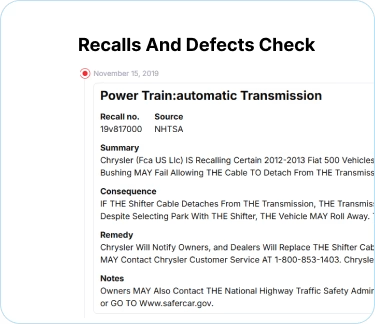
While specific widespread recalls for the 1987 model year are not extensively documented, it's always advisable to check the National Highway Traffic Safety Administration (NHTSA) database for any relevant safety recalls that might have been issued. Generally, the long-term reliability of the 1987 Sable depends heavily on its maintenance history. Well-maintained examples can still be quite reliable, but those with a history of neglect are more likely to exhibit a cluster of these common problems. The 3.0L Vulcan V6 is generally considered more robust than the 2.5L 4-cylinder, though the 3.8L V6 offers more power. Transmission problems are a primary concern across all engine and trim levels for this model year.
Another significant concern is electrical system reliability. Owners have reported issues with various components, including power window motors, door lock actuators, and the instrument cluster. Dashboard warning lights can illuminate intermittently or fail altogether. The engine control module (ECM) can also be a source of problems, leading to poor running conditions or starting issues.
Rust is a pervasive issue for vehicles of this vintage, and the Sable is no exception. Areas prone to rust include the wheel wells, rocker panels, door bottoms, and the frame rails. Thorough inspections are necessary, especially in regions where road salt is used extensively.
Cooling system issues, such as radiator leaks and water pump failures, can also occur, leading to overheating. The serpentine belt system, while generally robust, can also experience wear and tear.
While specific widespread recalls for the 1987 model year are not extensively documented, it's always advisable to check the National Highway Traffic Safety Administration (NHTSA) database for any relevant safety recalls that might have been issued. Generally, the long-term reliability of the 1987 Sable depends heavily on its maintenance history. Well-maintained examples can still be quite reliable, but those with a history of neglect are more likely to exhibit a cluster of these common problems. The 3.0L Vulcan V6 is generally considered more robust than the 2.5L 4-cylinder, though the 3.8L V6 offers more power. Transmission problems are a primary concern across all engine and trim levels for this model year.
How long will the 1987 Mercury Sable last?
Based on owner data and typical maintenance habits, a well-maintained 1987 Mercury Sable can realistically be expected to last for 150,000 to 200,000 miles, or approximately 15-20 years of service. However, achieving this longevity hinges on consistent maintenance. Weaknesses that emerge over time include the aforementioned transmission issues, which can shorten its service life significantly if not addressed promptly. Rust, especially in harsh climates, will also degrade the vehicle's structural integrity over the years. The durability of the powertrain, particularly the 3.0L and 3.8L V6 engines, is generally good, but accessories like alternators, water pumps, and radiators will likely need replacement as the vehicle ages. Electrical components are also prone to failure with time and mileage. Ultimately, its long-term durability is a testament to diligent care.
What Technology & Safety Features are Included?
The 1987 Mercury Sable, representing the late 1980s automotive technology, offered a functional suite of features focused on comfort and convenience rather than cutting-edge tech. Built-in technology was relatively basic by today's standards. Standard entertainment typically included an AM/FM radio, often with an optional cassette player for those seeking to enjoy their music collection. Higher trim levels might have featured a more sophisticated sound system with more speakers, aiming for a premium feel.
Driver-assistance features were virtually nonexistent by modern definitions. Cruise control was a common option that aided in highway driving comfort. Power steering and power brakes were standard, providing ease of operation. The car's aerodynamic design was considered a technological achievement for its time, contributing to its efficiency and quiet cabin.
Safety features for the 1987 Sable included seat belts (manual lap and shoulder belts for front passengers), front disc brakes with rear drum brakes, and the structural integrity of its unibody construction. Airbags were not yet standard equipment on most vehicles of this era, and the Sable likely did not offer them as an option. Anti-lock braking systems (ABS) were beginning to appear on luxury vehicles but were not common on mid-size sedans like the Sable in 1987.
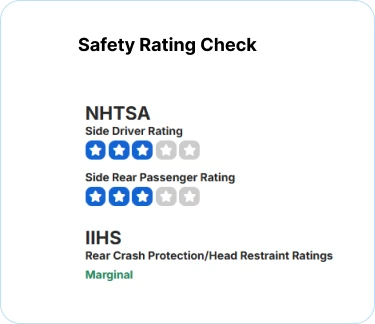
Optional safety features might have included rear seat belts for passengers and potentially a rear window defroster for improved visibility in inclement weather. Crash-test ratings for vehicles from this period are not directly comparable to today's rigorous testing protocols. However, the Sable was designed with a focus on occupant protection for its time, utilizing crumple zones and a reinforced passenger compartment. While specific NHTSA or IIHS ratings for the 1987 model year are not readily available in a format comparable to current standards, the vehicle was built to meet the safety regulations of its era, which were less stringent than those of today.
Driver-assistance features were virtually nonexistent by modern definitions. Cruise control was a common option that aided in highway driving comfort. Power steering and power brakes were standard, providing ease of operation. The car's aerodynamic design was considered a technological achievement for its time, contributing to its efficiency and quiet cabin.
Safety features for the 1987 Sable included seat belts (manual lap and shoulder belts for front passengers), front disc brakes with rear drum brakes, and the structural integrity of its unibody construction. Airbags were not yet standard equipment on most vehicles of this era, and the Sable likely did not offer them as an option. Anti-lock braking systems (ABS) were beginning to appear on luxury vehicles but were not common on mid-size sedans like the Sable in 1987.
Optional safety features might have included rear seat belts for passengers and potentially a rear window defroster for improved visibility in inclement weather. Crash-test ratings for vehicles from this period are not directly comparable to today's rigorous testing protocols. However, the Sable was designed with a focus on occupant protection for its time, utilizing crumple zones and a reinforced passenger compartment. While specific NHTSA or IIHS ratings for the 1987 model year are not readily available in a format comparable to current standards, the vehicle was built to meet the safety regulations of its era, which were less stringent than those of today.
What Colors Options are Available?
1987 Mercury Sable Prices and Market Value
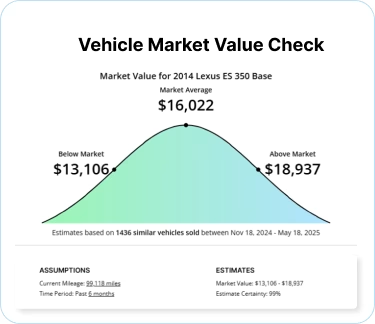
In 1987, the Mercury Sable had a new car price ranging from approximately $15,000 for a base sedan to around $20,000 for a well-optioned wagon. Today, the used market prices for a 1987 Mercury Sable are generally quite low, often falling between $1,000 and $4,000, depending heavily on condition, mileage, and trim level. Examples in pristine, low-mileage condition might fetch slightly more. The Sable has experienced significant depreciation, as is typical for most sedans of this age. Factors affecting its resale value are primarily its condition, the presence of rust, the operational status of the transmission, and overall maintenance history. Lower mileage and a documented service record are crucial for maximizing its value, but it remains a budget-friendly used car option.
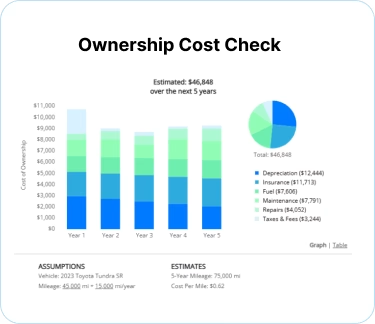
1987 Mercury Sable Cost of Ownership
The 1987 Mercury Sable is generally an economical vehicle to own. Insurance costs are typically low due to its age and lower market value. Fuel costs are moderate, especially with the V6 engines, offering decent highway mileage. Maintenance costs are reasonable for routine items, but potential repairs to the transmission and electrical systems can increase expenses. Parts are generally available and not excessively expensive. Overall, it is considered an affordable car to own and operate, especially for buyers prioritizing budget over advanced features or peak performance. Regular maintenance is key to keeping long-term repair costs manageable.
1987 Mercury Sable Fuel Efficiency
Fuel Type
Gasoline
Fuel Capacity
-
City Mileage
-
Highway Mileage
-
1987 Mercury Sable Insurance
Insurance for a 1987 Mercury Sable is moderately priced, reflecting its status as a Sedan with strong safety ratings and
reasonable repair costs.
How Does the 1987 Mercury Sable Compare to Other Sedan?
The 1987 Mercury Sable competed in the mid-size sedan and wagon segment against formidable rivals such as the Chevrolet Celebrity, Oldsmobile Cutlass Ciera, and the Ford Taurus (its corporate sibling). In terms of performance, the Sable's V6 engines offered adequate power, often matching or slightly exceeding competitors like the Celebrity, which had smaller engine options. However, its handling was geared more towards comfort than sporty driving, a trait shared with many of its contemporaries.
Feature-wise, the Sable often boasted a slightly more upscale interior and styling than its Chevrolet and Oldsmobile counterparts, particularly with its distinctive light bar and aerodynamic lines. The Ford Taurus, being its sibling, offered very similar features and performance due to sharing the same platform and powertrain options, often making it a direct competitor.
Reliability was a mixed bag for American cars of this era. While the Sable's engines were generally robust, transmission issues were a common concern across many of these domestic models. Competitors like the Japanese offerings from Honda (Accord) and Toyota (Camry) generally held an edge in long-term reliability and build quality, though they often came with a higher price tag and sometimes less interior space.
Price-wise, the Sable was competitively positioned, offering a good balance of features for its cost. If looking for similar alternatives in the same price bracket, the Ford Taurus is the most direct comparison. For those prioritizing proven long-term reliability and potentially better fuel economy, a used Honda Accord or Toyota Camry from the late 1980s or early 1990s would be strong alternatives, although they might be pricier on the used market and offer a firmer ride. If a comfortable, spacious American sedan is the priority, the Sable remains a viable option, especially if found in good condition.
Feature-wise, the Sable often boasted a slightly more upscale interior and styling than its Chevrolet and Oldsmobile counterparts, particularly with its distinctive light bar and aerodynamic lines. The Ford Taurus, being its sibling, offered very similar features and performance due to sharing the same platform and powertrain options, often making it a direct competitor.
Reliability was a mixed bag for American cars of this era. While the Sable's engines were generally robust, transmission issues were a common concern across many of these domestic models. Competitors like the Japanese offerings from Honda (Accord) and Toyota (Camry) generally held an edge in long-term reliability and build quality, though they often came with a higher price tag and sometimes less interior space.
Price-wise, the Sable was competitively positioned, offering a good balance of features for its cost. If looking for similar alternatives in the same price bracket, the Ford Taurus is the most direct comparison. For those prioritizing proven long-term reliability and potentially better fuel economy, a used Honda Accord or Toyota Camry from the late 1980s or early 1990s would be strong alternatives, although they might be pricier on the used market and offer a firmer ride. If a comfortable, spacious American sedan is the priority, the Sable remains a viable option, especially if found in good condition.
Final Verdict: Is the 1987 Mercury Sable a Good Sedan?
The 1987 Mercury Sable is ideal for budget-conscious buyers seeking a spacious, comfortable, and somewhat stylish American sedan or wagon from the late 1980s. It's worth buying as a used vehicle if found in excellent mechanical condition, with a particular focus on the transmission and absence of significant rust. For those who appreciate classic American design and prioritize a smooth ride over modern technology, it can be a charming option. It is not recommended for buyers seeking high performance or bulletproof reliability without a thorough pre-purchase inspection and a willingness to perform regular maintenance. A well-maintained GS trim in good condition represents the best value, offering a comfortable and well-equipped experience for its low market price.