The 2011 Freightliner Cascadia 113 is a Class 8 commercial truck, part of a popular line introduced in 2007. Known for its aerodynamic design and driver-centric features, it targets long-haul and vocational applications. Key trims often revolved around engine and chassis configurations, with pricing for new models historically ranging from $100,000 to $150,000, depending on customization. Its popularity stems from a blend of fuel efficiency and driver comfort, making it a staple in the trucking industry.
The Good
The 2011 Cascadia 113 offers strong performance and impressive fuel efficiency, appealing to practical buyers. Its comfortable, spacious cabin and advanced safety features provide peace of mind and a better driving experience, resonating with both emotional and practical needs of professional drivers.
The Bad
Potential buyers should be aware of possible issues with the exhaust gas recirculation (EGR) system and diesel particulate filter (DPF). Some owners have reported electrical gremlins and premature wear on certain suspension components. Regular maintenance is crucial to mitigate these common concerns.
2011 Freightliner Cascadia 113: Quick Overview
- Engine Options: The 2011 Freightliner Cascadia 113 was typically equipped with Detroit Diesel engines, renowned for their robustness. Common options included the Detroit DD13 and DD15. Some models might have also featured Cummins ISX engines.

- Horsepower: Horsepower ratings varied significantly based on the specific engine installed. The Detroit DD13 typically ranged from 350 to 450 horsepower, while the more powerful DD15 could produce between 400 and 500 horsepower. Cummins ISX engines offered similar power bands.

- Fuel Economy: Fuel economy for the 2011 Cascadia 113 is highly dependent on the engine, transmission, axle ratios, driving style, and load. However, its aerodynamic design contributed to competitive fuel efficiency for its class, often cited in the range of 5.5 to 7.5 miles per gallon (MPG) for highway applications.
- 0-60 Times: Commercial trucks of this size and weight do not have published 0-60 mph times as it is not a relevant metric for their intended use. Performance is measured more by acceleration under load and sustained speed on inclines.
- Towing Capacity: As a Class 8 truck, the Cascadia 113 is designed for heavy-duty towing. Its Gross Combination Weight Rating (GCWR) can exceed 80,000 pounds, and it is capable of towing very heavy trailers, often in the range of 40,000 to 70,000 pounds depending on configuration and trailer type.
- Trim-Level Features: While Freightliner doesn't typically use traditional "trim levels" like passenger cars, specifications were highly customizable. Key features included various cabin sizes (day cab, mid-roof, raised-roof sleepers), advanced climate control systems, ergonomic driver seats, digital dashboards, available navigation systems, and options for enhanced safety features like ABS and stability control. Specific aerodynamic packages and suspension types were also configurable.
2011 Freightliner Cascadia 113 Specifications
Vehicle Information
| Year | 2011 |
| Make | Freightliner |
| Model | Cascadia 113 |
| Trim | - |
| Style | - |
| Type | Truck |
| Category | Medium Truck |
Manufacturing Details
| Made In | United States |
| Manufacturing City | CLEVELAND |
Dimensions
| Doors | - |
| Curb Weight | - |
| Gross Vehicle Weight Rating | 33001 pounds |
| Overall Height | - |
| Overall Length | - |
| Overall Width | - |
| Wheelbase Length | - |
| Standard Seating | - |
Engine & Performance
| Engine | 12.8L L6 DIESEL |
| Engine Size | 12.8L |
| Engine Cylinders | 6 |
| Transmission | - |
| Transmission Type | - |
| Transmission Speeds | - |
| Drivetrain | 6x4 |
Additional Features
| Anti-Brake System | - |
| Steering Type | - |
Pricing
| Manufacturer Suggested Retail Price (MSRP) | - |
| Invoice Price | - |
| Delivery Charges | - |
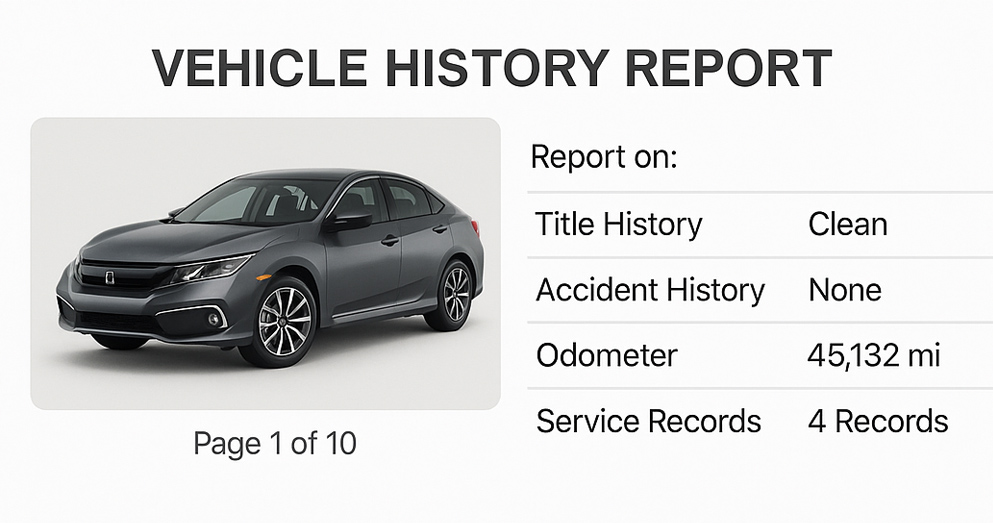
Vehicle History Report
Vehicle
Specifications
Specifications
Ownership
History
History
All History
Events
Events
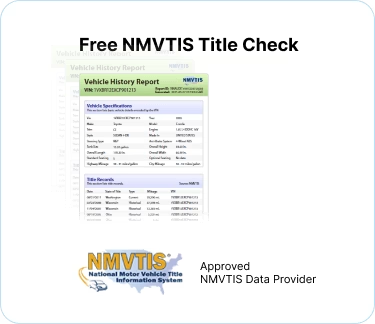
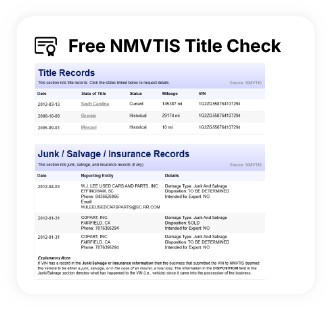
NMVTIS Title
History Check
History Check
Salvage/Rebuilt
Check
Check
Accident
Check
Check
Theft
Check
Check
Open Lien
Check
Check
Past Sale
Listings
Listings
Safety
Recalls
Recalls
Odometer
Check
Check
Market Price
Analysis
Analysis
What Problems Does the 2011 Freightliner Cascadia 113 Have?
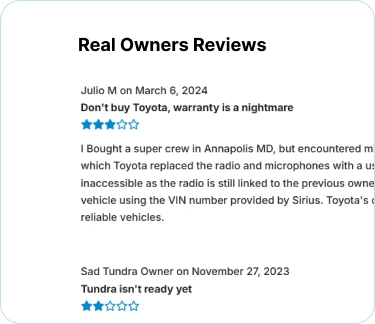
The 2011 Freightliner Cascadia 113, like many heavy-duty trucks, has had its share of reported issues. One of the most commonly cited problems revolves around the exhaust gas recirculation (EGR) system and the diesel particulate filter (DPF). These components are critical for emissions control but can be prone to clogging or malfunction, leading to reduced engine performance, check engine lights, and costly repairs if not properly maintained. Owners have reported needing to perform DPF regeneration cycles more frequently, and in some cases, full DPF replacement.
Another area of concern for some 2011 models involves electrical system gremlins. This can manifest as intermittent issues with dashboard lights, sensors, or ancillary systems. While not universal, these can be frustrating and difficult to diagnose. Suspension components, particularly bushings and air springs, have also been mentioned as potential wear items that may require attention over time, especially on trucks with high mileage.
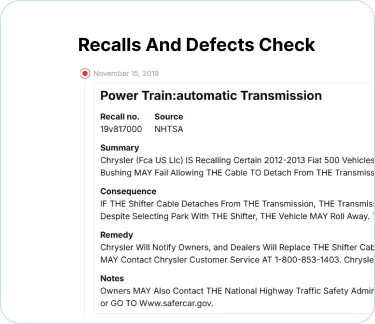
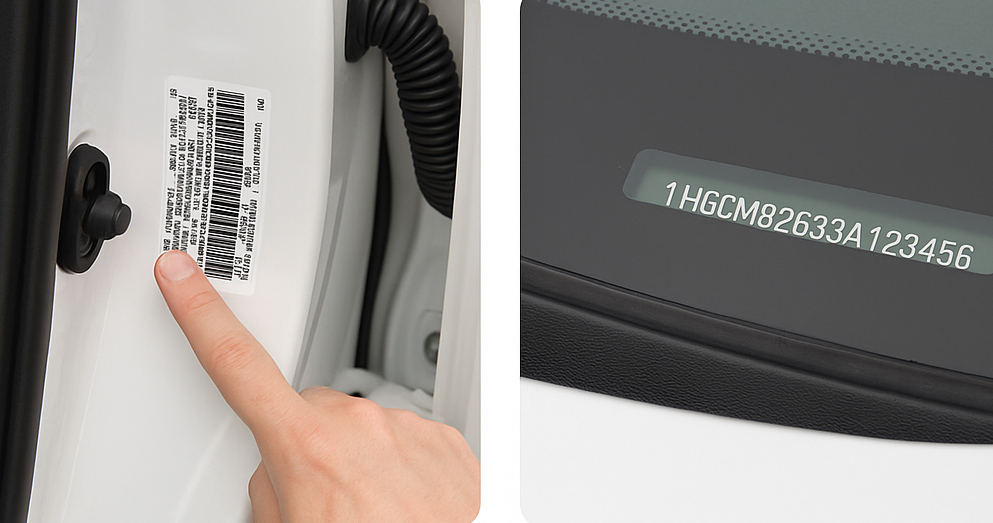
While specific recalls for the 2011 model year can be found by VIN on NHTSA's website, general concerns across this generation of Cascadia often relate to the emissions systems. Long-term reliability hinges significantly on diligent maintenance. Trucks that have received regular oil changes, filter replacements, and have had emission system faults addressed promptly tend to fare much better. The robust Detroit Diesel engines are generally reliable, but neglecting maintenance can accelerate wear on critical components. Model year specific issues are less common for the Cascadia generation, with most problems being consistent with the technology and design prevalent at the time.
Another area of concern for some 2011 models involves electrical system gremlins. This can manifest as intermittent issues with dashboard lights, sensors, or ancillary systems. While not universal, these can be frustrating and difficult to diagnose. Suspension components, particularly bushings and air springs, have also been mentioned as potential wear items that may require attention over time, especially on trucks with high mileage.
While specific recalls for the 2011 model year can be found by VIN on NHTSA's website, general concerns across this generation of Cascadia often relate to the emissions systems. Long-term reliability hinges significantly on diligent maintenance. Trucks that have received regular oil changes, filter replacements, and have had emission system faults addressed promptly tend to fare much better. The robust Detroit Diesel engines are generally reliable, but neglecting maintenance can accelerate wear on critical components. Model year specific issues are less common for the Cascadia generation, with most problems being consistent with the technology and design prevalent at the time.
How long will the 2011 Freightliner Cascadia 113 last?
A well-maintained 2011 Freightliner Cascadia 113 can realistically achieve upwards of 750,000 to over 1 million miles in vocational or long-haul service. Owner data and maintenance habits are paramount. Trucks used for consistent, high-mileage highway routes with meticulous adherence to preventative maintenance schedules (e.g., regular oil changes, filter replacements, and proactive checks of the emissions system) demonstrate excellent long-term durability. The core chassis and Detroit Diesel engines are built for longevity. However, weaknesses over time often appear in the emissions control systems (EGR, DPF) and associated sensors, which can become maintenance headaches if neglected. Electrical connections and cabin wear can also be noted in older units, but the fundamental powertrain and chassis tend to hold up well with proper care.
What Technology & Safety Features are Included?
The 2011 Freightliner Cascadia 113 offered a range of technology, driver-assistance, and safety features, though often as optional upgrades. Standard technology typically included a robust instrument cluster with driver information display, providing essential data on engine performance, fuel consumption, and diagnostics. AM/FM radio with auxiliary input was common, and premium sound systems, including CD players and even early Bluetooth connectivity, were available options. Navigation systems were also offered for longer hauls.
In terms of driver-assistance, while advanced systems common today were rare, features like anti-lock braking systems (ABS) were standard for enhanced control during braking. Electronic stability control (ESC) was becoming more prevalent and offered as an option on some configurations to help prevent rollovers and loss of control. Cruise control was a standard convenience feature. Advanced driver-assistance systems like lane departure warning or adaptive cruise control were not typically available on this model year.
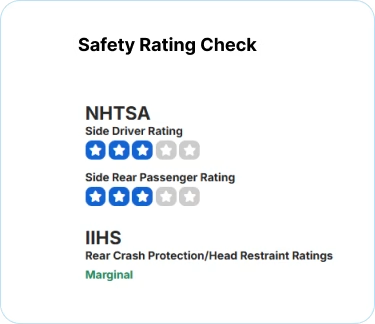
Safety was addressed through a robust frame and cab structure designed to withstand significant impact. Airbags for the driver and front passenger were standard. Seatbelt pretensioners and energy-absorbing steering columns were also part of the safety package. Optional safety features could include enhanced lighting packages for better visibility and potentially some forms of collision mitigation systems that were in their early stages of development for heavy-duty vehicles. Direct crash-test ratings in the same vein as passenger cars are not typically published for commercial trucks by organizations like NHTSA or IIHS. Instead, manufacturers adhere to stringent federal safety standards (FMVSS) for cab integrity, occupant protection, and braking performance, which the Cascadia line was designed to meet or exceed.
In terms of driver-assistance, while advanced systems common today were rare, features like anti-lock braking systems (ABS) were standard for enhanced control during braking. Electronic stability control (ESC) was becoming more prevalent and offered as an option on some configurations to help prevent rollovers and loss of control. Cruise control was a standard convenience feature. Advanced driver-assistance systems like lane departure warning or adaptive cruise control were not typically available on this model year.
Safety was addressed through a robust frame and cab structure designed to withstand significant impact. Airbags for the driver and front passenger were standard. Seatbelt pretensioners and energy-absorbing steering columns were also part of the safety package. Optional safety features could include enhanced lighting packages for better visibility and potentially some forms of collision mitigation systems that were in their early stages of development for heavy-duty vehicles. Direct crash-test ratings in the same vein as passenger cars are not typically published for commercial trucks by organizations like NHTSA or IIHS. Instead, manufacturers adhere to stringent federal safety standards (FMVSS) for cab integrity, occupant protection, and braking performance, which the Cascadia line was designed to meet or exceed.
What Colors Options are Available?
2011 Freightliner Cascadia 113 Prices and Market Value
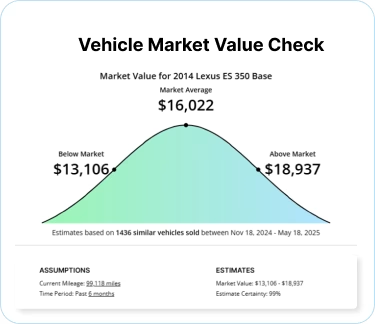
When new, the 2011 Freightliner Cascadia 113 typically ranged from approximately $100,000 to $150,000, with the final price heavily influenced by engine choice, cabin configuration (day cab vs. sleeper), and optional equipment. Today, the used market prices for a 2011 Cascadia 113 can vary widely, often falling between $20,000 and $60,000, depending on mileage, condition, engine, and overall specifications. These trucks experience significant depreciation in their first few years but then stabilize. Factors affecting resale value include total mileage, maintenance history (especially emissions system servicing), tire condition, interior wear, and the presence of desirable features like larger sleeper cabs or more powerful engines. A well-maintained truck with lower mileage will command a higher price.
2011 Freightliner Cascadia 113 Cost of Ownership
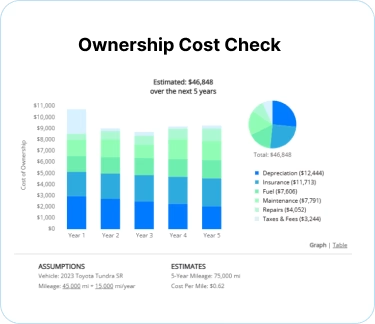
Owning a 2011 Freightliner Cascadia 113 is a significant financial undertaking. Insurance costs are substantial, reflecting the vehicle's value and the risks associated with commercial trucking. Fuel expenses are a major ongoing cost, though the Cascadia is relatively economical for its class due to its aerodynamic design. Maintenance and repair costs can be high, especially for complex components like the EGR and DPF systems. While the initial purchase price might seem manageable on the used market, ongoing operational expenses for parts, labor, and potential downtime make it a costly vehicle to own. It is not an economical vehicle for small operators without a strong business plan.
2011 Freightliner Cascadia 113 Fuel Efficiency
Fuel Type
Diesel
Fuel Capacity
-
City Mileage
-
Highway Mileage
-
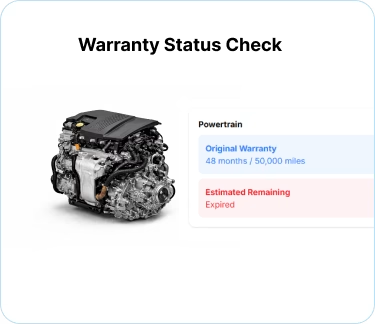
2011 Freightliner Cascadia 113 Warranty
Basic
Original warranty
0 months / No data
Estimated remaining
Expired
Powertrain
Original warranty
0 months / No data
Estimated remaining
Expired
Rust
Original warranty
0 months / No data
Estimated remaining
Expired
2011 Freightliner Cascadia 113 Insurance
Insurance for a 2011 Freightliner Cascadia 113 is moderately priced, reflecting its status as a Truck with strong safety ratings and
reasonable repair costs.
How Does the 2011 Freightliner Cascadia 113 Compare to Other Truck?
The 2011 Freightliner Cascadia 113 competed fiercely in the Class 8 truck market against rivals like the Peterbilt 579, Kenworth T660 (or older T600/T700), and Volvo VNL series. In terms of performance, the Cascadia generally offered competitive engine options from Detroit Diesel, providing good power and torque for hauling. Its aerodynamic design was a key differentiator, aiming for superior fuel efficiency compared to some competitors that may have prioritized other aspects. Reliability was generally considered strong for the core powertrain, but like many trucks of this era, emissions control systems (EGR, DPF) could present challenges across all brands.
Feature-wise, the Cascadia was designed with driver comfort and ergonomics in mind, offering various cabin configurations and driver-friendly layouts. Competitors like Peterbilt and Kenworth were also strong in this area, often perceived as having a more premium interior feel. Volvo was known for its advanced safety features and comfortable ride. Pricing for a 2011 model year would have been competitive, with Freightliner often positioned as offering good value for money, balancing capability with cost.
Similar alternatives that offer a comparable experience would include the Kenworth T660 or T700, known for their durability and driver comfort. The Peterbilt 579, while newer in its full redesign, offered a modern and efficient platform. The Volvo VNL series provided excellent ride quality and a focus on driver ergonomics and safety.
If seeking potentially better long-term reliability with fewer emissions-related headaches, exploring models from slightly later years or those with known robust engine platforms (e.g., certain Cummins ISX configurations) might be beneficial, though likely at a higher cost. For a 2011 model, the Cascadia remains a solid choice, particularly if a well-maintained unit with documented service history can be found.
Feature-wise, the Cascadia was designed with driver comfort and ergonomics in mind, offering various cabin configurations and driver-friendly layouts. Competitors like Peterbilt and Kenworth were also strong in this area, often perceived as having a more premium interior feel. Volvo was known for its advanced safety features and comfortable ride. Pricing for a 2011 model year would have been competitive, with Freightliner often positioned as offering good value for money, balancing capability with cost.
Similar alternatives that offer a comparable experience would include the Kenworth T660 or T700, known for their durability and driver comfort. The Peterbilt 579, while newer in its full redesign, offered a modern and efficient platform. The Volvo VNL series provided excellent ride quality and a focus on driver ergonomics and safety.
If seeking potentially better long-term reliability with fewer emissions-related headaches, exploring models from slightly later years or those with known robust engine platforms (e.g., certain Cummins ISX configurations) might be beneficial, though likely at a higher cost. For a 2011 model, the Cascadia remains a solid choice, particularly if a well-maintained unit with documented service history can be found.
Final Verdict: Is the 2011 Freightliner Cascadia 113 a Good Truck?
The 2011 Freightliner Cascadia 113 is ideal for owner-operators and fleet managers seeking a reliable, fuel-efficient Class 8 truck with a focus on driver comfort for long-haul or vocational applications. It is definitely worth buying, especially on the used market, provided it has a comprehensive maintenance history. Buying used is the only realistic option now, and conditions to watch for include mileage, the state of the emissions system (EGR/DPF), and overall mechanical condition. Sleeper cab configurations are best for long-haul, while day cabs suit regional or vocational work. Thorough pre-purchase inspections by a qualified heavy-duty mechanic are crucial to ensure long-term value and minimize unexpected repair costs.