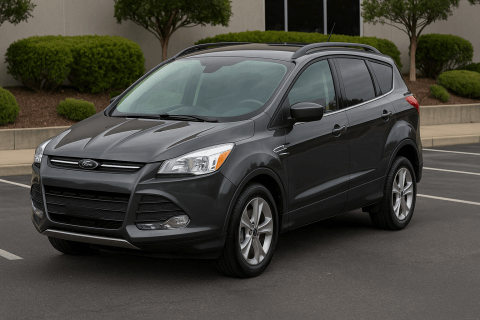
The 1992 Chevrolet Cavalier, part of a model run from 1982 to 2005, represented a significant refresh for its fourth generation. Available as a coupe, sedan, and convertible, popular trims included the RS, Z24, and the base model. Its appeal stemmed from affordability, practicality, and a reputation for being a no-nonsense, reliable compact car for everyday use, often seen as a sensible choice for budget-conscious buyers.

The Good
The 1992 Cavalier offered dependable performance and strong reliability, making it a practical choice. Its comfortable ride and straightforward design appealed to those seeking an unpretentious daily driver. For many, it represented an attainable entry into car ownership, providing a sense of independence and freedom.

The Bad
Common weaknesses for the 1992 Cavalier include potential for rust, especially in colder climates, and occasional electrical gremlins. Some owners reported issues with the transmission, particularly on higher-mileage examples. Engine performance could be considered adequate rather than exciting.
1992 Chevrolet Cavalier: Quick Overview
- Engine Options: The 1992 Chevrolet Cavalier was primarily offered with two engine choices:
- A 2.2L 4-cylinder engine.
- A 3.1L V6 engine, often found in sportier trims like the Z24.
- Horsepower:
- The 2.2L 4-cylinder typically produced around 110-125 horsepower.
- The 3.1L V6 offered more power, generally in the range of 140-160 horsepower.
- Fuel Economy: Fuel economy varied depending on the engine and transmission. For the 2.2L engine with manual transmission, expect combined MPG in the mid-to-high 20s. The V6 and automatic transmissions would yield slightly lower figures, likely in the low 20s for combined MPG.
- 0-60 Times: Official 0-60 mph times were not always a focus for these vehicles, but generally, models equipped with the 2.2L engine would be in the 9-11 second range, while the 3.1L V6 could achieve 0-60 mph in the 8-9 second range.
- Towing Capacity: The Chevrolet Cavalier was not designed for significant towing. Towing capacity was generally not a listed specification or would be very limited, suitable only for very light loads if at all.
- Trim-Level Features:
- Base Model: Basic amenities, manual windows and locks, AM/FM radio.
- RS: Often included upgraded interior trim, sportier exterior accents, and potentially a better sound system.
- Z24: This trim typically boasted the V6 engine, sport suspension, alloy wheels, fog lights, a more aggressive body kit, and a driver-oriented interior with bucket seats.
1992 Chevrolet Cavalier Specifications
Vehicle Information
| Year | 1992 |
| Make | Chevrolet |
| Model | Cavalier |
| Trim | - |
| Style | - |
| Type | Sedan |
| Category | Compact Car |
Manufacturing Details
| Made In | United States |
| Manufacturing City | RAMOS ARIZPE |
Dimensions
| Doors | 2-Door |
| Curb Weight | - |
| Gross Vehicle Weight Rating | - |
| Overall Height | - |
| Overall Length | - |
| Overall Width | - |
| Wheelbase Length | - |
| Standard Seating | - |
Engine & Performance
| Engine | 2.2 L 4-Cyl. |
| Engine Size | 2.2L |
| Engine Cylinders | 4 |
| Transmission | - |
| Transmission Type | - |
| Transmission Speeds | - |
| Drivetrain | Front-Wheel Drive |
Additional Features
| Anti-Brake System | - |
| Steering Type | - |
Pricing
| Manufacturer Suggested Retail Price (MSRP) | - |
| Invoice Price | - |
| Delivery Charges | - |
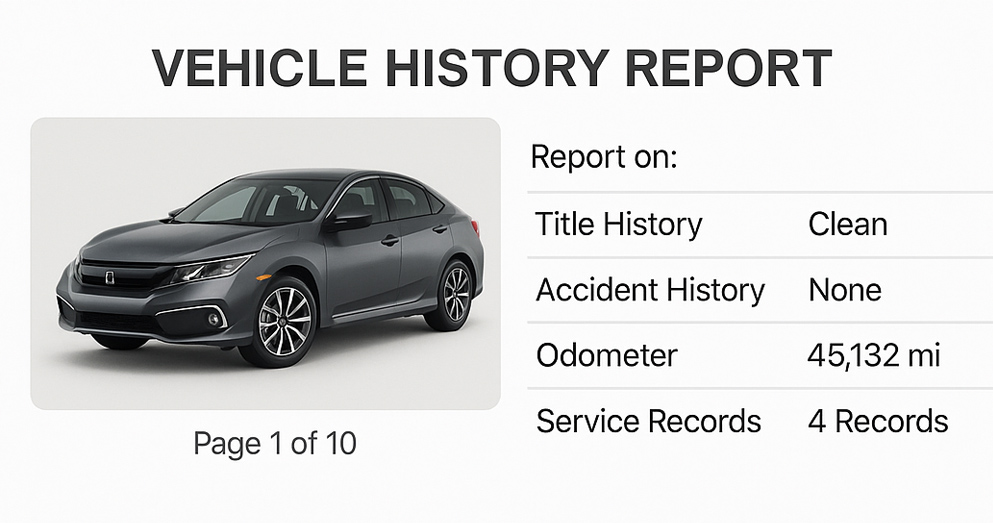
Vehicle History Report
Vehicle
Specifications
Specifications
Ownership
History
History
All History
Events
Events
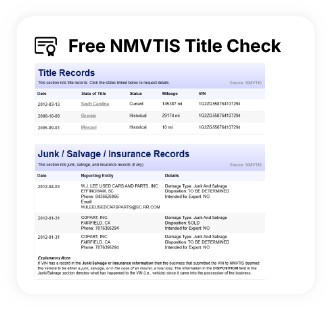
NMVTIS Title
History Check
History Check
Salvage/Rebuilt
Check
Check
Accident
Check
Check
Theft
Check
Check
Open Lien
Check
Check
Past Sale
Listings
Listings
Safety
Recalls
Recalls
Odometer
Check
Check
Market Price
Analysis
Analysis
What Problems Does the 1992 Chevrolet Cavalier Have?
The 1992 Chevrolet Cavalier, while generally considered a reliable compact car for its era, did have some commonly reported issues. One prevalent concern across many GM vehicles of this period, including the Cavalier, was the tendency for intake manifold gaskets to leak, particularly on V6 engines. This could lead to coolant leaks and engine overheating if not addressed.
Transmission issues were also noted, especially with automatic transmissions. Owners sometimes reported harsh shifting, slipping gears, or outright transmission failure on higher-mileage vehicles, often linked to a lack of regular fluid changes or wear and tear over time.
Electrical problems, while not unique to the 1992 model year, could surface. This might include issues with power windows, door locks, the radio, or warning lights illuminating on the dashboard. The aging of wiring harnesses and components over the years contributed to these potential electrical gremlins.
Rust and corrosion were significant concerns, particularly for Cavaliers driven in areas that used road salt during winter. Undercarriage components, wheel wells, and rocker panels were often susceptible to significant rust, compromising structural integrity and appearance. While specific recalls for the 1992 model year regarding major mechanical failures might be sparse, routine maintenance and addressing minor issues promptly were key to long-term reliability. For example, regular coolant checks and changes could help prevent intake manifold gasket issues, and diligent transmission fluid servicing could extend its life. There were no widely known major powertrain or safety recalls that defined the 1992 model year as particularly problematic, suggesting that for its time, it offered reasonable dependability when properly maintained.
Transmission issues were also noted, especially with automatic transmissions. Owners sometimes reported harsh shifting, slipping gears, or outright transmission failure on higher-mileage vehicles, often linked to a lack of regular fluid changes or wear and tear over time.
Electrical problems, while not unique to the 1992 model year, could surface. This might include issues with power windows, door locks, the radio, or warning lights illuminating on the dashboard. The aging of wiring harnesses and components over the years contributed to these potential electrical gremlins.
Rust and corrosion were significant concerns, particularly for Cavaliers driven in areas that used road salt during winter. Undercarriage components, wheel wells, and rocker panels were often susceptible to significant rust, compromising structural integrity and appearance. While specific recalls for the 1992 model year regarding major mechanical failures might be sparse, routine maintenance and addressing minor issues promptly were key to long-term reliability. For example, regular coolant checks and changes could help prevent intake manifold gasket issues, and diligent transmission fluid servicing could extend its life. There were no widely known major powertrain or safety recalls that defined the 1992 model year as particularly problematic, suggesting that for its time, it offered reasonable dependability when properly maintained.
How long will the 1992 Chevrolet Cavalier last?
Based on owner experiences and typical maintenance, a well-maintained 1992 Chevrolet Cavalier could reasonably be expected to last between 150,000 to 200,000 miles, or serve its owner for 10-15 years. Long-term durability largely depends on the owner's commitment to regular maintenance, including oil changes, fluid flushes, and timely repairs. Weaknesses that tend to emerge over time include potential for rust, especially in the undercarriage and body panels, and the aforementioned transmission and electrical system concerns. Engines, particularly the 4-cylinder variants, can be quite robust if oil levels are kept consistent. However, components like suspension bushings, exhaust systems, and cooling systems will likely require replacement as the vehicle ages.
What Technology & Safety Features are Included?
The 1992 Chevrolet Cavalier was designed in an era where technology in compact cars was relatively rudimentary. Its built-in tech and entertainment features were basic by today's standards. Standard equipment typically included an AM/FM radio, with optional upgrades to a cassette player or, for higher trims, a CD player and a premium speaker system. Air conditioning was a common, though not always standard, feature.
Driver-assistance features were virtually non-existent in the 1992 Cavalier. There were no advanced systems like ABS (though it might have been available as an option on some later models in this generation, it was not standard on the 1992), traction control, or adaptive cruise control. The primary focus was on manual operation for most functions.
Safety features were also basic. Standard equipment would have included seat belts (lap and shoulder belts for front occupants, lap belts for rear), and a padded dashboard. Some models might have offered optional driver-side airbags, but this was not universal across all trims or a standard offering for the 1992 model year. Passenger-side airbags were not common in this segment at the time.
Crash-test ratings for vehicles of this vintage are often not directly comparable to modern standards due to evolving testing methodologies and vehicle design. However, for its time, the Cavalier was designed to meet federal safety standards. Information on specific crash-test ratings for the 1992 model year from organizations like the NHTSA or IIHS may be limited or reflect older testing protocols. Generally, it would be considered a typical compact car of its era in terms of safety, with no outstanding features or significant deficiencies compared to its direct competitors.
Driver-assistance features were virtually non-existent in the 1992 Cavalier. There were no advanced systems like ABS (though it might have been available as an option on some later models in this generation, it was not standard on the 1992), traction control, or adaptive cruise control. The primary focus was on manual operation for most functions.
Safety features were also basic. Standard equipment would have included seat belts (lap and shoulder belts for front occupants, lap belts for rear), and a padded dashboard. Some models might have offered optional driver-side airbags, but this was not universal across all trims or a standard offering for the 1992 model year. Passenger-side airbags were not common in this segment at the time.
Crash-test ratings for vehicles of this vintage are often not directly comparable to modern standards due to evolving testing methodologies and vehicle design. However, for its time, the Cavalier was designed to meet federal safety standards. Information on specific crash-test ratings for the 1992 model year from organizations like the NHTSA or IIHS may be limited or reflect older testing protocols. Generally, it would be considered a typical compact car of its era in terms of safety, with no outstanding features or significant deficiencies compared to its direct competitors.
What Colors Options are Available?
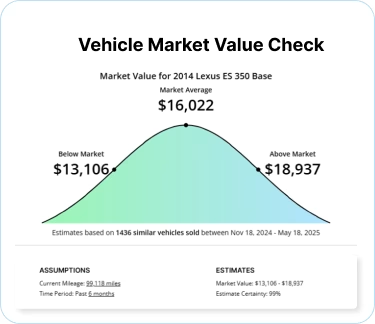
1992 Chevrolet Cavalier Prices and Market Value
When new in 1992, the Chevrolet Cavalier was an extremely affordable vehicle, with base models starting in the range of $9,000 to $11,000, and higher trims like the Z24 reaching closer to $13,000-$15,000. Its depreciation was typical for an entry-level American car, meaning it lost value steadily in its first few years. Today, the current used market prices for a 1992 Cavalier are generally very low, often ranging from $1,500 to $4,000 for examples in decent condition. Factors significantly affecting resale value include the vehicle's overall condition, mileage, the presence of rust, and whether it has been maintained with records. Pristine, low-mileage examples, especially of sportier trims, can command slightly higher prices, but they are rare.
1992 Chevrolet Cavalier Cost of Ownership
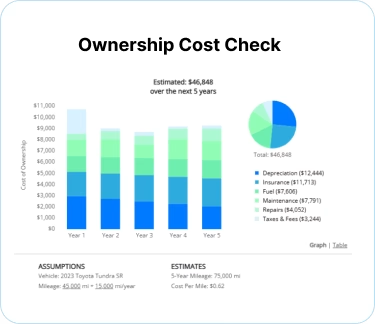
The 1992 Chevrolet Cavalier is exceptionally economical to own. Insurance costs are typically very low due to its age, low market value, and generally safe ownership profile. Fuel costs are moderate, especially with the 4-cylinder engine, offering good MPG for daily commuting. Maintenance and repair costs are also generally low, as parts are widely available and inexpensive, and many repairs can be handled by DIY mechanics. While older models may require more frequent attention to wear-and-tear items, its overall affordability in parts and labor makes it a very cost-effective vehicle to keep running.
1992 Chevrolet Cavalier Fuel Efficiency
Fuel Type
Gasoline
Fuel Capacity
-
City Mileage
-
Highway Mileage
-
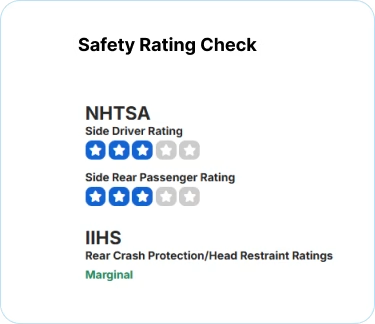
1992 Chevrolet Cavalier Safety Rating
NHTSA
1992 Chevrolet Cavalier Insurance
Insurance for a 1992 Chevrolet Cavalier is moderately priced, reflecting its status as a Sedan with strong safety ratings and
reasonable repair costs.
How Does the 1992 Chevrolet Cavalier Compare to Other Sedan?
The 1992 Chevrolet Cavalier competed in the fiercely contested compact car segment against rivals like the Honda Civic, Toyota Corolla, Ford Escort, and Dodge Neon (though Neon debuted later). In terms of price, the Cavalier was often one of the most budget-friendly options, making it an attractive choice for first-time buyers or those on a strict budget.
Performance was generally adequate rather than exciting. The 4-cylinder engines offered decent fuel economy but lacked punch, while the V6 in the Z24 offered a sportier feel but at the expense of fuel efficiency. Competitors like the Honda Civic and Toyota Corolla often offered a more refined driving experience and better-tuned powertrains. The Ford Escort offered similar practicality, while the Dodge Neon, when it arrived, provided a more modern design and stronger performance.
Features on the 1992 Cavalier were basic. While higher trims offered some creature comforts, they generally lagged behind Japanese competitors in terms of interior refinement, available technology, and standard safety features like airbags. The Civic and Corolla often boasted better build quality and more sophisticated options.
Reliability was a mixed bag for the Cavalier. While considered dependable for its price point, it generally did not match the long-term reputation for bulletproof reliability that the Honda Civic and Toyota Corolla enjoyed. Issues with transmissions and electrical components were more frequently reported compared to their Japanese counterparts. However, for owners who performed regular maintenance, the Cavalier could be a dependable car.
Alternatives: For buyers prioritizing long-term reliability and a refined driving experience, a used Honda Civic or Toyota Corolla from the same era would be strong contenders, often offering better build quality and fewer common mechanical issues, though they might be slightly more expensive on the used market. The Ford Escort is a similar competitor in terms of price and practicality but may share some of the same reliability concerns. If a sportier feel is desired on a budget, the Z24 trim of the Cavalier is worth considering, but a similarly aged Mazda MX-3 or a later Dodge Neon might offer more engaging performance.
Performance was generally adequate rather than exciting. The 4-cylinder engines offered decent fuel economy but lacked punch, while the V6 in the Z24 offered a sportier feel but at the expense of fuel efficiency. Competitors like the Honda Civic and Toyota Corolla often offered a more refined driving experience and better-tuned powertrains. The Ford Escort offered similar practicality, while the Dodge Neon, when it arrived, provided a more modern design and stronger performance.
Features on the 1992 Cavalier were basic. While higher trims offered some creature comforts, they generally lagged behind Japanese competitors in terms of interior refinement, available technology, and standard safety features like airbags. The Civic and Corolla often boasted better build quality and more sophisticated options.
Reliability was a mixed bag for the Cavalier. While considered dependable for its price point, it generally did not match the long-term reputation for bulletproof reliability that the Honda Civic and Toyota Corolla enjoyed. Issues with transmissions and electrical components were more frequently reported compared to their Japanese counterparts. However, for owners who performed regular maintenance, the Cavalier could be a dependable car.
Alternatives: For buyers prioritizing long-term reliability and a refined driving experience, a used Honda Civic or Toyota Corolla from the same era would be strong contenders, often offering better build quality and fewer common mechanical issues, though they might be slightly more expensive on the used market. The Ford Escort is a similar competitor in terms of price and practicality but may share some of the same reliability concerns. If a sportier feel is desired on a budget, the Z24 trim of the Cavalier is worth considering, but a similarly aged Mazda MX-3 or a later Dodge Neon might offer more engaging performance.
Final Verdict: Is the 1992 Chevrolet Cavalier a Good Sedan?
The 1992 Chevrolet Cavalier is ideal for budget-conscious individuals or first-time car buyers seeking the absolute lowest entry cost into reliable transportation. It's particularly well-suited for someone who prioritizes functionality and affordability over performance or advanced features. It is worth buying primarily in the used market, as new units are no longer available. When considering a purchase, focus on models with documented maintenance history, minimal rust, and the 4-cylinder engine for better fuel economy and potentially fewer complex issues. Avoid higher mileage examples with transmission problems. For basic commuting and errands, a well-kept Cavalier can still be a sensible, economical choice, but manage expectations regarding its age and capabilities.