The 2003 Forest River Cedar Creek is a well-regarded fifth-wheel RV, known for its robust construction and comfortable living spaces. Produced by Forest River, a prominent RV manufacturer, Cedar Creek models have been a staple in the recreational vehicle market for many years, with the 2003 model representing a significant point in their development. These fifth-wheels typically feature a luxurious, residential feel, appealing to those seeking a home-away-from-home experience. While specific trims can vary, they often emphasize spacious layouts and quality amenities. Pricing for a 2003 model, depending on condition and features, generally falls into the affordable used RV market, making them a popular choice for value-conscious buyers.

The Good
The 2003 Cedar Creek excels in offering a comfortable and reliable travel experience. Its spacious interior design fosters a sense of home, while its sturdy build provides peace of mind. For practical buyers, its enduring value and reasonable maintenance costs are significant advantages, making it an attractive long-term investment for adventures.
The Bad
Potential buyers of the 2003 Cedar Creek should be aware of common RV issues that can arise with age. This includes checking for water damage, particularly around seals and roof penetrations, as well as the condition of the tires and suspension. Electrical and plumbing systems should also be thoroughly inspected for wear and tear.
2003 FOREST RIVER Cedar Creek: Quick Overview
- Vehicle Type: Fifth-Wheel Recreational Vehicle (RV)
- Manufacturer: Forest River
- Model: Cedar Creek
- Model Year: 2003
- Body Style: Fifth-Wheel RV
- Engine Options: Not applicable. As an RV, it is towed by a separate truck.
- Horsepower: Not applicable.
- Fuel Economy: Not applicable. The fuel economy is dependent on the towing vehicle.
- 0-60 Times: Not applicable.
- Towing Capacity: This is a towed vehicle, so its specifications relate to its Gross Vehicle Weight Rating (GVWR) and Dry Weight. Specific GVWR and Dry Weight vary by floor plan and trim. Typical GVWR for a 2003 Cedar Creek could range from 10,000 lbs to 15,000+ lbs, with Dry Weights generally falling between 8,000 lbs and 12,000+ lbs. Owners must ensure their tow vehicle has sufficient towing capacity to safely handle the loaded RV.
- Key Trim-Level Features (General for 2003 Cedar Creek models):
- Construction: Typically featured robust construction with aluminum framing and high-quality insulation for four-season living.
- Interior Amenities: Often included residential-style cabinetry, solid surface countertops, full-size appliances (refrigerator, oven, microwave), queen-size master beds, spacious bathrooms with separate showers, and ample storage.
- Entertainment: Could include built-in entertainment centers with TVs, DVD players, and sound systems, though these might be dated by modern standards.
- Comfort Systems: Usually equipped with central air conditioning, furnace heating, and often a fireplace for ambiance and supplemental heat.
- Exterior Features: May have power awnings, exterior storage compartments, and robust entry steps.
- Plumbing and Electrical: Included onboard fresh water tanks, grey and black water holding tanks, and 120V AC and 12V DC electrical systems.
- Floor Plans: Available in various floor plans offering different bedroom, living area, and kitchen configurations to suit diverse needs.
2003 FOREST RIVER Cedar Creek Specifications
Vehicle Information
| Year | 2003 |
| Make | FOREST RIVER |
| Model | Cedar Creek |
| Trim | - |
| Style | - |
| Type | - |
| Category | - |
Manufacturing Details
| Made In | - |
| Manufacturing City | - |
Dimensions
| Doors | - |
| Curb Weight | - |
| Gross Vehicle Weight Rating | - |
| Overall Height | - |
| Overall Length | - |
| Overall Width | - |
| Wheelbase Length | - |
| Standard Seating | - |
Engine & Performance
| Engine | - |
| Engine Size | - |
| Engine Cylinders | - |
| Transmission | - |
| Transmission Type | - |
| Transmission Speeds | - |
| Drivetrain | - |
Additional Features
| Anti-Brake System | - |
| Steering Type | - |
Pricing
| Manufacturer Suggested Retail Price (MSRP) | - |
| Invoice Price | - |
| Delivery Charges | - |
Vehicle History Report
Vehicle
Specifications
Specifications
Ownership
History
History
All History
Events
Events
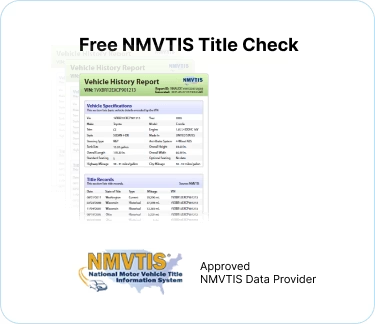
NMVTIS Title
History Check
History Check
Salvage/Rebuilt
Check
Check
Accident
Check
Check
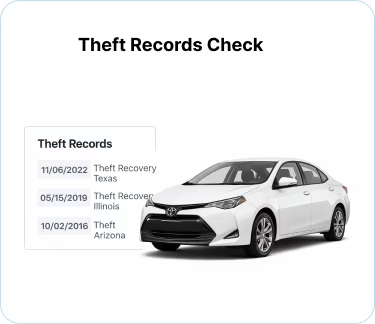
Theft
Check
Check
Open Lien
Check
Check
Past Sale
Listings
Listings
Safety
Recalls
Recalls
Odometer
Check
Check
Market Price
Analysis
Analysis
What Problems Does the 2003 FOREST RIVER Cedar Creek Have?
When considering a 2003 Forest River Cedar Creek, prospective buyers should be aware of common issues that can affect RVs of this vintage. While Forest River generally has a reputation for solid construction, age-related problems are inevitable. The most frequently reported concerns for RVs from this era, including Cedar Creek models, revolve around water intrusion and its consequences.
Water damage is a primary concern. This can stem from worn seals around windows, doors, roof vents, and other external penetrations. Over time, these seals degrade, allowing moisture to seep into the RV's structure. This can lead to delamination of the walls (where the outer FRP or aluminum skin separates from the underlying wood or foam core), soft spots in the floor, and mold or mildew growth. The wooden framing within the walls and floor can rot, compromising the structural integrity of the RV. A thorough inspection for any signs of water damage, musty odors, or soft spots is crucial.
Another area to watch for is the condition of the roof. The rubber or TPO membrane can become brittle, crack, or develop tears, leading to leaks. The sealant around edges and penetrations on the roof also needs regular inspection and maintenance.
Electrical and plumbing systems, while typically robust, can also develop issues with age. Wiring insulation can become brittle, and plumbing connections can loosen or develop leaks, especially with the constant vibration of travel. Appliances, such as the refrigerator, water heater, and air conditioner, may be original and could be nearing the end of their service life, potentially requiring costly repairs or replacement.
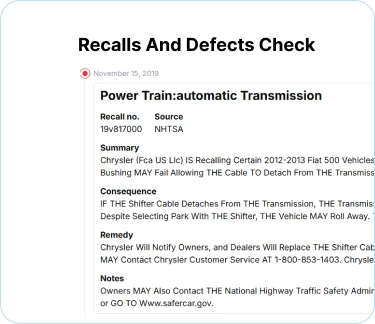
While specific recalls for the 2003 Cedar Creek are not widely publicized as major widespread defects, it is always advisable to check the National Highway Traffic Safety Administration (NHTSA) website for any potential recalls associated with the model year and specific VIN. Given the age, the most significant reliability concern is the overall condition due to maintenance history. An RV that has been regularly maintained, stored properly (ideally under cover), and used gently will likely fare much better than one that has been neglected. Long-term reliability hinges heavily on the preventative maintenance performed by previous owners. The frame and suspension components, while typically durable, should also be inspected for rust or damage, especially if the RV has been used in coastal or harsh environments.
Water damage is a primary concern. This can stem from worn seals around windows, doors, roof vents, and other external penetrations. Over time, these seals degrade, allowing moisture to seep into the RV's structure. This can lead to delamination of the walls (where the outer FRP or aluminum skin separates from the underlying wood or foam core), soft spots in the floor, and mold or mildew growth. The wooden framing within the walls and floor can rot, compromising the structural integrity of the RV. A thorough inspection for any signs of water damage, musty odors, or soft spots is crucial.
Another area to watch for is the condition of the roof. The rubber or TPO membrane can become brittle, crack, or develop tears, leading to leaks. The sealant around edges and penetrations on the roof also needs regular inspection and maintenance.
Electrical and plumbing systems, while typically robust, can also develop issues with age. Wiring insulation can become brittle, and plumbing connections can loosen or develop leaks, especially with the constant vibration of travel. Appliances, such as the refrigerator, water heater, and air conditioner, may be original and could be nearing the end of their service life, potentially requiring costly repairs or replacement.
While specific recalls for the 2003 Cedar Creek are not widely publicized as major widespread defects, it is always advisable to check the National Highway Traffic Safety Administration (NHTSA) website for any potential recalls associated with the model year and specific VIN. Given the age, the most significant reliability concern is the overall condition due to maintenance history. An RV that has been regularly maintained, stored properly (ideally under cover), and used gently will likely fare much better than one that has been neglected. Long-term reliability hinges heavily on the preventative maintenance performed by previous owners. The frame and suspension components, while typically durable, should also be inspected for rust or damage, especially if the RV has been used in coastal or harsh environments.
How long will the 2003 FOREST RIVER Cedar Creek last?
Estimating the exact mileage for an RV like the 2003 Forest River Cedar Creek is challenging as they are not measured in mileage in the same way as a car. Instead, their service life is often measured in years of use and the number of trips taken. Well-maintained Cedar Creek fifth-wheels can realistically provide 15-20 years or even more of enjoyable service. Durability is a strong suit, with many owners reporting consistent use for over a decade. The primary weaknesses that emerge over time are related to age and environmental exposure. As mentioned, water intrusion is a significant concern, and its impact can drastically shorten the usable lifespan if not addressed promptly. The chassis, suspension, and fundamental structure are generally robust, but components like tires, seals, and appliances will require periodic replacement. Regular, meticulous maintenance is the key differentiator between a Cedar Creek that lasts for two decades and one that becomes a money pit sooner.
What Technology & Safety Features are Included?
The 2003 Forest River Cedar Creek, being a product of its time, offers a more basic suite of technology and safety features compared to modern RVs. Built-in tech primarily focused on comfort and convenience rather than advanced connectivity. Entertainment systems typically included a standard television (often a CRT model in 2003, though some higher trims might have had early flat screens), a VCR or early DVD player, and an AM/FM radio with cassette or CD player, often integrated into an entertainment center. Speakers were usually mounted in the ceiling or walls.
Driver-assistance features were virtually non-existent in RVs of this era, as the focus was on the towing vehicle. Safety features for the RV itself were also more fundamental. These included standard safety glass for windows, sturdy door locks, and smoke and carbon monoxide detectors, which are essential for any living space. Emergency exit windows were also a standard safety feature in sleeping areas and living spaces. Fire extinguishers were typically provided. There were no advanced driver-assistance systems (ADAS) like lane departure warnings, automatic emergency braking, or adaptive cruise control, as these were not common or even feasible in RV construction at that time.
Optional features on higher trim levels or through dealer additions might have included satellite TV readiness, more sophisticated sound systems, or a generator for off-grid power. However, the core technology was geared towards providing a comfortable living environment rather than cutting-edge connectivity.
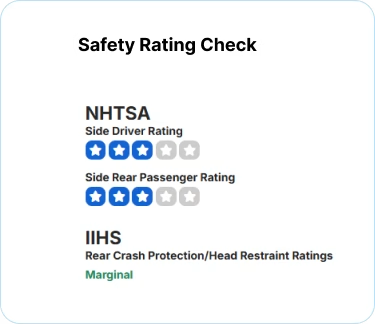
Crash-test ratings are not available for RVs in the same way they are for passenger vehicles. RVs are not subjected to standardized crash tests by organizations like the NHTSA or IIHS. The safety of occupants relies on the structural integrity of the RV, the towing vehicle's stability, and the proper use of safety equipment within the RV, such as seat belts (if available and used in designated seating areas) and the aforementioned detectors.
Driver-assistance features were virtually non-existent in RVs of this era, as the focus was on the towing vehicle. Safety features for the RV itself were also more fundamental. These included standard safety glass for windows, sturdy door locks, and smoke and carbon monoxide detectors, which are essential for any living space. Emergency exit windows were also a standard safety feature in sleeping areas and living spaces. Fire extinguishers were typically provided. There were no advanced driver-assistance systems (ADAS) like lane departure warnings, automatic emergency braking, or adaptive cruise control, as these were not common or even feasible in RV construction at that time.
Optional features on higher trim levels or through dealer additions might have included satellite TV readiness, more sophisticated sound systems, or a generator for off-grid power. However, the core technology was geared towards providing a comfortable living environment rather than cutting-edge connectivity.
Crash-test ratings are not available for RVs in the same way they are for passenger vehicles. RVs are not subjected to standardized crash tests by organizations like the NHTSA or IIHS. The safety of occupants relies on the structural integrity of the RV, the towing vehicle's stability, and the proper use of safety equipment within the RV, such as seat belts (if available and used in designated seating areas) and the aforementioned detectors.
What Colors Options are Available?
2003 FOREST RIVER Cedar Creek Prices and Market Value
When new, the 2003 Forest River Cedar Creek would have been a significant investment, with prices likely ranging from $40,000 to upwards of $70,000 or more, depending on the specific floor plan, features, and trim level. As with most RVs, depreciation is quite rapid in the first few years. However, by 2003, the significant depreciation hit had already occurred for this model.
Currently, the used market price for a 2003 Cedar Creek can vary widely, typically falling between $8,000 and $25,000. Factors heavily influencing resale value include the overall condition (especially the absence of water damage), maintenance history, original features, and the current market demand for used fifth-wheels. An RV that has been meticulously maintained, has a clear title, and appears in good cosmetic and functional condition will command a higher price. Conversely, those with visible wear, signs of neglect, or significant repairs needed will be at the lower end of the spectrum.
2003 FOREST RIVER Cedar Creek Cost of Ownership
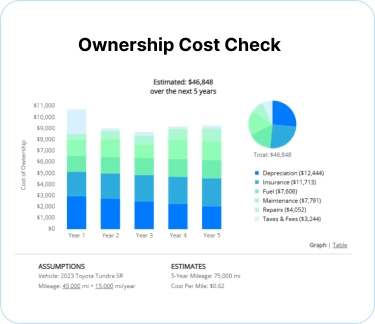
Owning a 2003 Forest River Cedar Creek can be economical relative to purchasing a new RV, but requires ongoing costs. Insurance rates will vary based on coverage, location, and RV value, but expect annual premiums in the hundreds to low thousands of dollars. Fuel costs are entirely dependent on the towing vehicle. Maintenance is critical; expect annual costs for roof checks, seal inspections, appliance servicing, and potential tire replacement (every 5-7 years). Repairs can range from minor ($100s) to major ($1,000s) if structural issues or major appliance failures occur. Overall, it's moderately costly to own, with upfront purchase price being lower, but ongoing upkeep and potential repair costs requiring budgeting.
2003 FOREST RIVER Cedar Creek Fuel Efficiency
Fuel Type
-
Fuel Capacity
-
City Mileage
-
Highway Mileage
-
2003 FOREST RIVER Cedar Creek Insurance
Insurance for a 2003 FOREST RIVER Cedar Creek is moderately priced, reflecting its status as a Vehicle with strong safety ratings and
reasonable repair costs.
How Does the 2003 FOREST RIVER Cedar Creek Compare to Other Vehicle?
The 2003 Forest River Cedar Creek competed in the popular mid-range fifth-wheel RV market. Its key rivals at the time included brands like Jayco Eagle, Keystone Montour, Grand Design Solitude (though Grand Design was newer), and Fleetwood Wilderness, among others.
Performance: As a fifth-wheel, performance is dictated by the towing vehicle. In terms of build quality and ride comfort, the Cedar Creek was generally considered a solid performer, offering a stable towing experience due to its robust chassis and fifth-wheel hitch design. Its rivals often offered comparable stability and handling.
Features: Cedar Creek models of this era typically aimed for a higher level of comfort and residential feel than some entry-level fifth-wheels. They often boasted more refined cabinetry, solid surface countertops, and well-appointed living spaces. Competitors like Jayco Eagle also focused on comfort, while some Keystone models might have offered more innovative layouts or amenities for the price point. Feature sets were generally comparable within this segment, with variations primarily in design aesthetics and specific appliance choices.
Reliability: Forest River generally held a good reputation for reliability, and the Cedar Creek was no exception. However, like all RVs of this age, reliability is heavily dependent on maintenance. Competitors like Jayco also had strong reliability track records. Brands like Keystone sometimes faced more mixed reviews regarding long-term build quality.
Price: The 2003 Cedar Creek offered good value for its features and build quality, typically positioned as a mid-tier option. It was generally priced competitively against its direct rivals.
Alternatives:
Performance: As a fifth-wheel, performance is dictated by the towing vehicle. In terms of build quality and ride comfort, the Cedar Creek was generally considered a solid performer, offering a stable towing experience due to its robust chassis and fifth-wheel hitch design. Its rivals often offered comparable stability and handling.
Features: Cedar Creek models of this era typically aimed for a higher level of comfort and residential feel than some entry-level fifth-wheels. They often boasted more refined cabinetry, solid surface countertops, and well-appointed living spaces. Competitors like Jayco Eagle also focused on comfort, while some Keystone models might have offered more innovative layouts or amenities for the price point. Feature sets were generally comparable within this segment, with variations primarily in design aesthetics and specific appliance choices.
Reliability: Forest River generally held a good reputation for reliability, and the Cedar Creek was no exception. However, like all RVs of this age, reliability is heavily dependent on maintenance. Competitors like Jayco also had strong reliability track records. Brands like Keystone sometimes faced more mixed reviews regarding long-term build quality.
Price: The 2003 Cedar Creek offered good value for its features and build quality, typically positioned as a mid-tier option. It was generally priced competitively against its direct rivals.
Alternatives:
- Similar: Jayco Eagle models from the same era offer a very similar value proposition in terms of comfort, features, and build quality. Monaco Safari Zebra (if it existed in that specific trim) might also be a comparable option for those seeking a slightly more premium feel.
- Potentially Better (depending on priorities): If a slightly newer model year is within budget, you might find RVs from around 2005-2008 from brands like Dutchmen or KZ RV that incorporate slightly more modern features while still offering good value. For those prioritizing ultimate build quality and willing to spend more, brands like Newmar Kountry Star or Tiffin Allegro Breeze (though these are typically motorhomes) might be considered, but they represent a significantly higher price bracket and different vehicle type.
Final Verdict: Is the 2003 FOREST RIVER Cedar Creek a Good Vehicle?
The 2003 Forest River Cedar Creek is an ideal choice for budget-conscious RVers, first-time fifth-wheel buyers, or those seeking a comfortable, reliable RV for seasonal or extended travel without the cost of a new unit. It offers a good balance of residential comfort and durable construction for its age.
It is certainly worth buying, but with significant caveats. The primary condition for a worthwhile purchase is a thorough pre-purchase inspection, specifically focusing on water damage and the condition of major systems (roof, appliances, plumbing, electrical). Buyers should be prepared for potential maintenance and repairs inherent to an older RV. Focusing on well-maintained examples with documented service history will yield the best results. Opting for a used 2003 Cedar Creek is the only option, as it is no longer in production. Specific trims that offer enhanced insulation or higher-end finishes might provide a slightly more comfortable experience, but the core value lies in the foundational build quality and overall layout.