
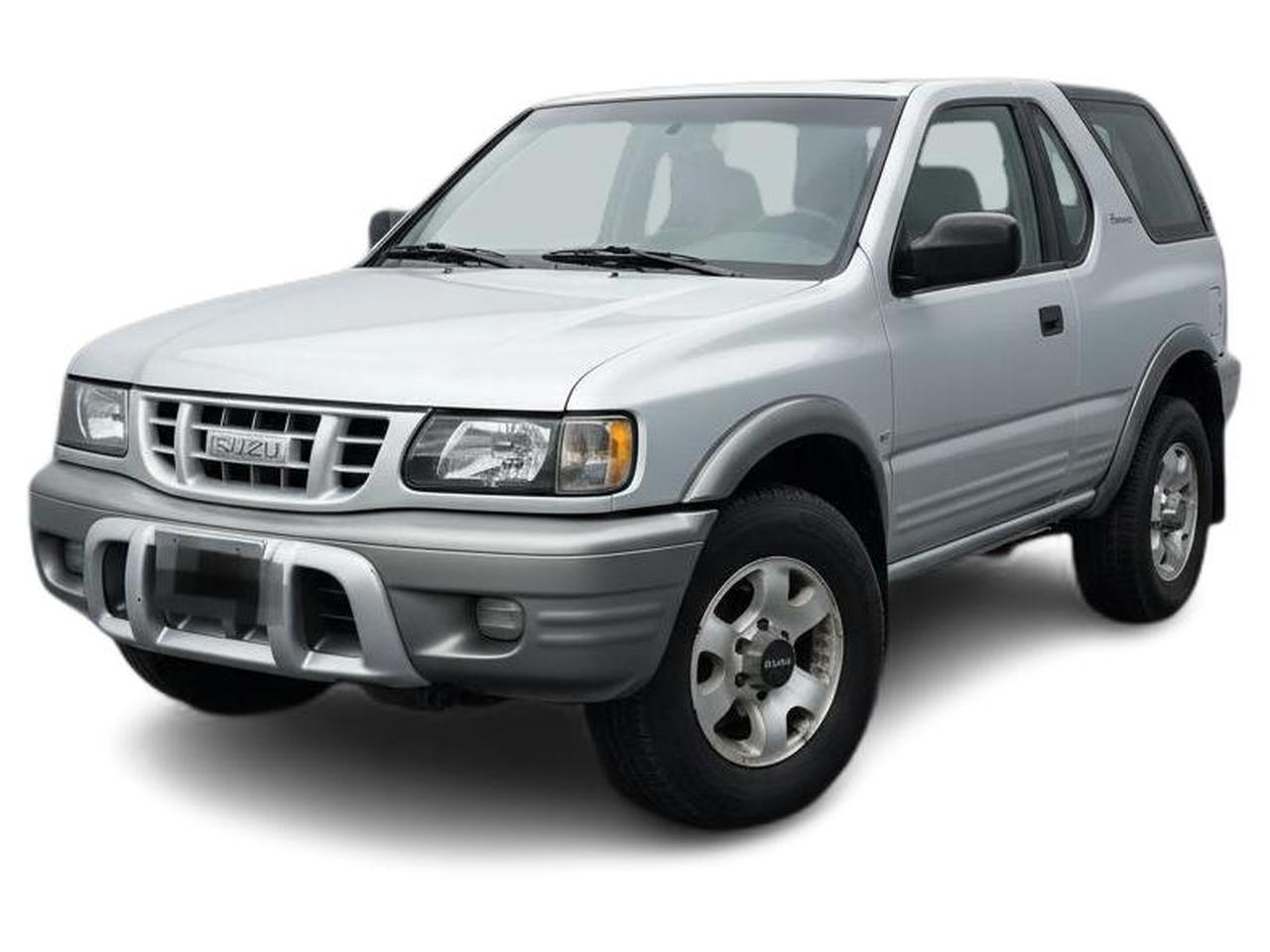
The 2000 Isuzu Amigo, part of a model run from 1998 to 2000, is a compact two-door SUV known for its rugged capability and distinctive off-road styling. Available in trims like the S and the LS, it offered a unique blend of personality and practicality. Its popularity stemmed from its accessible pricing and its appeal as a fun, lifestyle-oriented vehicle for adventurers.
The Good
The 2000 Isuzu Amigo offers appealing off-road capability and a distinctive, rugged design that excites adventure seekers. For practical buyers, it provides decent value and a generally reliable platform for its era, making it a fun yet somewhat sensible choice.
The Bad
Potential buyers of the 2000 Isuzu Amigo should be aware of its somewhat underpowered performance, especially with the base engine. Interior space is limited, and long-term reliability can be a concern with age, particularly regarding rust and transmission issues.
2000 Isuzu Amigo: Quick Overview
- Engine Options: The 2000 Isuzu Amigo typically came with two main engine options:
- 2.2L DOHC 16-valve 4-cylinder engine
- 3.2L DOHC 24-valve V6 engine
- Horsepower:
- The 4-cylinder engine produced approximately 130 horsepower.
- The V6 engine offered around 205 horsepower.
- Fuel Economy:
- Fuel economy varied by engine and transmission, but generally, it was in the range of 17-19 MPG in the city and 20-23 MPG on the highway.
- 0-60 Times:
- With the 4-cylinder engine, 0-60 mph times were in the slow 11-13 second range.
- The V6 engine offered a more sprightly acceleration, with 0-60 mph times around 8-9 seconds.
- Towing Capacity:
- The Isuzu Amigo was not primarily designed for heavy towing. Its towing capacity was generally limited, often around 1,000 to 2,000 lbs, depending on the configuration.
- Trim-Level Features:
- S Trim: The base model typically included standard features like power steering, intermittent wipers, AM/FM stereo, and 16-inch wheels. Air conditioning and power windows/locks might have been optional or part of a package.
- LS Trim: The LS trim offered more amenities, often including air conditioning, power windows, power door locks, cruise control, a CD player, and sometimes upgraded interior trim or seating. Optional features on both trims could include a removable roof panel for an open-air experience, alloy wheels, and fog lights.
2000 Isuzu Amigo Specifications
Vehicle Information
| Year | 2000 |
| Make | Isuzu |
| Model | Amigo |
| Trim | - |
| Style | Hard Top 2WD |
| Type | Sport Utility Vehicle |
| Category | Standard Sport Utility Vehicle |
Manufacturing Details
| Made In | United States |
| Manufacturing City | LAFAYETTE |
Dimensions
| Doors | 2-Door |
| Curb Weight | 3975 pounds |
| Gross Vehicle Weight Rating | 4450 pounds |
| Overall Height | 67.10 inches |
| Overall Length | 170.30 inches |
| Overall Width | 70.40 inches |
| Wheelbase Length | 96.90 inches |
| Standard Seating | 5 |
Engine & Performance
| Engine | 2.2L I4 |
| Engine Size | 2.2L |
| Engine Cylinders | 6 |
| Transmission | 5-Speed Manual |
| Transmission Type | Manual |
| Transmission Speeds | 5-Speed |
| Drivetrain | Rear-Wheel Drive |
Additional Features
| Anti-Brake System | 4-Wheel ABS |
| Steering Type | Rack & Pinion |
Pricing
| Manufacturer Suggested Retail Price (MSRP) | $15,730 |
| Invoice Price | $14,943 |
| Delivery Charges | - |
Vehicle History Report
Vehicle
Specifications
Specifications
Ownership
History
History
All History
Events
Events
NMVTIS Title
History Check
History Check
Salvage/Rebuilt
Check
Check
Accident
Check
Check
Theft
Check
Check
Open Lien
Check
Check
Past Sale
Listings
Listings
Safety
Recalls
Recalls
Odometer
Check
Check
Market Price
Analysis
Analysis
What Problems Does the 2000 Isuzu Amigo Have?
The 2000 Isuzu Amigo, like many vehicles of its age, can exhibit several common problems. One frequently reported issue relates to the automatic transmission, which can experience slipping or failure over time, particularly with higher mileage. Regular fluid changes are crucial, but even then, some units may develop issues. Another concern is engine overheating, especially in the 4-cylinder models, which could point to radiator or cooling system problems.Rust and corrosion are significant long-term reliability concerns, particularly in areas with harsh winters or high humidity. Frame rust, body panel rust, and exhaust system corrosion are common. Buyers should thoroughly inspect the undercarriage and body for signs of significant rust damage.Power steering components can also wear out, leading to leaks or stiff steering. The clutch on manual transmission models can also be a wear item. Electrical issues, such as faulty window regulators, power lock actuators, and intermittent dashboard warning lights, are not uncommon. While there aren't widespread, model-year-specific recalls that stand out for the 2000 Amigo, it's always advisable to check for any outstanding recalls with the VIN. Overall, while the Amigo can be a fun vehicle, its long-term reliability is dependent on consistent maintenance and the owner's willingness to address age-related issues. The V6 engine is generally considered more robust than the 4-cylinder. Specific issues by model year within the 2000 model are less distinct, with most problems stemming from general wear and tear and the inherent characteristics of vehicles from this era.
How long will the 2000 Isuzu Amigo last?
Based on owner data and anecdotal evidence, a well-maintained 2000 Isuzu Amigo can reasonably achieve between 150,000 to 200,000 miles, and in some cases, even more. However, this heavily depends on the owner's diligence with maintenance. Those who consistently change fluids (especially transmission fluid), address minor leaks promptly, and perform regular tune-ups tend to experience better longevity. The long-term durability is somewhat hampered by its susceptibility to rust, which can significantly shorten its usable lifespan in certain climates. The V6 engine generally shows better long-term durability than the 4-cylinder. Weaknesses that emerge over time include potential transmission issues and wear on suspension components, which are common for SUVs of this age and design. Regular inspections for rust are paramount for ensuring long-term service.
What Technology & Safety Features are Included?
The 2000 Isuzu Amigo offers a relatively basic suite of technology and safety features, reflecting its era. For entertainment, most models came standard with an AM/FM stereo system, often with a cassette player. An optional CD player was available, particularly on the higher LS trim levels. While not considered a tech-forward vehicle, it provided the essential audio entertainment for its time. Driver-assistance features were minimal; cruise control was available on some trims, especially the LS. There were no advanced driver-assistance systems (ADAS) like lane departure warnings or adaptive cruise control. Safety features were more conventional for the period. Standard safety equipment typically included front airbags for the driver and passenger. Anti-lock Braking System (ABS) was generally available, often as an option on the S trim and standard on the LS trim, providing improved braking control. Seatbelts were, of course, standard. The Amigo's body-on-frame construction provided a sense of robustness. Regarding crash-test ratings, specific ratings for the 2000 Isuzu Amigo from agencies like the NHTSA or IIHS are not readily available or may be limited due to its niche status and age. However, vehicles from this era generally performed moderately in crash tests compared to modern standards. The Amigo's relatively compact size and the lack of advanced crumple zones or restraint systems meant that crash protection would be more basic. Optional features that enhanced the user experience included a removable rear soft top or hardtop on some models, allowing for an open-air driving experience, which was a significant draw for many buyers looking for a more adventurous feel.
What Colors Options are Available?
2000 Isuzu Amigo Prices and Market Value
When new, the 2000 Isuzu Amigo had a starting MSRP that typically ranged from around $17,000 to $21,000, depending on the trim level and optional equipment. Currently, the used market prices for a 2000 Isuzu Amigo vary significantly based on condition, mileage, and whether it's equipped with the 4-cylinder or V6 engine. Expect prices to range from approximately $2,000 to $6,000 for vehicles in decent running order. Those in excellent condition with low mileage and the desirable V6 engine could command higher prices. The Amigo has experienced substantial depreciation since its debut, as is typical for vehicles of this age. Factors affecting its resale value include rust presence, mechanical condition (especially transmission health), originality of parts, and overall cosmetic appeal. A well-maintained Amigo with a clean history and minimal rust will hold its value better than one that has been neglected or used heavily off-road without proper care.
2000 Isuzu Amigo Cost of Ownership
Owning a 2000 Isuzu Amigo can be moderately economical for fuel, especially with the 4-cylinder engine, though the V6 will consume more. Insurance costs are generally reasonable, falling into a mid-range for its class. However, maintenance and repair costs can become significant as the vehicle ages. Parts availability for some components may be less common than for more popular brands, potentially increasing labor and part expenses. Long-term ownership costs are heavily influenced by the vehicle's condition, particularly the health of the transmission and the presence of rust. It's not necessarily costly to own if kept in good condition with proactive maintenance, but repairs for major issues can escalate expenses.
2000 Isuzu Amigo Fuel Efficiency
Fuel Type
Gasoline
Fuel Capacity
17.70 gallons
City Mileage
20 miles/gallon
Highway Mileage
23 miles/gallon
2000 Isuzu Amigo Safety Rating
NHTSA
IIHS
2000 Isuzu Amigo Warranty
Basic
Original warranty
36 months / 50,000 miles
Estimated remaining
Expired
Powertrain
Original warranty
120 months / 120,000 miles
Estimated remaining
Expired
Rust
Original warranty
72 months / 100,000 miles
Estimated remaining
Expired
2000 Isuzu Amigo Insurance
Insurance for a 2000 Isuzu Amigo is moderately priced, reflecting its status as a Sport Utility Vehicle with strong safety ratings and
reasonable repair costs.
How Does the 2000 Isuzu Amigo Compare to Other Sport Utility Vehicle?
The 2000 Isuzu Amigo competed in a niche segment of compact, rugged SUVs. Its primary rivals included vehicles like the Jeep Wrangler, Suzuki Vitara/Sidekick, and perhaps smaller, car-based SUVs such as the Honda CR-V or Toyota RAV4, though the Amigo leaned more towards the Wrangler's off-road persona.
Performance: The Amigo's base 4-cylinder engine was notably underpowered compared to many rivals. The V6 offered much-needed pep but still wasn't class-leading. The Jeep Wrangler often offered comparable or better off-road performance and engine options. The CR-V and RAV4 offered smoother on-road performance and better acceleration with their car-based platforms.
Features: The Amigo offered a unique removable roof option that few competitors could match directly, providing an open-air experience akin to the Wrangler. However, its interior features and technology were generally simpler than those found in the CR-V or RAV4, which often boasted more modern amenities and comfort features.
Reliability: Reliability is a mixed bag for the Amigo. While its 3.2L V6 engine is generally robust, transmission issues are a known concern across model years. The Jeep Wrangler has its own set of reliability challenges but is often revered for its mechanical simplicity. The Japanese competitors like Honda and Toyota typically boast superior long-term reliability and fewer major mechanical woes.
Price: The Amigo was positioned as a more affordable option compared to the Jeep Wrangler, offering a similar spirit at a lower price point. It was often priced competitively against other compact SUVs.
Recommendations:
Performance: The Amigo's base 4-cylinder engine was notably underpowered compared to many rivals. The V6 offered much-needed pep but still wasn't class-leading. The Jeep Wrangler often offered comparable or better off-road performance and engine options. The CR-V and RAV4 offered smoother on-road performance and better acceleration with their car-based platforms.
Features: The Amigo offered a unique removable roof option that few competitors could match directly, providing an open-air experience akin to the Wrangler. However, its interior features and technology were generally simpler than those found in the CR-V or RAV4, which often boasted more modern amenities and comfort features.
Reliability: Reliability is a mixed bag for the Amigo. While its 3.2L V6 engine is generally robust, transmission issues are a known concern across model years. The Jeep Wrangler has its own set of reliability challenges but is often revered for its mechanical simplicity. The Japanese competitors like Honda and Toyota typically boast superior long-term reliability and fewer major mechanical woes.
Price: The Amigo was positioned as a more affordable option compared to the Jeep Wrangler, offering a similar spirit at a lower price point. It was often priced competitively against other compact SUVs.
Recommendations:
- Similar Alternative: For a similar rugged, body-on-frame SUV experience with better established reliability and parts availability, a well-maintained Suzuki Vitara (especially the 5-door versions) or an early model Jeep Cherokee (XJ) could be considered.
- Better Alternative (On-road focus): If on-road comfort, better fuel economy, and superior reliability are priorities, a Honda CR-V or Toyota RAV4 from the same era would be a significantly better choice.
- Iconic Alternative (Off-road focus): If the ultimate off-road capability and iconic status are desired, a Jeep Wrangler (TJ generation) is the benchmark, though typically at a higher price and with its own set of maintenance demands.
Final Verdict: Is the 2000 Isuzu Amigo a Good Sport Utility Vehicle?
The 2000 Isuzu Amigo is ideally suited for budget-conscious buyers who prioritize unique styling, a fun, rugged image, and the desire for an open-air driving experience. It's a niche vehicle that appeals to those who don't need extreme practicality or cutting-edge technology.
Whether it's worth buying hinges heavily on condition. A well-maintained example, particularly with the more robust 3.2L V6 engine and manual transmission, could be a fun and capable secondary vehicle for weekend adventures. However, potential buyers must be diligent in inspecting for rust and checking the transmission's health.
It is certainly not a wise purchase for someone seeking a reliable daily driver without a significant commitment to potential repairs. Buying used is the only option, and focusing on lower-mileage vehicles with a documented maintenance history and minimal rust is paramount. Specific trims like the LS with the V6 engine offer a better balance of power and features, but the underlying concerns about age and potential issues remain.
Whether it's worth buying hinges heavily on condition. A well-maintained example, particularly with the more robust 3.2L V6 engine and manual transmission, could be a fun and capable secondary vehicle for weekend adventures. However, potential buyers must be diligent in inspecting for rust and checking the transmission's health.
It is certainly not a wise purchase for someone seeking a reliable daily driver without a significant commitment to potential repairs. Buying used is the only option, and focusing on lower-mileage vehicles with a documented maintenance history and minimal rust is paramount. Specific trims like the LS with the V6 engine offer a better balance of power and features, but the underlying concerns about age and potential issues remain.