The 2018 Harley-Davidson FLHR, commonly known as the Road King, is a classic cruiser with a rich heritage dating back decades. Its iconic body style features a large fairing, comfortable seating, and ample storage. The FLHR model line has been a staple in Harley-Davidson's touring lineup for many years. It stands out for its blend of classic styling, comfortable ride, and versatile touring capabilities, making it a popular choice for riders who appreciate traditional American motorcycle aesthetics and long-distance comfort.

The Good
The 2018 FLHR excels in providing a supremely comfortable and stable ride, ideal for long journeys. Its classic, timeless design appeals to emotional desires, while its robust Milwaukee-Eight engine offers reliable power. Practical buyers appreciate its touring amenities and the emotional connection to the Harley-Davidson legacy.
The Bad
Potential buyers should be aware of the FLHR's considerable weight, which can make low-speed maneuvering challenging for some. Fuel economy is not a strong suit, and the infotainment system, while functional, may feel dated compared to more modern offerings. Some riders report a firm seat on extended rides.
2018 Harley-Davidson FLHR: Quick Overview
- Engine: The 2018 Harley-Davidson FLHR is powered by the Milwaukee-Eight 107 V-Twin engine.
- Displacement: 1745cc (107 cubic inches).
- Horsepower: Approximately 93 horsepower at 5,020 rpm (claimed).
- Torque: Approximately 111 lb-ft at 3,250 rpm (claimed).
- Fuel Economy: Estimated around 43 MPG (city/highway combined). Actual mileage can vary significantly based on riding style and conditions.
- 0-60 mph: While official times are not typically published by Harley-Davidson, independent tests generally place the 0-60 mph time for bikes with the Milwaukee-Eight 107 in the range of 3.5 to 4.5 seconds.
- Towing Capacity: The FLHR is not designed for towing in the traditional sense (like a trailer). It is a touring motorcycle meant for carrying luggage.
- Transmission: 6-speed Cruise Drive manual transmission.
- Clutch: Hydraulic, wet clutch.
- Frame: Steel, uniframe, cradle.
- Front Suspension: 49mm telescopic fork.
- Rear Suspension: Premium hand-adjustable rear emulsion shocks.
- Front Brakes: 32mm, 4-piston fixed front and rear.
- Rear Brakes: 32mm, 4-piston fixed front and rear.
- Wheels: Front: 17-inch cast aluminum. Rear: 16-inch cast aluminum.
- Tires: Front: Dunlop H-D Series Bias-Ply, 130/90B17. Rear: Dunlop H-D Series Bias-Ply, 180/65B16.
- Wheelbase: 63.5 inches.
- Seat Height: 29.5 inches (laden).
- Ground Clearance: 5.1 inches.
- Rake: 26 degrees.
- Trail: 6.7 inches.
- Fuel Capacity: 6 gallons.
- Dry Weight: Approximately 770 lbs.
- Wet Weight: Approximately 815 lbs.
- Standard Features (FLHR):
- Batwing fairing with windshield.
- Leather-wrapped hard-shell saddlebags with locks.
- Classic chrome tank console.
- Halogen headlight and auxiliary passing lamps.
- Cruise control.
- Analog gauges with a digital display.
- Anti-lock Braking System (ABS) - standard on 2018 models.
- Key Trim-Level Features: The FLHR itself is a singular model within the Road King family for this year, distinguished by its classic touring setup. It represents the core Road King experience.
2018 Harley-Davidson FLHR Specifications
Vehicle Information
| Year | 2018 |
| Make | Harley-Davidson |
| Model | FLHR |
| Trim | - |
| Style | - |
| Type | Motorcycle |
| Category | Motorcycle |
Manufacturing Details
| Made In | United States |
| Manufacturing City | YORK |
Dimensions
| Doors | - |
| Curb Weight | - |
| Gross Vehicle Weight Rating | - |
| Overall Height | - |
| Overall Length | - |
| Overall Width | - |
| Wheelbase Length | - |
| Standard Seating | - |
Engine & Performance
| Engine | 1750CC |
| Engine Size | 1750L |
| Engine Cylinders | 2 |
| Transmission | - |
| Transmission Type | - |
| Transmission Speeds | - |
| Drivetrain | - |
Additional Features
| Anti-Brake System | - |
| Steering Type | - |
Pricing
| Manufacturer Suggested Retail Price (MSRP) | - |
| Invoice Price | - |
| Delivery Charges | - |
Vehicle History Report
Vehicle
Specifications
Specifications
Ownership
History
History
All History
Events
Events
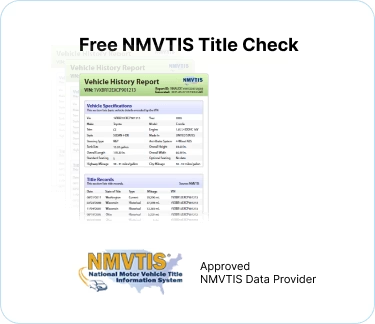
NMVTIS Title
History Check
History Check
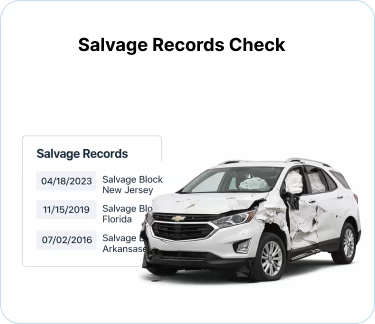
Salvage/Rebuilt
Check
Check
Accident
Check
Check
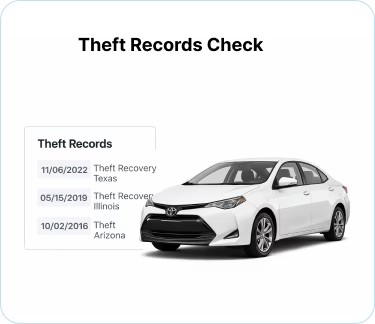
Theft
Check
Check
Open Lien
Check
Check
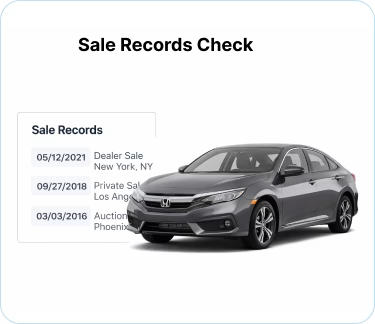
Past Sale
Listings
Listings
Safety
Recalls
Recalls
Odometer
Check
Check
Market Price
Analysis
Analysis
What Problems Does the 2018 Harley-Davidson FLHR Have?
The 2018 Harley-Davidson FLHR, equipped with the new Milwaukee-Eight engine, generally enjoys a reputation for robust reliability, especially when compared to earlier Harley engines. However, as with any motorcycle, particularly those with a few years on them, some common themes emerge in owner discussions and reviews.
One area that saw some early attention was related to the hydraulic clutch system. Some owners reported a stiffer clutch lever pull than expected or occasional issues with clutch engagement. While not a widespread epidemic, it's something to be mindful of during a test ride or pre-purchase inspection.
The Milwaukee-Eight engine itself, while a significant improvement in power and refinement, did have a few early adopter concerns. Some owners noted minor oil leaks from the rocker box gaskets or transmission seals. This was often addressed under warranty by dealers. Additionally, while the engine runs cooler overall, some vibrations, particularly at idle, are a characteristic of the V-twin design, though the Milwaukee-Eight is generally smoother than its predecessors.
Infotainment systems in Harley-Davidson motorcycles can sometimes be a source of minor electronic glitches. While the 2018 FLHR's system is functional, some users might experience occasional Bluetooth connectivity issues or minor display quirks. These are usually resolved with software updates or simple resets.
Regarding recalls, it's essential to check the National Highway Traffic Safety Administration (NHTSA) website for any specific recalls that may have been issued for the 2018 model year or the FLHR specifically. Harley-Davidson has, in the past, issued recalls for various components, including fuel pump issues or electrical system concerns on certain models. Always ensure any recalled items have been addressed by a qualified dealer.
Long-term reliability for the FLHR is generally considered good. The chassis and suspension are robust, and the Milwaukee-Eight engine is designed for longevity with proper maintenance. The primary factors influencing long-term reliability will be the owner's adherence to the scheduled maintenance intervals, the quality of parts used for any repairs, and the riding conditions the motorcycle is subjected to. Overall, the 2018 FLHR is viewed as a dependable touring machine, but like any vehicle, attention to maintenance is key.
One area that saw some early attention was related to the hydraulic clutch system. Some owners reported a stiffer clutch lever pull than expected or occasional issues with clutch engagement. While not a widespread epidemic, it's something to be mindful of during a test ride or pre-purchase inspection.
The Milwaukee-Eight engine itself, while a significant improvement in power and refinement, did have a few early adopter concerns. Some owners noted minor oil leaks from the rocker box gaskets or transmission seals. This was often addressed under warranty by dealers. Additionally, while the engine runs cooler overall, some vibrations, particularly at idle, are a characteristic of the V-twin design, though the Milwaukee-Eight is generally smoother than its predecessors.
Infotainment systems in Harley-Davidson motorcycles can sometimes be a source of minor electronic glitches. While the 2018 FLHR's system is functional, some users might experience occasional Bluetooth connectivity issues or minor display quirks. These are usually resolved with software updates or simple resets.
Regarding recalls, it's essential to check the National Highway Traffic Safety Administration (NHTSA) website for any specific recalls that may have been issued for the 2018 model year or the FLHR specifically. Harley-Davidson has, in the past, issued recalls for various components, including fuel pump issues or electrical system concerns on certain models. Always ensure any recalled items have been addressed by a qualified dealer.
Long-term reliability for the FLHR is generally considered good. The chassis and suspension are robust, and the Milwaukee-Eight engine is designed for longevity with proper maintenance. The primary factors influencing long-term reliability will be the owner's adherence to the scheduled maintenance intervals, the quality of parts used for any repairs, and the riding conditions the motorcycle is subjected to. Overall, the 2018 FLHR is viewed as a dependable touring machine, but like any vehicle, attention to maintenance is key.
How long will the 2018 Harley-Davidson FLHR last?
The 2018 Harley-Davidson FLHR is built for the long haul, and with consistent, proper maintenance, owners can expect it to last for well over 100,000 miles. Many dedicated riders push their Harley-Davidsons much further, with some reaching 200,000 miles or more. The Milwaukee-Eight engine is designed for durability, and the overall chassis and components are robust.
Regular oil changes, filter replacements, and checking fluid levels are crucial. The primary points of wear over time will likely be wear items such as tires, brake pads, and possibly suspension components (seals and shocks) after many years and miles. The clutch and transmission are generally very durable. Weaknesses that may emerge over extreme mileage could include eventual wear on the cam chain tensioners if not maintained or potential issues with the electrical system as connectors age, though this is not unique to this model year. Overall, the FLHR exhibits excellent long-term durability.
What Technology & Safety Features are Included?
The 2018 Harley-Davidson FLHR offers a functional suite of technology focused on the rider's experience and safety, rather than an overwhelming array of complex electronic aids. Standard features include a robust halogen headlight and auxiliary passing lamps for excellent nighttime visibility. The Batwing fairing houses a 25-watt, 2-speaker Boom!™ Audio system, offering AM/FM radio and Bluetooth connectivity for streaming music from a smartphone. While it lacks a touch screen, it's operated via hand controls and a display integrated into the analog gauges.
Comfort features are also paramount. Cruise control is standard, significantly enhancing the experience on long highway stretches. The instrument cluster features classic analog speedometer and tachometer dials, complemented by a digital screen displaying odometer, trip meters, fuel level, and gear selection. Security features include a keyless ignition system with a proximity fob and a factory-installed engine immobilizer.
In terms of driver assistance, the 2018 FLHR comes standard with Anti-lock Braking System (ABS) for both front and rear wheels, a critical safety feature that prevents wheel lock-up during hard braking, especially in adverse conditions. This is a significant practical safety enhancement.
Optional features available from Harley-Davidson or through the aftermarket can enhance the tech package. These might include upgraded speakers for better sound quality, GPS navigation modules that can be integrated into the existing infotainment system, heated grips for cold-weather riding, or even more sophisticated alarm systems. However, advanced driver-assistance systems like adaptive cruise control, blind-spot monitoring, or lane-keeping assist are not found on this model or were not common options for Harley-Davidson touring bikes of this era.
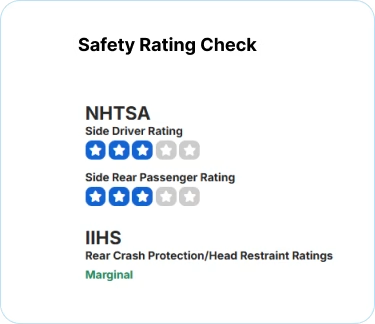
Crash-test ratings are not typically performed on motorcycles in the same way they are for cars. However, the FLHR is built with a strong steel frame and features like ABS contribute to its overall safety profile. The weight and stability of the motorcycle also play a role in mitigating the severity of potential incidents.
Comfort features are also paramount. Cruise control is standard, significantly enhancing the experience on long highway stretches. The instrument cluster features classic analog speedometer and tachometer dials, complemented by a digital screen displaying odometer, trip meters, fuel level, and gear selection. Security features include a keyless ignition system with a proximity fob and a factory-installed engine immobilizer.
In terms of driver assistance, the 2018 FLHR comes standard with Anti-lock Braking System (ABS) for both front and rear wheels, a critical safety feature that prevents wheel lock-up during hard braking, especially in adverse conditions. This is a significant practical safety enhancement.
Optional features available from Harley-Davidson or through the aftermarket can enhance the tech package. These might include upgraded speakers for better sound quality, GPS navigation modules that can be integrated into the existing infotainment system, heated grips for cold-weather riding, or even more sophisticated alarm systems. However, advanced driver-assistance systems like adaptive cruise control, blind-spot monitoring, or lane-keeping assist are not found on this model or were not common options for Harley-Davidson touring bikes of this era.
Crash-test ratings are not typically performed on motorcycles in the same way they are for cars. However, the FLHR is built with a strong steel frame and features like ABS contribute to its overall safety profile. The weight and stability of the motorcycle also play a role in mitigating the severity of potential incidents.
What Colors Options are Available?
2018 Harley-Davidson FLHR Prices and Market Value
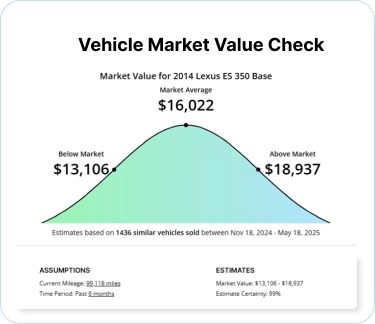
When new, the 2018 Harley-Davidson FLHR had an MSRP typically starting in the range of $20,000 to $22,000, depending on color options and any minor factory add-ons. Today, the used market prices for a 2018 FLHR generally range from $13,000 to $18,000, heavily influenced by mileage, overall condition, maintenance history, and any aftermarket modifications.
Harley-Davidson motorcycles, especially iconic models like the Road King, tend to hold their value reasonably well compared to many other brands. Depreciation is most significant in the first few years of ownership. Factors that positively affect resale value include low mileage, a documented service history, stock or high-quality tasteful modifications, and excellent cosmetic condition. Conversely, excessive wear, neglect, or poorly executed aftermarket customizations can significantly reduce its market value. The enduring appeal of the Harley-Davidson brand and the classic design of the FLHR contribute to its strong residual value.
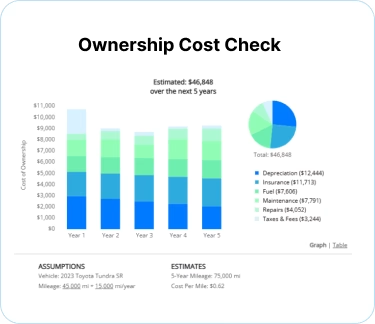
2018 Harley-Davidson FLHR Cost of Ownership
Owning a 2018 Harley-Davidson FLHR is generally considered moderately costly, certainly not economical in the same vein as a small commuter car. Insurance premiums can vary widely based on rider experience, location, and coverage, but expect it to be higher than for smaller displacement motorcycles. Fuel economy, around 43 MPG, is average for its class, meaning regular fill-ups add up. Maintenance, while straightforward for basic tasks, can be expensive if relying on dealerships for more complex jobs or specialized Harley-Davidson tools. Repairs, especially for engine or transmission work, can also be significant. While not cheap to own, the cost is often offset by the rider's enjoyment and the bike's long-term durability.
2018 Harley-Davidson FLHR Fuel Efficiency
Fuel Type
Gasoline
Fuel Capacity
-
City Mileage
-
Highway Mileage
-
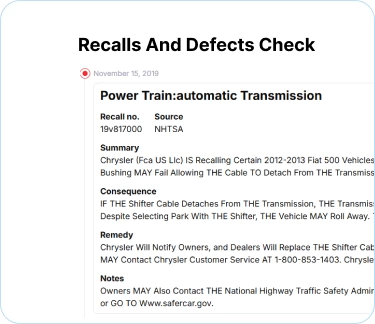
2018 Harley-Davidson FLHR Recalls & Defects
Power Train:clutch Assembly
Recall date
2018-10-18
Recall no.
18v734000
Source
NHTSA
Summary
Harley-Davidson Motor Company (Harley-Davidson) IS Recalling Certain 2017-2018 Police Road King (Flhp), Road King (flhr), Road King Special (flhrxs), Electra Glide Ultra Classic (flhtcu), Ultra Limited (flhtk), Ultra Limited Low (flhtkl), Ultra Limited Shrine (flhtk Shrine), Police Electra Glide (flhtp), Street Glide (flhx), Street Glide Special (flhxs), Road Glide Ultra (fltru), Road Glide (fltrx), Road Glide Special (fltrxs), Freewheeler (flrt), TRI Glide Ultra (flhtcutg), CVO Limited (flhtkse) and CVO Street Glide (flhxse) Motorcycles, 2017 Softail Slim S (flss), FAT BOY S (flstfbs) and CVO PRO Street Breakout (fxse) Motorcycles, 2018 115th Anniversary Ultra Limited (flhtk Anv), 115th Anniversary Street Glide (flhx Anv), 115th Anniversary Street Glide Special (flhxs Anx), 115th Anniversary TRI Glide Ultra (flhtcutg Anv), 115th Anniversary CVO Limited (flhtkse Anv) and CVO Road Glide (fltrxse) Motorcycles. THE Secondary Clutch Actuator Cylinder MAY Leak Fluid Internally and THE Clutch Master Cylinder MAY Lose THE Ability TO Generate Enough Lift TO Disengage THE Clutch.
Consequence
IF THE Clutch Cannot BE Disengaged IT CAN Result IN A Loss OF Control, Increasing THE Risk OF A Crash.
Remedy
Harley-Davidson Will Notify Owners, and Dealers Will Install A NEW Secondary Clutch Actuator Piston Assembly, Free OF Charge. THE Recall Began November 5, 2018. Owners MAY Contact Harley-Davidson Customer Service AT 1-800-258-2464. Harley-davidson's Number FOR This Recall IS 0173.
Notes
Owners MAY Also Contact THE National Highway Traffic Safety Administration Vehicle Safety Hotline AT 1-888-327-4236 (Tty 1-800-424-9153), or GO TO Www.safercar.gov.
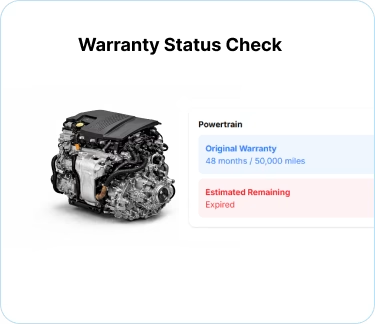
2018 Harley-Davidson FLHR Warranty
Basic
Original warranty
0 months / No data
Estimated remaining
Expired
Powertrain
Original warranty
0 months / No data
Estimated remaining
Expired
Rust
Original warranty
0 months / No data
Estimated remaining
Expired
2018 Harley-Davidson FLHR Insurance
Insurance for a 2018 Harley-Davidson FLHR is moderately priced, reflecting its status as a Motorcycle with strong safety ratings and
reasonable repair costs.
How Does the 2018 Harley-Davidson FLHR Compare to Other Motorcycle?
The 2018 Harley-Davidson FLHR competes in the large-displacement cruiser/touring segment. Its primary rivals include the Indian Chief Vintage, and to some extent, bikes like the Honda Gold Wing F6B or Yamaha Star Venture if looking at more modern, feature-rich touring options, though the FLHR leans more towards classic cruiser aesthetics.
Performance: The FLHR's Milwaukee-Eight 107 engine provides strong, low-end torque essential for comfortable cruising and passing. It's not a performance machine in terms of acceleration against sportbikes, but it offers ample power for its intended purpose. The Indian Chief Vintage also offers a powerful V-twin with impressive torque. The Gold Wing F6B and Star Venture, however, generally offer more refined and powerful engines with smoother power delivery, often excelling in highway cruising and acceleration.
Features: The FLHR is relatively spartan compared to some rivals. It features essential touring amenities like cruise control and saddlebags, but its infotainment system is basic. The Indian Chief Vintage offers a comparable level of features, often with a slightly more integrated feel. Bikes like the Honda Gold Wing F6B or Yamaha Star Venture are significantly more advanced, boasting sophisticated infotainment systems with large touchscreens, Apple CarPlay/Android Auto, advanced navigation, and more comprehensive rider aids.
Reliability: Harley-Davidson has improved reliability significantly, and the Milwaukee-Eight engine is generally robust. However, historically, some Japanese brands have a reputation for slightly higher overall long-term reliability and fewer minor issues. The Indian brand has also made strides, but like Harley-Davidson, complex electronics can sometimes be a point of concern. The Gold Wing and Star Venture are renowned for their bulletproof reliability.
Price: The 2018 FLHR offered a solid value proposition within the Harley-Davidson lineup, typically priced below the Ultra Limited or other fully-dressed touring models. The Indian Chief Vintage was often in a similar price bracket. The Honda Gold Wing F6B and Yamaha Star Venture, being more technologically advanced and purpose-built touring machines, often commanded higher initial prices, especially when new.
Alternatives:
Performance: The FLHR's Milwaukee-Eight 107 engine provides strong, low-end torque essential for comfortable cruising and passing. It's not a performance machine in terms of acceleration against sportbikes, but it offers ample power for its intended purpose. The Indian Chief Vintage also offers a powerful V-twin with impressive torque. The Gold Wing F6B and Star Venture, however, generally offer more refined and powerful engines with smoother power delivery, often excelling in highway cruising and acceleration.
Features: The FLHR is relatively spartan compared to some rivals. It features essential touring amenities like cruise control and saddlebags, but its infotainment system is basic. The Indian Chief Vintage offers a comparable level of features, often with a slightly more integrated feel. Bikes like the Honda Gold Wing F6B or Yamaha Star Venture are significantly more advanced, boasting sophisticated infotainment systems with large touchscreens, Apple CarPlay/Android Auto, advanced navigation, and more comprehensive rider aids.
Reliability: Harley-Davidson has improved reliability significantly, and the Milwaukee-Eight engine is generally robust. However, historically, some Japanese brands have a reputation for slightly higher overall long-term reliability and fewer minor issues. The Indian brand has also made strides, but like Harley-Davidson, complex electronics can sometimes be a point of concern. The Gold Wing and Star Venture are renowned for their bulletproof reliability.
Price: The 2018 FLHR offered a solid value proposition within the Harley-Davidson lineup, typically priced below the Ultra Limited or other fully-dressed touring models. The Indian Chief Vintage was often in a similar price bracket. The Honda Gold Wing F6B and Yamaha Star Venture, being more technologically advanced and purpose-built touring machines, often commanded higher initial prices, especially when new.
Alternatives:
- Similar Alternative: The Indian Chief Vintage is a very direct competitor, offering classic styling, powerful V-twin performance, and a comparable touring setup. It appeals to those who appreciate American heritage but might want an alternative to Harley-Davidson.
- More Modern/Feature-Rich: The Honda Gold Wing F6B (if available used from that era) or the Yamaha Star Venture offer a more contemporary touring experience with superior technology, advanced comfort features, and often better handling dynamics for those prioritizing long-distance comfort and modern amenities over classic cruiser aesthetics.
- Pure Cruiser Alternative: If the touring aspect is less critical and a pure cruiser experience is desired, models like the Indian Springfield or even other Harley-Davidson touring models stripped down could be considered.
Final Verdict: Is the 2018 Harley-Davidson FLHR a Good Motorcycle?
The 2018 Harley-Davidson FLHR is an ideal motorcycle for riders who cherish the quintessential American cruiser touring experience. It's perfect for those who value classic styling, a comfortable and stable ride for long distances, and the iconic rumble of a V-twin engine. It appeals to both seasoned Harley enthusiasts and riders new to the brand looking for a capable tourer without the ultra-premium price tag of fully dressed models.
It is absolutely worth buying, especially on the used market. The 2018 model year benefits from the refined Milwaukee-Eight engine and standard ABS. Buying used offers significant savings over its original MSRP, making it a more accessible entry into the Harley-Davidson touring world. Opting for a well-maintained used FLHR with documented service history is the most prudent condition for purchase. While newer models offer more tech, the 2018 FLHR provides a compelling blend of classic charm, touring capability, and solid reliability at a strong value point.