
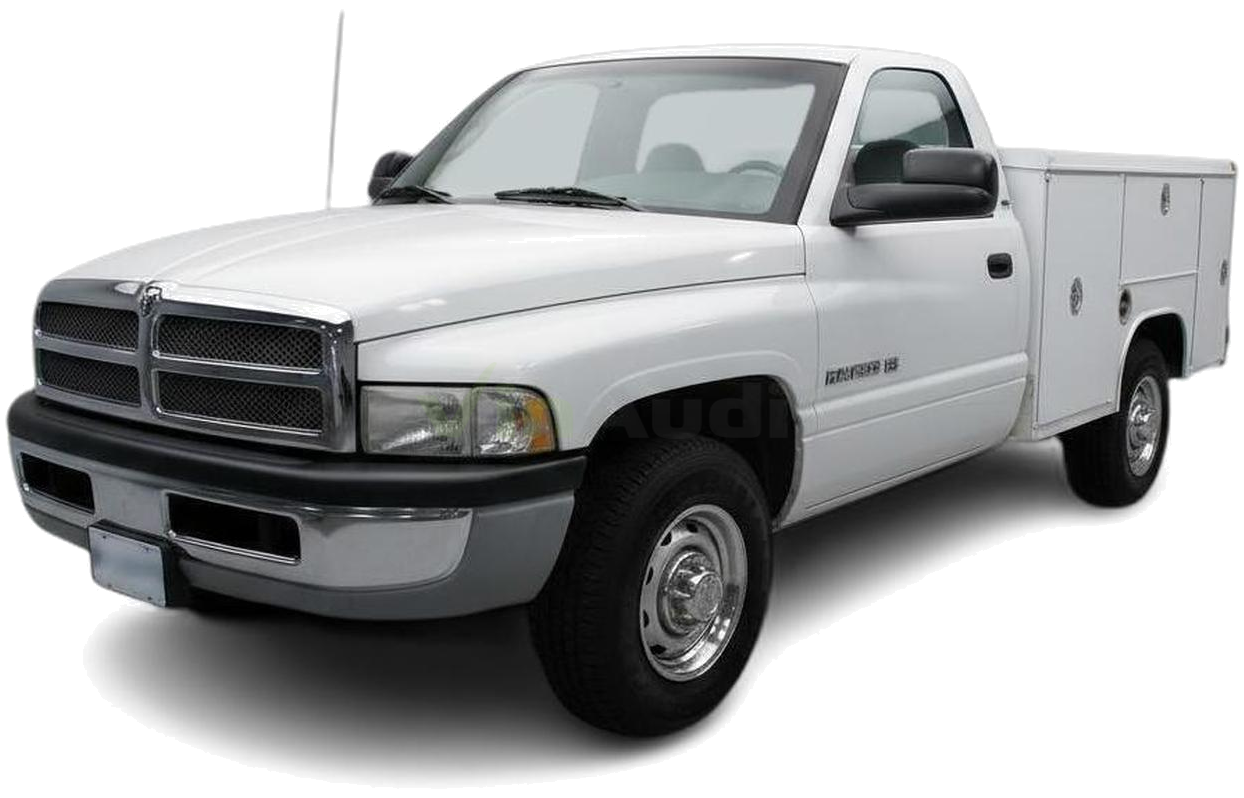
The Good
The 2001 Dodge Ram Chassis Cab excels in raw power and a commanding presence that appeals to both practicality and pride. Its durable construction ensures reliability for demanding tasks, while its spacious interior offers surprising comfort. This truck represents exceptional value for its capability and longevity.
The Bad
When considering a 2001 Dodge Ram Chassis Cab, be aware of potential issues like rust, particularly around the wheel wells and frame. Transmission problems can also arise with higher mileage. Electrical gremlins and aging suspension components are other common areas to inspect carefully.
2001 Dodge Ram Chassis Cab: Quick Overview
- Engine Options: The 2001 Dodge Ram Chassis Cab offered a choice of robust gasoline and diesel engines. Primary gasoline options included the 5.2L Magnum V8 and the larger 5.9L Magnum V8. The iconic 5.9L Cummins Turbo Diesel was also available, renowned for its durability and torque.
- Horsepower:
- 5.2L Magnum V8: Approximately 230 horsepower
- 5.9L Magnum V8: Approximately 245-250 horsepower
- 5.9L Cummins Turbo Diesel: Approximately 215 horsepower
- Fuel Economy: Fuel economy varied significantly by engine and configuration, but generally, these trucks were not known for efficiency, with V8 gasoline models averaging around 10-14 MPG combined and the diesel slightly better under load. Specific figures are hard to pinpoint due to varied usage.
- 0-60 Times: Due to its heavy-duty nature and chassis cab configuration, 0-60 mph times were not a primary focus and typically ranged from 9 to 11 seconds for gasoline V8 models, with the diesel being slower but more torque-oriented.
- Towing Capacity: Towing capacity was a major strength, with ratings often exceeding 10,000 to 15,000 pounds or more, depending on the specific configuration, axle ratio, and drivetrain (2WD or 4WD). This made it ideal for heavy-duty work.
- Trim-Level Features:
- ST Trim: This was the base trim, typically featuring essential work-oriented equipment such as vinyl seating, durable floor coverings, power steering, and manual windows/locks. It focused on functionality and ruggedness.
- SLT Trim: The SLT offered more creature comforts and convenience features. This could include upgraded cloth or vinyl seating, air conditioning, power windows and door locks, cruise control, and a better audio system. Optional packages could further enhance comfort and utility.
2001 Dodge Ram Chassis Cab Specifications
Vehicle Information
| Year | 2001 |
| Make | Dodge |
| Model | Ram Chassis Cab |
| Trim | - |
| Style | - |
| Type | Sport Utility Vehicle Cab; |
| Category | Medium Truck |
Manufacturing Details
| Made In | Mexico |
| Manufacturing City | MEXICO CITY |
Dimensions
| Doors | 4-Door |
| Curb Weight | - |
| Gross Vehicle Weight Rating | - |
| Overall Height | - |
| Overall Length | - |
| Overall Width | - |
| Wheelbase Length | - |
| Standard Seating | - |
Engine & Performance
| Engine | 5.9L V8 |
| Engine Size | 5.9L |
| Engine Cylinders | 8 |
| Transmission | - |
| Transmission Type | - |
| Transmission Speeds | - |
| Drivetrain | Rear-Wheel Drive |
Additional Features
| Anti-Brake System | - |
| Steering Type | - |
Pricing
| Manufacturer Suggested Retail Price (MSRP) | - |
| Invoice Price | - |
| Delivery Charges | - |
Vehicle History Report
Specifications
History
Events
History Check
Check
Check
Check
Check
Listings
Recalls
Check
Analysis
What Problems Does the 2001 Dodge Ram Chassis Cab Have?
The transmission, particularly the automatic transmissions (like the 47RE and 48RE), can be a weak point if not maintained properly. Overheating, slipping, and hard shifting are common symptoms that often indicate the need for a rebuild or replacement, especially after years of heavy use.
The 5.9L Cummins Turbo Diesel, while generally a very reliable engine, can develop issues with the injection pump (P7100 or VP44 depending on exact year and configuration) and fuel system components, especially the VP44, which can be sensitive to fuel quality and lift pump failures. The lift pump failure can lead to the VP44 pumping air and subsequently failing.
Electrical gremlins are also not uncommon, with issues like faulty instrument clusters, power window motors, and HVAC blower motors occasionally reported. The cooling system can also develop leaks over time, particularly at the radiator and hoses.
While there aren't specific widespread recalls that define the 2001 model year as uniquely problematic, general maintenance and addressing wear-and-tear items are crucial. Long-term reliability is highly dependent on the owner's maintenance habits. A well-maintained Ram Chassis Cab, especially with the Cummins engine, can last for hundreds of thousands of miles, but neglect can lead to costly repairs. For the 2001 model year specifically, watch for potential exhaust manifold leaks on the Cummins. Overall, while robust, these trucks require diligent inspection and upkeep.
How long will the 2001 Dodge Ram Chassis Cab last?
What Technology & Safety Features are Included?
Technology and Entertainment: Base models typically featured a basic AM/FM radio with a cassette player. Higher trims like the SLT offered optional upgrades such as a CD player and improved speaker systems. Air conditioning was often an option on lower trims but standard on SLT. Power windows and door locks were also often part of optional packages on the ST, but more common on the SLT. The instrument cluster was straightforward, providing essential information like speed, RPM, fuel level, and engine temperature, with basic warning lights. Cruise control was generally available on higher trims. There were no advanced infotainment systems, touchscreens, or integrated navigation systems in this model year; technology was focused on functionality rather than connectivity.
Driver-Assistance Features: Driver-assistance features were very limited in 2001. The most advanced system available would have been ABS (Anti-lock Braking System) on the rear wheels, and potentially on all four wheels as an option, which helped prevent wheel lock-up during heavy braking. There were no electronic stability control, traction control, lane departure warning, or adaptive cruise control systems available. The focus was on the driver's direct control of the vehicle.
Safety Features: Standard safety features included airbags for the driver and front passenger. Seatbelts were also standard. The robust construction of the Ram chassis cab provided a significant degree of passive safety due to its substantial frame and body.
Crash-Test Ratings: Official crash-test ratings from organizations like the NHTSA (National Highway Traffic Safety Administration) and IIHS (Insurance Institute for Highway Safety) for this specific generation and configuration are not readily available or as comprehensive as modern standards. However, trucks from this era generally performed reasonably well in frontal impacts due to their heavier construction, but side-impact protection and rollover resistance were areas where improvements have been made in subsequent generations.
Overall, the 2001 Dodge Ram Chassis Cab's feature set is rudimentary by today's standards, prioritizing mechanical capability and core driving functions over advanced electronic aids or entertainment.
What Colors Options are Available?
2001 Dodge Ram Chassis Cab Prices and Market Value
Today, used market prices for the 2001 Dodge Ram Chassis Cab vary significantly, typically ranging from $5,000 to $15,000. Trucks in excellent condition with lower mileage and the desirable 5.9L Cummins engine command the highest prices. Those with higher mileage, wear and tear, or gasoline engines will be at the lower end.
Depreciation has been substantial, as expected for a vehicle of this age and type. However, the Cummins-equipped models hold their value remarkably well due to their reputation for durability and work capability. Factors affecting resale value include overall condition, maintenance history, presence of rust, mileage, and the specific engine and drivetrain. A well-maintained, rust-free Cummins chassis cab is a strong performer in the used market for its class.
2001 Dodge Ram Chassis Cab Cost of Ownership
2001 Dodge Ram Chassis Cab Fuel Efficiency
2001 Dodge Ram Chassis Cab Insurance
reasonable repair costs.
How Does the 2001 Dodge Ram Chassis Cab Compare to Other Sport Utility Vehicle Cab;?
Performance: The Ram, particularly with the 5.9L Cummins Turbo Diesel, offered exceptional torque and towing prowess, often matching or exceeding its competitors. The gasoline V8s were competitive but sometimes lagged slightly in raw power compared to Ford's larger V8s or Chevy's Vortec offerings of the same era.
Features: In 2001, features were relatively basic across all manufacturers in the heavy-duty segment. The Ram offered a functional interior with available comfort features in its SLT trim, comparable to the Ford XLT/Lariat and Chevy LT. None offered advanced tech like navigation or extensive driver aids. The chassis cab configuration meant buyers were customizing the rear, a common practice across all brands.
Reliability: The 5.9L Cummins diesel in the Dodge Ram is renowned for its bulletproof reliability and longevity, often considered superior to early Power Stroke (Ford) or Duramax (GM) diesels in terms of simple, robust engineering. Gasoline engines and transmissions were generally on par with competitors, with their own sets of common issues. Rust could be a concern for all these trucks depending on their environment.
Price: The Dodge Ram Chassis Cab was often competitively priced when new. In the used market, well-maintained Cummins models can command prices comparable to or even higher than similar Ford or Chevy models due to their reputation.
Alternatives:
- Ford F-250/F-350 Super Duty (1999-2007): A strong competitor offering robust powertrains (especially the 7.3L Power Stroke diesel) and a more modern interior design starting in 1999. Reliability of the 7.3L is excellent.
- Chevrolet Silverado 2500HD/3500 (2001-2007): Introduced in 2001, these trucks offered competitive powertrains, including the early Duramax diesel, and a more refined ride. Reliability was generally good, though early Duramax models had some specific issues.
Final Verdict: Is the 2001 Dodge Ram Chassis Cab a Good Sport Utility Vehicle Cab;?
Buying one is best under conditions where thorough inspection for rust and mechanical soundness is performed. The ST trim offers basic functionality, while the SLT adds some comfort. Avoid models with a history of neglect, transmission issues, or significant rust, as repairs can be costly. For those who understand its limitations and value its workhorse nature, it represents excellent value, particularly the diesel variants, for their continued ability to perform demanding jobs for many years to come.

Simon A
Simon is a contributor to VinCheck, where he provides articles and reviews on various automotive topics. His work focuses on delivering accurate and up-to-date information about used cars, helping readers make informed decisions.