
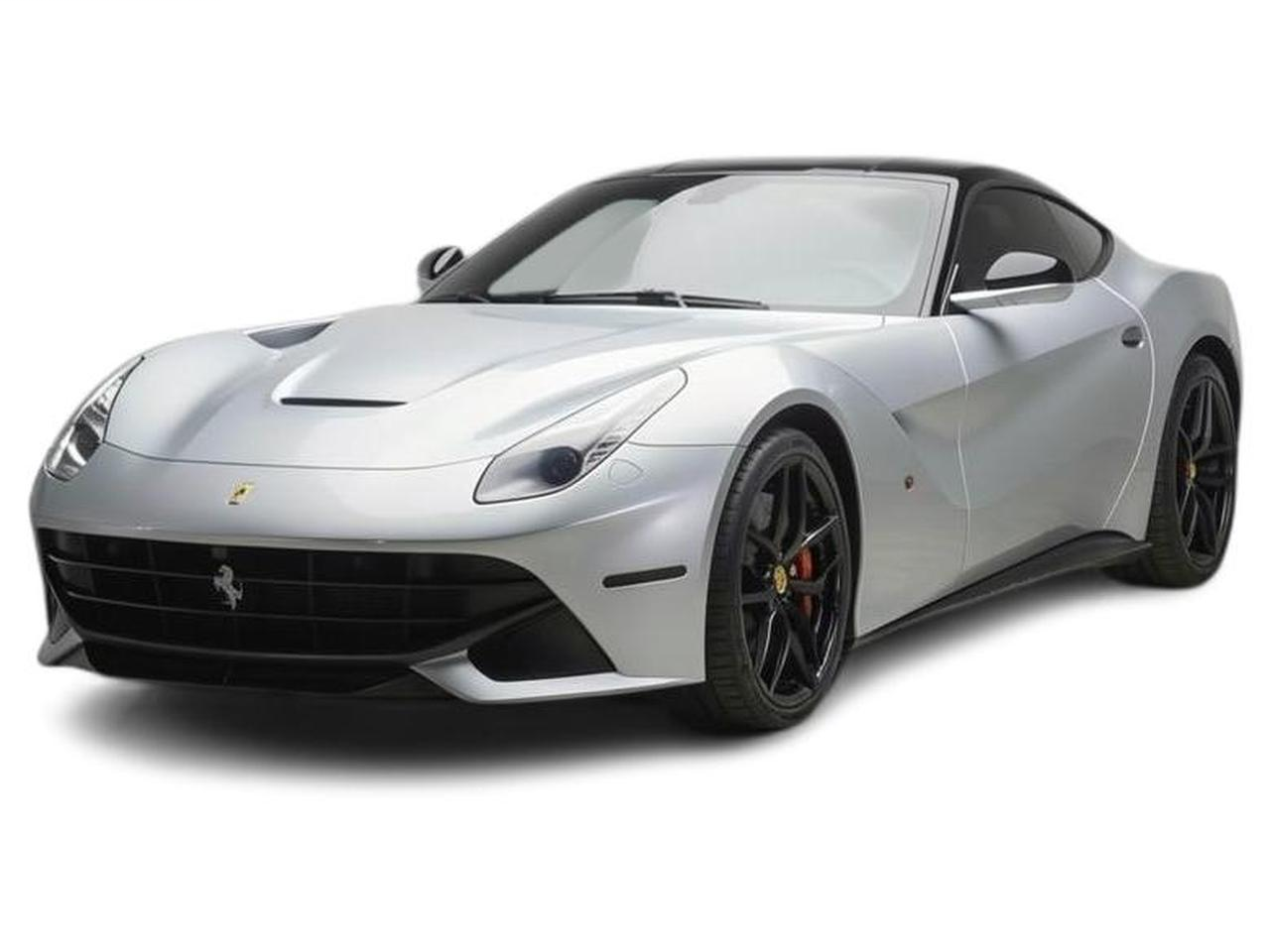
The Good
The F12 Berlinetta excels with its phenomenal V12 power and thrilling acceleration (emotional appeal). Its stunning, timeless design captivates, while surprisingly comfortable ride quality and usable trunk space offer practical advantages for a supercar. Reliability is generally strong for a high-performance Italian exotic.
The Bad
Potential buyers should be aware of the F12's demanding maintenance requirements and associated high costs. Some owners report occasional electronic glitches, and the ride, while comfortable for a supercar, can still be firm on less-than-perfect roads. Fuel consumption is, as expected, substantial.
2013 Ferrari F12 Berlinetta: Quick Overview
- Engine: 6.3-liter naturally aspirated V12
- Horsepower: 730 hp @ 8,500 rpm
- Torque: 509 lb-ft @ 6,000 rpm
- Transmission: 7-speed dual-clutch automatic
- Drivetrain: Rear-wheel drive
- Fuel Economy (EPA Estimated): 13 MPG city / 17 MPG highway
- 0-60 mph: Approximately 3.1 seconds
- Top Speed: Over 211 mph
- Towing Capacity: Not applicable for this vehicle class
- Body Style: 2-door coupe
- Key Trims/Features (primarily a single, highly equipped model):
- The 2013 F12 Berlinetta was offered in a single, well-appointed trim level, meaning most features were standard. Key highlights included:
- Adaptive Magnetorheological Dampers (SCM-E)
- Carbon-ceramic brakes
- Brembo brakes
- Xenon headlights
- Leather upholstery
- Power-adjustable seats
- Dual-zone climate control
- Infotainment system with navigation (often a premium option integrated into the dashboard design)
- Ferrari's F1-derived dual-clutch transmission
- Aerodynamic innovations like the Aero Bridge and Active Brake Cooling system
- Manettino dial on the steering wheel for adjusting driving modes
- Ferrari Telemetry system (optional, allowing for performance data analysis)
- Carbon fiber interior accents (optional or part of specific packages)
- Premium sound system (optional)
- The 2013 F12 Berlinetta was offered in a single, well-appointed trim level, meaning most features were standard. Key highlights included:
2013 Ferrari F12 Berlinetta Specifications
Vehicle Information
| Year | 2013 |
| Make | Ferrari |
| Model | F12 Berlinetta |
| Trim | - |
| Style | - |
| Type | Coupe |
| Category | Compact Car |
Manufacturing Details
| Made In | Italy |
| Manufacturing City | - |
Dimensions
| Doors | - |
| Curb Weight | - |
| Gross Vehicle Weight Rating | - |
| Overall Height | - |
| Overall Length | - |
| Overall Width | - |
| Wheelbase Length | - |
| Standard Seating | - |
Engine & Performance
| Engine | 6.3L V12 |
| Engine Size | 6.3L |
| Engine Cylinders | 12 |
| Transmission | - |
| Transmission Type | - |
| Transmission Speeds | - |
| Drivetrain | Rear-Wheel Drive |
Additional Features
| Anti-Brake System | - |
| Steering Type | - |
Pricing
| Manufacturer Suggested Retail Price (MSRP) | - |
| Invoice Price | - |
| Delivery Charges | - |
Vehicle History Report
Specifications
History
Events
History Check
Check
Check
Check
Check
Listings
Recalls
Check
Analysis
What Problems Does the 2013 Ferrari F12 Berlinetta Have?
Another aspect to watch for is the clutch system on the dual-clutch transmission. While designed for performance, aggressive driving or poor maintenance could lead to premature wear, though this is not a widespread or common failure for typical owners. The F12 employs sophisticated electronic systems, and like any complex vehicle, these can occasionally present minor gremlins, such as sensor issues or minor warning lights that may require dealer diagnostics.
Ferrari has issued recalls for various models over the years, and it's crucial to check the specific VIN for any outstanding safety recalls. For the F12, recalls have sometimes pertained to airbag inflators or specific component supplier issues that affect a range of vehicles.
Regarding long-term reliability, the F12's naturally aspirated V12 engine is renowned for its durability if properly cared for. However, the complexity of its systems, from the advanced suspension to the dual-clutch gearbox, means that maintenance and repairs are specialist tasks, and costs can escalate quickly if issues arise. Unlike some mass-produced vehicles, there isn't a broad database of widespread, recurring mechanical failures that plague the F12. Instead, concerns are more centered around the inherent costs and specialist nature of maintaining such a high-performance vehicle over many years.
How long will the 2013 Ferrari F12 Berlinetta last?
The long-term durability of the F12's V12 engine is excellent, provided it receives consistent and high-quality maintenance, including regular fluid changes and inspections. The primary weaknesses that emerge over time are related to the sophisticated electronic systems and the wear and tear on components associated with high performance, such as brakes and tires. With diligent maintenance, a well-cared-for F12 can last for many years and hundreds of thousands of miles, though the cost of such longevity is significant.
What Technology & Safety Features are Included?
Driver-assistance features were more limited compared to modern vehicles. The F12 didn't offer many of the advanced electronic aids we see today. However, it did feature systems like traction and stability control (fully configurable via the Manettino dial), ABS, and rear parking sensors. Optional features could include a rearview camera, which would be highly beneficial given the car's long hood and limited rear visibility. Ferrari's focus was on enhancing the driving experience through mechanical feedback rather than electronic intervention, though the F12 did incorporate advanced aerodynamic aids and active cooling for the brakes.
Safety features included front and side airbags for the driver and passenger, and a robust chassis designed for high-speed integrity. Being a low-volume, ultra-luxury exotic, the F12 Berlinetta was not subjected to the same rigorous crash-testing regimes as mainstream vehicles by organizations like NHTSA or IIHS. Manufacturers of such exclusive cars tend to focus on internal safety engineering and meeting homologation standards for the markets they are sold in, rather than public crash test ratings. The primary safety features are its powerful carbon-ceramic brakes, advanced suspension, and the driver's ability to control its immense power through the various driving modes.
What Colors Options are Available?
2013 Ferrari F12 Berlinetta Prices and Market Value
Current used market prices for a 2013 F12 Berlinetta can range widely, generally from the mid-$200,000s to well over $300,000, heavily influenced by mileage, condition, service history, and the presence of rare or desirable factory options. Factors affecting resale value include low mileage, pristine condition, complete service records from authorized Ferrari dealers, and desirable color combinations. Limited production runs and the enduring appeal of its naturally aspirated V12 engine contribute to its strong residual values, especially as it represents a more analog supercar experience compared to newer, hybrid or turbocharged models.
2013 Ferrari F12 Berlinetta Cost of Ownership
Maintenance is where costs truly escalate. Regular services, including oil changes, filter replacements, and inspections, performed by authorized Ferrari specialists, are expensive. Unexpected repairs can be astronomical, with parts and labor for specialized components costing tens of thousands of dollars. This vehicle is emphatically not economical to own; it is a significant financial commitment requiring deep pockets for ongoing care and operation.
2013 Ferrari F12 Berlinetta Fuel Efficiency
2013 Ferrari F12 Berlinetta Recalls & Defects
AIR Bags:frontal:passenger Side:inflator Module
Service Brakes, Hydraulic
2013 Ferrari F12 Berlinetta Insurance
reasonable repair costs.
How Does the 2013 Ferrari F12 Berlinetta Compare to Other Coupe?
Performance: The F12 stands out with its searing 730 hp naturally aspirated V12 and exhilarating 0-60 mph time of around 3.1 seconds, making it one of the fastest front-engined cars of its era. The Aventador, with its mid-engine layout and V12, offered similar or slightly better acceleration but a more extreme, less refined driving experience. The Vanquish offered a more relaxed GT feel with strong performance but less outright horsepower.
Features: Ferrari's F1-derived dual-clutch transmission and advanced aerodynamics were highlights. The interior, while luxurious, prioritized the driver. Aston Martin's Vanquish offered a similarly luxurious and handcrafted interior, often with more traditional GT appointments. The Aventador was focused purely on supercar thrills.
Reliability: All these cars require specialist maintenance and can be expensive to repair. Ferraris of this era are generally considered to have decent reliability for their class, assuming diligent maintenance. Aston Martins can sometimes have more minor electrical gremlins. Lamborghinis, particularly the Aventador, are known for their intense performance but also demanding upkeep.
Price: The F12 was competitively priced against its direct rivals at launch. Used prices remain high for all these vehicles, with depreciation varying.
Alternatives: For a similar front-engine V12 GT experience, a later model Aston Martin Vanquish or Vanquish Volante would be a compelling alternative, offering a slightly different character. For ultimate V12 exhilaration with a more aggressive edge, a Lamborghini Aventador (though mid-engined) offers a different kind of thrill. For those seeking a slightly more focused but still potent V12 experience from a different manufacturer, models like the McLaren MP4-12C (though V8 twin-turbo) offered cutting-edge performance, but lacked the V12 soul. The F12 remains a benchmark for its blend of extreme performance and GT usability, making it a strong contender even against newer rivals.
Final Verdict: Is the 2013 Ferrari F12 Berlinetta a Good Coupe?
Whether it's worth buying depends entirely on the buyer's financial capacity. The significant costs associated with maintenance, insurance, and fuel mean it's only a viable purchase for those with substantial disposable income. Buying used is the only realistic option now, and it's crucial to find a well-maintained example with a complete service history from an authorized dealer. It's a fantastic car for its intended purpose, offering an unforgettable driving experience, but it demands respect and considerable financial resources.

Simon A
Simon is a contributor to VinCheck, where he provides articles and reviews on various automotive topics. His work focuses on delivering accurate and up-to-date information about used cars, helping readers make informed decisions.