
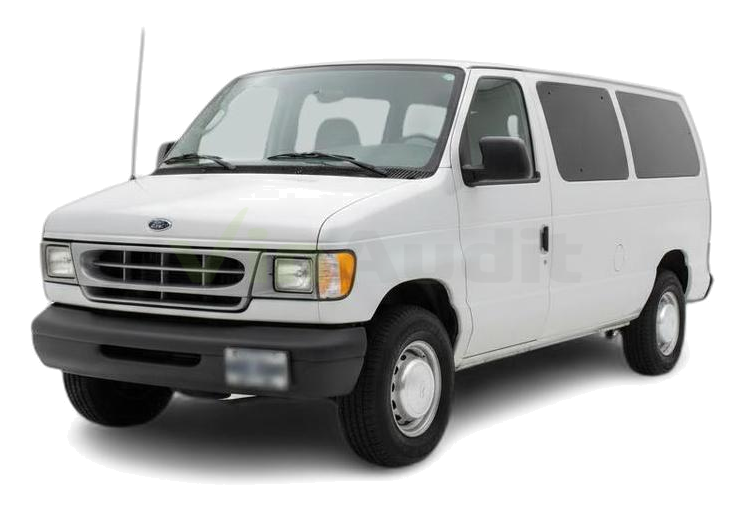
The Good
The 2000 Ford E250 excels in its robust performance, offering strong V8 and optional V10 engines perfect for heavy loads and towing. Its legendary durability and widespread parts availability contribute to high reliability and practical ownership. While not luxurious, the spacious cabin offers decent comfort for long hauls. For emotional buyers, its utilitarian design is a versatile canvas for camper conversions or mobile workshops, while practical users appreciate its immense value, proven workhorse credentials, and ability to tackle almost any task.
The Bad
Known weaknesses for the 2000 Ford E250 include its notoriously poor fuel economy, particularly with the larger engines, and susceptibility to rust, especially in colder climates. The sheer size makes handling cumbersome in urban environments. Owners should also watch for common issues like spark plug extraction problems on the 5.4L V8, transmission wear due to heavy use, and potential for electrical gremlins or aging interior plastics.
2000 Ford E250: Quick Overview
The 2000 Ford E250 offered a range of robust powertrains to suit various needs:
- Engine Options: The primary gasoline engines included the 4.6L Triton V8, 5.4L Triton V8, and the powerful 6.8L Triton V10. A highly sought-after option was the legendary 7.3L Power Stroke Turbodiesel V8. While a 4.2L V6 was available in lighter E-Series, it was less common in the E250.
- Horsepower:
- 4.6L V8: Approximately 220 hp
- 5.4L V8: Approximately 255 hp
- 6.8L V10: Approximately 305 hp
- 7.3L Power Stroke Diesel: Ranged from about 215 hp to 275 hp depending on specific tuning and intercooler presence.
- Fuel Economy: This is not a strong suit. Expect combined EPA ratings, if available for such commercial vehicles, to be in the range of 10-15 MPG, significantly lower when heavily loaded or equipped with the V10 or diesel.
- 0-60 MPH Times: Performance was utility-focused, not acceleration. Times typically ranged from 9 to 12 seconds, depending on the engine and load.
- Towing Capacity: A major strong point. The E250 was capable of impressive towing, generally ranging from 7,000 lbs to over 10,000 lbs, especially when equipped with the V10 or 7.3L diesel and appropriate towing package.
- Trim-Level Features:
- Base Cargo Van: Designed for utility, featuring vinyl seats, AM/FM radio, manual windows and locks, and basic instrumentation.
- Passenger Van (e.g., XL, XLT):
- XL: Offered multiple seating configurations (8, 12, or 15 passengers), cloth upholstery, air conditioning, power steering, and power brakes.
- XLT: Added more creature comforts such as power windows and door locks, cruise control, tilt steering wheel, an upgraded audio system, chrome exterior accents, improved interior trim, and often included or offered optional rear air conditioning/heating and privacy glass.
- Common Options: Included heavy-duty alternator, trailer towing package, limited-slip differential, various axle ratios, different tire options, and running boards.
2000 Ford E250 Specifications
Vehicle Information
| Year | 2000 |
| Make | Ford |
| Model | E-250 |
| Trim | - |
| Style | - |
| Type | Van |
| Category | Cargo Van |
Manufacturing Details
| Made In | United States |
| Manufacturing City | LORAIN |
Dimensions
| Doors | 3-Door |
| Curb Weight | 5091 pounds |
| Gross Vehicle Weight Rating | 8600 pounds |
| Overall Height | 83.40 inches |
| Overall Length | 211.90 inches |
| Overall Width | 79.30 inches |
| Wheelbase Length | 138.00 inches |
| Standard Seating | 2 |
Engine & Performance
| Engine | 5.4L V8 |
| Engine Size | 5.4L |
| Engine Cylinders | 8 |
| Transmission | 4-Speed Automatic |
| Transmission Type | Automatic |
| Transmission Speeds | 4-Speed |
| Drivetrain | Rear-Wheel Drive |
Additional Features
| Anti-Brake System | 2-Wheel ABS |
| Steering Type | Recirculating |
Pricing
| Manufacturer Suggested Retail Price (MSRP) | $21,485 |
| Invoice Price | $18,738 |
| Delivery Charges | - |
Vehicle History Report
Specifications
History
Events
History Check
Check
Check
Check
Check
Listings
Recalls
Check
Analysis
What Problems Does the 2000 Ford E250 Have?
The 2000 Ford E250, despite its reputation for durability, has several frequently reported problems and long-term reliability concerns that prospective owners should be aware of. Many issues stem from its heavy-duty usage and age.
Engine-Related Issues: For the gasoline Triton V8 and V10 engines (4.6L, 5.4L, 6.8L), common complaints include spark plug issues, particularly the risk of plugs seizing in the cylinder heads or, less commonly but still possible on this model year, ejecting from the heads, especially on earlier iterations of the 2-valve engines. Exhaust manifold studs breaking due to heat cycling are also prevalent, leading to exhaust leaks. The highly popular 7.3L Power Stroke Turbodiesel, while a legend, isn't without its quirks; common issues include cam position sensor (CPS) failures, which can cause sudden stalling, injector O-ring leaks leading to hard starts or rough idle, and occasional exhaust back pressure valve (EBPV) issues. Overheating can be a concern if the cooling system is not meticulously maintained.
Transmission Concerns: The automatic transmissions (typically 4R70W or 4R100) are generally robust but can suffer from wear, especially if subjected to constant heavy loads without proper fluid changes. Solenoid failures or delayed shifts are common indicators of internal wear.
Structural and Electrical: Rust is a significant long-term concern, particularly in regions that use road salt. It commonly affects rocker panels, door bottoms, wheel wells, and the frame. Electrical gremlins can arise with age, including issues with the instrument cluster (flickering or dead gauges), blend door actuators for the HVAC system, and aging wiring harnesses.
Brakes and Suspension: Due to the E250's considerable weight and load-carrying capacity, brake components (pads, rotors, calipers) experience accelerated wear. Front suspension and steering components like ball joints, tie rods, and bushings also tend to wear out over time, necessitating regular inspection and replacement for safe handling. Power steering pump leaks are also not uncommon.
Recalls: Owners should check NHTSA for specific recalls pertaining to the 2000 Ford E250. Historically, some E-Series models around this era faced recalls for issues like cruise control deactivation switches (potential for fire), fuel tank strap corrosion, and wiper motor failures. Always verify a vehicle's recall status with its VIN.
How long will the 2000 Ford E250 last?
What Technology & Safety Features are Included?
The 2000 Ford E250, being a utility-focused vehicle from its era, offered built-in technology, entertainment, and safety features that are quite basic by today's standards but were typical for a full-size van at the turn of the millennium.
Built-in Tech & Entertainment: Standard equipment was usually an AM/FM stereo, with options for a cassette player or a single-CD player. Upgraded audio systems, possibly with more speakers or a rudimentary multi-disc changer, were available on XLT passenger trims. There was no integrated navigation, touchscreens, or modern connectivity like Bluetooth or USB ports. The "tech" largely comprised straightforward analog gauges and basic climate controls.
Driver-Assistance Features: Modern driver-assistance systems such as blind-spot monitoring, lane-keeping assist, or adaptive cruise control were nonexistent. The primary driver aids included standard power steering and power brakes, with optional cruise control for highway driving. Visibility was aided by large mirrors.
Safety Features: The 2000 E250 came standard with driver and front passenger airbags. Anti-lock braking system (ABS) was typically standard for the rear wheels, with 4-wheel ABS available or standard on higher trims and specific configurations. All seating positions included 3-point seatbelts. The vans also featured side-impact door beams for added protection. In passenger variants, rudimentary child seat anchors (precursors to the modern LATCH system) were present. Optional features like daytime running lights could be found in some markets.
Crash-Test Ratings: Full-size van crash-test ratings from this period, particularly by NHTSA, were often less comprehensive than those for passenger cars. For frontal impacts, the E-Series generally received moderate ratings, often in the 3 or 4-star range. Side-impact ratings, if available, would likely be lower due to the absence of side airbags and less advanced side-impact protection designs compared to contemporary passenger cars. Specific E250 ratings are often aggregated with the E-Series line. It's important to note that safety standards and testing methodologies have evolved significantly since 2000, making direct comparisons to modern vehicles unfair.
What Colors Options are Available?
2000 Ford E250 Prices and Market Value
When new in 2000, a base Ford E250 cargo van typically started around $20,000-$25,000, while a well-equipped passenger XLT model, especially with the 7.3L diesel or V10 engine, could push prices into the $25,000-$32,000+ range. Fast forward to today's used market (2024), and prices vary dramatically based on condition and configuration. A usable cargo van might fetch $3,000-$8,000, while passenger versions in good shape could be $4,000-$10,000. However, clean examples with the coveted 7.3L Power Stroke diesel engine, particularly those ripe for conversion or already converted, frequently command $10,000 to $20,000, and sometimes even higher for exceptional units, defying typical depreciation trends.
Initial depreciation was steep, characteristic of commercial vehicles. However, after two decades, the depreciation curve has flattened, with certain high-demand variants actually appreciating. Key factors affecting current resale value include the vehicle's overall mechanical and cosmetic condition (rust being a major detractor), mileage, and crucially, the engine type – the 7.3L diesel is king. Demand for camper van conversions also significantly boosts values for clean cargo models.
2000 Ford E250 Cost of Ownership
2000 Ford E250 Fuel Efficiency
2000 Ford E250 Safety Rating
NHTSA
IIHS
2000 Ford E250 Recalls & Defects
Equipment:other:labels
Equipment Adaptive/Mobility
Vehicle Speed Control
Vehicle Speed Control:cruise Control
Vehicle Speed Control
2000 Ford E250 Warranty
Basic
Powertrain
Rust
2000 Ford E250 Insurance
reasonable repair costs.
How Does the 2000 Ford E250 Compare to Other Van?
The 2000 Ford E250 operated in a highly competitive full-size van segment, primarily battling the Chevrolet Express/GMC Savana 2500 and the Dodge Ram Van 2500. Each offered distinct advantages and disadvantages.
Performance: The E250 truly stood out with its robust engine lineup. Its optional 6.8L Triton V10 offered immense power, but the legendary 7.3L Power Stroke Turbodiesel V8 was its unparalleled trump card, providing immense torque and towing capacity that no rival could directly match in 2000. The Chevrolet Express/GMC Savana 2500 offered strong 5.7L and later 6.0L Vortec V8s, which were highly capable for most hauling needs, but lacked a diesel option until the Duramax arrived in later years. The Dodge Ram Van 2500, with its 5.2L and 5.9L Magnum V8s, generally offered adequate performance but often felt less powerful or refined than the Ford or Chevy for truly heavy-duty tasks.
Features: All vans in this era were largely utilitarian. The E250, Express, and Savana offered similar basic amenities, with passenger versions (XLT, LS, SLT) providing more comfort features like power accessories, upgraded audio, and rear HVAC. The Ford often had a slightly more user-friendly interior layout and better seat comfort than the Ram Van. Advanced tech and driver-assistance features were minimal across all models.
Reliability: The E250, especially with the 7.3L diesel, is renowned for its long-term reliability and ruggedness, making it a favorite for commercial fleets. Ford's gasoline V8s were also very durable, despite known quirks like spark plug issues. The Chevrolet Express/GMC Savana 2500 also boasts excellent reliability with its Vortec V8 engines and robust mechanicals. The Dodge Ram Van, while a capable workhorse, generally garnered a reputation for being slightly less durable, particularly with electrical systems and front suspension components, making it a step below its Ford and Chevy counterparts.
Price: When new, pricing was competitive across the board. In the used market today, the Ford E250 and Chevrolet Express/GMC Savana 2500 tend to hold their value better, especially desirable engine configurations. The 7.3L diesel E250s often command premium prices due to their legendary status and suitability for conversions. Dodge Ram Vans are typically the most affordable on the used market.
Alternatives: For those seeking a similar, robust workhorse, a 2000-2002 Chevrolet Express 2500 or GMC Savana 2500 with a 5.7L or 6.0L Vortec V8 is an excellent alternative. If modern refinements and better fuel economy are priorities, newer generation vans like the Ford Transit, Ram ProMaster, or Mercedes-Benz Sprinter would be "better" in a different class, but they sacrifice some of the E250's brute strength and traditional body-on-frame design.
Final Verdict: Is the 2000 Ford E250 a Good Van?
Given it's a vintage vehicle, it is only available used. It is absolutely worth buying under the right conditions: prioritize models with the legendary 7.3L Power Stroke diesel or the powerful 6.8L V10 for demanding tasks and better long-term value. Seek out rust-free examples, ideally with well-documented maintenance history. A thorough pre-purchase inspection is crucial to assess the condition of the drivetrain, suspension, and electrical system. Avoid neglected examples unless you're prepared for significant repairs. While not suitable for urban parking or those seeking luxury, for those needing a rugged, affordable workhorse or a blank canvas for adventure, the 2000 Ford E250 remains an outstanding and cost-effective choice.

Drew B
Drew is a seasoned automotive expert and contributor to VinCheck.info. With nearly 15 years of experience as a former Porsche technician, he brings a wealth of hands-on knowledge to his writing. Born in North Carolina, a region renowned for its deep-rooted NASCAR culture, Drew developed a passion for cars early in life, often building and working on vehicles from a young age. At VINCheck, Drew leverages his extensive technical background to provide in-depth analyses of various vehicles. His articles often focus on engine performance, reliability, and maintenance insights, offering readers practical information grounded in real-world experience. Some of his notable contributions include reviews on the Mazda CX-5's longevity and detailed examinations of engine options for models like the 2011 Toyota Camry and Tacoma