
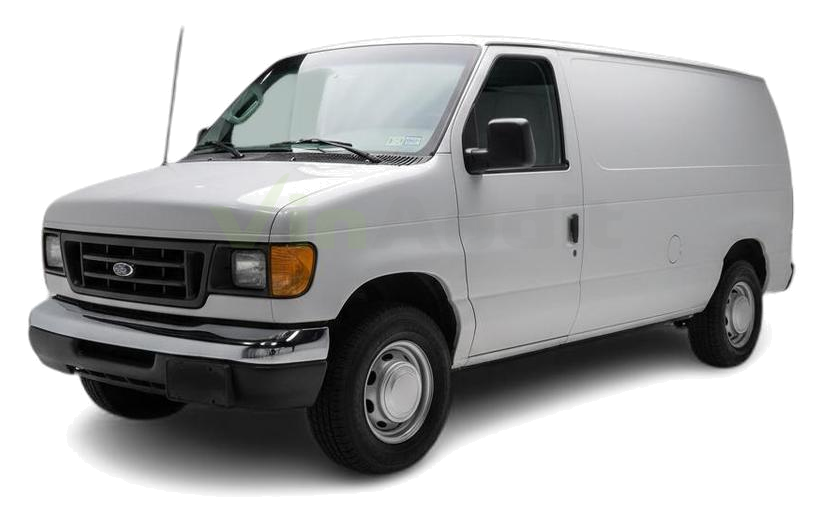
The Good
The 2006 Ford E-250 offers dependable performance for hauling and work. Its robust design contributes to its reliability. While comfort is basic, it's functional for work needs. A practical buyer appreciates the straightforward design and good value for its utility. Emotionally, it represents a "get-the-job-done" attitude, inspiring confidence in its capabilities.
The Bad
The 2006 Ford E-250's weaknesses include relatively poor fuel economy compared to modern vans. Rust can be a problem, especially in areas with road salt. Suspension components can wear out with heavy use. Also, the dated interior and basic tech might not appeal to everyone. Watch for transmission issues during test drives.
2006 Ford E250: Quick Overview
- Engine Options:
- 4.2L V6: Base engine, offering adequate power for lighter loads.
- 4.6L V8: A common upgrade, providing a better balance of power and fuel economy.
- 5.4L V8: The most powerful option, ideal for heavy hauling and towing.
- Horsepower (approximate):
- 4.2L V6: Around 200-205 hp
- 4.6L V8: Around 225 hp
- 5.4L V8: Around 255 hp
- Fuel Economy (EPA Estimates, may vary):
- V6: 14-16 mpg city / 17-20 mpg highway
- V8s: Slightly lower than the V6, especially the 5.4L. Expect around 13-15 mpg city and 16-19 mpg highway. Fuel economy is heavily dependent on driving style and load.
- 0-60 Times: Not a primary metric for these vans. Expect 9-12 seconds depending on the engine and load.
- Towing Capacity: Varies significantly based on configuration and engine. The 5.4L V8, with proper equipment, could tow upwards of 7,000-8,500 lbs. The V6 will be significantly lower.
- Trim-Level Features:
- Base E-250: Typically comes with vinyl seating, basic AM/FM radio, and minimal features focused on utility.
- Options: Could include air conditioning, power windows and locks, upgraded stereo systems, and different seating configurations (though mostly focused on cargo).
- Customization: Many E-250s were upfitted with shelving, racks, and other equipment for specific trades (plumbing, electrical, etc.).
2006 Ford E250 Specifications
Vehicle Information
| Year | 2006 |
| Make | Ford |
| Model | E-250 |
| Trim | - |
| Style | - |
| Type | Van |
| Category | Cargo Van |
Manufacturing Details
| Made In | United States |
| Manufacturing City | LORAIN |
Dimensions
| Doors | 3-Door |
| Curb Weight | 5225 pounds |
| Gross Vehicle Weight Rating | 8600 pounds |
| Overall Height | 84.10 inches |
| Overall Length | 231.90 inches |
| Overall Width | 79.30 inches |
| Wheelbase Length | 138.00 inches |
| Standard Seating | 2 |
Engine & Performance
| Engine | 4.6L V8 |
| Engine Size | 4.6L |
| Engine Cylinders | 8 |
| Transmission | 4-Speed Automatic |
| Transmission Type | Automatic |
| Transmission Speeds | 4-Speed |
| Drivetrain | Rear-Wheel Drive |
Additional Features
| Anti-Brake System | 4-Wheel ABS |
| Steering Type | Recirculating |
Pricing
| Manufacturer Suggested Retail Price (MSRP) | $24,945 |
| Invoice Price | $22,247 |
| Delivery Charges | $795 |
Vehicle History Report
Specifications
History
Events
History Check
Check
Check
Check
Check
Listings
Recalls
Check
Analysis
What Problems Does the 2006 Ford E250 Have?
How long will the 2006 Ford E250 last?
What Technology & Safety Features are Included?
Driver-assistance features were sparse. Anti-lock brakes (ABS) were standard, but electronic stability control (ESC) was not widely available. Safety features included front airbags. Side airbags were not common.
Crash-test ratings for the 2006 Ford E-250 are available from the NHTSA (National Highway Traffic Safety Administration), but results may vary depending on the specific configuration and testing methodology used at the time. The IIHS (Insurance Institute for Highway Safety) may have limited data for this specific model year.
Focus was placed on basic safety and functionality, and many buyers would have added aftermarket tech solutions. Power windows and locks were sometimes optional. The relative lack of modern technology reflects the vehicle's focus on utility and affordability at the time of its release. Its simple design also contributed to its reliability. The priority was cargo capacity and durability rather than advanced driver aids or high-end entertainment.
What Colors Options are Available?
Exterior Colors
Interior Colors
2006 Ford E250 Prices and Market Value
2006 Ford E250 Cost of Ownership
2006 Ford E250 Fuel Efficiency
2006 Ford E250 Safety Rating
NHTSA
IIHS
2006 Ford E250 Recalls & Defects
Fuel System, Gasoline:storage:tank Assembly
Equipment
Equipment Adaptive/Mobility
Equipment Adaptive/Mobility
Equipment Adaptive/Mobility
Equipment Adaptive/Mobility
Equipment Adaptive/Mobility
Equipment Adaptive/Mobility
Equipment Adaptive/Mobility
Visibility:windshield Wiper/Washer:motor
Fuel System, Gasoline
Equipment Adaptive/Mobility
Equipment Adaptive/Mobility
Equipment Adaptive/Mobility
Fuel System, Gasoline:fuel Injection System:fuel Rail
Equipment Adaptive/Mobility
Equipment Adaptive/Mobility
Equipment Adaptive/Mobility
Equipment Adaptive/Mobility
Equipment Adaptive/Mobility
Equipment Adaptive/Mobility
Equipment Adaptive/Mobility
Equipment Adaptive/Mobility
Equipment Adaptive/Mobility
Equipment Adaptive/Mobility
Equipment Adaptive/Mobility
Equipment Adaptive/Mobility
Equipment Adaptive/Mobility
Equipment:appliance:air Conditioner
Equipment Adaptive/Mobility
Equipment Adaptive/Mobility
2006 Ford E250 Warranty
Basic
Powertrain
Rust
2006 Ford E250 Insurance
reasonable repair costs.
How Does the 2006 Ford E250 Compare to Other Van?
Today, used prices depend heavily on condition. The Chevy Express/GMC Savana are similar alternatives, offering comparable performance and features. If you need more modern features or better fuel economy, newer vans like the Ford Transit, Ram ProMaster, or Mercedes-Benz Sprinter are significantly better choices but at a higher price point. However, these newer vans may not match the E-250's simple mechanics, making them potentially more expensive to repair in the long run. It's worth considering your specific needs (budget, cargo capacity, required features) when choosing between these options.
Final Verdict: Is the 2006 Ford E250 a Good Van?

Drew B
Drew is a seasoned automotive expert and contributor to VinCheck.info. With nearly 15 years of experience as a former Porsche technician, he brings a wealth of hands-on knowledge to his writing. Born in North Carolina, a region renowned for its deep-rooted NASCAR culture, Drew developed a passion for cars early in life, often building and working on vehicles from a young age. At VINCheck, Drew leverages his extensive technical background to provide in-depth analyses of various vehicles. His articles often focus on engine performance, reliability, and maintenance insights, offering readers practical information grounded in real-world experience. Some of his notable contributions include reviews on the Mazda CX-5's longevity and detailed examinations of engine options for models like the 2011 Toyota Camry and Tacoma