
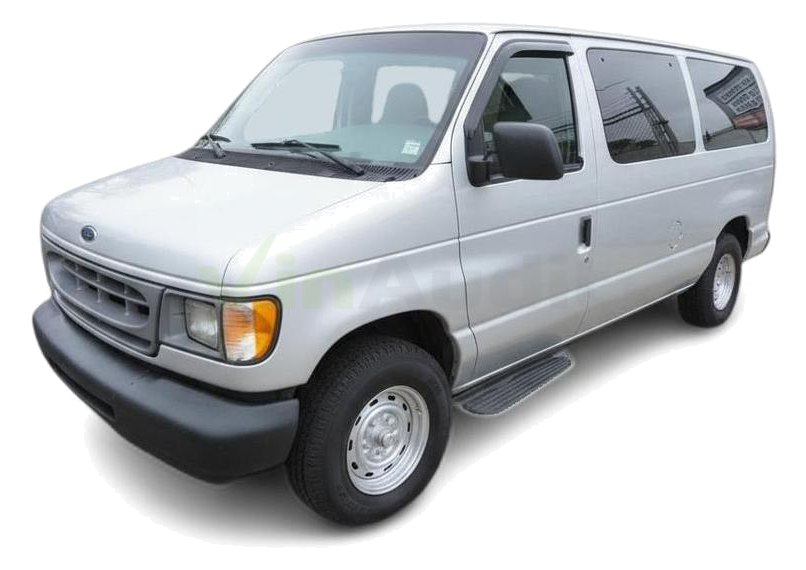
The Good
The 2002 Ford Econoline Wagon offers practical advantages like vast cargo space and passenger capacity. Emotionally, it's about freedom and adventure – road trips and family outings. While not fuel-efficient, its robust engine provides adequate performance. It is generally considered reliable, and represents good value for families or businesses needing affordable space.
The Bad
Weaknesses of the 2002 Ford Econoline Wagon include poor fuel economy due to its size and weight. Rust can be a significant issue, particularly in areas with harsh winters. Suspension components and transmissions can also be prone to wear and tear. Potential buyers should inspect carefully for corrosion and signs of deferred maintenance.
2002 Ford Econoline Wagon: Quick Overview
Here's a breakdown of the key specs for the 2002 Ford Econoline Wagon:
- Engine Options:
- 4.2L V6: Typically the base engine.
- 4.6L V8: A popular choice for added power.
- 5.4L V8: The most powerful option available.
- Horsepower:
- 4.2L V6: Approximately 200 hp.
- 4.6L V8: Around 225 hp.
- 5.4L V8: Roughly 255 hp.
- Fuel Economy: (Estimates vary based on configuration and driving habits)
- V6: 14-18 mpg city / 17-22 mpg highway.
- V8: 13-17 mpg city / 16-20 mpg highway.
- 0-60 Times: Not a primary focus, but expect around 10-12 seconds depending on the engine.
- Towing Capacity: Varies significantly based on configuration (E150 vs E250/E350, engine, axle ratio). Can range from 5,000 lbs to over 7,000 lbs when properly equipped.
- Trim Level Features:
- XL (Base): Basic cloth seats, standard AM/FM radio, manual windows and locks (may vary).
- XLT (Upgraded): Upgraded cloth seats, power windows and locks, air conditioning, upgraded sound system (may include cassette or CD player), cruise control. May also include options like captain's chairs, rear air conditioning, and upgraded trim.
2002 Ford Econoline Wagon Specifications
Vehicle Information
| Year | 2002 |
| Make | Ford |
| Model | Econoline |
| Trim | - |
| Style | - |
| Type | Minivan |
| Category | Passenger Van |
Manufacturing Details
| Made In | United States |
| Manufacturing City | LORAIN |
Dimensions
| Doors | 3-Door |
| Curb Weight | 5254 pounds |
| Gross Vehicle Weight Rating | 7000 pounds |
| Overall Height | 80.90 inches |
| Overall Length | 211.90 inches |
| Overall Width | 79.30 inches |
| Wheelbase Length | 138.00 inches |
| Standard Seating | 8 |
Engine & Performance
| Engine | 5.4L V8 |
| Engine Size | 5.4L |
| Engine Cylinders | 8 |
| Transmission | 4-Speed Automatic |
| Transmission Type | Automatic |
| Transmission Speeds | 4-Speed |
| Drivetrain | Rear-Wheel Drive |
Additional Features
| Anti-Brake System | 4-Wheel ABS |
| Steering Type | Recirculating |
Pricing
| Manufacturer Suggested Retail Price (MSRP) | $26,390 |
| Invoice Price | $23,151 |
| Delivery Charges | $715 |
Vehicle History Report
Specifications
History
Events
History Check
Check
Check
Check
Check
Listings
Recalls
Check
Analysis
What Problems Does the 2002 Ford Econoline Wagon Have?
Electrical problems can arise, including issues with the power windows, door locks, and interior lighting. Engine issues, while less frequent, can include oil leaks and cooling system problems. It's crucial to check for any signs of overheating or unusual engine noises.
Recalls for the 2002 Econoline Wagon may have addressed issues such as fuel system problems or brake-related concerns. It's important to check the vehicle's VIN with the National Highway Traffic Safety Administration (NHTSA) to determine if all applicable recalls have been addressed.
Long-term reliability can be a concern if the vehicle hasn't been properly maintained. Regular fluid changes, suspension inspections, and rust prevention measures are essential for prolonging its lifespan. Ignoring these issues can lead to costly repairs down the road. Specific issues aren't usually isolated to *just* the 2002 model year; instead these problems generally apply to this generation of Econolines.
How long will the 2002 Ford Econoline Wagon last?
What Technology & Safety Features are Included?
Safety features include standard front airbags. Anti-lock brakes (ABS) were often an optional feature. Traction control was not generally available. Optional features included power windows, power locks, and cruise control. Rear air conditioning was also available for passenger comfort.
Crash-test ratings from the NHTSA (National Highway Traffic Safety Administration) for the 2002 Ford Econoline Wagon are generally adequate for the time period. However, it's important to remember that safety standards have significantly improved since 2002. Given its size and weight, it generally provides a good level of protection in a collision, but it lacks the advanced safety technologies found in newer vehicles like electronic stability control or side-impact airbags. Finding reliable crash test data specifically for the 2002 model year can be difficult, so referring to data from similar years within the same generation can provide insights.
What Colors Options are Available?
Exterior Colors
Interior Colors
2002 Ford Econoline Wagon Prices and Market Value
2002 Ford Econoline Wagon Cost of Ownership
2002 Ford Econoline Wagon Fuel Efficiency
2002 Ford Econoline Wagon Safety Rating
NHTSA
IIHS
2002 Ford Econoline Wagon Warranty
Basic
Powertrain
Rust
2002 Ford Econoline Wagon Insurance
reasonable repair costs.
How Does the 2002 Ford Econoline Wagon Compare to Other Minivan?
Alternatives to the 2002 Econoline, depending on your needs, could include newer minivans like the Honda Odyssey or Toyota Sienna. These offer better fuel economy, more modern features, and improved safety, but sacrifice cargo space and towing capacity. For those still needing a full-size van, a newer Chevrolet Express or GMC Savana might be a better choice for their improved (though still dated) features and potentially better condition. It really depends on priorities - budget vs. modern features/safety.
Ranks #58 Van
| 1 | 2023 Toyota Sienna | (5.0★) |
| 2 | 2023 Honda Odyssey | (4.0★) |
| 3 | 2001 Mazda MPV | (4.0★) |
| 4 | 2024 Ford E-Series Cutaway | (0.0★) |
| 5 | 2023 Mercedes-Benz Metris Passenger Van | (0.0★) |
| 6 | 2023 Chevrolet Express Passenger | (0.0★) |
| 7 | 2021 Nissan NV200 | (3.0★) |
| 8 | 2023 GMC Savana | (0.0★) |
| 9 | 2023 Ram ProMaster | (0.0★) |
| 10 | 2021 Rolls-Royce Dawn | (0.0★) |
| 11 | 2013 Volkswagen Routan | (4.0★) |
| 12 | 2007 Buick Terraza | (0.0★) |
| 58 | 2002 Ford Econoline Wagon | (0.0★) |
Final Verdict: Is the 2002 Ford Econoline Wagon a Good Minivan?

Jovan
Jovan specializes in interpreting vehicle records and making sense of VIN data. With over 10 years of experience in the automotive data industry, his work ensures that every report is clear, accurate, and useful for car buyers.