
by VIN, Year, Make, Model by License Plate

2002 Ford Explorer Sport Overview, Reviews, Ratings & Specs

Rating: 0.00
Based on 0 Owner Reviews
Cathleen V | October 21, 2025
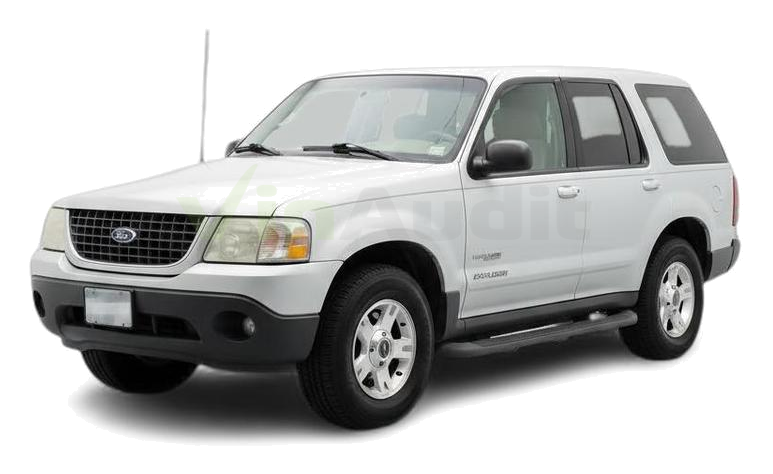
The 2002 Ford Explorer Sport, part of the third generation of the popular SUV, was produced for a shortened model year, with this two-door variant being particularly distinctive. It offered a more compact, sporty take on the Explorer formula. Key trims often included basic Sport and upgraded XLT models. When new, pricing generally ranged from the mid-$20,000s. Its popularity stemmed from its rugged SUV capability combined with a more agile, two-door package that appealed to buyers seeking adventure.
The Good

The 2002 Explorer Sport offered a robust V6 engine providing capable performance for its class. Its solid build and comfortable interior made it a practical choice for daily driving and weekend getaways, while its iconic design evoked a sense of adventure and freedom.

The Bad

Potential buyers should be aware of common issues like transmission problems, particularly with the overdrive system, and potential for rust, especially in colder climates. Cooling system issues and interior wear on high-mileage examples are also worth noting during inspection.

2002 Ford Explorer Sport: Quick Overview

  • Engine Options: The 2002 Ford Explorer Sport primarily came with a 4.0L V6 engine.
  • Horsepower: The 4.0L V6 engine produced approximately 205 horsepower.
  • Fuel Economy: Expect around 14-16 MPG in the city and 18-20 MPG on the highway, depending on drivetrain (2WD or 4WD).
  • 0-60 Times: Official 0-60 mph times were typically in the 9-10 second range, which was competitive for its class at the time.
  • Towing Capacity: With the appropriate towing package, the Explorer Sport could tow around 5,000 to 5,700 pounds, making it suitable for smaller trailers or boats.
  • Trim-Level Features:
    Base Sport: Often included standard features like power windows and locks, air conditioning, an AM/FM stereo with CD player, and durable cloth upholstery. It emphasized functional utility.
    Sport XLT: Added more upscale amenities such as alloy wheels, cruise control, a premium audio system, optional leather seats, and potentially a sunroof. This trim offered a blend of comfort and capability.
    Both trims typically featured a two-door body style, rear-wheel drive or optional four-wheel drive, and a capable independent front suspension for a smoother ride compared to some competitors. The spare tire was often mounted externally on the rear door, contributing to its rugged appearance.

2002 Ford Explorer Sport Specifications

Vehicle Information
Year 2002
Make Ford
Model Explorer Sport
Trim -
Style -
Type Sport Utility Vehicle
Category Standard Sport Utility Vehicle
Manufacturing Details
Made In United States
Manufacturing City LOUISVILLE
Dimensions
Doors 2-Door
Curb Weight 4070 pounds
Gross Vehicle Weight Rating 5060 pounds
Overall Height 68.3 inches
Overall Length 180.4 inches
Overall Width 70.2 inches
Wheelbase Length 101.8 inches
Standard Seating 4
Engine & Performance
Engine 4L V6
Engine Size 4L
Engine Cylinders 6
Transmission 5-Speed Automatic
Transmission Type Automatic
Transmission Speeds 5-Speed
Drivetrain Four-Wheel Drive
Additional Features
Anti-Brake System 4-Wheel ABS
Steering Type Rack & Pinion
Pricing
Manufacturer Suggested Retail Price (MSRP) $25,420
Invoice Price $23,114
Delivery Charges $625

Vehicle History Report

Vehicle
Specifications
Ownership
History
All History
Events
NMVTIS Title
History Check
Salvage/Rebuilt
Check
Accident
Check
Theft
Check
Open Lien
Check
Past Sale
Listings
Safety
Recalls
Odometer
Check
Market Price
Analysis

What Problems Does the 2002 Ford Explorer Sport Have?

The 2002 Ford Explorer Sport, as part of the larger Explorer model line, faced some common concerns that owners should be aware of. One of the most frequently reported issues revolves around the automatic transmission. Specifically, problems with the torque converter and the overdrive system could lead to slipping, harsh shifting, or complete failure, especially as mileage increased. Regular maintenance, including fluid changes, is crucial to mitigate this.

Another significant concern for vehicles of this era, including the Explorer Sport, is the potential for rust. This is particularly prevalent in regions where salt is used on roads during winter. Areas like the frame rails, rocker panels, and wheel wells are susceptible. Thorough inspections for rust are essential before purchasing, as significant corrosion can compromise structural integrity and lead to costly repairs.

Cooling system issues were also reported, with leaks from the radiator, water pump, and heater core being common. Overheating can lead to more severe engine damage, so monitoring the coolant level and checking for any signs of leaks is important. Some owners have also noted premature wear in suspension components and brake systems, which is not unusual for SUVs of this age but warrants attention during maintenance.

While there weren't specific widespread recalls directly targeting the 2002 Explorer Sport for major safety defects beyond general Explorer concerns of the era, it's always advisable to check the VIN for any outstanding recalls. Long-term reliability can be good with diligent maintenance, but the aforementioned transmission and cooling system issues are the most significant hurdles to overcome for sustained dependable service.

How long will the 2002 Ford Explorer Sport last?

With regular and diligent maintenance, a 2002 Ford Explorer Sport can reasonably achieve an average mileage of 150,000 to 200,000 miles, and in some cases, even more. Owners who prioritize timely oil changes, transmission fluid flushes, and coolant checks often see their vehicles last for 12-15 years of service. The durability of the V6 engine is generally good, often outlasting other components. However, its long-term weaknesses, particularly the transmission and potential for cooling system failures, are the most significant factors that can limit its lifespan if not addressed proactively. Addressing these common issues can significantly extend its useful service life.

What Technology & Safety Features are Included?

The 2002 Ford Explorer Sport was equipped with a focus on practicality rather than cutting-edge technology. Standard entertainment features typically included an AM/FM stereo with a CD player, offering decent sound quality for its time. Optional upgrades could have included a premium audio system with more speakers, providing a richer listening experience. While advanced infotainment systems were not a feature of this era, the basic setup was user-friendly and reliable.

Driver-assistance features were quite limited by modern standards. Standard safety features included front airbags for the driver and passenger. Anti-lock braking system (ABS) was also a common standard feature, enhancing braking control in emergency situations. Some models might have offered optional side-impact airbags, though these were less common for the two-door Sport variant. Daytime running lights were also a standard safety feature.

Regarding crash-test ratings, the Ford Explorer line as a whole generally performed respectably for its time, though specific ratings for the two-door Sport variant might differ slightly from the four-door models. The National Highway Traffic Safety Administration (NHTSA) typically awarded the Explorer with four out of five stars in frontal driver and passenger crash tests. Side-impact ratings were also generally good. However, it's important to note that crash test standards and methodologies have evolved significantly since 2002, so these ratings should be considered within the context of their time. Features like traction control were not commonly available on this specific model. The emphasis was on a robust body-on-frame construction and essential safety equipment for its class.

What Colors Options are Available?

We’re working on this section!
In the meantime, feel free to explore the other sections for more content.

2002 Ford Explorer Sport Prices and Market Value

When new, the 2002 Ford Explorer Sport typically had an MSRP ranging from the mid-$20,000s to around $27,000, depending on trim level and options. Like most vehicles, it experienced significant depreciation in its first few years. Currently, the used market prices for a 2002 Ford Explorer Sport vary widely, often ranging from $2,000 to $6,000, heavily influenced by mileage, condition, and maintenance history. Factors affecting resale value include the presence of rust, transmission health, and overall mechanical integrity. Well-maintained examples with lower mileage and a clean history command higher prices. The Sport's distinctive two-door styling can also be a factor, appealing to a niche market that appreciates its rugged, compact SUV appeal.

2002 Ford Explorer Sport Cost of Ownership

Ownership costs for the 2002 Ford Explorer Sport are moderate, leaning towards moderately costly due to potential repair needs. Insurance premiums are generally reasonable, falling within typical SUV rates. Fuel costs will be higher than a comparable sedan, with average MPG around 15-18 combined. Routine maintenance, such as oil changes and tire rotations, is standard. However, potential transmission repairs, cooling system issues, and rust remediation can significantly increase long-term repair expenses. While not prohibitively expensive, it requires a budget that accounts for potential aging vehicle maintenance and repairs.

2002 Ford Explorer Sport Fuel Efficiency

Fuel Type Gasoline
Fuel Capacity 16.8 gallons
City Mileage 15 miles/gallon
Highway Mileage 20 miles/gallon

2002 Ford Explorer Sport Safety Rating

NHTSA
Side Driver Rating
Frontal Passenger Rating
Rollover Rating
Side Rear Passenger Rating
Frontal Driver Rating
IIHS
Rear Crash Protection/Head Restraint Ratings Not Tested
Moderate Overlap Front Test Results Not Tested
Side Impact Test Results Not Tested

2002 Ford Explorer Sport Recalls & Defects

Tires:tread/Belt
Recall date 2001-05-22
Recall no. 01x001000
Source NHTSA
Summary This IS NOT A Safety Recall IN Accordance With THE Safety Act. However, IT IS Deemed A Safety Improvement Campaign BY THE Agency. Equipment Description: Ford IS Replacing All Firestone Wilderness AT 15, 16, and 17 Inch Tires Mounted ON Ford Trucks and Suvs. Ford Reports Tread Separation CAN Occur DUE TO A Combination OF THE Sensitivity OF THE Tire Design TO Stress, Aging, and Manufacturing Differences Between Plants. Ford IS Replacing These Tires TO Prevent Possible Premature Tire Failure. Vehicle Description: THE Vehicles Listed Below MAY Have Been Originally Equipped With Firestone Wilderness AT Tires or MAY Have HAD Wilderness AT Tires Installed During THE Firestone Recall Launched IN August 2000. Certain 1991 Throught 2002 Ford Explorer Certain 2001 Throught 2002 Explorer Sport, and Sport Trac Certain 1997 Through 2002 Mercury Mountaineer Certain 1991 Through 2001 Ranger Certain 1999 Through 2001 Expedition Certain 1991 Through 1994, and 1997 Model Year F-Series Certain 1991 Through 1994 Bronco Note: Both Original Equipment and Replacement Tires ARE Affected.
Consequence Should THE Tread Separate AT Highway Speeds, A Vehicle Crash Could Occur, Possibly Resulting IN Personal Injury or Death.
Remedy THE Replacement/Reimbursement Program FOR This Campaign Expired ON March 31, 2002. However, Customers CAN Contact Ford AT 1-877-917-3673 or GO On-line TO Www.ford.com FOR Possible Assistance.
Notes
Seats:front Assembly:recliner
Recall date 2003-08-05
Recall no. 03v281000
Source NHTSA
Summary ON Certain Sport Utility Vehicles Equipped With High Back Seats, THE Upper Bolt ON THE Driver's Side High Back Seat, That Attaches THE Seat Recliner Mechanism TO THE Seat Back Frame, Could Fracture. IF THE Bolt Fractures and Does NOT JAM IN THE Seat Back Frame, THE Seat Back MAY Recline Until IT Makes Contact With AN Object Behind THE Seat, Such AS THE Second ROW Seat Cushion.
Consequence THE Driver Could Potentially Lose Contact With THE Steering Wheel or Foot Pedals During Such AN Event, Increasing THE Risk OF A Crash.
Remedy Dealers Will Replace THE Driver Seat Upper Bolt With A Metal Spacer and Bolt. IN Addition, Seats With Tubular Back Frames Will Have THE Fully Threaded Lower Recliner Bolt Replaced With A Partially Threaded Bolt. Owner Notification Began ON August 29, 2003. Owners Should Contact Ford AT 1-800-392-3673.
Notes Ford Recall NO. 03s04.customers CAN Also Contact THE National Highway Traffic Safety Administration's Auto Safety Hotline AT 1-888-Dash-2-dot (1-888-327-4236).
Exterior Lighting
Recall date 2006-03-23
Recall no. 06e026000
Source NHTSA
Summary Certain Pro-A Motors Corner Lamps, Turn Signals, and Headlights Sold AS Replacement Lamps FOR USE ON Certain Passenger Vehicles Listed Above. Some Combination Lamps That ARE NOT Equipped With Amber Side Reflectors Fail TO Conform TO Federal Motor Vehicle Safety Standard NO. 108, Lamps, Reflective Devices, and Associated Equipment.
Consequence Without THE Amber Reflectors, THE Vehicle Will BE Poorly Illuminated, Possibly Resulting IN A Vehicle Crash Without Warning.
Remedy Pro-A Motors Will Notify Owners and Offer TO Repurchase THE Lamps. THE Recall Began ON April 3, 2006. Owners MAY Contact Pro-A Motors AT 323-838-2988.
Notes This Recall Only Pertains TO Pro-A Motors Aftermarket Lamps and HAS NO Relation TO ANY Original Equipment Installed ON THE Listed Passenger Vehicles.for More Information ON THE Lamp Model Numbers, Click ON Document Search and View Document Titled "lamp Model Numbers."customers MAY Contact THE National Highway Traffic Safety Administration's Vehicle Safety Hotline AT 1-888-327-4236 (Tty: 1-800-424-9153); or GO TO Http://Www.safercar.gov.
Seats:front Assembly:recliner
Recall date 2006-04-10
Recall no. 06v114000
Source NHTSA
Summary ON Certain Sport Utility Vehicles Equipped With High Back Seats, THE Upper Bolt ON THE Driver's Side High Back Seat That Attaches THE Seat Recliner Mechanism TO THE Seat Back Frame, Could Fracture. IF THE Bolt Fractures, THE Seat Back MAY Recline Until IT Makes Contact With AN Object Behind THE Seat, Such AS THE Second ROW Seat Cushion.
Consequence THE Driver Could Potentially Lose Contact With THE Steering Wheel or Foot Pedals During Such AN Event, Increasing THE Risk OF A Crash.
Remedy Dealers Will Replace THE Driver Seat Upper Bolt With A Metal Spacer and Bolt. IN Addition, Seats With Tubular Back Frames Will Have THE Fully Threaded Lower Recliner Bolt Replaced With A Partially Threaded Bolt. THE Recall Began ON April 10, 2006. Owners MAY Contact Ford AT 1-800-392-3673. This IS A Supplement TO A Previous Recall Campaign (03v281).
Notes Ford Recall NO. 03s04. Customers MAY Also Contact THE National Highway Traffic Safety Administration's Vehicle Safety Hotline AT 1-888-327-4236 (Tty 1-800-424-9153), or GO TO Http://Www.safercar.gov.
Vehicle Speed Control
Recall date 2007-08-03
Recall no. 07v336000
Source NHTSA
Summary ON Certain Pickup Trucks, Passenger Vehicles, Sport Utility Vehicles, and Motor Homes Chassis, THE Speed Control Deactivation Switch May, Under Certain Conditions, Leak Internally and Then Overheat, Smoke, or Burn.
Consequence This Could Result IN AN Underhood Fire.
Remedy Dealers Will Install A Fused Wiring Harness. Owners OF THE Passenger Cars Included IN This Campaign Will BE Instructed TO Return Their Vehicles TO Their Dealers TO Have THE Speed Control Deactivation Switch Disconnected AS AN Interim Repair. AS Soon AS Repair Parts ARE Available (Expected October 2007), Owners Will BE Instructed TO Return TO THE Dealers FOR Installation OF A Fused Wiring Harness. THE Recall Began ON August 13, 2007, and Mailing Completed BY September 19, 2007. Owners MAY Contact Ford AT 1-888-222-2751.
Notes Ford Recall NO. 05s28.customers MAY Also Contact THE National Highway Traffic Safety Administration;s Vehicle Safety Hotline AT 1-888-327-4236 (Tty 1-800-424-9153), or GO TO Http://Www.safercar.gov.

2002 Ford Explorer Sport Warranty

Basic
Original warranty 36 months / 36,000 miles
Estimated remaining Expired
Powertrain
Original warranty 36 months / 36,000 miles
Estimated remaining Expired
Rust
Original warranty 60 months / unlimited miles
Estimated remaining Expired

2002 Ford Explorer Sport Insurance

Insurance for a 2002 Ford Explorer Sport is moderately priced, reflecting its status as a Sport Utility Vehicle with strong safety ratings and
reasonable repair costs.

How Does the 2002 Ford Explorer Sport Compare to Other Sport Utility Vehicle?

The 2002 Ford Explorer Sport competed in the compact to mid-size SUV segment against vehicles like the Jeep Cherokee (XJ, nearing the end of its run), Toyota 4Runner, and Chevrolet Blazer. In terms of performance, its V6 engine offered competitive power, similar to or slightly better than the V6 options in the Blazer, but the 4Runner often had a reputation for more robust powertrain options. The Explorer Sport's ride quality was generally more comfortable on pavement than the more utilitarian Jeep Cherokee.

Feature-wise, the Explorer Sport offered a decent package for its time, with power accessories and available premium audio. However, rivals like the Toyota 4Runner often boasted more refined interiors and a wider array of available upscale features, especially in higher trims. The Jeep Cherokee, while simpler, offered legendary off-road capability.

Reliability is where the Explorer Sport faced challenges compared to some key rivals. While the engine was generally solid, the automatic transmission was a known weak point, a contrast to the Toyota 4Runner's stellar reputation for long-term dependability. The Chevrolet Blazer also had its share of transmission and electrical issues.

Price-wise, the Explorer Sport was positioned competitively, often offering more features for a similar or slightly lower price than the 4Runner when new. In the used market, it remains an affordable option.

Alternatives to consider:
  • Toyota 4Runner (3rd Gen): If long-term reliability and off-road prowess are paramount, the 4Runner is a superior choice, though it may command higher used prices.
  • Jeep Cherokee (XJ): For pure off-road capability and a simpler, more rugged experience, the Cherokee is unmatched, but its on-road comfort and features are less refined.
  • Chevrolet Blazer: A similar body-on-frame SUV offering comparable performance and size, but often shares similar reliability concerns as the Explorer.
The 2002 Ford Explorer Sport is a capable and comfortable option for those seeking a sporty SUV on a budget, but buyers should be prepared for potential maintenance on its transmission and cooling system.

Final Verdict: Is the 2002 Ford Explorer Sport a Good Sport Utility Vehicle?

The 2002 Ford Explorer Sport is ideal for budget-conscious buyers seeking a capable, two-door SUV with a comfortable ride and decent performance for daily driving and light off-road adventures. It's worth buying cautiously, primarily in the used market. Prospective buyers should prioritize vehicles with meticulous maintenance records, paying close attention to the transmission and cooling system. A pre-purchase inspection is highly recommended. It's best suited for those who understand its potential mechanical needs and are prepared for moderate repair costs over its lifespan, rather than expecting bulletproof long-term reliability without proactive care. Lower mileage, well-maintained examples, particularly those without significant rust, offer the best value proposition.

2002 Ford Explorer Sport Owner Reviews

0.00
Consumer Rating, Based on 0 Consumer Reviews
Overall rating
Cancel
Thank You for Your Review!

We truly appreciate the time and effort you took to share your experience with us.

Uh oh!

Something went wrong, please try again later.

Author Image
Cathleen V

Cathleen is an exceptional freelance writer covering hot topics in the automotive world from a gearhead's perspective. Her articles delve into various aspects of automotive technology and history, offering readers detailed insights into engine performance, reliability, and maintenance. Through her engaging and informative writing, Cathleen provides valuable information to automotive enthusiasts and consumers alike, helping them make informed decisions about vehicle maintenance and purchases.